Hinduphobia Exists, But Pakistan Was Not Born from It

I was riffling through the comments and my jaw dropped when Kabir claimed Hinduphobia doesn’t exist. It struck me as both historically and emotionally tone-deaf. I didn’t respond at the time, but I’ve been reflecting on it since.

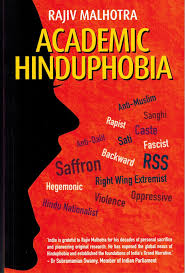
Let me say upfront: Hinduphobia does exist. It may not always manifest in overt violence or systemic persecution (at least not today, and not in most places globally), but it does appear in more insidious, ideological forms; especially in academic and diasporic discourse.

Take, for instance, the backlash against H1B visa recipients. Much of that criticism is coded; targeting upper-caste Indians, especially Hindus, who are the primary beneficiaries of this brain-drain dynamic. It’s not just about class or meritocracy; there’s an unspoken discomfort with their presence and success, often couched in progressive rhetoric.

On the intellectual front, academics like Audrey Truschke and others within the left-liberal Western consensus have regularly challenged or dismissed Hindu identity altogether; reducing it to political nationalism or caste oppression. This refusal to acknowledge Hinduism as a living, plural, and spiritual tradition creates an environment where Hindu self-articulation is delegitimized. That too is a form of Hinduphobia.

Now, is this Hinduphobia the same as the systemic anti-Muslim, anti-Black, or anti-immigrant hatred we see elsewhere? No. Hinduphobia today is more dismissive than violent, more erasure than exclusion, but it is real and it needs to be acknowledged.

Pakistan Was Not Born from Hinduphobia Continue reading Hinduphobia Exists, But Pakistan Was Not Born from It
Hans Zimmer and the Polite Dismissal of the Ramayana

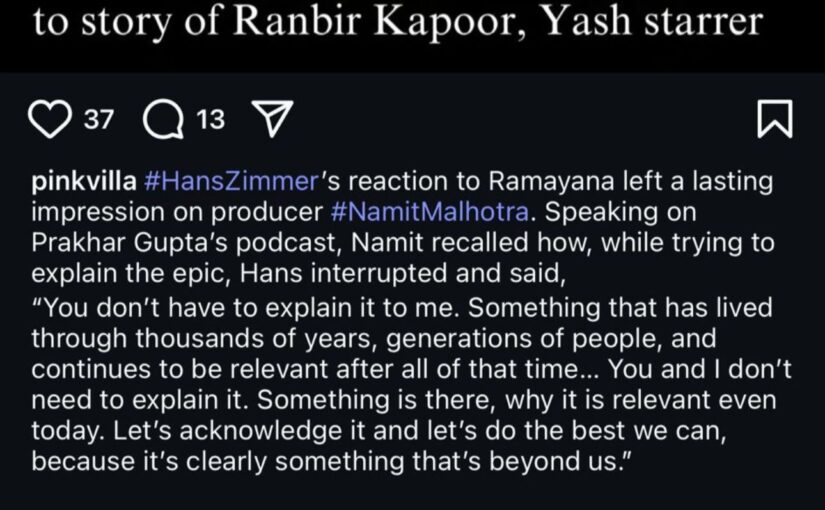
When producer Namit Malhotra began explaining the Ramayana to Hans Zimmer, the legendary composer cut him off:

ā€œYou don’t have to explain it to me. Something that has lasted thousands of years clearly has meaning. Let’s just do our best. It’s beyond us.ā€

Malhotra took this as reverence. In fact, it was erasure.

No serious Western artist would score The Ten Commandments or Schindler’s List without knowing the story. Imagine a composer saying, ā€œDon’t explain the Illiad to me, it’s beyond me.ā€ They’d be fired. But when it comes to Indian epics? The bar is subterranean. That’s not reverence.

That’s: I’m Western, I’m famous, I’m here for the cheque; not the history. The tragedy isn’t Zimmer’s line. It’s Malhotra’s awe. A Westerner shrugs off our most sacred text, and we call it wisdom. That’s not cultural pride. That’s civilizational confusion. It’s a pattern. Many elite Indians are fluent in the language of Islamic grievance; but tone-deaf to Western condescension.

Divide and rule still works:

  • Hindus thank the British for ā€œfreeingā€ them from Muslim rule

  • Muslims thank the British for ā€œprotectingā€ them from Hindu majoritarianism

Meanwhile, the West shrugs at our stories and we applaud.


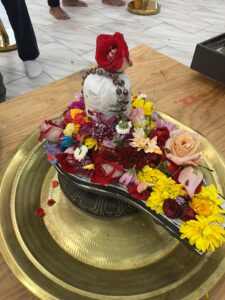
Shravan Monday at the New England Temple

Continue reading Hans Zimmer and the Polite Dismissal of the Ramayana

Let Hindus Decide for India

There’s a quiet but persistent coalition, inside and outside India, that seems intent on denying Hindus the right to define their own future. It includes unreformed Islamists who refuse to reckon with modernity, English-speaking liberal elites still shadowboxing for Nehru, minorities with veto power but no stake in cohesion, and a chorus of Western (and increasingly Chinese) voices, eager to manage India’s trajectory from afar. What unites them? A shared discomfort with Hindu political consolidation.

Let’s be clear: Hindu identity is not a new construct. Whether you place its roots 3,000 or 5,000 years ago, it’s one of the world’s oldest living civilizational continuities. That identity has always been plural, regional, and evolving. But it has also always been there; visible in memory, ritual, geography, and language. Today, that identity is waking up to its political form. And it will not be put back to sleep.

Hindutva is not going anywhere. Nor is the Indian Union. Those who hoped Kashmir would stay outside this arc have already seen the direction of travel. Pakistan’s decision to opt out of Hindustan, and then build an identity against it, has led not to strength but to strategic stasis. Bangladesh, too, for all its cultural richness, now stands as a separate civilizational lane. And so we arrive at the core truth: Hinduism and India are coterminous.

This isn’t a call for exclusion. But it is a reminder that those who opted out do not get to dictate terms to those who stayed in. That includes foreign commentators and diasporic gatekeepers alike. There is a difference between pluralism and paralysis. There is a difference between nationalism and denial. And if majoritarianism is the anxiety; perhaps the deeper fear is that Hindus are no longer apologizing for being the majority. Let India decide. Let Hindus decide. Let the world, finally, learn to listen.

Brown Pundits