Ta’arof & The Art of Flattery


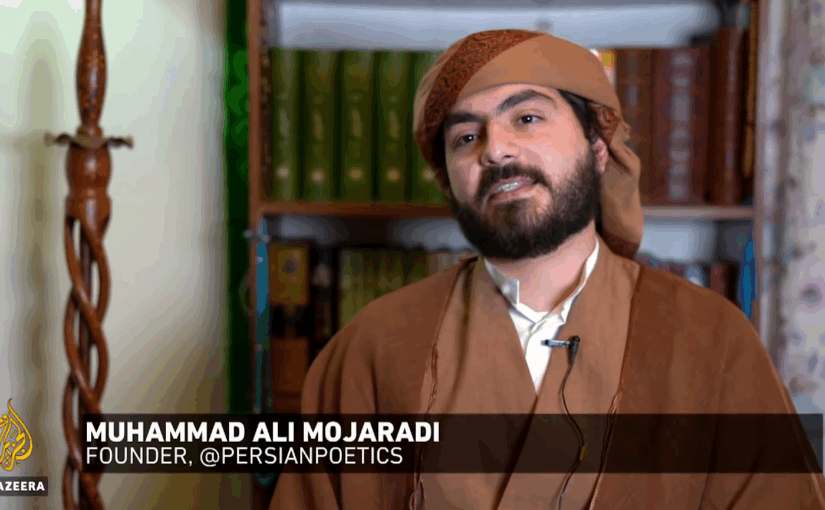
Because Tarof isn’t about numerical formulae. It’s not just “no means yes after the third try.” It’s not a knock-knock joke.

Onunchi, Ta’arof, and High-Context Societies

Tarof is best understood as high-context negotiation within deeply hierarchical and emotionally attuned societies; a kind of cultural Onunchi (옚눈ìč˜), for those familiar with Korean sociolinguistics. It’s the art of reading the room before the room speaks. More than etiquette, Tarof is a performance of dignity through flattery, deferral, and intuition.
And that’s precisely what’s being lost; not just in Rainn’s version, but in the Westernisation of diasporic Persian culture more broadly.


Read More Here

Zohran Mamdani and the Question of Civilizational Belonging

Kabir:

I would question how one defines “Indian” culture vs “Hindu” culture (this is a real question, I’m not being snarky). Zohran speaks Urdu/Hindi, wears shalwar kameez and uses Bollywood references in his campaign. So clearly, he has no issues with Indian culture. He’s not a Hindu so he doesn’t go to temples etc. I’m not sure exactly what you expect him to do?

While Zohran Mamdani expresses outward familiarity with “Indian” culture — speaking Hindi/Urdu, referencing Bollywood, wearing traditional attire — these are surface markers. They do not, on their own, constitute rootedness in Indian civilizational identity. Indian culture, especially post-Partition, is not simply a composite of languages and aesthetics. It is anchored in Dharma — a diffuse but pervasive civilisational ethos shaped over millennia by Hindu, Buddhist, Sikh and Jain worldviews.

Despite being born to a Hindu mother, Zohran’s public identity is strongly framed within a Muslim, Middle Eastern, and postcolonial activist context. His political and cultural instincts appear more aligned with pan-Islamic and Western progressive causes than with any articulation of Indian philosophical or spiritual heritage. His Syrian Muslim spouse, activist framing, and lack of visible engagement with Indic traditions contribute to this perception.

This is not a religious critique but a civilizational one. Just as Israel defines its national identity through a broadly Jewish character — irrespective of belief — India’s cultural self-understanding is inseparable from its Hindu roots. To be Indian, in this view, is not to perform cultural familiarity but to resonate with the metaphysical and historical rhythms of the civilization.

By that measure, Zohran — despite South Asian ancestry — does not code as civilizationally Indian, but rather as an American progressive of South Asian Muslim extraction. The distinction is subtle but important.

The Elder Race and the English-Speaking Heat

As I write this from Dublin, waiting to board my connecting flight—I’d nearly missed it in Newark, too absorbed in writing to hear the gate call—I’m struck by how a Euro sign or EU flag can alter one’s sense of place. Technically, I’m still in the British Isles. But culturally—unmistakably—I’m on the Continent. A sensation I never quite feel in England.

It’s a strange feeling, this flicker of European belonging. In the early millennium, I was a passionate Brexiteer—young, angry, seeking change. By the time of the referendum, a decade later, I found myself morally conflicted. I knew the EU was not a good fit but as a Bahá’í, I knew I could never advocate for disunity, of any sort. I abstained. Ironically, Commonwealth citizens could vote, but EU nationals couldn’t—a bit of imperial gatekeeping that deeply irritated my liberal British-Irish friend. (“Why can Indians vote, but not the French?” he asked.)

Today, standing in Europe, I feel the contrast sharply. The Continent is genteel, even decadent, locked into postwar consensus. Meanwhile, the English-speaking world feels like it’s on fire—politically, culturally, psychologically. It’s not just the UK or the US. India, too, belongs to this hot zone of rhetoric and reinvention. Pakistan, by contrast, while elite-driven in English, remains emotionally and socially an Urdu republic. Continue reading The Elder Race and the English-Speaking Heat

“A Foreign Class of Servants” — JD Vance and the Great American Amnesia

Vice President JD Vance recently declared that America doesn’t need to “import a foreign class of servants” to remain competitive. “We did it in the ’50s and ’60s,” he said. “We put a man on the moon with American talent. Some German and Jewish scientists who had come over during World War two, but mostly by American citizens.”

The line is memorable—not for its nationalism, but for its breathtaking amnesia.

The moon landing was not the product of some closed, white-bread meritocracy. It was powered by German engineers, Jewish refugees, and immigrant scientists—many quite literally “imported.” Wernher von Braun, the face of NASA’s rocket program, was a former Nazi, repurposed by America for its Cold War dreams.

Today, the immigrant pipeline Vance sneers at includes his own in-laws—his wife’s parents, Indian-born academics. I’ve highlighted this problematic tendency before. They weren’t servants. They were scholars. Like hundreds of thousands who have powered this country’s universities, tech firms, hospitals, and labs. America doesn’t run on pedigree. It runs on brains. And yes, those brains often have accents.

America First doesn’t mean America stays first Continue reading “A Foreign Class of Servants” — JD Vance and the Great American Amnesia

Café Concord: A View from the Counter

I’m writing this from a bakery-cafĂ© in Concord, Massachusetts—the cradle of the American Revolution, where ideals like liberty and equality were born anew in the New World. The croissants are fresh, the espresso is bespoke (lavender), and the staff layout is eerily familiar.

At the front: white staff—stylish, aesthetic, articulate—handling (bossing sometimes but in general everyone is exceptionally lovely & calm) model minority clientele with curated ease. In the kitchen: Mexican workers—efficient, invisible, foundational. It’s the same setup across most of America’s cool, clean consumer spaces: the aesthetic and the labor silently segregated by race and language.

No one talks about it. You’re not supposed to notice the subtle “Americanisation” at play (the American dream and its attendant complexities). But once you do, as a twice-immigrant (East to Britain, old England to New England), it’s hard to unsee. The roles aren’t assigned by policy, but by a deeper algorithm—one that sorts people into place based on centuries of sedimented power: race, class, culture, even aesthetics. Continue reading CafĂ© Concord: A View from the Counter

Brown Pundits