

How will the Iranian Regime Survive? By Becoming Persian & Crowning a Pahlavi Queen

Iran After Ideology

The Iranian Revolution survived because it fused two forces that had long resisted foreign domination: Shi‘i Islam and Persian historical memory. It endures today because it still commands the machinery of the state. But endurance is not the same as viability. The revolution has reached a point where its original ideological heft, once an asset, has become its primary liability.

The Iranian Revolution must become Iranian. Not rhetorically, but structurally. Islam can no longer function as an export ideology or as a permanent mobilisation doctrine. It must become a civilisational substrate: Islam with Persian characteristics, not Persian life bent permanently around Islamic revolution. The clerical class has to accept a hard truth that other revolutionary elites eventually learn; that ideology is a ladder, not a house. Nuclear ambition, permanent resistance, and theological maximalism were once instruments of leverage. Today they are liabilities. Iran is not losing legitimacy because it is insufficiently Islamic; it is losing legitimacy because it insists on remaining revolutionary long after the revolution has exhausted its social utility.

The English Example Continue reading How will the Iranian Regime Survive? By Becoming Persian & Crowning a Pahlavi Queen
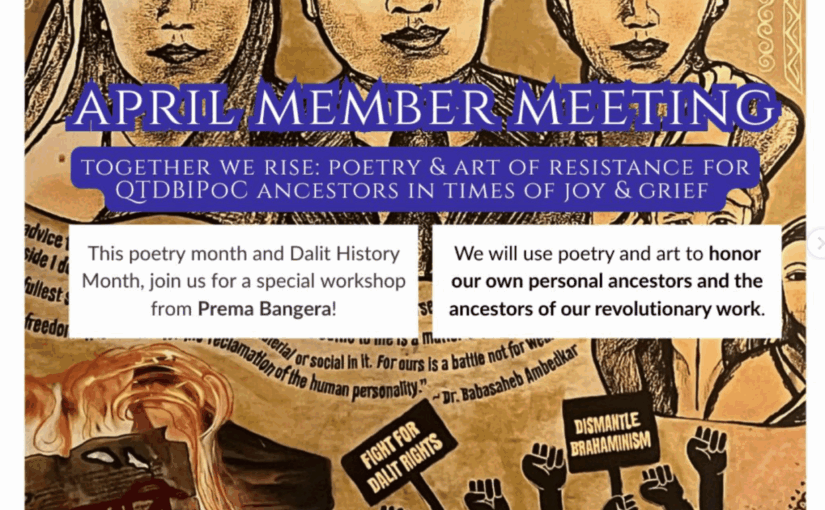
Caste in America

I’ve found myself drifting further left than I expected this year. Much of that is circumstantial, being involved in local activism in the United States naturally places one within progressive coalitions. Yet even in this frame, my ideological compass is firmly rooted in some admiration for Brahminical continuity and Bharat Mata as civilizational anchor.

At times I speculate on where Bharat truly ends. Is it the Hindu Kush? The Iranian plateau? The Persian world has always seemed to me about 20–30% Indianise; its mythology, musicality, and memory bear the imprint of the Indo-Aryan stream more than the Indo-European one, no matter how insistently modern Iranians lean toward a Westward identification.

This brings me to a provocative thesis I’ve often floated: that Brahmins are the civilisational custodians of the Indian subcontinent, and that their displacement often signals a broader cultural erasure. The tragedy of the Kashmiri Panditsis not merely a community’s trauma, but a warning. Without Brahminical continuity, Vedic frameworks falter. Hinduism in Pakistan and Bangladesh remains vulnerable precisely because it lacks the embedded authority and supervisory function of Brahmin elites to anchor Vedic traditions and calibrate resistance to incessant Islamisation. Continue reading Caste in America

Brown Pundits