
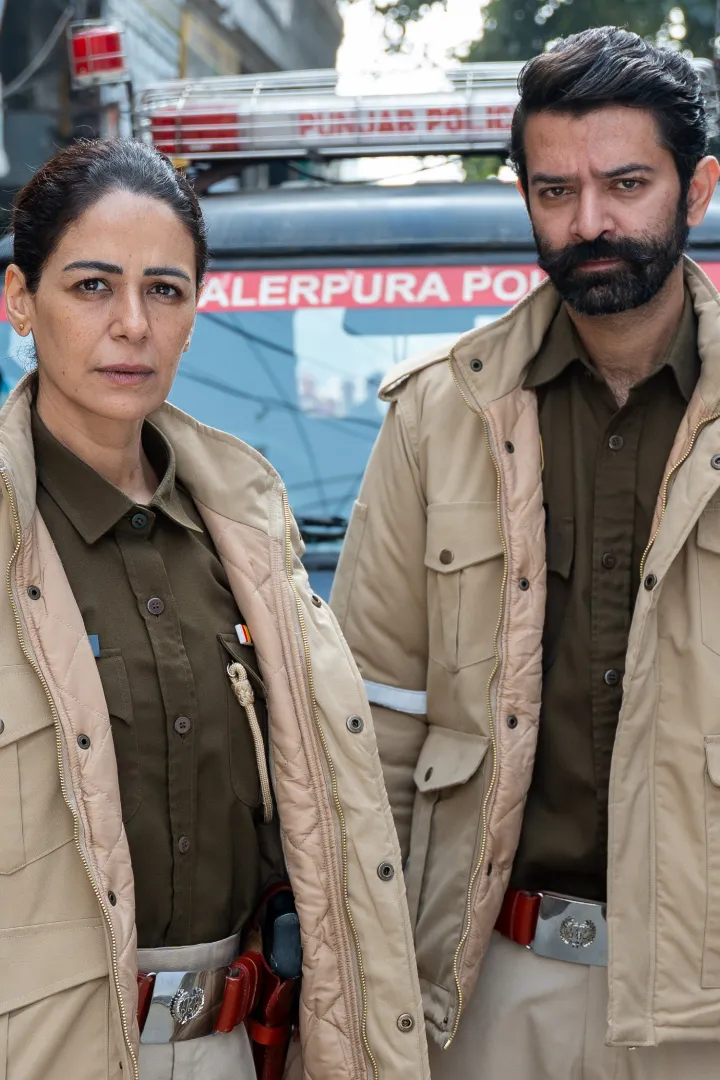
Kohrra Season 2: Review

Kohrra is a police procedural series set in Punjab whose second season is now available now on Netflix which I highly recommend.

Some relatively spoiler free thoughts. I am skipping plot details etc because I don’t want to spoil anything plus there are many reviews already available on the internet.

  • Indian directors/writers have really mastered this sort of police procedural – usually has two police partners and the story jumps between the case (new case per season) and the personal lives of the protagonists. Add in some social commentary as well in a gritty package. Others of this ilk are Pataal Lok (2 seasons, Amazon Prime) and Dahaad (1 season, Amazon Prime). Those are also highly recommended.
  • Because this is a new season, it’s a completely new case. Also only one of the officers from the first season returns. Watching the first season is not necessary but ideal to get an idea of the personal life of the returning character.
  • The plot this time is a lot more twisty with multiple threads leaving you guessing, compared to the first one where I guessed the plot a few episodes in.
  • Also a lot more technically accomplished. The few action set pieces are really well done. The cinematography is great and the acting is great across the board (the first season had some iffy acting by some actors).
  • Love the fact that like most Indian OTT shows, it is not monolingual (like movies) and is multilingual and characters speak in the language that they would actually speak. So predominantly Punjabi with a bit of Hindi.

Dr Manzur Ejaz. 1949-2025


Classical Poets: Understanding Mian Muhammad Bakhsh - Dr Manzur Ejaz with Wajid Ali Syed

Leading Punjabi intellectual and writer Dr Manzur Ejaz passed away at his home in Virginia on 3/30/25. Dr Ejaz was born in a village (chak 60/5-L Burjwala, Sahiwal) in central Punjab shortly after the creation of Pakistan. He contracted polio as a child and was partially paraplegic as a result, but he never let this hold him back. Familiar with traditional rural punjabi culture from his very traditional home, he became a left wing activist in college and remained active in Left wing politics all his life.

He did his masters in philosophy from Punjab University in 1970 and joined the same as a lecturer in philosophy. He remained a committed Marxist and also developed the idea that oppression took many forms and one of its forms was the denial of the language of the common people in favor of imperial languages that were used to impose a new imperial reality on the people. He always insisted that the cause of Punjabi language must be a central concern for any Punjabi Leftist and there could be no working class politics that did not include the defense and promotion of the only language in which that class was able to fully express themselves.  It was at this point that Dr Manzur Ejaz and other Punjabi activists led by Najm Hussain Syed (the most famous Punjabi critic and writer of our age) started a weekly meeting (the “sangat”) to promote the modern study of classical Punjabi literature. They tried to hold their meetings in the university but this was the era in which the jamiat (student wing of the Jamat e Islami) was taking over Punjab university and they created hurdles such that the meeting was moved to Najm Sahib’s house and met there regularly until the Covid era, when it was converted to a virtual meeting. Around that time Dr Ejaz also met his future wife (he said the first time was at a bus stop) and Attiya Kokab and Dr Manzur got married in the late seventies and remained together ever since. Continue reading Dr Manzur Ejaz. 1949-2025

Brown Pundits