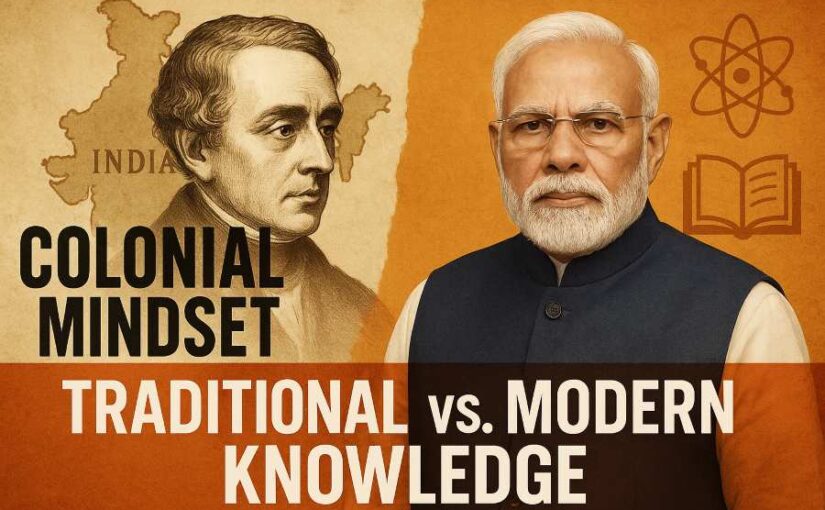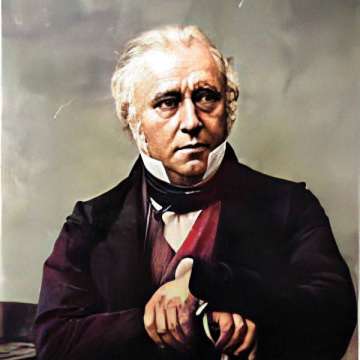
Macaulay, Macaulayputras, and their discontents

We had some discussion about Macaulay on X and I wanted to write a piece about it, but I also know I probably wont get the time soon, so I am going to just copy and paste the discussion here, I am sure people can follow what is going on and offer their comments..

It started with this tweet from Wall Street Journal columnist Sadanand Dhume:

In India, critics of the 19th century statesman Thomas Macaulay portray him as some kind of cartoon villain out to destroy India. In reality, he was a brilliant man who wished Indians well. Link to article. 

I replied: 

I have to disagree a bit with sadanand here bcz I think while cartoonish propaganda can indeed be cartoonish and juvenile, there is a real case to be made against the impact of Macaulay on India.. Education in local languages with hindustami or even English (or for that matter, sanskrit or Persian, as they had been in the past during pre islamicate-colonization India and islamicate India respectively) as lingua franca would have been far superior, and the man really did have extremely dismissive and prejudiced views, the fact that they were common views in his world explains it but does not excuse it. The very fact that many liberal, intelligent and erudite Indians of today think he was “overall a good thing” is itself an indication that his work has done harm.. BTW, there were englishmen in India then who argued against Macaulay on exactly these lines..

Akshay Saseendran (@Island_Thought) replied: Continue reading Macaulay, Macaulayputras, and their discontents

Pāṇini, the “Glitch,” and a Note From an Old Cambridge Friend

I received a message from a publicist this week. The name caught my eye because I knew the scholar from Cambridge years ago. The subject of the email was simple: a new book on Pāṇini and the old claim that something in his system “doesn’t work.”

For two and a half millennia, scholars have argued that Pāṇini’s grammar, the first true computational system for language, contains a flaw. His treatise gives a compact system for generating correct Sanskrit forms. But in cases where two rules seem to apply at the same time, most readers assumed the system breaks. Textbooks describe this as a “conflict problem.” Generations of commentators tried to patch it with exceptions, hierarchies, or interpretive workarounds.

The new book, Pāṇini’s Perfect Rule (December 2025), argues that the flaw was never there. The author, Rishi Rajpopat, claims the system already contains a rule for solving the conflict. According to him, Pāṇini didn’t leave a hole; modern readers simply looked in the wrong place. If his reading is right, the entire architecture of the grammar becomes visible as a single machine; elegant, compact, and self-consistent.

There are two parts to this story. Continue reading Pāṇini, the “Glitch,” and a Note From an Old Cambridge Friend

Brown Pundits