Karan Thapar’s Interview with Ajai Sahni about Red Fort Bombing

A very insightful interview. I obviously don’t agree with some of Ajai Sahni’s analysis of Pakistan. His fears about an Islamist takeover of Bangladesh also seem overblown.

However, he does make the important point that the Indian government is reluctant to blame Pakistan for the Red Fort attack because that would box them into resuming “Operation Sindoor”.Ā  “Operation Sindoor” obviously didn’t go well for them the first time (contrary to the bluster of right-wing Indians on BP). Sahni notes that the onlyĀ  countries that accepted India’s narrative without reservation were Israel and the Taliban.Ā  Pakistan, meanwhile, is currently friends with both the US and China.

Karan Thapar asked him about the suicide attack in Islamabad on Tuesday and his reaction to the Pakistani government blaming India. Sahni replied that the default in India is to blame Pakistan while the default in Pakistan is to blame India.Ā  Neither side’s domestic audience requires evidence.Ā  However, in this case, the Indian government doesn’t want to blame Pakistan because that would require them to declare war on Pakistan (as per their own “new normal” from May) and such a declaration would have consequences.


Red Fort Attack and Aftermath: Initial Thoughts by Manav S.


Red Fort Attack and Aftermath: Initial Thoughts by Manav S.

Last evening’s devastating car-explosion near the Red Fort in Delhi is not only a cruel assault on innocent lives but an assault on the very symbolism of our nation. According to early reports, a vehicle detonated close to the busy metro zone at the historic Red Fort complex, killing at least eight people and injuring more than twenty. ļæ¼ The government has invoked anti-terror legislation and launched a full probe under the Unlawful Activities (Prevention) Act (UAPA). ļæ¼

First, we must recognise the human tragedy behind the headlines. Lives shattered, families devastated, fear spreading in a city already grappling with chronic insecurity. For those of us of South Asian heritage who carry memories of communal strife, of migration and displacement, this attack touches a deeper chord of vulnerability and of collective memory. Hospitals have reported frantic cries, missing persons, relatives screaming for loved ones. ļæ¼

Second, the choice of location amplifies the message. The Red Fort is not just another landmark: it is an emblem of India’s sovereignty, its layered history, its identity. To strike here is to strike at the heart of public confidence and to send a message of audacious defiance. As scholars writing on ā€œbrown diasporic publicsā€ know, our public spaces carry meaning not just for those inside India, but for those of us abroad who anchor our identity in ā€˜homeland’ narratives. This attack disrupts that anchor.

Third, we must resist both fear and simplistic narratives. The invocation of terror laws suggests the state is treating this as a planned act of violence, not an accident. ļæ¼ But let us guard against quick binaries: Us vs Them, Hindus vs Muslims, India vs Outsiders. In a plural society like ours, sweeping communal attributions too often deepen fault-lines rather than heal them. Our commentary must demand both justice and wisdom: meticulous investigation, transparent process, and safeguarding civil rights in the process.

Fourth, what does this mean for our shared public culture? For someone born in Punjab and now living across borders, the explosion challenges our sense of movement, of belonging, of normalcy. We think of carrying family across continents, of re-configuring identity in Washington–DC and Delhi , how do such apparently random acts of terror recalibrate the psychic cost of migration and the distance between home and homeland? The answer is: they make the cost higher, the emotional freight heavier.

Finally, the path forward must hold three imperatives: one, empathy – for all victims, irrespective of religion, class or residence; two, accountability – for whoever plotted, financed or enabled this attack; and three, renewal – of the public realm, the shouting panic, the fear-laden sighs, with something stronger: resilient civic culture, public institutions we trust, cross-community solidarity.

As a brown pundit, I urge our readership to see beyond the flashes of violence, beyond the political spin, and to ask the deeper questions: What kind of society are we building? What kind of public spaces do we imagine, and what cost are we willing to pay for them? For if we shrug now, the symbolic scar will grow — far after the immediate blast damage is repaired.

In that moment of stillness after the blast, we owe to our fellow citizens not just sorrow, but vigilant hope.

BrownCast with Rahul Pandita on Kashmir, Delhi Riots, Maoism

Another BP Podcast is up. You can listen onĀ Libsyn,Ā Apple,Ā Spotify, andĀ StitcherĀ (and a variety of other platforms). Probably the easiest way to keep up the podcast since we don’t have a regular schedule is toĀ subscribeĀ to one of the links above!

In this episode of Browncast Omar and I (Gaurav) talk to Rahul Pandita, the journalist and author. We spoke on a range of topics from Kashmir to Maoism. Rahul’s is a refreshingly insightful voice among the English speaking journalists based around Delhi – do check out his writings. His twitter bio is Rahul Pandita.

I would highly recommend his books – especially his memoirOur Moon Has Blood Clots

Below the fold here I am posting the transcript as well. This is auto-generated and unedited, so expect to see MANY errors, but it may help you jump to whatever part interests you, or give you at least a gist of the conversation. Continue reading BrownCast with Rahul Pandita on Kashmir, Delhi Riots, Maoism

An observation for David Ronfeldt

[ cross-posted at Zenpundit — suggesting that the “how do we know when a radicalized thinker shifts into violent action mode?” question is frankly a koan ]
.


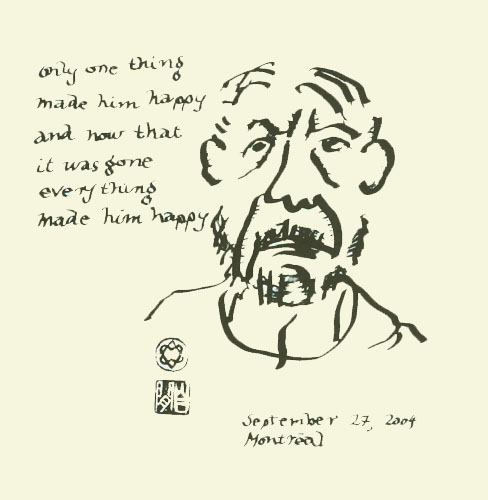
stern task-master image borrowed from The Zen Priest’s Koan

**

We’d been discussing on FB The Right Way to Understand White Nationalist Terrorism, and in particular this observation:

This movement is often called white nationalist, but too many people misunderstand that moniker as simply overzealous patriotism, or as promoting whiteness within the nation. But the nation at the heart of white nationalism is not the United States. It is the Aryan nation, imagined as a transnational white polity with interests fundamentally opposed to the United States and, for many activists, bent on the overthrow of the federal government.

and an idea occurred to me that seemed interesting enough for me to re-post it here on Zenpundit and Brownpundits:

We’re seeing a lot of discussion of how to foresee the switch from a terror-propensity thought into a terrorist act. Even in retrospect this is very difficult to manage, although lots of people elide the difference or feel constrained to separate the two, and managing an effective strategy to accomplish forewarning seems close to impossible.

I’d like to observe that the great leap between thought and act is in fact a leap across the mind > brain distinction, ie the “hard problem in consciousness”. > It’ds called the “hard problem” because it’s a question so basic that our best reaches of thought can’t stretch across the inherent paradox, a koan in effect.

Perhaps if we started with that koan, we could at least understand the “size” of the problem that predicting terrorist violence poses.

**

I think that’s, technically, an audacious idea.

What the hell do I mean by that? It doesn’t threaten my physical well-being, nor, I’d suspect, national security. It’s “just a thought” — so what’s the big deal?

Well, it concerns a matter of immediate strategic and tactical concern, for one thing. And for another, it takes that strategic and tactical issue way past its present discursive parameters, and analyzes it to a level of fundamental abstraction — so much so that it invokes one of the few most basic unresolved issues in scientific thought, a veritable western koan.

That’s quite a reach, but I believe it’s a reach that illuminates the difficulty of the “strategic and tactical issue” from a fresh point of view that’s frustratingly so deep as to be virtually impenetrable.

**

In Chalmers‘ words, the “hard” problem is:

how physical processes in the brain give rise to subjective experience … the way things feel for the subject. When we see for example, we experience visual sensations, such as that of vivid blue. Or think of the ineffable sound of a distant oboe, the agony of an intense pain, the sparkle of happiness or the meditative quality of a moment lost in thought

You remember the kids’ mathematical saying, “three into two won’t go”? Well here’s a case of “mind into brain won’t go” in the sense of Chalmers‘ hard problem.

**


Leonard koan, yes, yes — from Leonard Cohen (1934-2016)

Brown Pundits