
May those who lost their lives in the Pahalgam tragedy rest in peace. May the injured find swift healing. And may the perpetrators be brought to justice.
False Flags, Fragile Ideologies, and the Weight of History
I don’t want to take away from Omar’s excellent piece, India and Pakistan: Back to the Future—he nailed it on the trajectory of Pakistan’s self-conception and the road ahead for India.
But what began as a comment evolved into something more. I wanted to briefly address the misinformed murmurings online about the attack on Pahalgam being a false flag.
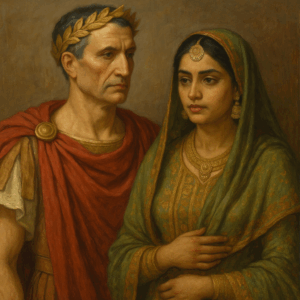
Caesar’s Wife
There’s an old line: Caesar’s wife must be above suspicion. If you want to be taken seriously on the world stage, perception is half the battle. India has a clear civilizational and national narrative. Despite its contradictions, it’s attempting—seriously—to join the ranks of the U.S. and China. And it’s making real progress.
Pakistan, by contrast, seems increasingly defined by what it opposes rather than what it builds. Its civilizational narrative has, over time, narrowed into a single impulse: block India at any cost. There are dozens of Muslim-majority nations. But there is only one India. That asymmetry matters—culturally, strategically, metaphysically.
Zia’s Logic: Annihilation as Strategy
One quote making the rounds—attributed to General Zia-ul-Haq—offers a glimpse into a mindset that’s still disturbingly prevalent:
“Pakistan may suffer annihilation, but Muslims will survive. There is only one India. I shall wipe out Hinduism from the face of the earth.”
I can’t vouch for its authenticity. But the fact that it circulates so widely in Pakistani nationalist circles is telling. It reveals a logic where mutual destruction isn’t feared, but fantasised. Where nuclear brinkmanship becomes doctrine. Where religious identity trumps civilizational continuity. If your ideology accepts the annihilation of your own state as the cost of harming your neighbour—you’re not a nation. You’re a martyr complex with missiles.
The Asymmetry That Matters
India, for all its flaws, is building. Its democracy is messy, but resilient. Its economy is growing. Its institutions—however imperfect—are evolving. Pakistan, too often, is interrupting. And history rarely remembers the spoilers kindly. The tragedy is that the real cost is paid by ordinary people: the victims, the Punjabi farmers, the families in Pahalgam, Fawad Khan. The artists and workers and worshippers who simply want peace, and instead become collateral to a state’s obsession.
leaving a comment here so that the thread opens up. so critical to have a great commentariat for any weblog