The origin and variation of ethnic violence in South Asia

It’s been a few days since I last appeared here, so I don’t know what’s going on here. Either way, I had previously mentioned in some of my past comments about a few useful sources for understanding communal and caste conflict. One of the books that I mentioned was “The Colonial Origins of ethnic violence in India” by Ajay Varghese. I have been meaning to make a post about the book, but I couldn’t really fully summarize everything in a meaningful manner until I remembered a summary the author wrote in the concluding chapter himself, which I am just going to fully quote below since I think it’s an interesting insight about violence in present-day South Asia.

Summary of the Book

This book has argued that patterns of ethnic violence in India stem from legacies of colonial rule that were reinforced over time through institutions. India is well known as having been the “jewel in the crown” of the British Empire; less well known is that the British never controlled the entire country. Most of the areas that were already British colonies prior to the conquest of India had been brought under direct rule, but the Rebellion of 1857 prevented the subcontinent from being entirely annexed. Afterward, roughly one-fourth of the Indian population lived in princely states ruled by largely autonomous native kings. This key historical divide forms the colonial origins of ethnic violence in contemporary India. Both the British administrators and the princely rulers governed heterogeneous populations, but they had very different conceptions of how to manage this ethnic diversity. In the provinces, British administrators emphasized the centrality of caste. Colonial officials chose this particular identity after the Rebellion of 1857, which they perceived as a religious(primarily Islamic) uprising, because they were intent on de-emphasizing religion. Caste (along with tribal identities) was promoted as the central organizing principle for a new, modern society. During the latter half of the nineteenth century, the caste system was divorced from its Hindu origins and became largely a system of social categories. It was subsequently viewed as scientific in character, bearing resemblance (depending on the administrator) either to race or to the class structure of Victorian England.

Continue reading The origin and variation of ethnic violence in South Asia

Review: Siren Song: Understanding Pakistan Through Its Women Singers by Fawzia Afzal-Khan

I am sharing this review in the context of the ongoing discussion on women’s rights in Pakistan.  Though Afzal-Khan’s book is specifically about women singers, it is relevant to this discussion since it makes broader points about “respectability politics”. 

Afzal-Khan’s book is wide-ranging and covers a time period from the years preceding Pakistan’s creation in 1947 to the present. It includes many genres, from khayal to Sufi-Pop. The central theme of the book is articulated in the first two chapters entitled “The Respectable Courtesan” (focusing on Malka Pukhraj) and “Roshan Ara Begum: Performing Classical Music, Gender, and Muslim Nationalism in Pakistan.” In these initial chapters, Afzal-Khan develops her notion of “respectability politics.” This refers to the ways in which these artists had to negotiate their public image in order to align themselves with the norms of ashraf Muslim families, which hold that a woman’s primary place is in the home. Though they were both great artists, Malka Pukhraj and Roshan Ara Begum identified themselves primarily as “good” wives and (in Pukhraj’s case) mothers. This allowed them to distance themselves from their alleged “courtesan” backgrounds, considered dubious by mainstream society. In Pukhraj’s case, she was a court singer in the erstwhile princely state of Jammu and Kashmir, ruled at the time by Maharaja Hari Singh. It is telling that, according to her daughter Tahira Syed (1958-) – herself an accomplished singer – Pukhraj’s children didn’t learn about this aspect of their mother’s background until she wrote her autobiography in her eighties (Afzal-Khan 2020: 5). It is also important to note that Pukhraj dedicated her memoirs to two men: first her husband and then her patron (Maharaja Hari Singh). Afzal-Khan deems this another “normative gesture of respectability” (2020: 3).

The rest of the review can be read on Substack


Gender statistics in India

Normally I’m wary of India-Pakistan comparisons but since a comment was made on an earlier thread that “India is light-years ahead of Pakistan” when it comes to gender, let’s look at some objective statistics.   I have no problem conceding that India is indeed ahead of Pakistan in many things. For example, India has decriminalized homosexuality (by getting rid of the British colonial Section 377).  This is something that is currently unimaginable in Pakistan.  Partly this is because India is a constitutionally secular state while Pakistan is an “Islamic Republic”.  Islam has clear views about homosexuality which don’t need to be elaborated here.

Yet, India is by no means a Western feminist paradise. Arranged marriage remains the norm (just as it is in Pakistan). Marital rape is not a crime (just as it isn’t in Pakistan).   So Indians can indeed take satisfaction in being more progressive than Pakistan but they are nowhere near Western standards.

Take the Global Gender Gap Index for example. While Pakistan is the bottom ranked country on the list (with a score of 0.567) India is ranked at 0.644. This is just above Saudi Arabia at 0.643.  Meanwhile, the UK is ranked at 0.838 and the US is ranked at 0.756.   Clearly, India needs to make a lot of progress to catch up with the so-called “civilized world”. Continue reading Gender statistics in India

Is Pakistan primitive?

By new Precedent, ceasefires are lifted by default, and maintained only where a commenter requests one on Online Safety grounds, as K has (BB – RNJ – 0M).

We argued in “The Patriarchy Survives Everything” that has no religion.

Over the last month, in order not to be Islamophobic, a line was surreptiously moved. The proposition that women should be confined to the home and kept out of higher education stopped being an outrage to be dismantled in public and became a “perspective” to be weighed.

Silence on the right of a woman to leave her own house, and called the silence respect. A space loud for one liberty and mute on another has not been even-handed; it has been captured. That is the moment the emperor lost his clothes and the courtiers agreed not to mention it.

How a country starts eating halal

RNJ consistently brings up Nassim Taleb’s seminal piece on “The Most Intolerant Wins: The Dictatorship of the Small Minority.” Continue reading Is Pakistan primitive?

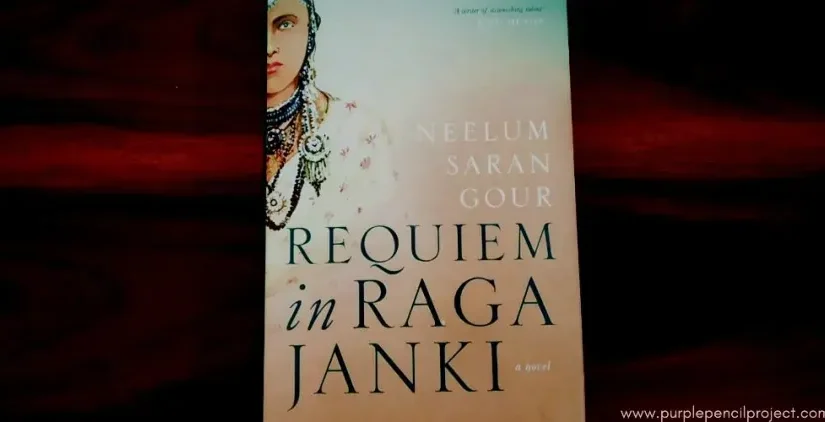
Review: Requiem in Raga Janki by Neelum Saran Gour

Neelum Saran Gour’s novel Requiem in Raga Janki (Penguin Random House India, 2018) is a fictionalized biography of Janki Bai Ilahabadi (1880-1934), one of the most famous Hindustani classical singers of the early twentieth century. Janki Bai was an extremely successful gramophone artist in the early days of recording. She performed at the Grand Delhi Darbar in December 1911, where George V was crowned as Emperor of India. She also wrote Urdu poetry, most famously the Diwan-e-Janki.

Gour begins the novel by describing one of the most famous stories associated with Janki Bai, when she was stabbed by a jealous lover (depending on the version of the story, the man was either her lover or the lover of her father’s mistress). Janki received 56 stab wounds, which led to her receiving the nickname “Chappan Churi” (56 knives). After the stabbing, her father’s mistress, Lakshmi, ran away and Janki’s father abandoned his wife and children to go searching for her. Janki and her mother Manki Bai were then sold to a brothel in Allahabad. In order to protect her daughter from becoming an ordinary sex worker, Manki Bai arranged for her to recieve a high level of musical training from Ustad Hassu Khan of the Gwalior gharana (school) of Hindustani classical singing. Her success at this art is what made Janki a bai or courtesan– a highly valued female entertainer.

The rest of the review can be read on Substack 


Indus Water Treaty: What lies in the future?

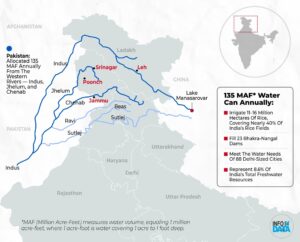
Indus Waters Treaty was signed in 19 Sept 1960 between India and Pakistan under mediation provided by the World Bank. As a political compromise between Pakistan and India seemed improbable the US and UK decided to pressure both into signing onto a technical treaty which could outline the claims and limits of both nations on the flow of the water. Over the years it was touted at the most successful and unequal water sharing agreement where the upper riparian nation only made claim to a minor portion of the river’s waters.

The Indus basin was categorized into two groups of rivers. With the Eastern Rivers (Beas, Ravi, and Sutlej) being controlled by India and the Western Rivers (Indus, Chenab and Jhelum) being controlled by Pakistan.

Many still blame Nehru for this treaty in India for only allowing India to control less than 20% of the Indus’ waters, while many in Pakistan still decry the unequal nature of the treaty in directly awarding a set of rivers to India as that may eventually cause droughts in the parts of Pakistan which are mainly fed by the Eastern rivers. However, the main calls for renegotiations of the treaty have originated in India which at this point has put it into ‘abeyance’. In this post we will go through the main areas of dispute in the treaty and what the possible solutions for the current impasse may be.

Continue reading Indus Water Treaty: What lies in the future?

Review: The Medici Boy-Art and Homoeroticism in Renaissance Florence

Another great read for Pride Month.  I am a big fan of historical fiction, particularly those books set in Renaissance Italy. 

Renaissance Florence was a period of great artistic ferment. Under the patronage of the Medici family, artists such as Donatello, Michelangelo and Leonardo produced great works of painting and sculpture. Among the best known of these works are the sculptures of David produced by Donatello (c. 1440s) and Michelangelo ( 1501-1504).

John L’Heureux’s novel The Medici Boy focuses on the creation of Donatello’s David (the titular “Medici boy”). The story is narrated by Luca Mattei, a former monk who works as Donatello’s apprentice. Luca becomes jealous of his foster brother, Agnolo, who serves as Donatello’s inspiration for David and later becomes his lover. Donatello’s relationship with Agnolo serves as the major plot complication since Agnolo is repeatedly denounced as a sodomite. His illegal activities also threaten to bring down Donatello and through him his patron and friend, Cosimo de’ Medici.

The rest of the review can be read on Substack.  For a woman’s perspective on the Medici, see this review of Maggie O’Farrell’s The Marriage Portrait, which is inspired by the marriage and possible murder of Lucrezia de’Medici (1545-1561) at the hands of her husband Alfonso II d’Este, Duke of Ferrara. This alleged murder also served as the inspiration for Robert Browning’s poem “My Last Duchess“–itself a classic of English Literature.

Note: Modern historians believe that Lucrezia died of pulmonary tuberculosis


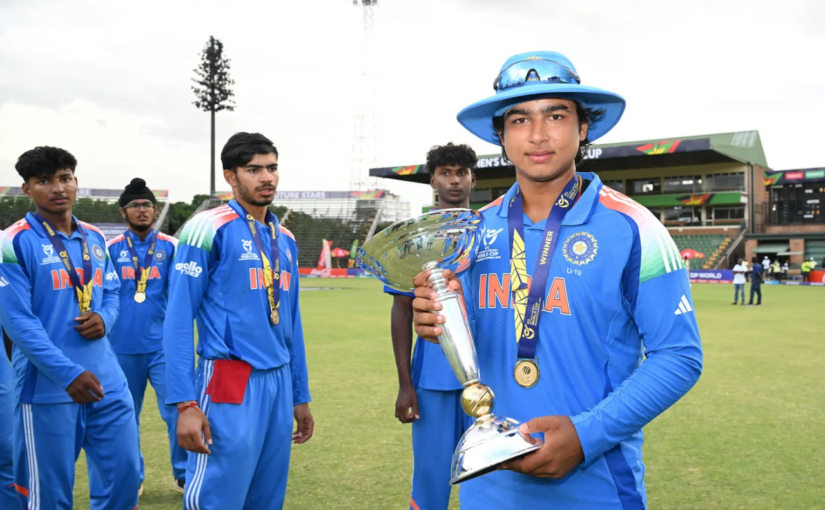
The joy of watching Vaibhav Sooryavanshi

After the twin pleasures of the Indian cricket team’s campaign in the T20 World Cup in February and early March and Dhurandhar: the Revenge in late March, the thing that has given me a lot of joy throughout the months of April and May is watching Vaibhav Sooryavanshi’s batting in the IPL.

As I write this, he has been selected for the Ireland and England tours in late June-July, becoming the youngest Indian to get an international callup ever, surpassing the great Sachin Tendulkar. He also won the IPL MVP award along with the Emerging Player Award (usually people win them years apart, not in the same year) along with a variety of other awards. This follows the U-19 World Cup in February where he was Man of the Match in the final as well as Man of the Tournament.

And it is not just me, but the entire cricketing world which has been set aflutter by his exploits. His extremely fast pace of play (even compared to some of the fastest players in the world) plus his insane shot making and bat swing have made him a fan favourite already.

Continue reading The joy of watching Vaibhav Sooryavanshi

Is Kabir Right?

Kabir’s claim, is that much of the Saffroniate comes to Brown Pundits for one purpose: to litigate Pakistan, and to litigate the Muslim. Take that fixture away and the room goes quiet. The post on Hindustani classical music sinks without a ripple. The translated short story draws three comments and dies. Only the threads that arm the two camps against each other run to hundred+.

Is he right?

Continue reading Is Kabir Right?

Brown Pundits