Who did the Brits conquer India from?

We asserted that West crushed and humiliated the Mughals. 0M-3 answered that the humiliation was an inside job: it was the Marathas who broke Mughal power, and when Delhi passed to the Company in 1803 the treaty was signed with the Marathas, the emperor not even a party to it.

Did the British take India from the Muslims or from the Hindus? The empire the British inherited had already fallen apart, and it had fallen apart along lines that almost had nothing to do with faith.

The British conquered successor states, not an empire.

Aurangzeb died in 1707, and within a generation the Mughal map was a fiction. Hyderabad went its own way under the Nizam by the 1720s, Bengal and Awadh became nawabis in all but name, and the Marathas took the centre. The spectacular blows did not come from London. Nadir Shah of Persia sacked Delhi in 1739, carried off the Peacock Throne and the Koh-i-Noor, and left tens of thousands dead in the streets in a single day. The Afghan Ahmad Shah Durrani came back to plunder again and again after him. By 1788 the emperor Shah Alam had been blinded by an Afghan adventurer and was living as a pensioner of his Maratha keepers. When General Lake walked into Delhi in 1803 he collected a prisoner the Marathas had been holding, not a throne. The British did not topple the Mughals. They arrived to read the will.

The frontiers were not religious frontiers.

Press the communal map onto the eighteenth century and it tears at once. Tipu Sultan, the Muslim tiger of Mysore, ruled a country that was mostly Hindu and ran his revenue through a Brahmin, Purnaiah. Ranjit Singh, the Sikh lion of Lahore, ruled a Punjab that was mostly Muslim. The Maratha and Nawabi states alike were administered by Hindu clerks and financed by Hindu bankers. There was no Muslim India and no Hindu India waiting to be defeated. There were states, and the faith of the man at the top told you very little about the people beneath him, still less about the men who ran his treasury.

The conquest was paid for and fought by Indians.

Plassey in 1757 is remembered as a battle. It was closer to a purchase. Siraj-ud-Daula lost because his own commander, Mir Jafar, stood aside, and Mir Jafar stood aside because the Jagat Seths, the richest Hindu banking house in Bengal, had decided their Nawab was bad for business and bought his army out from under him. Seven years later at Buxar the Company beat the Nawab of Awadh, the deposed Nawab of Bengal, and the Mughal emperor himself, all three together, and then took the right to tax Bengal to pay for the next war. The armies that did this work were Indian, sepoy and Hindu and Muslim in the great majority, marching on credit raised against Indian land. The Company was paramount because Indians found it paid to make it so.

The disunity is the story.

The faith of each beaten ruler is almost beside the point. The British did not conquer a religion. They completed a hostile takeover of a bankrupt estate, with Indian money, Indian troops, and a long row of victories over rulers who were Muslim, Hindu, and Sikh by turns and who would never combine.

Soundscapes of Muharram (Kabir’s Open Thread)

As promised, this is going to be my only post this week.

1) Soundscapes of Muharram  

By Mansoor Raza

This is particularly timely since it is currently Muharram and Ashura is this week.

From the dust of Pakistan’s independence in 1947 emerged a sonic revolution that would permanently rewrite Karachi’s spiritual DNA.

Rooted in classical Urdu, Arabic and Persian literary traditions, the noha — a profound elegiac lament commemorating the tragedy of Karbala and the martyrdom of Imam Husain (AS) — travelled across a fractured Subcontinent in the hearts of millions of families that migrated to Karachi. Over the last three-quarters of a century, this localised ritual of displacement morphed into a defining cultural powerhouse.

Driven by global shifts and technological eras, 12 trailblazing master orators of the noha [elegiac lament] arose, not merely as reciters, but as architectural anchors and boundary-breakers who fundamentally re-engineered the soundscape of devotion.

2) DAWN reviewed Anjum Altaf’s book A Modern Introduction to Indian Music and Other Essays Including a Primer on the Physics of Sound 

Part primer, part Socratic conversation and part cultural history, this engaging volume explores the theoretical foundations of Indian classical music

The book is unique and quite different from other Pakistani authors’ books on music, as it is interactive. It is the outcome of shared learning, in which a group learns from each other by pooling knowledge, and is more exciting and effective than passively being exposed to an expert’s views. In fact, the essays started off as blog posts that were then commented upon by readers. Those discussions are included in the book, almost like a Socratic dialogue.

The book has also been published in India by Primus Books


Pakistan, the Successor State to Islamistan

The settled view of Pakistan, is that it is the most ideologically Islamic state the world has ever produced, and that each decade carries it further into theocracy. We think the settled view is wrong.

The Pakistani elite has quietly secularised. And far from hollowing the state out, this is precisely how Pakistan became what it was always designed to be: the successor state to British India’s Muslims. Islam was the vehicle. Pakistan is the destination.

Islam remains the public language of legitimacy.

Privately, among the stakeholders who actually run the place, the operating priorities are entirely secular. The society on the ground is conservative and devout. The class at the top, the one that keeps the state alive, believes in Pakistan far more than it believes in Islam.

It helps to separate three things that we mean by Islam. There is Islam as faith, the private conviction of the believer. There is Islam as identity, the badge of who one is and whom one stands with. And there is Islam as state language, in which Pakistan explains itself to itself and to the world.

The elite has not surrendered the third, and it has not wholly shed the second. What it has let go of is the first as a terminal value: the notion that the purpose of the state is to realise Islam, rather than to deploy it.

Faith has gone from ultimate to instrumental.

This migration is what we mean by secularisation. This is not the familiar story of liberalisation. We are not saying Pakistan grew tolerant, or irreligious, or fond of gin. We are saying something narrower and stranger. Pakistan’s elite secularised the priorities of the state without secularising its language. Strip away the Islamic vocabulary and look at what the stakeholder class optimises for, and the list is unmistakable: state survival, strategic depth, military capability, sovereignty, national prestige, and the reproduction of the elite itself.

Continue reading Pakistan, the Successor State to Islamistan

High-Intensity Precedent

Brown Pundits runs on attention. When we put hours into the site, it hums; when work and travel pull us across three jurisdictions at once, it slows. We have a backlog of pieces we want to write and lives that keep getting in the way. The June survey took the wind out of the schedule. We do not want to run this place as full-time editors, and we should not have to.

First, a thing worth saying plainly. Brown Pundits is not a magazine. It is a discussion community with essays attached, and it always has been. The life of the site is the conversation, not the rate of publication. Everything below follows from taking that seriously.

The principle is high-intensity posts. A lot of writing is rewriting, and we want authors to work their pieces hard before they go up. We have noticed the same thing for years. A post that carries real thought and attention never dies at ten or fifteen comments. Fifty is our quiet benchmark. Past a hundred, the thread stops being ours at all and takes on its own life, because people come here to argue with each other and use the post as fodder. Signal pulls signal. Thin posts pull nothing.

The rules:

  1. Fresh original writing is the post. Work it hard, put it up on its own, and let the comments run. This is the essay, and it keeps standing where it always has.
  2. Reposts do not each get a post. Links, columns, reviews, the odd video, other people’s work: these stack into a single running thread, one per author or theme. The author upranks the newest entry to the top, refreshes the timestamp, and lets the curation gather in one place. One dense thread beats ten thin link-drops that die overnight.
  3. Open threads, where the general cross-talk lives, stay scarce. We open a new one only when the current thread crosses fifty to a hundred comments, or once a week, whichever comes first. Two or three live threads, not twenty.

The obvious worry is that a long thread walls out newcomers. It does not, because the newest entry always sits on top, and the open threads rotate weekly or at a hundred, so the live conversation is never buried under a year of history.

An example. A contributor who shares a steady stream of links, a column here, a book review there, the odd YouTube, keeps one running thread for the lot instead of a dozen one-line posts. Each new link goes to the top. The older ones stay underneath. The regulars know exactly where to find it and argue about it, and the thread grows heavier and more valuable every week instead of vanishing down the feed in a day.

That is the whole idea. Original essays worked harder, reposts gathered in one place, cross-talk kept to a few live threads. We stay a discussion community with essays attached. We are just building better rooms for the discussion to happen in. Less churn for us, more weight for you.

Open Thread: AfPak – Cocktail 2

We are busy but we found this comment amusing:

“And who knows, in the distant future we can prop up Afghanistan like China does Pakistan.”

We are going to watch this in a few hours?


The origin and variation of ethnic violence in South Asia

It’s been a few days since I last appeared here, so I don’t know what’s going on here. Either way, I had previously mentioned in some of my past comments about a few useful sources for understanding communal and caste conflict. One of the books that I mentioned was “The Colonial Origins of ethnic violence in India” by Ajay Varghese. I have been meaning to make a post about the book, but I couldn’t really fully summarize everything in a meaningful manner until I remembered a summary the author wrote in the concluding chapter himself, which I am just going to fully quote below since I think it’s an interesting insight about violence in present-day South Asia.

Summary of the Book

This book has argued that patterns of ethnic violence in India stem from legacies of colonial rule that were reinforced over time through institutions. India is well known as having been the “jewel in the crown” of the British Empire; less well known is that the British never controlled the entire country. Most of the areas that were already British colonies prior to the conquest of India had been brought under direct rule, but the Rebellion of 1857 prevented the subcontinent from being entirely annexed. Afterward, roughly one-fourth of the Indian population lived in princely states ruled by largely autonomous native kings. This key historical divide forms the colonial origins of ethnic violence in contemporary India. Both the British administrators and the princely rulers governed heterogeneous populations, but they had very different conceptions of how to manage this ethnic diversity. In the provinces, British administrators emphasized the centrality of caste. Colonial officials chose this particular identity after the Rebellion of 1857, which they perceived as a religious(primarily Islamic) uprising, because they were intent on de-emphasizing religion. Caste (along with tribal identities) was promoted as the central organizing principle for a new, modern society. During the latter half of the nineteenth century, the caste system was divorced from its Hindu origins and became largely a system of social categories. It was subsequently viewed as scientific in character, bearing resemblance (depending on the administrator) either to race or to the class structure of Victorian England.

Continue reading The origin and variation of ethnic violence in South Asia

Gender statistics in India

Normally I’m wary of India-Pakistan comparisons but since a comment was made on an earlier thread that “India is light-years ahead of Pakistan” when it comes to gender, let’s look at some objective statistics.   I have no problem conceding that India is indeed ahead of Pakistan in many things. For example, India has decriminalized homosexuality (by getting rid of the British colonial Section 377).  This is something that is currently unimaginable in Pakistan.  Partly this is because India is a constitutionally secular state while Pakistan is an “Islamic Republic”.  Islam has clear views about homosexuality which don’t need to be elaborated here.

Yet, India is by no means a Western feminist paradise. Arranged marriage remains the norm (just as it is in Pakistan). Marital rape is not a crime (just as it isn’t in Pakistan).   So Indians can indeed take satisfaction in being more progressive than Pakistan but they are nowhere near Western standards.

Take the Global Gender Gap Index for example. While Pakistan is the bottom ranked country on the list (with a score of 0.567) India is ranked at 0.644. This is just above Saudi Arabia at 0.643.  Meanwhile, the UK is ranked at 0.838 and the US is ranked at 0.756.   Clearly, India needs to make a lot of progress to catch up with the so-called “civilized world”. Continue reading Gender statistics in India

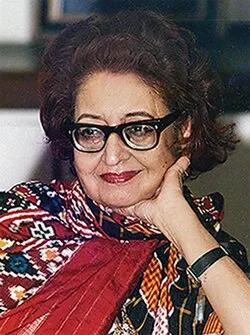
Lucknow’s Composite Culture and its Destruction in Qurratulain Hyder’s Novels

I am sharing an excerpt from this piece in the context of Fly Die’s piece on ethnic violence in India.  I believe that sometimes Literature provides a different lens on these issues than academic research does. 

I was tuning my tanpura for riaz in the morning to sing Khayal Jaunpuri, and one string snapped. Gautam, there’s symbolism for you. Hussain Shah’s tanpura broken into two,’ said Talat ruefully.

— Qurratulain Hyder, River of Fire, pg. 273

In the passage quoted above–from Qurratulain Hyder’s novel River of Fire (her own translation of her Urdu magnum opus Aag Ka Dariya)—the speaker, Talat, is a member of Lucknow’s Muslim elite. She is speaking to a group of friends—both Muslim and Hindu—after the Partition of 1947. Two new nation-states–“India” and “Pakistan”– have been created and the group of friends is splitting up in different directions: Talat’s cousin Amir Reza has already left for Karachi, Talat herself is imminently departing for further studies in England, and Gautam is soon to leave for America. The broken tanpura symbolizes the death of the composite culture, which could not survive the politics of religion and the force of the Two Nation Theory. This theme—the destruction of the Lucknawi way of life—runs through many of Hyder’s novels, particularly through My Temples, Too (Hyder’s translation of her debut novel Mere Bhi Sanam Khane) and the later sections of River of Fire.

In this paper I will examine Hyder’s novels and use them to discuss some arguments about the formation of the composite culture of Lucknow (and of UP generally) and the failure of this culture to prevent the Partition of British India and the creation of Pakistan in 1947. By focusing on Muslim elites who, despite all the odds, chose to retain their belief in a united India, Hyder problematizes the prevailing discourse that sees Hindus and Muslims as inherently opposed and Partition as the inevitable outcome of Independence.

The rest of the essay can be read on Substack.  See also my review of Hyder’s novel “Fireflies in the Mist” 


Brown Pundits