Rawalakot vs. Jantar Mantar
- Has any other South Asian government fired the anti-national frame at a major protest movement?
- What matters, constitutionalism or state resolve?
- Can a state be “hard” outwards without treating domestic opposition as an external enemy?
Is this the same as Delhi?
Last night, the Azad Jammu and Kashmir Police issued a statement about clashes at Rawalakot. It said that armed groups of the proscribed Joint Awami Action Committee had tried to force their way into the city, that appeals to disperse were rejected, that fire was opened on law enforcement officials, and that two officers were injured. The phrase used was challenging the state writ.
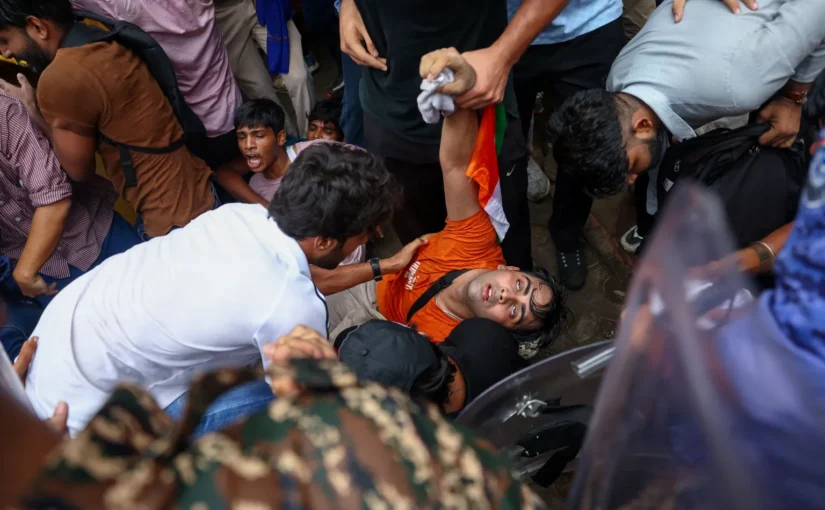
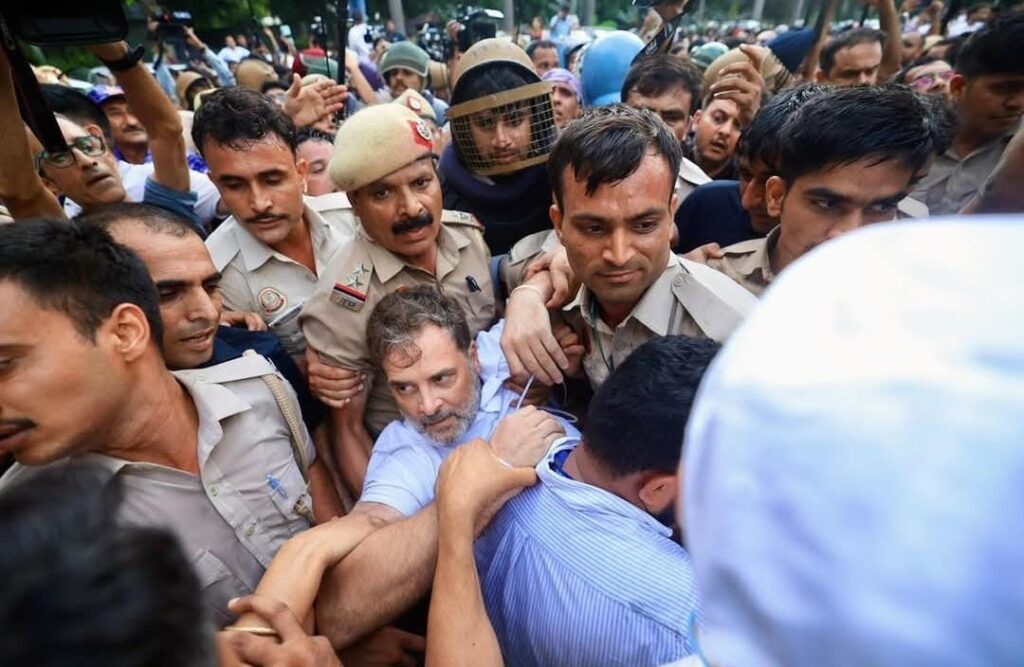
Five weeks earlier, on 23 June, Dharmendra Pradhan described the Cockroach Janta Party as a B team of disruptive elements and told India Today that tukde-tukde forces were at Jantar Mantar.
The two governments reached for the same instrument. Both took a movement making material demands and attempted to relocate it outside the nation, where its demands would no longer require an answer. This is the standard subcontinental response to a protest that cannot be conceded to.
The difference is what happened next. The JAAC is now banned. Pradhan resigned on 25 July.
Why is the Pakistani case different?