
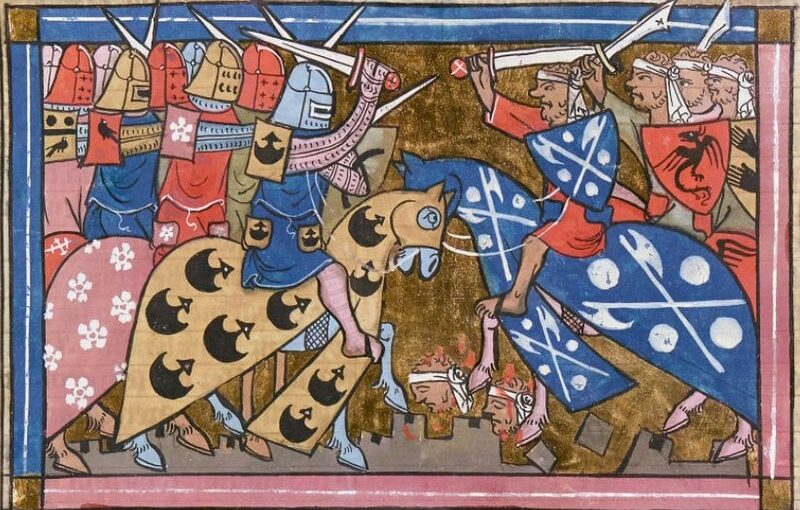
I am quite familiar with History of England and Europe since even before my teens. That was because my father had beautifully illustrated school History text books from England. Plus many historical novels eg Walter Scotts The Talisman which is set in Palestine during the Crusades. I read them all many times over as nothing better to do as no TV then in SL till 1977.
Let us start with the historical Jewish Diaspora. Historical as verified from sources other than the Bible. The Romans controlled the middle east around 1 BC. (Think Julius Caesar and Cleopatra an Egyptian Queen of Greek Origin)
To quote
Asia Minor after the Macedonian Wars (214–148 B.C.). In 63 B.C. The defeat of the Carthaginians gave Rome almost complete control of the Mediterranean. Romans conquered most of Asia Minor in 188 B.C., Syria and Palestine in 64 and 63 B.C.
In 70 C.E. (a few years after the purported passing of Jesus Christ the Romans Destroyed the Judaism Temple in Jerusalem. Apparently this ended the ability to make animal sacrifices to God (Yahweh). Plus the Roman persecution of the Jews and Judaism led to their disperal from Palestine, i.e. the Diaspora
Note: There is no evidence of a Kingdom or Country called Israel in any of the Historical or Pre-historical records of the Babylonians and Assyrians. There was region called Palestine (Palaistinê, Παλαιστῑ́νη) since at least since the Greek times. The word Israel became considered “Fact” when Europe became Christian and the Bible an accepted source of fact given by the Divine. The Jews became notable and rich because they were money lenders. Christians (and Muslims) are forbidden to lend money on interest (usury). Think Merchant of Venice and Shylock the Jew
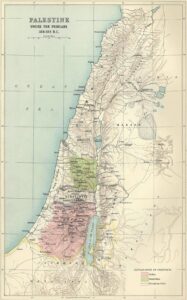
Now to the The Crusades
There were three Crusades,
First Crusade (1096–1099)
The Crusades were purpotedly to recapture Jerusalem and have it under Christian Rule. But more likely to get back two-thirds of land held by Christians that had been conquered by Muslim forces prior to the First Crusade . The Crusaders successfully capture Jerusalem and establish the Crusader States
The Second Crusade (1147–1149)
Was announced by Pope Eugene III, and was led in the east by European kings Louis VII of France and Conrad III of Germany, with help from a number of other European nobles. It ended with Jerusalem capitulating to Saladin. His forces then spread north to capture all but the capital cities of the Crusader States, precipitating the Third Crusade
The Third Crusade (1189–1192)
This is the Crusade I am most familiar, as it features heavily in English novels and English school text books.
The main characters in this Crusade are King Richard I of England, King Philip II of France, the Knights Templar and Saladin Sultan of Egypt and Syria. Ended with Saladin Regaining Palestine Including Jerusalem and Egypt
.
King Richard I of England
The English lionize King Richard the Lion Heart. In reality he was a bad King for England. Spending most of time in France (Aquitane) and on the Crusades. England was used as piggy bank to fund the Crusade and his Ransom. The burden was on taxes for peasants. Like the US and its forever wars funded by debt which is an indirect funding paid by the average person. However, considered brave and handsome “He was tall, of elegant build; the colour of his hair was between red and gold; his limbs were supple and straight”
Note: Both King Richard, King Philp II and all other Christians in Western Europe were Catholic. The Anglican Church (Church of England) and Protestant Churches were founded centuries later.
King Philip II of France
After Richard became king, he and Philip agreed to go on the Third Crusade, since each feared that during his absence the other might usurp his territories. the son of Louis VII and Adela of Champagne. He was nicknamed “Dieudonné” (God-given) being the first born son, arriving late in his father’s life.
In Contrast to Richard I, Philip II transformed France into the most prosperous and powerful country in Europe. He checked the power of the nobles and helped the towns free themselves from seigneurial authority, granting privileges and liberties to the emergent bourgeoisie.
Sultan Salah ad-Din (Saladin) of Syria and Egypt
Saladin was a Sunni Muslin and a Kurd (an Iranian Tribe). Under Saladin’s command, the Ayyubid army defeated the Crusaders at the decisive Battle of Hattin in 1187, capturing Jerusalem and re-establishing Muslim military dominance in the Levant. Although the Crusaders’ Kingdom of Jerusalem persisted until the late 13th century, the defeat in 1187 marked a turning point in the Christian military effort against Muslim powers in the region. Saladin died in Damascus in 1193, having given away much of his personal wealth to his subjects.
Richard proposed that his sister Joan should marry Saladin’s brother and that Jerusalem could be their wedding gift. However, Saladin rejected this idea when Richard insisted that Saladin’s brother convert to Christianity. Richard suggested that his niece Eleanor, Fair Maid of Brittany be the bride instead, an idea that Saladin also rejected. These stories are featured in Walter Scotts The Talisman.
Saladin was widely renowned in medieval Europe as a model of kingship, and in particular of the courtly virtue of regal generosity. “Indeed, it is somewhat ironic that the Muslim leader became one of the great exemplars of chivalry in 13th century European literature. Much has been written about the sultan during his own lifetime and since, but the fact that an appreciation for his diplomacy and leadership skills can be found in both contemporary Muslim and Christian sources would suggest that Saladin is indeed worthy of his position as one of the great medieval leaders.”
Some other Tidbits
Damascus Steel
Saladin and his armies were reputed have swords light and sharp. So sharp that with with a flick of the wrist it could cut a silk scarf that was resting on the sword blade. Now it is considered to be Wootz Carbon Steel that was made in South India and Sri Lanka. The other advantages were the lithe fast Arabian horses. In contrast the English had Iron Amour and big heavy Iron swords. Both needed big horses ill suited to the hot mid east climate
Saladin Tithe
A tax of of 10% on revenues and movable properties in England and France. Another massive tax was imposed on England in order to raise King Richards ransom money at the much higher rate of 25%.
Saladin Armored Car (Irony)
FV601 Saladin is a six-wheeled armored car developed by Crossley Motors and later manufactured by Alvis.
The Saladin also spawned an armoured personnel carrier counterpart, the Alvis Saracen
Not many Pure Arab Caliphs
Many of the Caliphs or Sultan of the Islamic Empires were not proper Arabs, Kurds (an Iranian Tribe) , Turks and children of concubines, typically Circassian or Persian (Circassians are considered extremely beautiful and desired in the Mid East). Quite similar to the Moghul (Mongol) Kings marrying Persian/Iranian women. Probably to end up with light skinned children, permanent Fair and Lovely. A modern day example is King Farouk, the last effective King of Egypt, He had Albanian, Circassian, Turkish, French, Greek and Egyptian ancestry
Scheherazade
The Legendary Queen who is the story teller of Thousand and One Nights (Arabian Nights). Her name is from the Middle Persian name Čīhrāzād, which is composed of the words čīhr (‘lineage’) and āzād (‘noble, exalted’). Many of the stories are set in Caliph Hārūn al-Rāshīd’s (766 – 809) court. Harun Al Rashid too was born in Tehran, Iran

This requires more context:
Restrictions kept Jews urban and blocked many occupations. They couldn’t own land, barred from craft guilds, forced to live in designated areas, couldn’t employ or eat with Christians etc. Their existing religious emphasis on literacy gave advantages in trade, medicine, and administration. Some with capital/connections entered moneylending because Christian usury laws created opportunity and few alternatives existed.
Lots of Jews, like almost everyone else in pre-modern societies, were poor.
What I am getting at is that some Jews did became conspicuous due to their wealth, but then, as now, this was a minority. And this visibility made all Jews, rich or not, in their ghettos, a target for persecution and pogroms.
Shylock from Merchant of Venice, demanding his pound of flesh, reinforces the stereotype.
Phoenicians were merchants; there is a theory about how modern Jewry, may have roots in Phoenicians.. the genetics don’t necessarily contradict it
Could be.
Armenians, Jews, Parsis – all landless or nationless communities, they became master traders. For Parsis and Armenians, their hey day was under the British Empire in India and SE Asia. There’s a story to be said there.
Post-partition Hindu Sindhis too could be in that list. Iirc in Lee Kuan Yew’s biography, he tells his preferred Indians in Singapore were Tamil Brahmins (or Tamils?) and Sindhis.
TamBrams went outside of Tamil Nadu (to SL & Malaysia)
As far as I know Tamil Brahmins did come to SL as trades, at least not in visible numbers.
A few Tamil Brahmins were EMPLOYED as Priests at Sri Lanjan Tamil Vellala owned Temples
Vellala: Farmer caste considered the highest caste in SL. 50% of the population. The same among the Sinhalese, the caste is called Govigama.
For Parsis and Armenians, their hey day was under the British Empire
The Tata’s and Sasoons made their millions trading Opium in China
Sasoons: Iraqi Jews
Tata’s: Parsis
Indians in Singapore were Tamil Brahmins (or Tamils?)
It was the Sri Lankan Tamils (Sudras) who went in as white collar Employees for the British/ eg Rajaratnam the Foreign Minister of Singapore
They got selected because they had very good English skill. Two of my fathers cousins went to Malaya pre WW2.
They are no longer a visible community as the assimilate, marry other groups, mainly Chinese and now Europeans.
The South Indian Hindu Tamils who were taken as Indentured workers are still visible as separate specially as they celebrate Hindu festivals
The Jaffna Tamil community offers a compelling narrative of migration, showcasing a remarkable trajectory from agricultural origins in Jaffna to attaining middle-class status within just half a century in Malaysia. Yet, equally intriguing is their rapid ascent from clerical and junior civil service positions to prominent roles in the professional sphere.
https://sangam.org/from-jaffna-to-malaya-the-unseen-architects-of-modern-malaysia/
.
[…] Roman Palestine and the Crusades September 29, 2025 […]
Lots of Jews, like almost everyone else in pre-modern societies, were poor.
In my opinion there is an inherent issue with Jews. They are unable to coexist with others. Not just recent over the centuries.
I ascribe it to their religious dogma of being “Gods Chosen”. It is probably good when as a community they are oppressed and discriminated.
That kind of “victim mentality” combined with “Being a Chosen People” is really bad when they have power or even equal rights.
If you go through the Judaism part of the Bible (Torah is also known as the Pentateuch) there is no mention of Tolerance, Compassion or Empathy
Very visible in Israeli Society which very visibly does not have Tolerance, Compassion or Empathy
Keep in mind the The Torah (and Bible) advocates Ethnic Cleansing and Genocide
1 Samuel 15:3: Now go and smite Amalek, and utterly destroy all that they have, and spare them not; but slay both man and woman, infant and suckling, ox and sheep, camel and ass.
I do not think it’s because of the Torah.
After all the jews in France /Germany were very secular and considered themselves deeply, integrally, French/German. And yet, they were targeted, with ancient blood libels and vendettas, whatever their religious observance.
It’s the Nazi and European experience that made them extremely paranoid about having their own country. That means a political environment that doesn’t allow any compromise on ensuring the Jewish demographic and political dominance over others in their state.
And in this, they are like most other humans: tribal. As with Sinhalas in Jaffna, or the Burmese in Arakan, or the Punjabis in East Pakistan. Or the various ethnic kangings in different parts of India.
PTSD?
let’s try to avoid anti-semitism pls