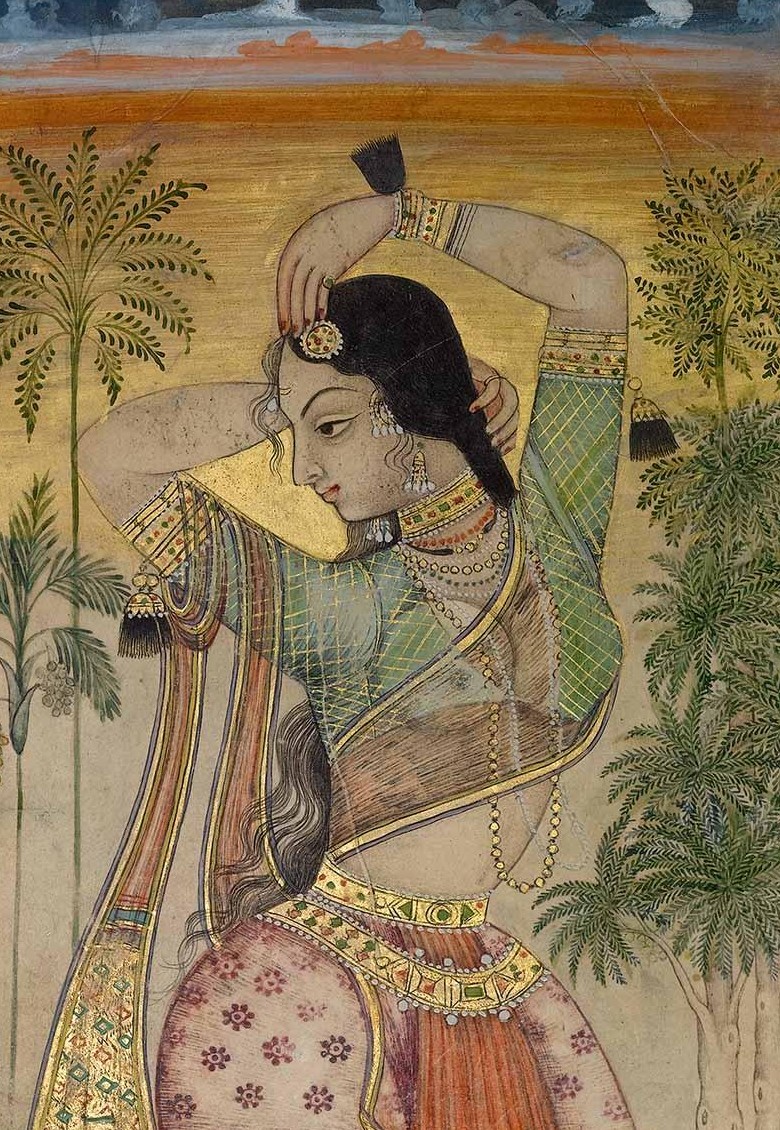
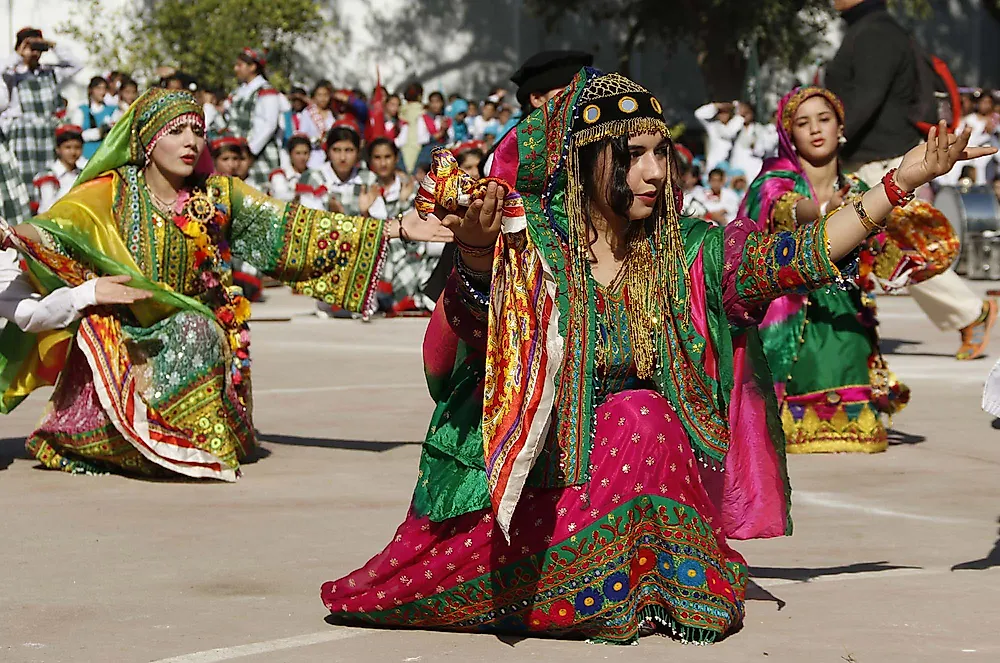
Reading Sophia Khan’s superb piece on the lost Muslim cities of Hindustan, and then watching the BP comment-thread unfold, a few thoughts crystallised for me; less about “ownership,” and more about the intellectual pattern that keeps resurfacing whenever Indo-Muslim history is discussed.
First: I genuinely did not know that Khan was originally pronounced with a silent n, nor that paan had such a deep Islamicate turn in its social history. Much like music, I had long assumed paan to be a largely Hindu-coded practice. The article forces a re-examination of how intertwined everything actually was. The same goes for Hindustani music: I once thought of it as essentially a Hindu, temple-rooted tradition. Then you realise how much of the courtly synthesis, Persian, Hindavi, Turko-Central Asian, was shaped by Muslims, even if the Vedic lattice underneath remained foundational.
This is partly why I found Bombay Badshah’s objection (“Pakistan cannot claim any of this”) an odd line to draw. One can, of course, make the territorial argument; but it collapses immediately once you observe what India itself is doing: aggressively appropriating the Indo-Muslim aesthetic while deracinating its historical context. If Bollywood, tourism, cuisine, and the Indian cultural machine can freely claim Delhi, Lucknow, Agra, and Hyderabad as national inheritances, then Pakistanis whose families actually come from those cities are hardly crossing an intellectual red line by acknowledging lineage, memory, or loss.
And we have to be consistent. Indians lament the loss of Lahore; quite understandably. Nobody tells them, “Lahore was never part of the Republic of India founded on 15 August 1947.” Because everyone grasps the point: cultural grief predates and supersedes the modern nation-state.
Second: there is a broader dialectic underway. In Pakistan, writers, often for the first time, are producing a serious discourse about Indo-Muslim civilisational memory, unlinked from 20th-century nationalism. Simultaneously, India is engaged in an equally deliberate Hindification of formerly Muslim cultural zones. You can see it in cuisine, music, clothing, architecture, historiography; everything. Andalusia is a useful analogue here. As Fernández-Morera notes, modern Western academia mythologised Islamic Spain to advance a progressive narrative; Hindu nationalists today perform the inverse manoeuvre: they flatten the Indo-Muslim centuries into caricature so that modern majoritarianism appears as a “restoration.”
But both moves share the same flaw: they refuse to look at the subcontinent as it actually existed; messy, syncretic, violent, generative, hybrid, and impossible to reduce to one parentage.
Finally, and this is perhaps the quiet truth beneath all this chatter, most of us in this conversation are no longer fighting for these identities. I’ve moved fully into a civilisationally Hindu orientation; others into hyper-Islamic, secular, or diasporic ones. None of these debates are “hills to die on.” They become interesting only when the commentariat starts to polarise, or when a genuinely new insight surfaces, such as the Afghan provenance of so much North Indian Muslim elite culture, or the fact that classical paan, like classical music, flourished within an Islamicate context as much as a Hindu one.
The real point is simple: if India is free to selectively exalt pieces of this shared inheritance while discarding their historical custodians, then Pakistanis with genealogical and cultural ties to those cities are more than entitled to remember, and to claim, what their families carried into exile.
To deny one while permitting the other is not history.
I find the whole question of “ownership” kind of silly. The modern nation-states of “India” and “Pakistan” haven’t even been around for 80 years. The culture is much much older. Hindustani classical music belongs as much to Pakistanis and Bangladeshis as it does to Indians. It’s a different matter that in today’s Pakistan many people don’t believe Hindustani music is part of our culture (or they try to label it “Pakistani classical music”).
Urdu is another example. Who owns Urdu? It is the national language of Pakistan but historically it evolved in the area around Delhi, where it was the prestige dialect of Khari Boli. So is Urdu “Indian” or “Pakistani”? At a certain point this argument becomes ridiculous. Unless, of course, one is pushing the Indian nationalist argument to its extreme to say that there is nothing that is genuinely part of “Pakistani culture” since “Pakistan” was historically just Northwestern India.
I found BB’s argument to be disingenuous at best. Both modern nation-states were created at exactly the same moment. Lahore has never been part of “India” (it was part of BRITISH India, the Mughal Empire etc). Sindh has never been part of “India”. That doesn’t prevent Indians whose families are from those areas from longing for their lost homeland. The same applies to Pakistanis whose ancestors were from the UP. This is perhaps compounded by the fact that Hindus and Sikhs lost just one cultural capital (Lahore) while Muslims lost Agra, Delhi and Lucknow–all major Islamicate cultural capitals.
On the question of “ownership”, Faiz Ahmed Faiz wrote in his 1968 Cultural Report:
You are the one being disingenuous.
The Republic of India is the “successor state” of “British India”.
Why did ROI get the UN membership, the sports records etc (which still persist to this day) and Pakistan had to start from scratch in 1947 if both countries were created “at the exact same moment”?
Using your logic, wasn’t the current Pakistan “formed” in 1971?
Dr. Masood Tariq writing about cultural colonization of native tongues of pakistan by urdu. interesting read.
https://www.facebook.com/story.php?story_fbid=10163226595884089&id=643904088&post_id=643904088_10163226595884089&rdid=liXbKZqVf0fcJ5CH#
just i am cutting and pasting!!. the comments to his post are really colourful!!
Cultural Colonisation at Home: How Urdu Reshaped Pakistan
By: Dr. Masood Tariq
Date: September 5, 2025
In the history of nations, language is never merely communication. It is the mirror of culture, the keeper of memory, and the instrument of power. To weaken a nation, one must first weaken its tongue.
The British wielded English and the ICS exam to manufacture a loyal elite. The Mughals used Persian to consolidate their empire. After 1947, the Urdu-speaking Ashrafia from UP and CP — without land, tribal base, or demographic majority — relied on one weapon: Urdu. Through it, they sought to dominate a state of many nations.
Urdu was declared Pakistan’s official and later national language immediately after independence. The centrality of Urdu was dramatized in Dhaka in March 1948, when Muhammad Ali Jinnah, speaking in English, told an audience of Bengali students:
> “Urdu, and only Urdu, shall be the state language of Pakistan.”
For Bengalis, who made up 56% of the country’s population, this was a profound insult. Bengali, one of South Asia’s richest languages and the language of Rabindranath Tagore, was dismissed as unfit for a Muslim nation. To reject the language was to reject the people themselves.
The Bengali Martyrs of 1952
On 21 February 1952, Bengali students in Dhaka defied curfew to demand recognition of their mother tongue. Police opened fire. Salam, Rafiq, Barkat, and Jabbar fell dead.
One mother, holding her slain son, cried out:
> “They killed my boy because he spoke my language. What kind of country kills its children for speaking the words of their mothers?”
Her cry became immortal. It reminds us that language is not merely politics but love, belonging, and dignity.
Punjab: The Silenced Majority
If Bengalis resisted loudly, Punjabis were silenced quietly. Courts, schools, and offices expelled Punjabi. Lahore, once the city of Bulleh Shah and Waris Shah, was reshaped into an Urdu-speaking center.
A displaced farmer from Amritsar in 1947 later recalled:
> “In Lahore, I could not claim my land in my own tongue. The court clerk told me: ‘Speak Urdu, or your file will not move.’ That day I felt a refugee in my own Punjab.”
Punjabis gained power through numbers and the military but lost their cultural soul. Their mother tongue became invisible in schools, courts, and government.
Sindh: Pride Under Siege
Sindhi had ancient roots: the poetry of Shah Latif, a script older than Urdu, and schools where Hindus and Muslims alike studied in their mother tongue. Partition, however, shattered this balance. Sindhi Hindu Sammats — teachers, publishers, professionals — were driven out. Migrants filled the vacuum.
A Sindhi schoolteacher in Hyderabad remembered 1949:
> “My Sindhi textbook was taken from my hands. The inspector said: ‘From now, only Urdu.’ I felt as if my tongue had been cut out in front of my students.”
In 1972, Sindh’s assembly passed the Sindhi Language Bill to assert its heritage. But Urdu-speaking groups rioted. Karachi and Hyderabad burned. The struggle for Sindhi identity turned violent in Sindh’s own homeland.
Balochistan: Excluded from the Beginning
Balochi was almost entirely absent from schools and administration. Urdu monopolized official life. For Baloch children, the classroom became a site of shame.
A student from Kalat later wrote:
> “On the blackboard the teacher wrote in Urdu. I could not read a single word. He called me stupid. I walked home crying, ashamed not of ignorance but of being Baloch.”
Such exclusion planted the seeds of long-term alienation and resistance.
Pashtun Lands: Tradition Marginalised
Pashto, rich in oral poetry and resistance literature, was dismissed as unsuitable for governance. The dismissal of Dr. Khan Sahib’s elected government in 1947 underlined this marginalisation.
A Pashtun elder from Charsadda told a researcher:
> “Our children recite Khushal Khan Khattak at home, but in school they are punished if they speak Pashto. The state teaches them that their father’s language is a crime.”
For many Pashtuns, language suppression was inseparable from political suppression.
The Human Cost of Linguistic Domination
The voices of a Bengali mother, a Punjabi farmer, a Sindhi teacher, a Baloch child, and a Pashtun elder reveal a common truth: the suppression of language is the suppression of dignity. Identity is not just politics; it is love, family, and belonging.
Consequences of Linguistic Hegemony
The imposition of Urdu fractured Pakistan’s federal compact:
1. Bengali Alienation — The 1952 Language Movement planted the seeds of 1971.
2. Punjabi Silence — Political strength was gained, but cultural voice was lost.
3. Sindhi Resistance — The 1972 Language Bill defended Sindhi but provoked ethnic riots.
4. Baloch and Pashtun Anger — Exclusion deepened alienation and insurgency.
Conclusion: A Hijacked Identity
Colonizers have always imposed their languages. In Pakistan, the colonizers were not Europeans but Urdu-speaking migrants from UP and CP. Their conquest was cultural rather than territorial. By elevating Urdu as superior, they excluded Punjabi, Sindhi, Balochi, Pashto, and Bengali from state power.
The echoes of mothers, farmers, teachers, children, and elders across these nations testify that Pakistan’s tragedy was not only political but cultural. The survival of its nations depends on reclaiming their voices.
India “owns” Indo-Muslim legacy simply because most “Hindustani” Muslims did not migrate and are Indian citizens.
Mohajirs in Pakistan are currently 7-9% of the population (around 25 million) and decreasing cause they have lower TFR than Punjabis and Pathans (Simply because Muhajirs are an urban group in Pakistan. Unlike Punjabi/Pathans they don’t have a rural component to keep feeding their urban centres as their rural brethren remained back in India). In fact, in the long run Karachi might become “Sindhi” again which it hasn’t since 47.
UP itself has more Muslims than that, all of whom are “Hindustani” Muslims. Add in Delhi, Rajasthan, Bihar, MP etc. It’s a no contest.
“Actual” Pakistani culture is Punjabi culture like Maula Jutt and Pathan culture. Muhajirs had first mover advantage in Pakistan because of being relatively more educated and hence their culture was at the forefront in the early days but now as they decrease in numbers and the other groups become richer, their culture shines through more and Pakistan diverges further from “Hindustani” culture. This is similar to how Brahmins flourished in the early days of India.
The biggest Urdu festival in the world is Indian, not Pakistani. You have Indian Muslim comedians like Zakir Khan who are the biggest Urdu comedians. As India’s economy increases and Indian Muslims climb the economic ladder (along with everyone else), Indian Muslim culture will become its own subculture like African American culture.
India is the sole continuing state of British India. Pakistan is a new state created in 1947.
This conclusion rests on four settled facts in international law:
Therefore: In the eyes of the international system, British India did not “split” into two successor states. It continued as India, with Pakistan seceding.
This is not interpretive. It is the exact legal status recognised by the UN, the Commonwealth, and all state-succession jurisprudence.
“India” did not exist as a nation-state before August 15, 1947. British India was not the Republic of India. This is why statements like Lahore was part of India or Rajnath Singh’s comment that Sindh will “return to India” are ridiculous.
in Law it did
I’m saying something different. It wasn’t a nation-state. It was a British colony. Those are two very different things.
Yes but Kabir u r wrong .. ROI is considered to be the legal successor to British India.
For instance when Bahadur Shah’s tombs had to be refurbed; Myanmar liaised with India not Pakistan as ROI was seen as the legal successor to even the Mughal Empire
I have no issues with that.
It is a historical fact that the nation-states of “India” and “Pakistan” were created at the exact same time. I am only disputing the ridiculous Indian nationalist contention that Pakistan is some fake thing and India has always been there.
We need to be careful with our terminology. When we mean “British India” we should use that term. When we mean the nation-state of “India” we should clarify that.
“Lahore was part of India” is a historically incorrect sentence.
You want to have it both ways.
If India was “formed” in 47, Pakistan was “formed” in 71 when more than half the population left.
If Pakistan was “formed” in 47, India got “independence” in 47.
Any logic you use for one contradicts the other.
India has always been there just like Russia has and China has, just in different forms.
Like @X.T.M mentioned, Myanmar got in touch with ROI.
Even the French government liaisons with the Indian government to honor the “Indian” soldiers of WWI.
Lahore was part of “India”, not ROI but “India”.
OK. You clearly don’t understand the difference between a nation-state and a colony. This is a pretty elementary difference.
Lahore was part of BRITISH India. To say anything else is a-historical and incorrect.
There was NO “India” before August 15, 1947.
You keep trying to argue that Pakistan was “formed” in 1971. This is a ridiculous argument. There was a nation-state of Pakistan formed on August 15, 1947. East Pakistan seceded from Pakistan in 1971 to form Bangladesh.
Secession is possible from a nation-state not from a colony.
“British India” was a “nation state”. Not an “independent” one but it was a state as can be seen with its UN membership and institutions/sporting teams separate from Great Britain.
So “India” existed before 1947.
British India was a colony. The hint is in the name BRITISH India.
If you don’t understand the difference between a nation-state and a colony, there is really no point discussing this with you. Believe what you like.
I don’t know Kabir u r flogging a dead horse here
I don’t know what that means that Lahore was part of “India.”
that is conflation
it is not; as British India is the legal predecessor of ROI.. but yes I do agree it was under the British Administration as opposed to ROI but I don’t see the point of the discussion tbh
All I am saying is that a colony is not a nation-state. This is not a matter of opinion. Anyone with a high-school level understanding of history knows that BRITISH India was a colony and not a nation-state.
It was the colony that was divided into the modern nation-states of “India” and “Pakistan”. This is a historical fact.
The Indian nationalist position that India was always there and that Pakistan is artificial is deeply offensive to Pakistanis.
I don’t know if it was a colony exactly. it’s legal status is more nuanced than that.
don’t manufacture offence pls
We’re seriously questioning whether British India was a colony? It was literally called the British Indian Empire.
I am extremely offended by the Indian nationalist argument that Pakistan is artificial while India is not. This is a-historical and frankly no serious intellectual would agree with it.
Reality does not care for the sensibility of deluded Pakistanis.
Once again, all serious intellectuals agree that the modern nation-states of India and Pakistan were created at the same time on August 15, 1947. BRITISH India was not a nation-state (neither was the Mughal Empire etc).
You are free to hold beliefs that go against the academic historical consensus but that makes you the deluded one.
I don’t understand; Pakistan was literally invented in a 1930’s pamphlet
India has been a reality since the IVC?
I am talking about NATION-STATES. Both Nation-states were created at the exact same moment: August 15, 1947. This is the historical consensus.
The IVC was not a nation-state. Neither was the Mughal Empire. Neither was British India.
This is simply a fact not a matter of opinion.
Don’t use caps locks please
Kabir is not wrong in everything
that makes no sense
below is cut and paste from praveen swamy’s article on maoism, in the print.
the question is who owns razakar’s legacy? owasi family certainly.
Little imagination is needed to understand why the Sangham, or Maoist squad, was welcomed into the alien Adivasi milieu. The uprising had been driven by the brutalities of the Nizam’s rule, Communist leader Puchalapalli Sundaraiah has written. Dalits were bound by vetti—forced labour demanded from each family. Landlords claimed a portion of the toddy, the cloth produced by weavers, and the labour of carpenters and ironsmiths. Members of landlord families were carried across villages on the backs of Dalits in palanquins.
Communal tensions sharpened the conflict. “The Nizam and his mullahs tried to instil a feeling that the Muslims were the ruling class,” Sundaraiah wrote. In response, Hindu business interests and Arya Samaj activists rallied the so-called “Hindu masses” against “Muslim oppressors.”
Arming themselves with traditional muzzle-loading hunting guns and modern weapons looted from police, the Communist Party of India began a guerrilla war against the Nizam, his Razakar militia, and the landlords supporting the regime. Razakars retaliated by massacring villagers, Communist leader Ravi Narayan Reddy recorded, burning settlements, executing suspects, and burying people alive. In one incident, more than 50 young men were lined up and shot.
https://theprint.in/opinion/india-long-war-with-maoists/2802647/
a i c c president mallikarjuna kharge’s family and his house were burned by razakars, he is tongue tied even to mention this ( as not to hurt muslims) , and yogi had to remind him.
hyderabad was liberated in 1948, karnataka’s congress governments were not even commemorating this vent till b j p made noises!!!.
muslims in india have to address the bad effects muslim rule had on hindus. just sugar coating as done for akbar and tom tomed by liberal hindus will not get a closure. no amount of flowery urdu, bowing down with long shewanis will help.
I think while Muslim-Dalit relations do sour since they closely overlap; they do also have similar interests