15 Years of Brown Pundits: A Platform, a Posture, a Proof

On 28 December 2010, the question was not ideology or politics, but naming.

brownpundit(s). brownguru(s). brownsmarts. brownfolks. brownidiots.

The instinct was already there: reclaim brown without asking permission, and refuse the performance of respectability that so often polices minority intellectual spaces. The reply came quickly and decisively.

Brownpundits.

The first post, Hello World, went live on 30 December 2010. Fifteen years later, what matters is not that a blog survived. Many do. What matters is how it survived: without institutional backing, without funding, without ideological capture, and without deference to credentials masquerading as truth. Brown Pundits was never designed as a platform for prestige. It was designed as an intellectual retreat; a place where arguments stand or fall on substance, not accent; where brownness is neither explained nor apologised for; where disagreement is not heresy. That posture, upright, unbought, unafraid, is why Brown Pundits still exists.

A Discipline, Not a Brand

Brown Pundits began with a simple wager: that the English-language internet still had room for a South Asian intellectual space that did not need permission. No institutional sponsor. No ideology police. No professional incentives. Just writers who believed that brown questions, Indian, Pakistani, Bangladeshi, diasporic, could be argued in public with rigor and dignity. Fifteen years on, Brown Pundits remains. That endurance is not luck. It is structure. We lasted because we never built this as a brand. We built it as a discipline.

The point has never been agreement. The point has been posture: stand upright, test claims, correct errors, refuse theatre. Independent platforms fail for predictable reasons. They chase virality. They harden into faction. Or they monetize attention until thought becomes marketing. Brown Pundits avoided those traps by being unusually boring in the right ways: we publish, we argue, we edit, we keep the record. Nobody here is paid to write. That is not moral vanity. It is why we remain unpurchasable.

Five Years of Solidarity

Over the last five years, some of the most important work has not been online at all. It has been the steady, unglamorous work of civic seriousness: reading dense documents, tracking deadlines, understanding procedure, and watching institutions scramble when they assume nobody is paying attention. During this period, there has also been sustained dialogue with a small circle of intellectually serious allies; quiet, exacting minds with a gift for clarity under pressure and an instinct for how power hides behind process. Not public figures. Not brands. Just adults: difficult to gaslight, uninterested in theatrics, precise about the record.

That kind of solidarity resets the baseline. You stop mistaking polish for integrity. You stop confusing titles with truth. You learn to clock everything. You learn that the record is not drama; it is protection. That discipline carries back into Brown Pundits. It shows in how disputes are handled, how errors are named, and how authority is tested rather than absorbed.

The SD Episode as Proof

The recent SD exchange was not, in the end, about architecture. It was about authority: who is allowed to explain, who is expected to absorb, and what happens when the subject speaks back. We engaged the way Brown Pundits always has. We read closely. We identified the errors. We insisted on precision. We treated the exchange as part of the record, not as outrage content. What mattered was not that corrections were made; corrections are normal and welcome.

What mattered was the instinct that surfaced at the start: revise quietly, respond pedagogically, assume the critique will not notice the shift. That instinct is older than any one writer. It is a patterned behaviour in how authority manages challenge in brown-facing spaces. And yet, precisely because Brown Pundits exists, the record held. The language moved. The posture changed. This was not a “victory.” It was proof of concept. The platform did what it is meant to do.

“Brown” Is Not an Ethnicity; It Is a Civilizational Composite

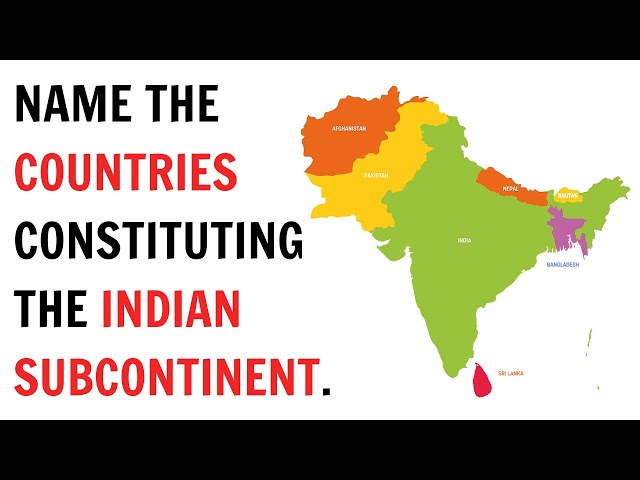
The deeper reason Brown Pundits still matters is that brown is not a neat identity. It is not a single bloodline, doctrine, or grievance. It is a civilizational composite with a long memory and a hard geography. The Indian subcontinent is layering, not essence:

  • ancient coastal and inland populations

  • Dravidian continuities and transformations

  • Aryan synthesis and institutionalisation

  • Islamicate overlays that became native in texture, not merely foreign in rule

  • British power, whose administrative afterlife still structures class and accent

And beyond this lie the East, the Northeast, the mountain corridors, the sea routes. This is why Brown Pundits resists simplification. The subcontinent is not a monoculture, a single trauma, or a single pride. It cannot be narrated by those who treat it as a site for extraction; political, academic, or aesthetic.

What Fifteen Years Means

Fifteen years is long enough to know what this site is for. Not fame. Not power. Not money. Not outrage. Those are cheap forms of relevance. Brown Pundits exists to keep an alternative alive: an intellectual retreat on the open web where brown life can be examined with seriousness; where hierarchy is not mistaken for truth; where criticism is not treated as insolence; where the record matters. We are not untouchable, and we do not aim to be. But we are not easily compromised, because everyone here has a life outside the internet. That is our freedom. Fifteen years on, the mission remains unchanged:

Stand upright | Read closely | Correct what is wrong | Refuse permission structures | Keep the record |

That is why we are still here.
Sanjeev Sanyal on the generational shift in India

Sanjeev Sanyal is somewhat… infamous as one of the flag-bearers of the Indian Right wing. A longform interview where he talks about citation laundering, the misrepresentation of Emperor Ashok, the machinations of ranking Indian democracy and credit sovereign ratings. Its indeed quite laughable if press freedoms in Pakistan and Afghanistan end up being rated higher than India.

The recent Barabar caves kerfluffle on BP came to mind while listening to him.

Why Pakistani Liberals Remain a Colonised Intellectual Class

The exchange (which has now been removed after mutual agreement) that just unfolded was not about architecture. It was about authority.

SD made factual errors, quietly corrected them, and apologised in private. That should have ended the matter. Instead, the loudest resistance came from Kabir: a reflex insistence that disagreement was illegitimate because the author was “credentialed,” “Oxford,” and therefore beyond challenge.

This is the residue of colonisation. Pakistanis were not only carved out of British India; they were produced by the collapse of a Muslim ruling class already broken by the British after the destruction of Mughal power. What followed was not confidence but deference. The habit of looking upward, to Western institutions, American accents, British titles, for permission to speak. That habit persists. Continue reading Why Pakistani Liberals Remain a Colonised Intellectual Class

Dhurandhar Review

I finally saw the movie in a theater in central California (almost houseful) and here are my thoughts:

4 out of 5 stars.

Genre: Inglorious Basterds. This is a revenge fantasy. The Indian state did not (publicly) take revenge for the Kandahar Hijack, the parliament attack or the Mumbai attack. This bothers “Nationalist Indians” and one of them decided to make a fantasy movie about revenge being taken.. And he did a good job.

Storyline: Fantasy about an Indian super-agent sent to infiltrate Pakistani terrorist networks, ends up in Lyari in the most notorious criminal gangs in Pakistan, who turn out to be tangentially involved in Pakistani-sponsored terrorism (none of this has any connection with reality). Mumbai attacks make an appearance and that is the part of the movie that is closest to reality; the attackers did train in Karachi, the attacks really happened and they really did get massacre instructions over the internet during their “mission”. Whether Khanani was involved or not, I have no clue, but someone like him probably was involved in the overall jihad efforts, so those parts are not just fantasy. The role assigned to the Lyari gangs is pure fantasy though.

The rest is of course ALL fantasy. But as a movie, it works very well, as long as you keep in mind that this is a revenge fantasy on the lines of Inglorious Basterds, not some kind of historical movie or documentary. The love angle is the silliest part of the story, but it IS a fantasy and it’s a bollywood movie, so hardly unexpected.

The movie itself works very well as a movie. The stars all deliver good performances, and Akshay Khanna definitely steals the show. His portrayal of Rahman Dakait will live long and prosper. And Akshay is now a legit superstar in Lyari (you can check out reels from there to confirm this) and will be mobbed and much loved if he shows up there. Sanjay Dutt as SP Choudhry Aslam is outstanding and Ranveer does a good job as the hero.

The music is simply outstanding. The background score worked VERY well in the theater (so see with good speakers if you can) and the songs are all excellent and fit in well with the movie.

It is very much an anti-Pakistan movie, so I dont think patriotic Pakistanis will enjoy it too much, but if you are a normal working class Pakistani you can enjoy it and if you are from Lyari you will likely watch it again. With direct attacks on Pakistan as the world center of terrorism and thinly disguised portrayals of Asif Zardari and Nabil Gabol, it is absolutely no surprise that this was banned in UAE as well. In fact, ISPR will surely make a revenge fantasy of their own now (it will be mostly AI slop, but some actors will get such over the top dialogs that they will be entertaining, and some music may be good, that is my prediction about the revenge movie, and I am very sure it will get funded, but it will not match Bollywood in tech or production; my confidence that it WILL be made comes from the simple fact that the Pakistani deep state is VERY obsessed with making sure we always have a tit for every tat.. in this we are somewhat different from India, but closer to the world average).

Why did Dhar mix Lyari up in this story? And was that a good idea? I think he mixed in lyari because Lyari gang wars are fantastic movie material and even if there was no real connection with the anti-Indian terrorism, for a movie it was a good element to fit into the story. Those gangsters mostly did die horrible deaths in real life and this too fits in well with the fantasy story, but it is worth keeping in mind that this connection is almost certainly fictional (if anything, some of them were working for foreign agencies, for example Uzair Baloch was formally accused of working with Iranian intelligence).

I will make a prediction about Dhurandhar part 2. I think they will get many or most of the figures shown in this movie to be killed in the next one as revenge by “unknown gunmen”, though in real life the unknown gunmen have not struck down any of the big fish till now.

That this revenge fantasy got a LOT Of pushback from Indian reviewers and critics (on the basis that it shows Pakistan too negatively and is too jingoistic) is a tribute to the naivete and innocence of the reviewers and the ecosystem they live in. We Pakistanis had no idea we have so many friends in India 🙂

Overall: well worth a watch. Three hours do fly past. It is very well made and most people will find it enjoyable, but patriotic Pakistanis may want to avoid it if such things raise their BP.

These are a couple of videos about the reality of the Lyari gangs and how this movie is playing there.

Why Balochistan Is Not Kashmir

Also, wanted to add – Its arguably quite morally lazy to simply sweep the multi-generational struggle of the Baloch for self-determination – if not outright secession, that has repeatedly and consistently raised its voice in speech and in blood over the last 7-8 decades.

Nobody on BP outright denies or pretends that there disaffected secessionist tendencies do not exist in the Sunni Valley. Why then, are we going to pretend that the ‘troubles’ in Balochistan are somehow… inconsequential?

This growing tendency to treat every internal conflict in South Asia as if it were interchangeable with Kashmir (the “Sunni Valley“). This is a mistake, and in the case of Balochistan, a very serious one.

The distinction was once put very clearly to me by Benazir Bhutto herself. In the 1990s, while seeking international advocacy on Kashmir, she was asked by Saddam Hussein a blunt question: If we support Kashmir, why should the world not support Kurdistan? Her reply was immediate and precise. Kashmir, she said, is an international dispute. Kurdistan is not.

That distinction matters, and it still holds.

Kashmir is internationalized by design. It is anchored in UN resolutions, formal bilateral agreements, wars between recognized states, and sustained global diplomatic engagement. It belongs to the same narrow category as Palestine or Cyprus; flashpoints where sovereignty itself is contested between states and therefore cannot be reduced to a domestic matter. Continue reading Why Balochistan Is Not Kashmir

Pakistan Is Not About to Break Apart

There is a persistent habit, especially among our soi-disant commentators, of predicting Pakistan’s imminent disintegration. The arguments are familiar: Baloch insurgency, Pashtun irredentism, low Kashmiri fertility, economic weakness, and analogies to 1971. They are also, taken together, wrong.

To begin with, most people discussing Pakistan do not understand its internal sociology. They begin with a conclusion, “Pakistan is artificial and unstable”, and then select facts to confirm it. This is confirmation bias dressed up as analysis.

Consider the Pashtuns. The claim that they are natural irredentists misunderstands who they are and how they live. Pashtuns in Pakistan are not a marginal population looking across the border for salvation. They are deeply integrated into the Pakistani state, economy, and military. They dominate transport, logistics, security, and large parts of urban informal commerce. Large numbers have moved permanently into Karachi, Lahore, and Islamabad. Assimilation is not failing; it is proceeding at scale. Continue reading Pakistan Is Not About to Break Apart

A Republic Cannot Deport, Humiliate or “Outbreed” Its Own People

“We are not from Bangladesh. We are Indian. Why did they do this to us?”

That question should shame the Indian state. On the facts as currently established, Sunali Khatun, a pregnant Indian woman, her husband, and their child were detained in Delhi, deported across an international border without due process, imprisoned in a foreign country, separated, and left to survive on charity and court orders. Their crime was not illegal entry. It was speaking Bengali, being Muslim, and being poor. This was not a mistake or overreach. It was state violence carried out through paperwork and silence.

India has procedures for suspected illegal migrants

They exist to prevent this outcome. They were ignored. There was no verification with the home state, no due process, no public record, and no accountability. A family was pushed across a border, reportedly beaten when they tried to return, and abandoned. That is not law enforcement. It is expulsion by force. When a state confuses language with nationality and religion with foreignness, it stops governing and starts hunting.

Citizenship is not a favour

It is a legal fact. India is not meant to be a blood, language, or religious state. Citizenship is defined by law, not accent or poverty. When the weakest are forced to prove citizenship under duress while the powerful are never asked, law collapses into power. This is how republics rot: not through coups, but through habits.

This is not an isolated lapse of manners towards the Muslim minority

It is the same logic in a smaller, more public form. When a Chief Minister can pull down a Muslim woman’s veil at a government appointment ceremony, and senior ministers can defend it as “show your face” patriotism, the message is clear: Muslim dignity is conditional, and visibility is enforced, not consented to. The argument is always the same. It is dressed up as procedure, security, or “rule of law,” but it operates as dominance.

Muslim Identity is seen as a National Threat

Today it is a veil tugged down in a room of officials. Yesterday it was a Bengali-speaking family pushed across a border. In both cases, the state treats Muslim identity as an offence to be corrected in public, and citizenship as something that can be suspended by suspicion. This is how discrimination becomes policy: first through humiliation, then through paperwork, then through expulsion.

Bengal, like Kashmir, is not a border zone to be cleansed Continue reading A Republic Cannot Deport, Humiliate or “Outbreed” Its Own People

Pakistan and the Act of Union

A Cold Comparison, Not a Romantic One

There is only one historical analogy worth using when discussing Pakistan “rejoining” India: the Act of Union of 1707 between Scotland and England. Not Rome and Greece. Not Yugoslavia. Not German reunification. And certainly not civilizational nostalgia. The reason is simple. The 1707 Union was not about love, memory, or reconciliation. It was about bankruptcy, security, elite survival, and managed loss of sovereignty without humiliation. That is the only way such a union could ever happen.

Union Is an Elite Exit, Not a Popular Dream

Scotland did not join England because it felt British. It joined because it was broke. The Darien Scheme collapsed. The Scottish state was insolvent. The elite faced personal ruin. England controlled capital, markets, and trade. The Act of Union absorbed Scottish debt, protected elite property, preserved law and church, dissolved sovereignty while preserving status. The public opposed it. It passed anyway. Unions are not plebiscites. They are elite exits under pressure.

Pakistan’s Position Is Structurally Similar

Pakistan today is not Scotland in 1707. But the resemblance is close enough to matter. Pakistan is chronically indebted, permanently IMF-dependent, over-militarised by design, economically capped by scale and FX limits. It is run by elites whose lives are already offshore, Like Scotland, the state is failing faster than rents can be extracted, sovereignty has become expensive, security dominates fiscal policy and there is no credible independent growth path. This is not ideology. It is arithmetic.

Why India Is England in This Analogy Continue reading Pakistan and the Act of Union

Brown Pundits