Readers know I do not like to watch YouTubes, but Mukunda is a member in-good-standing of the community, and a great host of the Browncast, so I did watch it.
My general reaction is “OK.” I don’t see how it changes my own views much at all. We know that the arrival of Kurgan people into Europe between 3000 and 2500 BC was not accompanied by the “light chariot.” Rather, they arrived in wagons. As it happens, the steppe people replaced 50-75% of the ancestry in Northern Europe, and 25-50% in Southern Europe. Contrary to I’ve been led to believe from Hollywood films apparently the primary utility of the chariot is as a transport vehicle, especially on flat ground. The light war chariot is presumably a major improvement on the cart, but the difference was presumably quantitative not qualitative.
Mukunda says that another foundation has been ripped from the Aryan migration/invasion theory. I don’t see it that way at all, because I don’t really know that this theory has too many detailed foundations. Mukunda’s response is pretty common, and I think some of the discordances here is that Indians have been educated in a way where many specific elements of the theory are presented as definitively and finally true. On the whole of course, real science does not work that way.
Here is what I know as a geneticist and have seen in the data.
– Genetic ancestry related to Corded Ware/Sintashta people of Eastern Europe and Central Asia contributes about 10-30% of the ancestry in Pakistan and Northern India (depending on the population)
– Y chromosomal lineage R1a1a-Z93 is ~15-25% of the subcontinental haplogroups. This lineage was discovered first in the “forest-steppe” of Europe’s southeast fringe with Central Asia and the Caucasus
– There are very few (though there are some) mtDNA haplogroups in South Asia that are found in Sintashta-Andronovo graves
The Sintashta seem to date from 2400 to 1800 BC as a culture. Additionally, the evidence from Turan and Khorasan in the ancient DNA does not indicate much steppe ancestry before 2000 BC.
To be frank, without genetic data I would not find a population admixture of 10-30% from a steppe group into the northwest subcontinent plausible on the face of it. Perhaps 1-3%. But the data are what they are, and we need to accept them. It is also plausible to me that the initial waves of migration into South Asia were not quite as male-biased as we think, as the proto-Indo-Aryans may have mixed with eastern Iranian/Indus periphery populations before arriving into Punjab. This would mean the population displacement is actually higher in demographic terms. The figures above only give percentages of “steppe”, and assumes pure admixture, which seems unlikely to me.
One hypothesis is that the IVC people already spoke Indo-Aryan languages. Perhaps the newcomers from the steppe assimilated into the local substrate, taking positions at the top of the caste hierarchy? I am skeptical of this. The Indo-European languages don’t exhibit the right structure for this model, as the European ones don’t form a natural closely related clade against the Iranian-South Asian ones. Rather, Indo-Aryan and Iranian seem closer to the Slavic clade.
As for all the rest, the details are interesting to me, but I don’t rest my inference on that. To be frank, some of the claims remind me of arguments I had with Creationists twenty years ago. It seems that they thought I had a very specific idea of what evolution is in all its details, so refuting one element refuted the theory. But that wasn’t it at all. Evolution is a broader framework, and many of the details have to be worked out.
That’s my general attitude to the Indo-Aryan migration into the subcontinent. It’s probably the right model. And we’ve pegged some details down. But a lot remains mysterious. Could the “Out of India” theory be right? The probability is definitely higher for that than that evolution is wrong. But on the whole, I am skeptical.
Another BP Podcast is up. You can listen on Libsyn, Apple, Spotify, and Stitcher (and a variety of other platforms). Probably the easiest way to keep up the podcast since we don’t have a regular schedule is to subscribe to one of the links above!
You can also support the podcast as a patron. The primary benefit now is that you get the podcasts considerably earlier than everyone else. This website isn’t about shaking the cup, but I have noticed that the number of patrons plateaued a long time ago.
I would though appreciate more positive reviews! Alton Brown’s “Browncast” has 30 reviews on Stitcher alone! Help make us the biggest browncast! At least at some point.
This episode features Omar, Mukunda, and Akshar talking to Harsh Gupta, an investor and author. We discuss the big picture geopolitics of the Galwan clash in Ladakh, Indian civilization, and why Harsh is going long on India. Some positive vibes in a trying time for many!
Another BP Podcast is up. You can listen on Libsyn, Apple, Spotify, and Stitcher (and a variety of other platforms). Probably the easiest way to keep up the podcast since we don’t have a regular schedule is to subscribe to one of the links above!
You can also support the podcast as a patron. The primary benefit now is that you get the podcasts considerably earlier than everyone else. This website isn’t about shaking the cup, but I have noticed that the number of patrons plateaued a long time ago.
In this episode Razib talks to Kushal Mehra about their views on religion. Kushal discusses his transition from being a New Atheist to a Carvaka, and the differences between Dharmic and Abrahamic religions in his view.
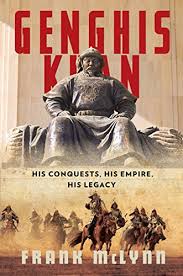
Today Genghis Khan is a hero in Mongolia. This, despite the fact that the rise of his Mongol Empire was associated with mass death. This mass death resulted in reforestation, which changed atmospheric CO2 levels.
During Genghis Khan’s lifetime, the most impactful and catastrophic conquests were of Central Asia and the obliteration of the Khwarezmian Empire. After the death of Genghis Khan, his heirs further obliterated the world of Islam, including killing the last significant Caliphs of the Abbassids. To a great extent, Genghis Khan ended with finality the world of the Iranian people of Turan, leaving the Tajiks as the Persianate rump. Economic historians have suggested that the destruction of Iranian agriculture (e.g., the qanat system) that occurred during the Mongol conquest was so great that the region did not recover until the modern era.
Muslim historians, some under the service of Mongol successor dynasties, have taken a mixed view of Genghis Khan and those who descend from him. On the one hand, their destructive impact is impossible to deny. The Mongols were one of the last of the steppe nomads to explode out of the Eurasian interior, but they were one of the largest military-political shocks, destroying multiple polities. But descent from Genghis Khan became prestigious in the Turkic world.
This is somewhat discomfiting and paradoxical because Genghis Khan was proudly pagan. And, it was not in dispute that the Mongol invasions had been brutally destructive. The prestige and glamor was clearly a nod to the fact that Genghis Khan’s conquests were evidence of glory sanctioned by God.
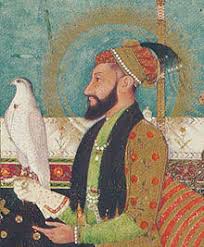
Despite Genghis Khan’s pagan beliefs, and the negative impact that the Mongol conquests had on Islam, somehow elements of Mongolic ruling culture became normative among the Muslims of Central Asia. This is how the name “Khan” became associated primarily with Muslims in the Indian subcontinent. Though there are non-Muslim Khan’s in South Asia, on the whole, the surname is associated with those of Muslim background, which is ironic given that it is a purely pagan title.
The details and subtleties of this history are on my mind because of the conversation I had yesterday with Neha Srivastava. It strikes me that in some ways she is haunted by history. In particular, the history of Turco-Islamic domination and brutality in the Indian subcontinent. She mentions offhand a Bollywood star giving her son the name Timur, which is reminiscent of a brutal Turco-Muslim conqueror, Timur the Lame.
This is where details became important. Neha no doubt remembers the brutal sack of Delhi. Though most of the dead were not Muslim, it is important to remember that Timur’s target was a polity ruled by Turco-Muslims, like himself. Importantly, and ironically, despite being a Muslim, Timur the Lame wrought his destruction exclusively in Muslim lands, or lands ruled by Muslims (India).
Though many facts of history are beyond dispute (e.g., Timur’s sacking of Delhi), the valence with which we recollect them varies. The Mongols view Genghis Khan as a great leader and a cultural figure of worth and note. Muslims take a more mixed view. Meanwhile, for European Christians and the Chinese, the Mongols are a purely destructive force. Whether the Mongols and Genghis Khan are worthy and of admiration is clearly filtered through a cultural lens.
Because I’m a bit of a Mongol history nerd, the name Timur to me actually is not closely associated with Timur the Lame! It as in fact closely associated with Khans of the Yuan Dynasty of China and Mongolia, who never converted to Islam. But then, I’m not an Indian Hindu.
Nevertheless, the issue of the name Timur is an illustration of the general phenomenon: a lack of the acknowledgment of the cultural brutality and domination which Turco-Muslims wrought upon the Indian subcontinent and its native peoples in the period between 1200 and 1800. Six hundred years of domination to varying degrees.
I will interject here an objection to what I see as some hyperbole. Oftentimes Hindus make the case for almost Nazi-like domination of Islamic power in medieval and early modern India. There are two major objections to this extreme characterization.
First, premodern societies did not have totalitarian state capacity. Both the Byzantine Empire and the Islamic polities were fixated on a universal state religion. But their coercive power had limitations. There were pagans who lived in southwest Peloponnese until about the year 1000 A.D., when they were finally converted. State Christianity did not have the power to coerce these isolated people, because the state was thin and weak. Similarly, the pagans of eastern Afghanistan, the Nuristanis, were forcibly converted to Islam in the last decade of the 19th century.
Second, the vast majority of the people in the upper Gangetic plain, the core of Turco-Islamic rule in the Indian subcontinent, remain Hindus. That is, practitioners of native Indian religious traditions. This is simply incompatible with the idea of centuries of totalitarian rule. Again, going back to the first point, premodern states had limited capacity for domination and coercion. The power of the Roman state or the Caliphate was an ideological one, as local officials were bound together by their allegiance to a figurehead. But if a local ruler or administrator wanted to operate at sharp variance from the ultimate ruler, it was entirely feasible. Central state capacity was weak.
The Islamicization of much of the Punjab and Bengal were not a function of the greater state capacity of the Turco-Muslim rulers of northern India. Rather, they were a function of the peculiar characteristics of unstable borderlands, which tend to be much more attracted to dynamic novel ideologies promoted by ruling elites, which in the late medieval and early modern period meant Islam. This is the same reason why Zoroastrianism (and Buddhism) was replaced by Islam much more quickly amongst the populace in Central Asian Turan than in Iran proper. Turan was frontier land. Iran was not.
With that preamble out of the way, it is not disputable to me that the Turco-Muslim conquest elites in the Indian subcontinent engaged in plunder, extraction, and subjugation, in a relatively brutal manner. The emergence of ISIS in the middle of the teens illustrates the nature of Islamic dominionism. The sexual exploitation of Yazidi women is in keeping with a tradition in Islam of sexual slavery of the women of conquered infidel peoples. This is not unique to Islam of course, but neither is not something one can deny as being part of Islamic history.
Now let us imagine an alternative history where the Turks who invaded the subcontinent were not Muslim. It is quite likely that like the Tai Ahom they would have become Hindu. It is quite likely that initially, they would have been just as brutal and exploitative as the Turco-Muslims. And, if they retained self-awareness as a distinct people for long enough that nature of a ruling class would persist despite the slow accretion of Indian cultural features. But, eventually, they would have become fully Indian, and gone into the mists of a legend like the Huna of yore.
The premodern world was brutal. The brutality of the Turco-Muslims was not unique. Julius Caesar may have been responsible for the deaths of 1 million Gauls. It must be noted here that the death was often not by direct killing, but through the starvation that occurred when populations were dislocated and dispersed. The brutality of the premodern world has an instrumental, material, rationale. Conquest was a way for elites to extract wealth out of the population. Death was not optimal, because extraction required bodies, but capture may have entailed some death.
Brutality was necessary, but not sufficient, to generate the trauma of modern Hindus.
But again, I need to step back, and admit something: there is some evidence that brutality is accentuated across ‘meta-ethnic’ boundaries. This comes from research by the quantitative historian Peter Turchin. He shows that civil wars tend to be characterized by less atrocity, while the most brutal killings occur across civilizational boundaries. The sack of Jerusalem during the First Crusade, for example.
This implies that the Turco-Muslim treatment of local Indian populations would be more exploitative and inhuman with a lack of common identity. The Turco-Muslims considered themselves white, and the natives black, and retained a separate language for much of their tenure. And, of course, they had a distinct religion from the native people.
In the modern Middle East, all of the subcontinental people are objects of contempt from the native Arab Muslims. But non-Muslims in particular seem to be the targets of unmitigated contempt (and, due to legal inequality, targeted for sexual predation).
Though on the whole, I would argue that the religious difference between the conquest elites and the native people makes the former more brutal toward the latter, I think the biggest distinction is that the conquest elites are more culturally destructive.
Neha discussed at length the impact on the temples of native peoples. Cultural displacement in terms of public religion is a key sign of hostility between the ruled and the rulers. The end of paganism in the Roman world began with the shutting down of public temples. Private paganism in household shrines continued for decades, but it slowly withered. I have written at length elsewhere about the robustness of Hinduism in the face of Islamic rule, so I will go no further on that issue. Rather, note that despite attacks on public Hinduism in North India the religion maintained and persisted due to its decentralized nature.
The crux of the issue is that modern Hindu Indians have to acknowledge that the core of Aryavarta was dominated politically by Muslims between 1200 and 1750. During this period Indian culture and society changed, some of it through interaction with the Muslim rulers, and some of it in situ. In either case, in some ways separating North Indian culture from the Islamicate period is insuperable. But Hindus know and understand that their role in this culture was as inferiors. Subordinates, if not slaves.
The flip side of this is that the Muslims of the Indian subcontinent are almost all descendants of converts from the local population, and their culture is clearly subcontinental. Though they may bear Arab, Persian, and even Turkic names, their faces are no different from their Hindu neighbors. It is hard to deny that fundamentally their past is one of subordination (as non-Muslims) and capitulation. They assimilated their own subcontinental identity, with brown faces, Indo-Aryan languages, and native cuisines, with the Islamic faith which had them face toward Mecca.
I may quibble and dispute some of the details of Neha’s assertion of inter-generational trauma due to the conquest (as I implied in the podcast, I believe women kidnapped and raped by Muslim elites today have Muslim descendants, so I would suggest that the trauma is elsewhere in the specifics), but the fact remains that Hindus with a profoundly different religious outlook and identity from Muslims are often uncomfortable praising a Mughal Golden Age where their own identity was of a conquered people. Dhimmis.
If Indian was 99% Muslim this might not be a great issue. Arabs can look dimly on their period of Ottoman hegemony in their nation-states, as very few Turks remain (there are Turkomans in Iraq!). But in a place like Uttar Pradesh, 20% of the population is Muslim. These people have a different identity in some deep ways from their Hindu neighbors, despite shared ancestry, language, and cuisine. I have never met a person from this background who was not proud and whistful about the period of Mughal rule in India. They identify this with this dynasty, and its predecessors, because of shared religious identity.
This is the fundamental tension in modern India. A substantial minority of the population is an adherent to the mythology of a conquest elite which the majority perceives to be traumatic, even genocidal. I do not have solutions for this issue, and I am not taking sides because it is really not my history anymore. But there it is.
Another BP Podcast is up. You can listen on Libsyn, Apple, Spotify, and Stitcher (and a variety of other platforms). Probably the easiest way to keep up the podcast since we don’t have a regular schedule is to subscribe to one of the links above!
You can also support the podcast as a patron. The primary benefit now is that you get the podcasts considerably earlier than everyone else. This website isn’t about shaking the cup, but I have noticed that the number of patrons plateaued a long time ago.
In this episode Razib talks to Neha Srivastava. One of the great things about the internet is you can meet people with different viewpoints, but too often the options are echo-chambers or screaming matches. This was different. Neha outlined her own views and experiences as a middle-class Indian with conventional Hindu religious views, who is unapologetically Dharmic.
We talked about her nonprofit, Shaktitva, as well as her observations of American and Indian politics. We also touched upon whether she was going to stay in the United States (no) and whether she preferred a Chinese or American world-hegemon. We also discussed what it means to be a Hindu in India.
Another BP Podcast is up. You can listen on Libsyn, Apple, Spotify, and Stitcher (and a variety of other platforms). Probably the easiest way to keep up the podcast since we don’t have a regular schedule is to subscribe to one of the links above!
You can also support the podcast as a patron. The primary benefit now is that you get the podcasts considerably earlier than everyone else. This website isn’t about shaking the cup, but I have noticed that the number of patrons plateaued a long time ago.
Today I talk to Tasmania-based writer Richard Alexander. We discuss the protests, riots, Antifascism, and Mongolian Nazis.
Another BP Podcast is up. You can listen on Libsyn, Apple, Spotify, and Stitcher (and a variety of other platforms). Probably the easiest way to keep up the podcast since we don’t have a regular schedule is to subscribe to one of the links above!
You can also support the podcast as a patron. The primary benefit now is that you get the podcasts considerably earlier than everyone else. This website isn’t about shaking the cup, but I have noticed that the number of patrons plateaued a long time ago.
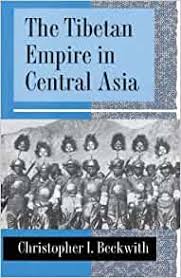
We discuss Tibetan Buddhism and the Tibetan Empire in this podcast.Browncast Episode 103: Abhijit Iyer-Mitra on Indian Defense, Economics, and History
Another BP Podcast is up. You can listen on Libsyn, Apple, Spotify, and Stitcher (and a variety of other platforms). Probably the easiest way to keep up the podcast since we don’t have a regular schedule is to subscribe to one of the links above!
You can also support the podcast as a patron. The primary benefit now is that you get the podcasts considerably earlier than everyone else. This website isn’t about shaking the cup, but I have noticed that the number of patrons plateaued a long time ago.
I would though appreciate more positive reviews! Alton Brown’s “Browncast” has 30 reviews on Stitcher alone! Help make us the biggest browncast! At least at some point.
This episode features Omar, Mukunda, and Akshar talking to Abhijit Iyer-Mitra, a defense and policy analyst, about his evolution of political thought with highlights on his former communist affinity, evolving feelings on Modi, and passion for Indian nationalism. We also get into the continued inefficiencies of India and how it has been so detrimental to its development, plus possible reforms to remedy it. The wide-ranging conversation also includes insights into Abhijit’s time in jail, Kashmir, and “Frugal Indian” cooking tips!
Another BP Podcast is up. You can listen on Libsyn, Apple, Spotify, and Stitcher (and a variety of other platforms). Probably the easiest way to keep up with the podcast since we don’t have a regular schedule is to subscribe to one of the links above!
Due to the costs of both recording software and storage space, I would appreciate if you could also support the podcast as a patron. The primary benefit now is that you get the podcasts considerably earlier than everyone else. It also compensates me for my admittedly mediocre editing (I’m a data scientist/geneticist). If we get more patrons I have reached out to have someone professional edit…but really we don’t have the funds now.
If you can’t give (in these times may cannot!), I would appreciate more positive reviews!
In this episode, I talk to an Italian in Verona, about what it’s like in the wake of COVID-19. This is a follow-up conversation with someone who I interviewed two months ago during the pandemic’s Italian peak.
Another BP Podcast is up. You can listen on Libsyn, Apple, Spotify, and Stitcher (and a variety of other platforms). Probably the easiest way to keep up with the podcast since we don’t have a regular schedule is to subscribe to one of the links above!
Due to the costs of both recording software and storage space, I would appreciate if you could also support the podcast as a patron. The primary benefit now is that you get the podcasts considerably earlier than everyone else. It also compensates me for my admittedly mediocre editing (I’m a data scientist/geneticist). If we get more patrons I have reached out to have someone professional edit…but really we don’t have the funds now.
If you can’t give (in these times may cannot!), I would appreciate more positive reviews!
In this episode, I talk to Yeyo, a Peruvian-based-in-Sweden. We discuss the Nordic nation’s response to coronavirus, and Yeyo’s own change in views.


 Another BP Podcast is up. You can listen on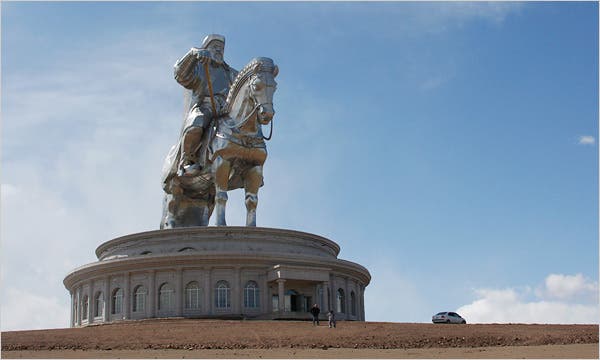



 Another BP Podcast is up. You can listen on