
November 09, 2019 was a momentous date in the history of modern India. An end to the decades and centuries old Ayodhya dispute has likely happened. The Supreme Court of India has, by a unanimous verdict of 5-0, pronounced that the disputed site of 2.77 acres be given for the building of a Ram temple while at the same time allotting a land of 5 acres somewhere else for the construction of a mosque.
In all respects this was a very fine judgement by the Supreme Court. However, there are mischief mongers who are busy spreading falsehoods about this judgement for their own vested interests. Let me here share a few videos which give us a very clear picture of why the SC judgement is neither biased nor is it giving precedence to faith over evidence.
https://www.youtube.com/watch?v=FoelD28UV28
Please also watch these two long presentations as they explain the available evidence at length.
The Case For Ram Mandir at Ayodhya
What Do The Ram Janmabhoomi Excavations Tell Us?
To put it briefly :-
Ayodhya is one of the seven holy cities of ancient India and for Hindus or Sanatan Dharmis. Its holy precisely because it is associated with the birth and life of Lord Ram, one of the most revered figures of Hinduism.
Now what exactly is the significance of Ayodhya for Muslims ?
Particularly with regard to the Ram Janmabhoomi/Babri Masjid site, it is clear and the SC judgement also points out that the Babri Masjid was not built on a vacant land but was built over a large pre-existing non-Islamic structure. Archaeologists and scholars have pointed out that this structure was most likely a Vishnu temple built by a feudatory of the Gahadavala King Govindchandra, the most powerful king of North India in his time and the grandfather of none other than Jayachand of Prithviraj/Samyukta fame.
While the SC has acknowledged the existence of this temple structure since the 12th century, it points out that between the 12th century and the early 16th century when the Babri Mosque was built on the site, we do not have records documenting what was happening at the site. The SC also states that the Archaeological Survey of India (ASI) could not prove that this earlier temple was destroyed to build the mosque i.e. perhaps the temple was already destroyed & lying in ruins. However, proving it conclusively is a tough ask.
Nevertheless, it has already been proven without a shadow of doubt that the remains of the pre-existing temple, including its pillars were used in the construction of the mosque.
Lastly, there are numerous eye-witness and other accounts in English, Persian, Arabic & Urdu from the 16th, 17th & 18th centuries which clearly prove that the particular site was holy for the Hindus and that the mosque was built by destroying the mandir or temple, and the site is often referred to in the accounts as the Ram Janamsthan.
Hindus were able to show that they were worshipping at the site for several centuries and people used to flock the site particularly on Ram Navami, the date of Lord Ram’s birth. They were also able to show the outer courtyard was always under the control of Hindus while there was often disputes between Hindus and Muslims for the inner courtyard of the mosque.
One may ask, what is the evidence that Lord Ram was born at this very site. And infact we don’t have any. But it can be shown that for several centuries it has been a Hindu belief that this very site was the birthplace of Lord Ram and that there is no other site at Ayodhya or elsewhere for which such a belief exists or has existed.
When one looks at this evidence in totality it is clear that the claim of Hindus on the site as an important place of worship for several centuries is supported by much more substantial evidence than anything the Muslim side could muster.
Therefore, the Verdict was a foregone conclusion. The Supreme Court has merely gone by the balance of evidence and has not buckled under the pressure of majoritarianism nor has the rights of the Muslim minority been suppressed by it, as alleged by some unscrupulous lot who perpetually want to keep the communal cauldron burning.
 (
(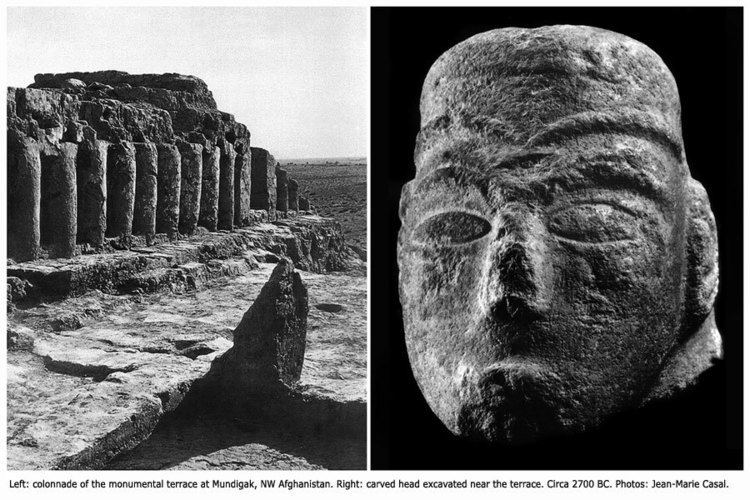 (Mundigak, Afghanistan)
 (Burnt Building, Shahr-i-Sokhta)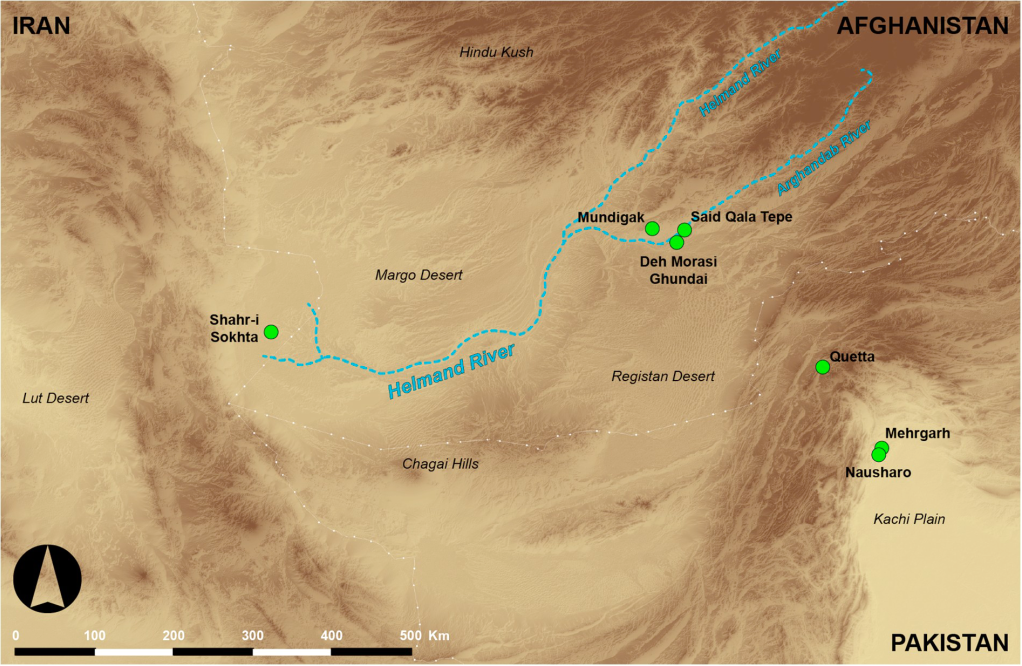
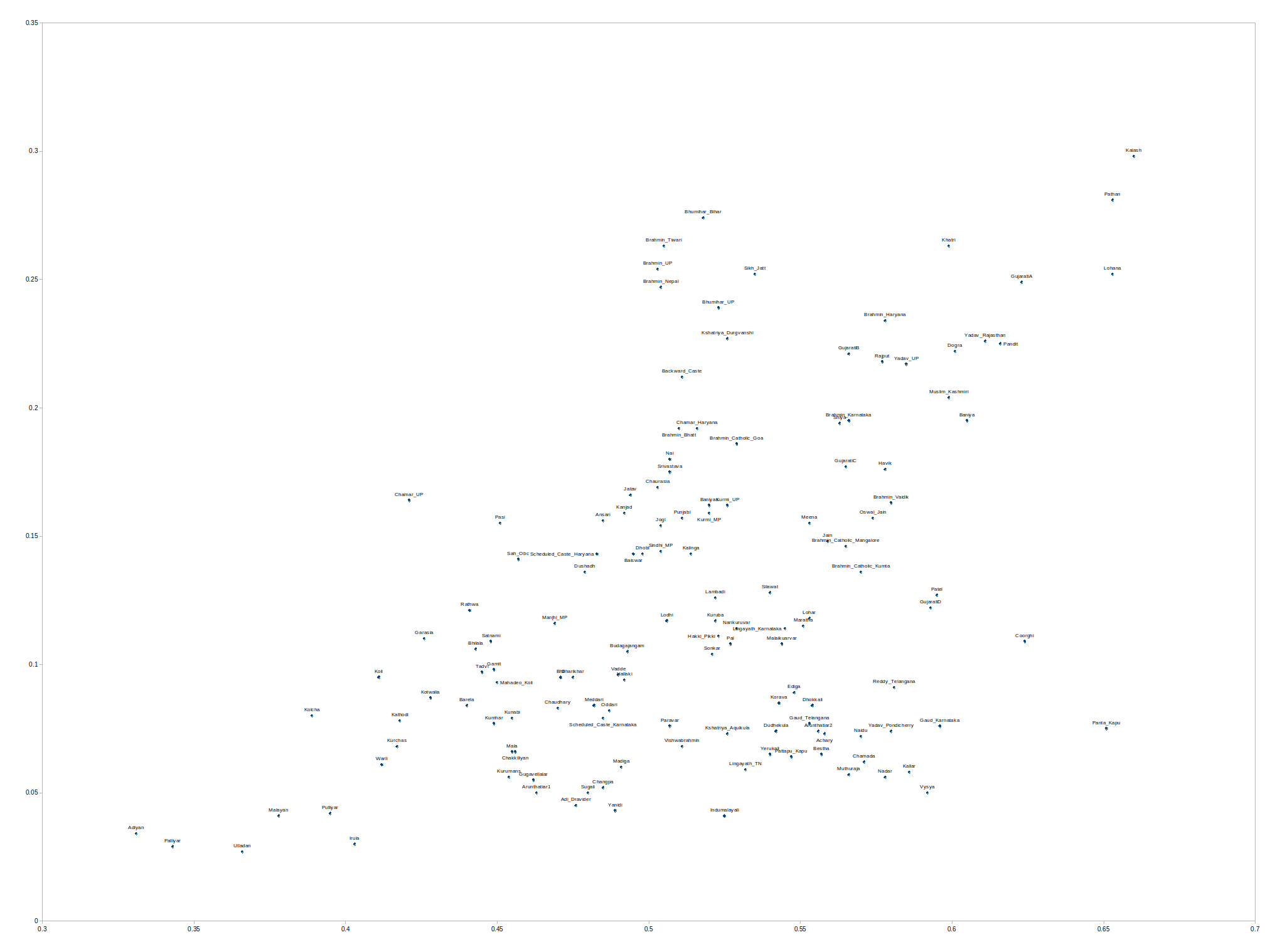
 I don’t know if I mentioned it, so I will do so here: Brahmins do not seem to form a natural descent group from a common ancestral population. I say this because