
UP’s very long shadow:
As I board my flight back to the UK after a brief but productive trip, I find myself reflecting on a language that continues to haunt and inspire me: Urdu.
It is a tongue caught between paradoxes. The language of courtesans and qawwals, of sacred supplication and sly seduction. It carries within it the scent of jasmine and blood, of Delhi’s dusk and Lahore’s lingering grief.
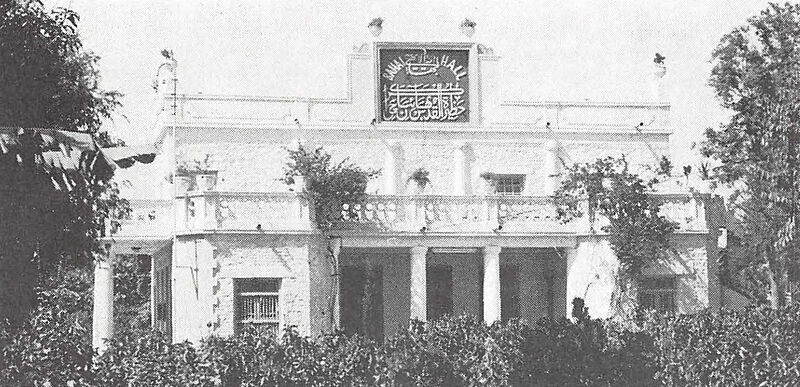
The Beloved Guardian of the Baha’i Faith once noted that while most Baha’i texts should be translated from English, Urdu alone is trusted for direct translation from Persian and Arabic. That proximity, that spiritual siblinghood with Persian, the language of kings, and Arabic, the language of God, renders Urdu magical.
Sanskrit, of course, is the language of gods, but Urdu, its stepdaughter of sorts, captures the longing of poet to partisan.
There’s a reason the Bahá’í prayer I share below is so piercing in Urdu. So here, before I cross back into another timezone, I offer this prayer—without commentary, without translation. Just Urdu, as it was meant to be heard.
And I wonder: perhaps this is what Pakistan truly is—a project in transcending the local. Not rooted in soil, but in sentiment. A place where Punjabis, Pathans, and Muhajirs are asked to shed skin and commune in Urdu. Where Pakistaniyat, for all its fractures, has succeeded in producing a common idiom: of piety, pride, and pain. Continue reading Pakistaniat & Urdu from Qasim to Quaid
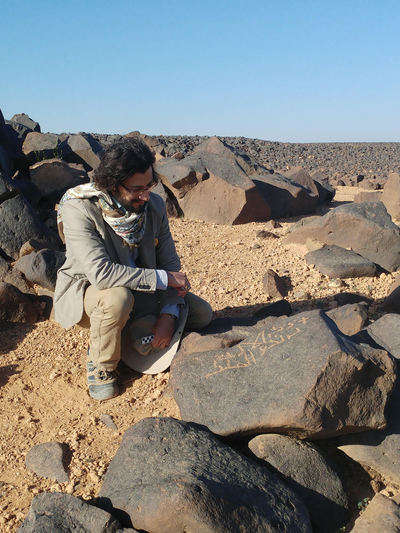 In this episode we talk to Dr Ahmed Al Jallad, Sofia Chair of Arabic Studies at Ohio State University. Dr Jallad is an expert on the languages and scripts of pre-Islamic Arabia. We talk about the origins of Arabic (most likely in the Northwest of the peninsula and not in the South as previously believed), the development of the Arabic script (most likely from Nabatean Arabic) and the inscriptions of the region (In the 6th Century CE the ones that do reference a religion mostly reference Christianity, not the pagan gods of pre-Islamic Arabia that dominate our vision of the “era of Jahiliya”..