

The Hindification of Muslim Culture

Something in a recent thread caught my attention. A commenter praised several khayal singers, almost all Hindu, while omitting equally eminent Muslim vocalists. Kabir pointed this out, but the exchange exposed a larger pattern: the slow Hindification of Muslim cultural inheritances in India.

This is not new. It has happened before in the Balkans, Spain, North Africa, and now South Asia. When Muslim political power retreats but its aesthetic legacy endures, successor communities begin absorbing, domesticating, and rebranding the cultural capital that Muslim rule left behind.

Hindustani music is a prime example. The foundational grammar, khayal, thumri, tarana, bandish, raga–riyaz discipline, gharana boundaries, was shaped by Persian, Turkic, and Indo-Muslim lineages. Yet today, the most visible custodians of this tradition are overwhelmingly Hindu: Bengali virtuosos, Maharashtrian stalwarts, the great Dharwad families, plus a handful of Muslim houses that continue against the grain. A few dozen performers make a strong living; a select few have global reputations. But the overall demographic shift is unmistakable. Continue reading The Hindification of Muslim Culture
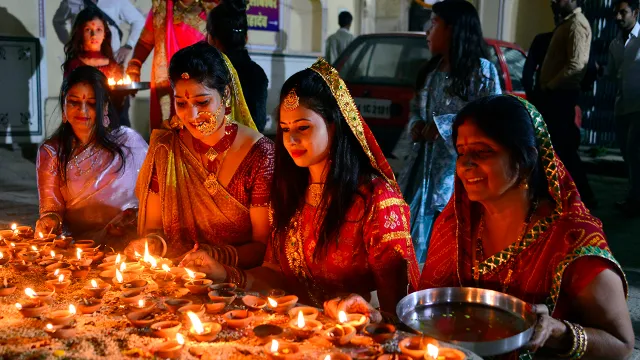
Let Hindus Decide for India

There’s a quiet but persistent coalition, inside and outside India, that seems intent on denying Hindus the right to define their own future. It includes unreformed Islamists who refuse to reckon with modernity, English-speaking liberal elites still shadowboxing for Nehru, minorities with veto power but no stake in cohesion, and a chorus of Western (and increasingly Chinese) voices, eager to manage India’s trajectory from afar. What unites them? A shared discomfort with Hindu political consolidation.

Let’s be clear: Hindu identity is not a new construct. Whether you place its roots 3,000 or 5,000 years ago, it’s one of the world’s oldest living civilizational continuities. That identity has always been plural, regional, and evolving. But it has also always been there; visible in memory, ritual, geography, and language. Today, that identity is waking up to its political form. And it will not be put back to sleep.

Hindutva is not going anywhere. Nor is the Indian Union. Those who hoped Kashmir would stay outside this arc have already seen the direction of travel. Pakistan’s decision to opt out of Hindustan, and then build an identity against it, has led not to strength but to strategic stasis. Bangladesh, too, for all its cultural richness, now stands as a separate civilizational lane. And so we arrive at the core truth: Hinduism and India are coterminous.

This isn’t a call for exclusion. But it is a reminder that those who opted out do not get to dictate terms to those who stayed in. That includes foreign commentators and diasporic gatekeepers alike. There is a difference between pluralism and paralysis. There is a difference between nationalism and denial. And if majoritarianism is the anxiety; perhaps the deeper fear is that Hindus are no longer apologizing for being the majority. Let India decide. Let Hindus decide. Let the world, finally, learn to listen.

Brown Pundits