Why India’s National Calendar Needs Urgent Correction

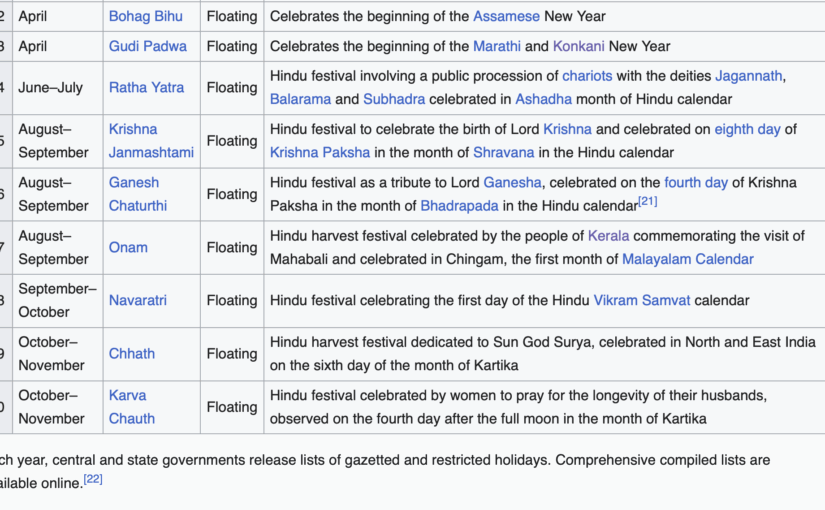
India’s national holidays should reflect its civilisation. They do not. Five Abrahamic festivals sit at the centre of the calendar, while most indigenous ones sit on an “optional” list. This is a distortion, not pluralism.

National holidays are public signals. They show what a country holds to be central. When non-indigenous festivals are guaranteed space and indigenous ones are not, the state sends a clear message: it is unsure of its own foundations.

This was a mistake made at independence. India had full freedom to shape its symbols. Instead of anchoring the calendar in its own tradition, the new state tried to avoid offence. That caution hardened into policy, even though no society builds confidence by sidelining itself. Continue reading Why India’s National Calendar Needs Urgent Correction

Hinduphobia Exists, But Pakistan Was Not Born from It

I was riffling through the comments and my jaw dropped when Kabir claimed Hinduphobia doesn’t exist. It struck me as both historically and emotionally tone-deaf. I didn’t respond at the time, but I’ve been reflecting on it since.

Let me say upfront: Hinduphobia does exist. It may not always manifest in overt violence or systemic persecution (at least not today, and not in most places globally), but it does appear in more insidious, ideological forms; especially in academic and diasporic discourse.

Take, for instance, the backlash against H1B visa recipients. Much of that criticism is coded; targeting upper-caste Indians, especially Hindus, who are the primary beneficiaries of this brain-drain dynamic. It’s not just about class or meritocracy; there’s an unspoken discomfort with their presence and success, often couched in progressive rhetoric.

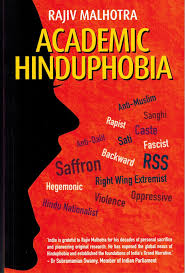
On the intellectual front, academics like Audrey Truschke and others within the left-liberal Western consensus have regularly challenged or dismissed Hindu identity altogether; reducing it to political nationalism or caste oppression. This refusal to acknowledge Hinduism as a living, plural, and spiritual tradition creates an environment where Hindu self-articulation is delegitimized. That too is a form of Hinduphobia.

Now, is this Hinduphobia the same as the systemic anti-Muslim, anti-Black, or anti-immigrant hatred we see elsewhere? No. Hinduphobia today is more dismissive than violent, more erasure than exclusion, but it is real and it needs to be acknowledged.

Pakistan Was Not Born from Hinduphobia Continue reading Hinduphobia Exists, But Pakistan Was Not Born from It

Brown Pundits: Broad Church or Narrow Canon?

Brown Pundits Must Stay a Broad Church

Reading Kabir’s thoughtful post on the “soft Hindutva” bias at Brown Pundits, I found myself both agreeing with parts of his argument and diverging from its framing. My own journey with BP goes back to its inception. The blog was born in Twixmas December 2010; 10 days after I had met Dr. Lalchand, whose presence has profoundly shaped my civilizational views.

I say this not as a biographical aside but because BP, at its best, is where the personal and civilizational collide. We bring who we are; our marriages, our migrations, our contradictions, into this messy, brilliant conversation.

At the time, like many Pakistanis, I held a deep-seated assumption: that Hindus were fundamentally “other.” It wasn’t overt hatred; just a civilizational distance, internalized from birth. But Dr. V & Brown Pundits challenged that.

A Forum With Bias? Yes. But Which One?

The heart of BP is not neutrality; it’s the willingness to host contradiction. That is its genius, and it must be protected.

Continue reading Brown Pundits: Broad Church or Narrow Canon?

The Mughals Were Not an Indian Dynasty — They Were a Dynasty in India

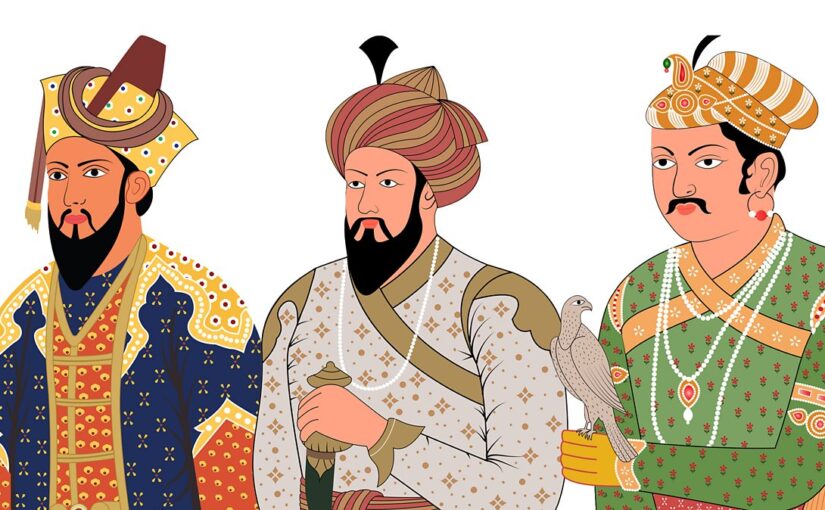
The Mughals were not an Indian dynasty in the civilizational sense. They were a dynasty in India — rooted in the Persianate ecumene that stretched from Anatolia to Bengal, but distinct from the indigenous Indic civilizational framework.

Richard Eaton’s India in the Persianate Age captures this well. The Mughal elite, like other Turko-Mongol polities across the Islamic world, operated through a tri-layered framework: Arabic religion, Persianate high culture, and Turko-Mongolian kingship. This pattern held from Egypt to Samarkand — and India was no exception.

But here’s the distinction: while in places like Iran, Central Asia, and even parts of Anatolia, the ruling elite and the subject populations often shared linguistic, religious, or cultural proximity, in India the Mughal court sat atop a society whose foundational worldview — Dharma, Sanskritic cosmology, ritual plurality — was wholly different.

Yes, the Mughals were cosmopolitan. Yes, Akbar attempted synthesis. But at their core, the Mughal dynasty retained its sense of separateness — not just politically, but civilizationally. Persian remained the language of court and culture, their aesthetics leaned West, and their ethos remained imperially aloof. Their legitimacy was not drawn from Indian sacred geography but from Turanic, Persian, and Islamic claims of kingship.

Contrast this with the Suri dynasty, which, despite being devoutly Muslim, left a remarkably grounded imprint. Sher Shah Suri ruled in Hindavi. His administrative and infrastructural legacy felt local, even national. In some ways, paradoxically, he felt more Indian than the Mughals did.

This isn’t about Islam being foreign to India. Islam has deep roots in the subcontinent — from Kerala to Bengal to Kashmir. It has been deeply indigenized across regions. But when Islam arrives twinned with Persianate high culture, it becomes something else: a hybrid elite formation, distinct both from Sanskritic Hinduism and from vernacular Islam.

The British Raj, too, was alien — but ironically, its later administrators localized many elements of their rule. The Mughals, by contrast, represented a more refined foreignness: imperial, hybrid, and between worlds.

It’s telling that the most influential women of the Mughal court—Noor Jahan, Mumtaz Mahal, and Hamida Banu Begum—were all of Persian origin. They wielded real power: issuing firmans, shaping court politics, commissioning architecture. In contrast, the Hindu-indigenous consorts—Jodha Bai, Anarkali, even Aurangzeb’s Hindu Rajput lover—were celebrated in romance, not governance. They were symbols, not strategists. Influence, in the Mughal world, came not with local integration but with Persian pedigree. That, in itself, says a great deal.

So no — the Mughals were not an Indian dynasty. They were a dynasty in India. That distinction matters.

Brown Pundits