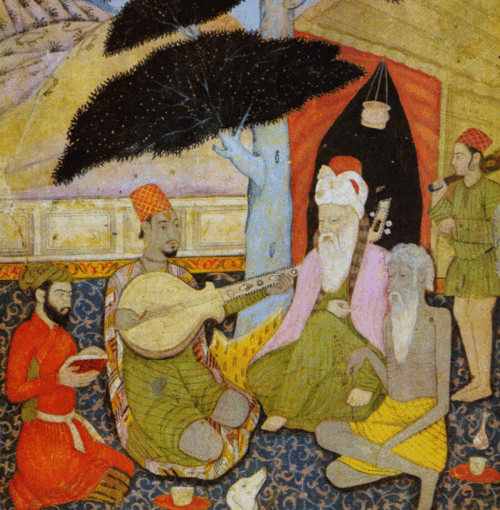
Five billionaires have as much wealth as half of humanity ~ Vandana Shiva
Prime Minister of Uzbekistan, Singing Raj Kapoor’s Song.
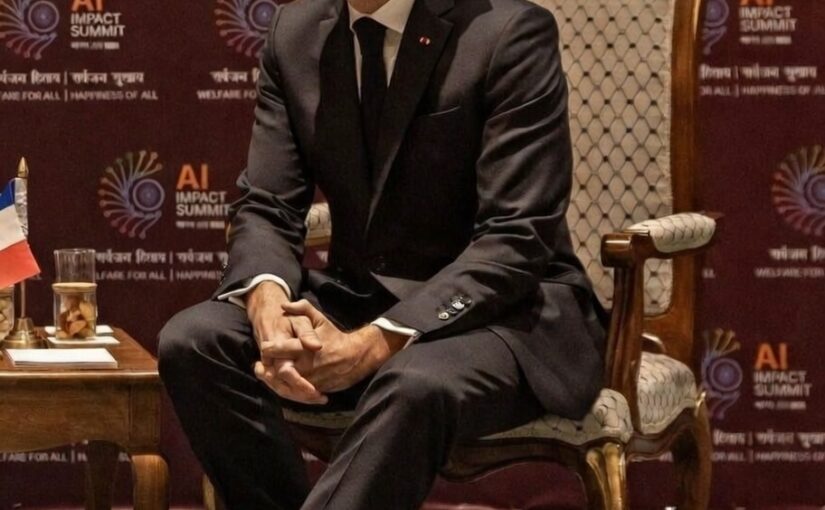
Seems LV also stole its TM design from India. Continue reading Open Thread: Bharat overawes France
Five billionaires have as much wealth as half of humanity ~ Vandana Shiva
Prime Minister of Uzbekistan, Singing Raj Kapoor’s Song.
Seems LV also stole its TM design from India. Continue reading Open Thread: Bharat overawes France
This Sunday, something quietly powerful is taking place: Indian and Pakistani artists will share a virtual stage, and among them is our very own Kabir Altaf, performing as a Hindustani classical vocalist and ethnomusicologist based in Pakistan.
Kabir shared that Sheema ji personally invited him to sing, and he’s planning to perform the Kabir bhajan already available on Spotify. A simple act but a potent one. Rooted in shared heritage, offered in public.
It’s easy to be cynical about India–Pakistan relations. But these moments matter. When musicians from Sindh and Delhi, translators from Karachi, and filmmakers from Mumbai come together, even on Zoom, they create a space that politics cannot reach. A space where memory, performance, and shared roots do the work diplomacy cannot.
This is the kind of initiative we need more of: not policy, but presence; not diplomacy, but dialogue. These exchanges don’t dilute identity; they deepen it.
Bravo and huzzah to Kabir, and to all involved.
🗓 Event:
Indian–Pakistani Artists in Dialogue
📅 Saturday, 3rd August 2025
⏰ 7:30 PM Pakistan time / 8:00 PM India time
👩🎤 Moderator:
Sheema Kermani – Bharatanatyam dancer, theatre personality, Karachi
🎙 Featured Speakers & Performers:
Dr. Syeda Saiyidain Hameed – Writer, former Member of India’s Planning Commission
Dr. Ghazala Irfan – Philosopher and Chair, Department of Humanities, LUMS; affiliated with All Pakistan Music Conference
Anand Patwardhan – Documentary filmmaker, Mumbai
Saleema J. Khawaja – Vocalist of Punjabi Kafi and Guru Nanak verses, Lahore
Neela Bhagwat – Hindustani vocalist (Gwalior Gharana), Mumbai
Azhar Shan – Folk musician from Sindh
Dhruv Sangari – Hindustani classical and Sufi vocalist, Delhi
Zainub J. Khawaja – Musician, member of Harsukhiyaan, Pakistan
Yousuf Saeed – Documentary filmmaker, known for work on classical music in Pakistan, Delhi
Kabir Altaf – Hindustani classical vocalist and ethnomusicologist, Pakistan
Nishtha Jain – Documentary filmmaker, Mumbai
Zahra Sabri – Lecturer and translator, Karachi
Zulaikha Jabeen – Independent scholar, India
🔗 Join via Zoom
Meeting ID: 897 8701 6742
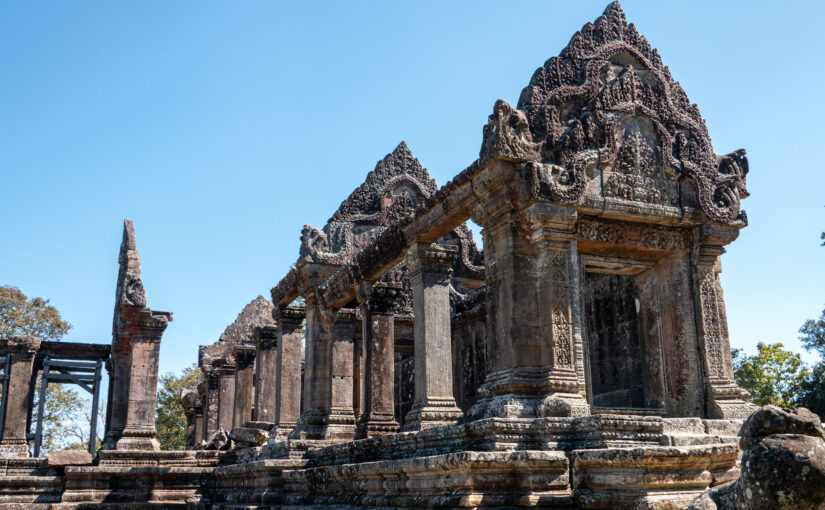
The long-running dispute between Thailand and Cambodia dates back more than a century, when the borders of the two nations were drawn after the French occupation of Cambodia.
Things officially became hostile in 2008, when Cambodia tried to register an 11th Century temple located in the disputed area as a Unesco World Heritage Site – a move that was met with heated protest from Thailand.
Why A Cluster Of Hindu Temples Is At Heart Of Thailand-Cambodia Conflict
It’s striking to see just how deeply Dharmic culture shaped Southeast Asia — not just as historical residue, but as a living civilizational layer. Buddhism, in many respects, prepared the civilizational terrain that Islam would later traverse.
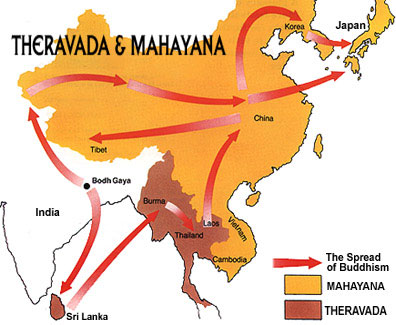
Buddhism, too, was not monolithic. The Sri Lankan Theravāda tradition influenced the western flank of Indo-China, while Mahayana currents, traveling through Sumatra, appear to have looped back toward Guangzhou, feeding into the Sinosphere.

The sectarian divergence between Thailand and Cambodia — Theravāda vs. Mahayana— adds nuance to territorial and cultural disputes like the Preah Vihear Temple, whose iconography and inheritance clearly align more with Cambodian history.
These are not just archaeological debates. They’re about cultural legitimacy, historical continuity, and civilizational memory.
In such moments, India, that is Bharat, must not remain a bystander. As the civilizational fountainhead, it should be playing a constructive role in cultural mediation and soft power diplomacy.