
[A note before we begin: We held back out of respect for Iran Zamin and the weight of what was unfolding. Pakistan has now acted where others would not, and the moment deserves acknowledgement.
This should have been India’s role. No other power sits closer to both Tehran and Washington. No other civilisational bridge existed with the credibility to hold both sides. That fatal trip, PM Modi’s visit to Tel Aviv, poisoned those waters permanently. It did not merely signal a foreign policy choice. It signalled comfort with regime change in a neighbouring civilisation. The opportunity cost is historic and will not be recovered.
What Pakistan has achieved is without precedent in its modern history. The Muslim Prussian Republic, forged in argument, held together by will, perpetually doubted, walked into the gap the subcontinent’s greater power vacated and stopped a war. The world owes a debt to Quaid-e-Azam and Allama Iqbal’s creation that it will not rush to acknowledge. That is how it goes. But we are noting it here, now, while the moment is live.]
History named the last one. It was called the Twelve-Day War. Clean. Surgical. A rehearsal. This one will be called the Forty-Day War. It began on 28 February 2026 with a decapitation strike that shattered Iran’s command structure in a single night and a brutal attack on a girl’s school. It paused on 8 April, when a Pakistani Prime Minister’s tweet achieved what five weeks of bombardment, ultimatums, and a pope’s intervention could not.
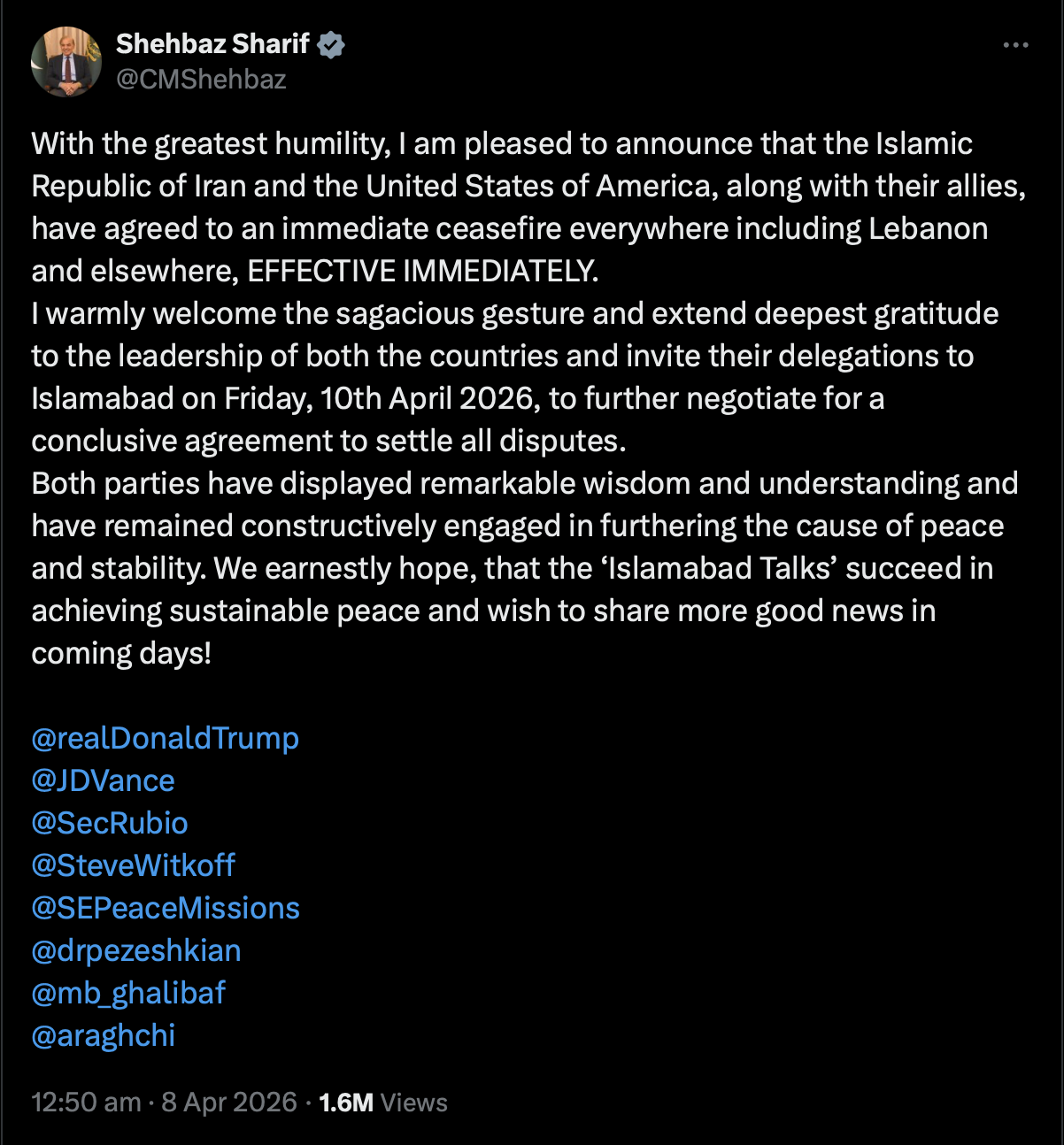
Pakistan forced the pause the world could not secure.
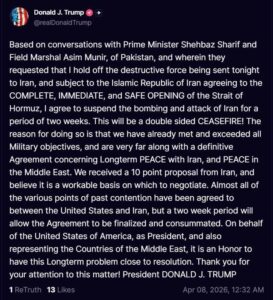
This is not sentiment. It is structural. Islamabad was the only room both sides could enter. Pakistan maintained working diplomatic channels with Tehran throughout the war. It shared enough institutional credibility with Gulf capitals to be trusted as a mediator. It was sufficiently operationally relevant to Washington; Field Marshal Munir’s name appeared, unremarkably, in Trump’s own ceasefire announcement, to be taken seriously rather than patronised. No other state sat at that intersection. Egypt tried. Turkey tried. Neither had all three legs of the stool.
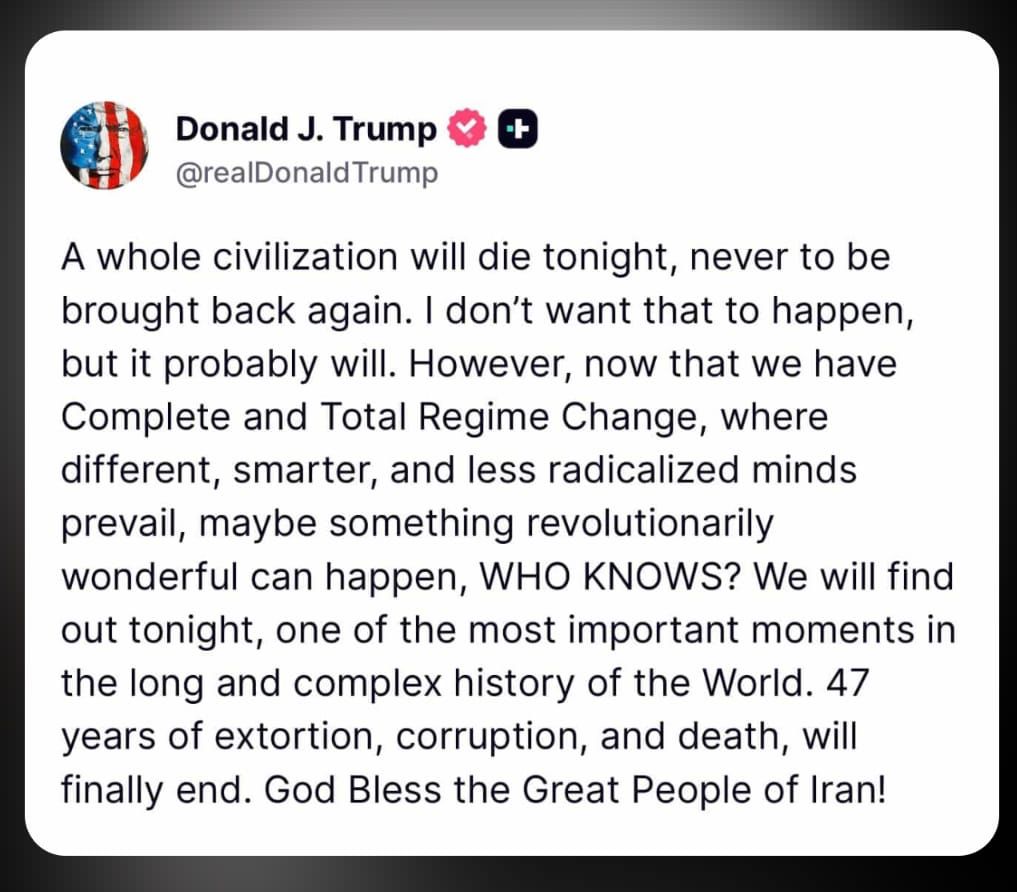
Over forty days, escalation outran control. Oil surged past $110 a barrel and briefly touched $117. Insurance markets seized. Traffic through the Strait of Hormuz reduced to a trickle. American signalling moved from coercive to apocalyptic, “a whole civilization will die tonight.” Iranian signalling hardened even as its leadership structure absorbed shock. Each side retained the capacity to raise costs further. Neither had a clean exit.
Pakistan supplied one.
The mechanics of the pause reveal everything. Tehran accepted a two-week window in which maritime traffic would resume under its coordination. Read that precisely. Coordination, not surrender. The Strait remains, in Iranian framing, an instrument of state power. That is not the language of defeat; though states rarely speak the language of defeat in real time, regardless of battlefield reality. What matters is what the text actually says. Iran controls the reopening. Iran does not yield it.
Washington will declare victory. The machinery is already running. Continue reading The Forty-Day War: Pakistan Saved the World?