
Why Indian Muslims are in India not of India

Reading Seshat History of the Axial Age chapters on India was a bit unsatisfying due to a lack of detail. But if you are looking for high-level historiography, it’s not a bad volume. It’s most definitely a good “sourcebook” on the literature.

Because of its general and cross-cultural focus, I began considering why Indian Muslims seem so immiscible. This is, in contrast to various other groups that moved into India. One might bring up “Scythians”, but more appropriate I think might be the Ahom of Assam. They were originally Buddhists of a sort, but eventually, they became Hindu, though they retain some Buddhist rituals.

So what’s the difference? Clearly one simple difference is that Buddhism and Hinduism are both Dharmic, so the barriers between the two traditions are lower and the boundary more fluid than between Islam and Dharmic traditions. This obvious in Sri Lanka, and also in Myanmar, where the remaining Indians of Hindu origin have mostly switched their religious affiliation to Buddhism, and in Thailand, where there are native Brahmins who perform rituals at the royal court.

But I think there’s a bigger difference: India was a land of opportunity for Muslims from West and Central Asia. The constant stream of officials, soldiers, and religious eminences mean that attempts to synthesize and assimilate Indian Muslims in the same way possible with earlier peoples were going to run into the counter-force of immigrants and transplants who would constantly demanding that Indian Muslims conform to world normative Islamic practices and beliefs. One illustration of this is the role of the Naqshbandi order in demanding that Muslim rulers not stray and that Hindus and Muslims should not mix excessively.
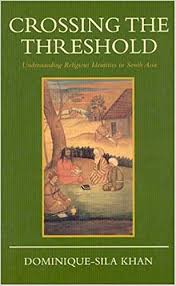
The only work that addresses the possibility of assimilation and synthesis in detail that I know of is Dominique-Sila Khan’s Crossing the Threshold: Understanding Religious Identities in South Asia. In the wake of the mass migration of Muslim Turks and Afghans under the Delhi Sultanate, a large number of Indians became Muslim, of various sorts. But with the decay of the Delhi Sultanate, and the decentralization of power and rule, Dominique-Sila Khan outlines her thesis that many Muslim and Hindu groups experimented with beliefs and practices which were synthetic, creating liminal identities. With the rise of the Mughal Empire and its integrative tendency, as well its excellent connections to the “Islamic international,” the liminal groups were forced into more standard and distinct confessional identities.

One unsurprising aspect of this is that demands for orthodoxy from the Sunni Muslims hit various Shia groups, in particular, ghulat sects among the Ismailis, particularly hard. Though forced conversions of Hindus no doubt occurred, we know for a fact that there was a systematic campaign to convert whole groups of Ismailis in regions such as Gujarat to Sunni Islam. These campaigns were on the whole successful.

Can we test my hypothesis that exogenous interaction and contact explain the relative lack of assimilation of Muslims into the Indian-Hindu identity? Yes. But not with India. Rather, there were multiple instances in China where small Muslim groups lost contact with the “outside world” (that is, Muslims in Central Asia). These groups at the elite levels became strongly influenced by Confucianism, and at the popular level took elements resembling Pure Land Buddhism. Though some Muslims were absorbed into Chinese folk religious milieu, the heterodox sects never became a new religion on the Chinese scene. Why? Because periodically contact would be reestablished with Muslims from Central Asia (again, the Naqshbandi order played a big role here), and deviations would be purged.

There is a final example that illustrates what happens to distinctive religions when they are totally isolated. In the early 17th-century, Japan banned Christianity and isolated itself from the rest of the world. But small groups of Catholic Christians maintained their identity in secret. These “Hidden Christians” were rediscovered in the 19th-century. The majority became conventional Catholics…but a minority remained “Hidden Christians”, and had taken on many elements of Japanese folk religion, as well as Pure Land Buddhism.

Can Islam than ever be indigenized in South Asia? Ask the Persians how easy it is to take Arabicity out of Islam…

Update: I suggest in the comments below that the foreign dominance among South Asia’s Muslim elites served to prevent the conversion of native elites.
Afghanistan’s History (a)

Special thanks to Mayuresh Madhav Kelkar for sending this. I would start watching this excellent Dari Farsi documentary 1 minute 19 seconds in. There are many excellent ancient maps of central and south Asia.


I just want to watch this again and again, just to listen to the narrator’s voice. Majestic, wise, soft and sweet. For those so sure Afghanistan will fall; any nation with voices like this is perchance stronger than she appears. This may be where the homo sapien sapien modern civilization was born.

+++++++++++++++++++++++++++++++++++++++++

Afghanistan’s History


Avtar Singh Khalsa: Lion of Afghanistan

Is it time for Asian Americans and Latino Americans to ask to be considered “white”? (d)

This is the next article in the series “Is it time for Asian Americans and Latino Americans to ask to be considered “white”, “Is it time for Asian Americans and Latino Americans to ask to be considered “white” (a)”,  Razib’s  “Hasan Minhaj’s Patriot Act on Affirmative Action“, “Is it time for Asian Americans and Latino Americans to ask to be considered “white” (b)” and “Is it time for Asian Americans and Latino Americans to ask to be considered “white” (c)”.


A middle eastern student shares how deeply offensive a condescending pretentious patronizing xenophobic post modernist baizuo caucasian is towards them. The baizuo caucasian tells the middle eastern student that he is a genie for solving a math problem and then apologizes for it afterwards, since after all the word “genie” comes from the middle east. Two phenomenons might be at play. One is baizuo. The other is anti muslim islamaphobia.


If this is coming from baizuo, this is a very old problem. It comes out of European imperialism in the 1700s and 1800s. The European intelligentsia tried to colonize the minds of their imperial colonial subjects with inferiority complex to damage their self confidence. Europeans also tried to deconstruct colonized peoples, causing them to be embarrassed by, hate and reject their ancient history, technology, science, product development, process innovation, civilization, culture, religion, spirituality, art, literature, institutions, ancestors and elders. Post modernism divided colonized peoples into many categories of oppressed and oppressors (mostly manufactured irrational concepts) to turn different groups of people against each other; implying that power oppression rather than meritocratic competence defined local hierarchies. This European colonization of the mind sharply lowered total factor productivity and material living standards in the developing world ceteris paribus. The Latinos, Africans and Asians got sick of it, and kicked the Europeans and their baizuo European intelligentsia out. You can read more about this in a Nuanced understanding of British Colonialism.


Sadly the baizuo caucasian intellegentsia did not seem to learn from this. In the 1960s they tried to undermine America’s heroes Muhammed Ali and Malcolm X. Please watch Muhammed Ali’s and Malcolm X’s videos speaking about the baizuo in American Caste (a). And the baizuo seem to continue to get worse year after year. I don’t understand how this is happening. Perhaps could this be a xenophobic jealous backlash against the accelerating socio-economic rise of the rest–especially darkies?


What can we darkies do about this? Should we ask to be considered white?


To the middle eastern student who wrote Prof Saad, maybe the caucasian overlords should learn that the vast majority of Aryans are Asians. Asians (Iran, Afghanistan, Uzbekistan, Xinjiang, Tibet, Turkmenistan, Tajikistan, SAARC, South East Asia) are very proud to be Aryan or Arya, thank you very much. Arya or Aryan is a cultural rather than genetic marker. Arya means nobility. Maybe ignore the baizuo and become extremely successful in everything you do despite their efforts to sabotage you. Fewer and fewer foreigners are fooled by the hard bigotry of low expectations, by the lie that we cannot manifest our own miracles. Their time is almost up.


I would like to thank Prof Saad for being a glowing light of wisdom and inspiration for our world. Love you Saad!


In the comments, please mention if anyone would like to invite Prof Saad to be a guest for the Brown Caste podcast.

Post Modernism (d)

Five thousand years ago the greater Egyptian, Sumerian, Eastern (defined as pan Arya plus China) civilizations were very mathematically oriented.  Many caucasians appear to believe that these ancient civilizations were racist. Possibly because of this many caucasians believe that math is racist.


Another possible reason many caucasians appear to believe that math is racist is because they fear it might unfairly advantages “brown” people (Asians, Arabs, Latinos) and “brown” cultures (eastern philosophy including Toaism and Confucianism, native american religion) at the expense of caucasians in the new global artificial intelligence, neuroscience, genetics economy.


Could part of the anger against math come from fear that mathematics, science, technology, seeking the truth through thought, seeking the truth without thought might be haram or blasphemous? (Obviously most Abrahamics do not believe this and this is not a critique of Abrahamism.)


I believe that mathematics is part of art; and that it derives from beyond normal gross thought. From what in Sanskrit is called Buddhi, Vijnayamaya Kosha, Ananda Maya Kosha, Sukshma Sharira, Kaarana Sharira, the subtle heavens.


Perhaps the anger against mathematics is part of a deeper anger against the subtle heavens? If so, one possible way to look at this is that to transcend the subtle heavens (including mathematics) it might be helpful to love them and love our way through them. Or to love and respect the racist (subtle heavens–including mathematics) until we transcend the various subtleties of thought and feeling.

What are everyone’s thoughts?

+++++++++++++++++++++++++++++++++++++++++++++++++++

Post Modernism (c)

Post Modernism (b)

Post Modernism (a)

Intellectual Dark Web (a)

Intellectual Dark Web

Why do nonmuslims treat muslims so badly (g)?

https://www.youtube.com/watch?v=FTiE4xTvPzA

There are few examples of nonmuslim sectarian mistreatment of muslims more glaring than the way nonmuslims have abysmally betrayed LBGTQ muslims. Nonmuslim LBTGTQ are celebrated by Xi Jinping, Trump, Modi, Lebron James and many others. Any mistreatment of LBGTQ nonmuslims correctly dominates news coverage around the world and leads to massive global pressure. But when it comes to muslim LBGTQ, nonmuslims become suddenly silent.


The above video details the severe persecution of Palestinian LGBTQ. Palestinian LGBTQ have long been attacked by Palestinians, the muslim world and nonmuslim world.


Where are PM Modi, President Xi Jinping, President Trump, Lebron James, PM Bibi Netanyahu, PM designate Gantz? Do Englishman and Englishwoman feel guilt for the enormous suffering they have inflicted upon Palestinian LBGTQ during English empire and ever since the end of English empire? This blood debt could be repaid by giving English permanent residence status to every Palestinian LBGTQ who passes a background check to weed out violent criminals and members of organized crime.


Not that muslims are doing any better when it comes to Palestinian LBGTQ rights. Global muslim leaders Ilhan Omar and Rashida Tlaib, have you no tears and compassion for Palestinian LBGTQ? How will you be able to look up upon Allah after having betrayed Palestinian LBGTQ?

Continue reading Why do nonmuslims treat muslims so badly (g)?

Commentary on Adi Shankara

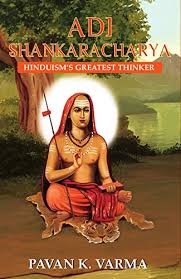
It seems Adi Shankaracharya: Hinduism’s Greatest Thinker is now $0.99 on Kindle, so I got a copy. From what little I know the subhead is warranted, so understanding Adi Shankara goes a long way to understanding elite Hinduism.

On the other hand, I have a dim view of most religious philosophy personally. But, it is important that people take such thinking seriously, as understanding it is a part of understanding humanity. For example, I can acknowledge that Thomas Aquinas was a brilliant thinker, while at the same time thinking his mind was wasted.

Calvinism, atheism, and Hinduism


A journalist associated with NPR made some prejudiced comments about Hinduism, and she is probably going to get in trouble. By the name, her background is that of a South Asian Muslim.

One of my immediate reactions is that this sort of comment about Hinduism is very common among South Asian Muslims. Growing up people would joke about Hindus drinking piss and obsessing over cow dung all the time. This is a widespread private comment, and this woman’s mask just dropped in public.

But, there is another aspect that emerged in discussion with a Hindu reader of this blog: the Muslims making these sort of jokes were not the very pious, but the more liberal and secular sort. Extremely religious Muslims did not talk about Hinduism in jocular terms, because they feared Hinduism.

This actually goes back something foundational in the Abrahamic religions, and that is the Hebrew suspicion and fear of foreign gods. Note that in the Hebrew Bible the Israelites repeatedly turned away from Jehovah, and sacrificed to the gods of the Canaanites. These religions and cults were tempting. The original Hebrews were clearly henotheistic, not monotheistic in a deep metaphysical sense. They did not reject the existence of other gods but were devoted to a particular god, their own tribal god.

In the Greco-Roman period, Jewish and Christian thought took the next step: they demonized the gods who were not their God. When I say they demonized the gods who were not their God, I mean demonized in a literal sense. The early Christians believed that the pagans worshipped demons, who were deceiving humans as to their true nature. These religions were not false religions because people worshipped the non-existent, but because they worshipped evil or deceptive beings who were not the true God.

There are still Christians who hold to the old ways. Some evangelical Protestants believe they are in a spiritual “war” with devils who are all around us. Which brings me to Calvinism. There is a line of argumentation that John Calvin and his heirs “rationalized” Christianity to such an extent that they drained the demons and supernatural from the universe. They were atheists and materialists except for the exception of their one God and his retinue.  This was a sharp break with the older Christian tradition, whereby the gods of other religions were false gods, but real gods (after a fashion).

I don’t know what I think about this argument, though it seems plausible. But, the sort of Muslim who makes fun of Hindus has been shaped by this way of thinking. They do not fear Hinduism. They do not think that Hindus believe in anything real. Their gods are no-gods. In contrast, many devout Muslims believe Hindus worship devils.

The limits of semantics; Hindus before Hinduism

When I was a 20-year old atheist I would read books on the philosophy of religion and explore arguments for and against the existence of god(s). Though I was never naive enough to think that just if people could be exposed to arguments against the argument for design people would be atheists, I wouldn’t have rejected it out of hand.

This is not a view I hold on to in any way because I believe religion as a social-cultural phenomenon is too complex and multi-faceted to reduce to a set of philosophical propositions. The “god of philosophers” ultimately misses the point of the reason so many people believe in god, and what sustain’s religion. But because the philosophers write the histories and dominate the priestly class, they have rewritten religion in their image.

A more complex view has to be brought to bear when we talk about ideas such as the “invention of Hinduism” by the British. If one limits the term “Hindu” to its utilization to point to a self-conscious and concise confessional community unitary across South Asia and disjoint from that of Muslims, Christians, Jews, Zoroastrians, etc., then one can assent to the proposition that the “Hindu identity” was “invented” relatively late in history.

But this is a piss-poor resolution to understanding the dynamics of human cultural evolution in South Asia.

As I have noted before, 1,000 years ago al-Biruni presented and anthropological understanding of the religion of Hindus that is totally recognizable and comprehensible to us. I say here “religion of Hindus” because he was referring here to the people of India, Hindus, rather than a religion called Hinduism. This is a shading which refines the descriptions with more precision, but if you actually read al-Beruni you notice that the term “Hinduism” is pure semantic sugar. It doesn’t add much substance, though it tightens up the style. He clearly outlines a religious system and communal identities which we would recognize today as Hindu.

For the philosophers and intellectuals, religion can be reduced down to particular parameters. My own view is that when people say a “Western view” of religion, they are actually alluding to the conception that arose out of the Calvinist framework, which strongly informed the American conception in relation to church-state interaction (and, in some ways, modern atheism is the child of the demystified Calvinist cosmology). Even within the West, this highly rational, confessional, and individualistic, understanding of religion is an artifact of the past few centuries, and not normative across all Christian traditions and societies.

When it comes to this weblog the usage of terms always needs to be framed in the context of their times. If you speak of the “Sunni-Shia” conflict of the 7th-century, you need to realize this is highly anachronistic. Sunni Islam, as we understand it, only developed organically over the centuries in reaction to the claims of the party of Ali and his scions, those who became Shia. Similarly, if one talks about “Hindus” in the context of Maurya India, one realizes that one is bracketing a host of philosophical schools and religious sensibilities which are at variance with Buddhism and Jainism. One can argue whether the term “Hindu” is more or less informative, but one should also understand that one can extract significance from the term even before its 19-century maturation.*

* I would be personally cautious about using the word “Hindu” before the Gupta period, but think that it makes sense after that, even if there was no a self-conscious Hindu religion for many centuries after. Your mileage may vary.

Intellectual Dark Web (b)

Eric Weinstein is close to the intersection of science, math and spirituality (or religion). He is skeptical that someone can do multi-dimensional math and science in deep meditation (satori, samadhi, mystical rapture). I think this is possible (not yet figured out how to do it).

Many ancients in narrative stories are described as combining science, math and spirituality. Including the great 7 sages (of the east, Sumeria and Egypt). Including Vishwamitra. Including Hinanyaksha and Hiranyakashipu.

I hope that our current crop of science and math thought leaders fully self actualize.

Eric describes the many theisms that different groups of people have, including in physics, math, AI, liberal arts, silicon valley, local governance, national governance, international institutions, globalization, politics.

One of the goals of religion is to transcend all theisms seeking the truth alone. The goal of religion is atheism. Theisms being:

  • irrationalities
  • unverified assumptions
  • patterns in the subconcious {Chitta}
  • habits
  • pre-religion
    • all methods and paths and preparation for religion included in religious literature, including all sounds, words, music and the various levels of meditation.

Eric is exceptionally good at breaking all theisms. Sadly those who break all icons and assumptions tend to get demonized. The Intellectual Dark Web–including Eric Weinstein–are being attacked as predicted by beautitudes Matthew 5:10-12:

  • Blessed are those who are persecuted because of righteousness, for theirs is the kingdom of heaven.
  • Blessed are you when people insult you, persecute you and falsely say all kinds of evil against you because of me.
  • Rejoice and be glad, because great is your reward in heaven, for in the same way they persecuted the prophets who were before you.

+++++++++++++++++++

Intellectual Dark Web (a)

Intellectual Dark Web


Brown Pundits