Links on My Browser Right Now – Open Thread

A few pieces I’ve been reading this week:


Reflections

On the Ummah: Muslims have often failed to concede ground in internal debates, which has left them politically boxed in. One reform across all denominations would be to return directly to the Quran as the primary authority. That alone would dissolve many cultural accretions, halal (animals should be stunned before slaughter), hijab (a Sassanian trait), and other practices, into something more adaptive.

And here’s a more speculative question: if the ā€œSatanic Versesā€ were reconsidered if Al-Lat, Al-Uzzah, and Al-Manat were understood as sacred divinities at the threshold of the Lote Tree, would that make Islam more fluid, especially for minority-majority dynamics?

On Kabir: I’m not moderating him out, but readers should be aware that he frames everything through Muslim-rights activism. Engage, but don’t get gaslit into endless provocations. Everyone is entitled to their nationalisms — but they can’t claim liberalism at the same time. That tension makes it worth examining how plurality is treated within the Hindu fold itself. Dharma, unlike the Abrahamic Faiths, tends to all for multiple truths co-existing with each other (Buddhism and indigenous East Asian religions).


šŸ‘‰ Over to you. I’m retreating from heavy moderation — I see BP’s strength in letting the commentariat lead. Biases are fine. Gratuitous abuse is not.

Image

ā€œIn March 1998 the Indian PM Gujral, told … ā€œPakistan was not capable of making atomic bombs.ā€ he had been convinced by Indian Intelligence and Dr Raja Raman, the head of Indian Atomic Energy Commission, who had publicly claimed that nuclear weapon were beyond Pakistan’s reach.ā€

Pakistan as India’s Ukraine?

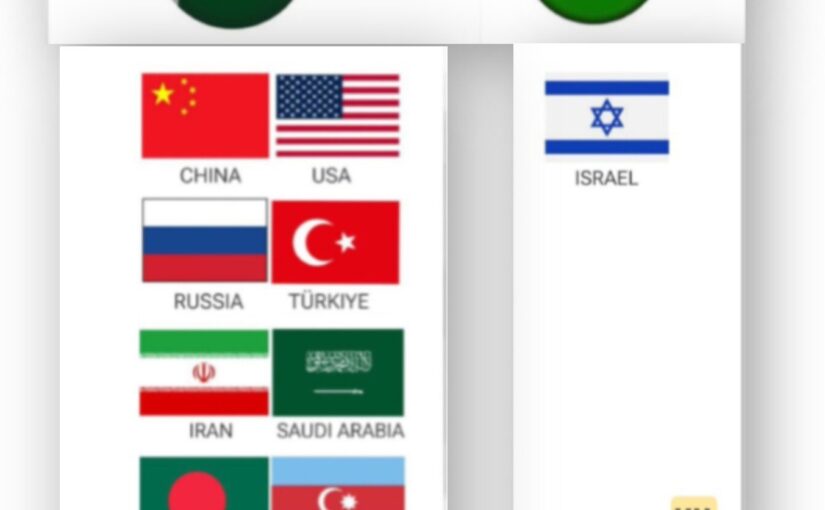
The chart above lays out ā€œstrategic partnersā€ for 2025. Pakistan lists China, Türkiye, Iran, Saudi Arabia, and assorted others. India, by contrast, shows Israel. But the real issue isn’t who collects more flags; it’s whether any of Pakistan’s patrons will ever raise its HDI, improve infrastructure, or embed long-term stability.

I’m interested to hear what the commentariat thinks of this moment. India’s foreign policy is already locking it into superpower status. Pakistan remains reactive, borrowing survival from whoever will lend it.

The analogy that strikes me: India–Pakistan resembles Russia–Ukraine, except if Ukraine had kept nuclear weapons. The parallels are strong:

  • Ukraine, like Pakistan, is a breakaway sibling — the ā€œother halfā€ of a civilizational whole.

  • Ukraine, like Pakistan, survives by appealing to larger patrons.

  • And interestingly, the GDP ratio gap between Russia and Ukraine is almost exactly the same as between India and Pakistan (please fact check me).

Just as Ukraine is considered the homeland of the Russian Empire (Kievan Rus’), Pakistan carries the legacy of Partition as the ā€œIndus homeland.ā€ That symmetry makes the analogy more than superficial.

On Kabir: I understand his consistent emphasis on Muslim rights and Muslim nationalism. Readers should be aware of that lens. I’m not moderating him out, but I would caution the commentariat against being gaslit into endless provocations by Kabir. The question here is not identity politics, but the direction of Indian and Pakistani foreign policy in a critical moment in global history (decades are happening in weeks).

Friendship in a time of evil

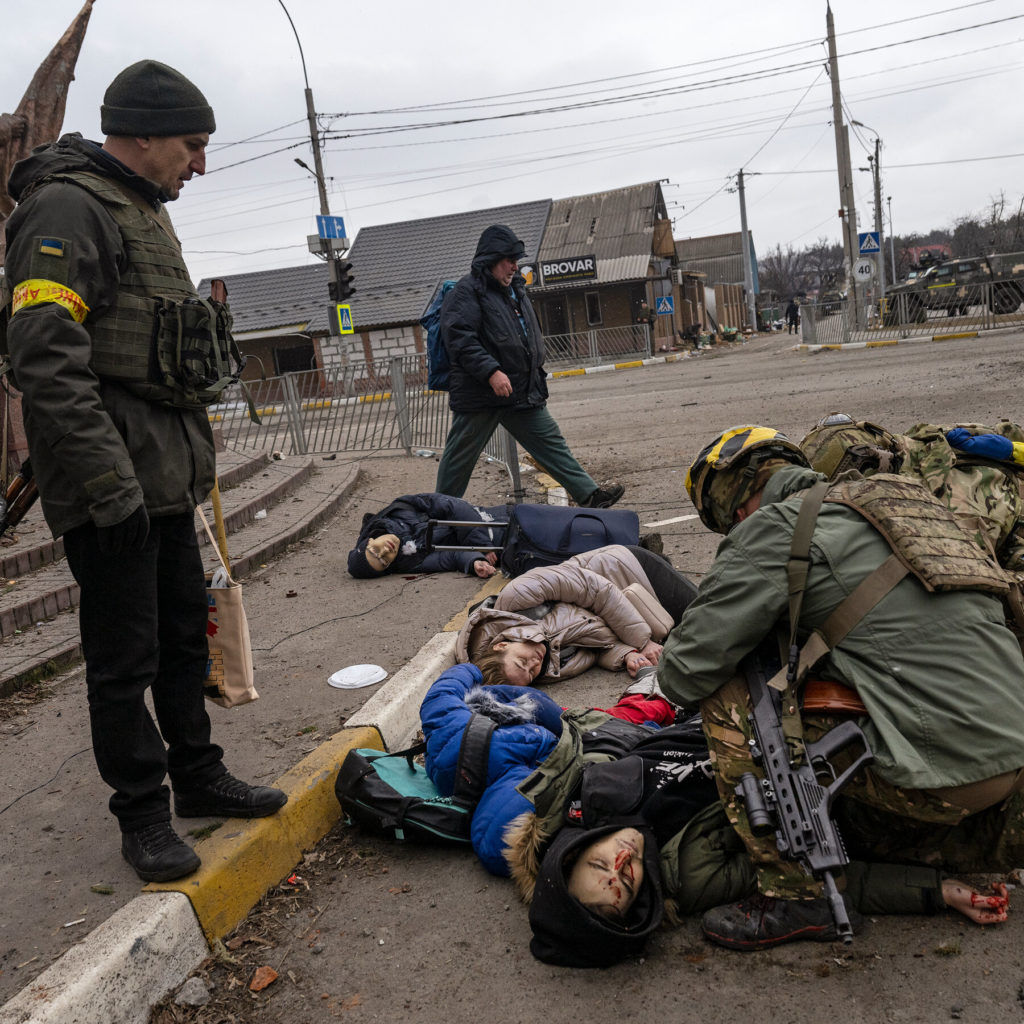
The shooting of this family in Ukraine is all over the front pages. Many Americans bemoan the humanitarian disaster. Russian restaurants are being boycotted in the US (many of the staff and owners are Ukrainian!).

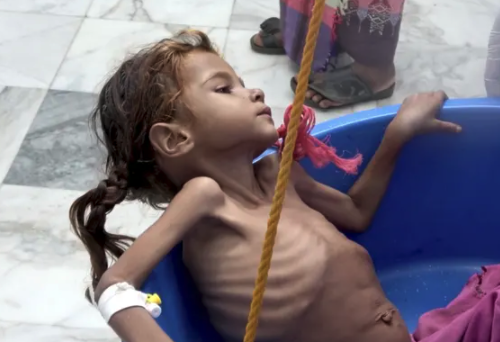
Below is a photo of a starving Yemeni child:

A bit under 100,000 children have starved in Yemen in the last 4 years due to a civil war, fueled in part by tacit American backing of the Saudi regime, which has been exacerbating and intervening in the conflict.

Why do we pay attention in one case and not the other?

  1. Nuclear war risks
  2. The Russian invasion of Ukraine violates longheld post-World War 2 norms
  3. Ukraine is in Europe, and the West cares about the West (or the aspirant West)

This is all fine. I’m very scared of #1 and horrified by the existential risks and economic havoc that Putin’s choice to actually invade has wrought on the world. But I find the arguments of a sui generis or exceptional humanitarian situation in Ukraine implausible. People don’t want to admit that their feelings are shaped by cultural or racial affinity, or that it is pure self-interest in relation to nuclear war or maintenance of world order. So they make this the “next Holocaust.”

A lot of non-Europeans are skeptical of this posturing. At my other blog, I put up a post about why Bangladeshis have a soft spot for Russia, which might explain their reluctance to condemn the invasion of Ukraine. The same obviously applies to India to a great extent.

Russian Invasion of Ukraine, part 1


Another Browncast is up. You can listen onĀ Libsyn,Ā Apple,Ā Spotify, andĀ StitcherĀ (and a variety of other platforms). Probably the easiest way to keep up the podcast since we don’t have a regular schedule is toĀ subscribeĀ to one of the links above!

In this episode Amey, Conrad and I (Omar Ali) talk to Karol Karpinski about theĀ  crisis, and particularly about the Eastern European perspective on it. This is sort of the counterpoint to our earlier recording with Major Amin (where he presented the hard Russian Nationalist viewpoint on the crisis). As usual, add your comments.. We hope to record another episode dedicated specifically to the question of sanctions; what is being done, how effective are they, and so on.

Browncast: Major Amin on the Ukraine Crisis

Major Amin – Brown Pundits

Another Browncast is up. You can listen onĀ Libsyn,Ā Apple,Ā Spotify, andĀ StitcherĀ (and a variety of other platforms). Probably the easiest way to keep up the podcast since we don’t have a regular schedule is toĀ subscribeĀ to one of the links above!

In this episode we talk to our regular guest, Major Amin. Major Amin is a military historian with long experience of working in Afghanistan and Russia. As a fan of military history he is also a huge fan of the Russian Army, the entity that executed such historic operations as Uranus and Bagration. This bias shows in the podcast today and many listeners will find things they vigorously disagree with, but his views probably reflect a lot of Putin’s (or Russian nationalist’s) own thinking in this affair. In any case, as always he is brutally frank and frequently provocative. Enjoy, and add your comments..

Reason for Russia-Ukraine War: Why did Russia attack Ukraine? Timeline of events that led to Russia Ukraine Invasion

Auto generated Transcript: (unedited, full of errors, but those in a hurry may get the drift) Continue reading Browncast: Major Amin on the Ukraine Crisis

Brown Pundits