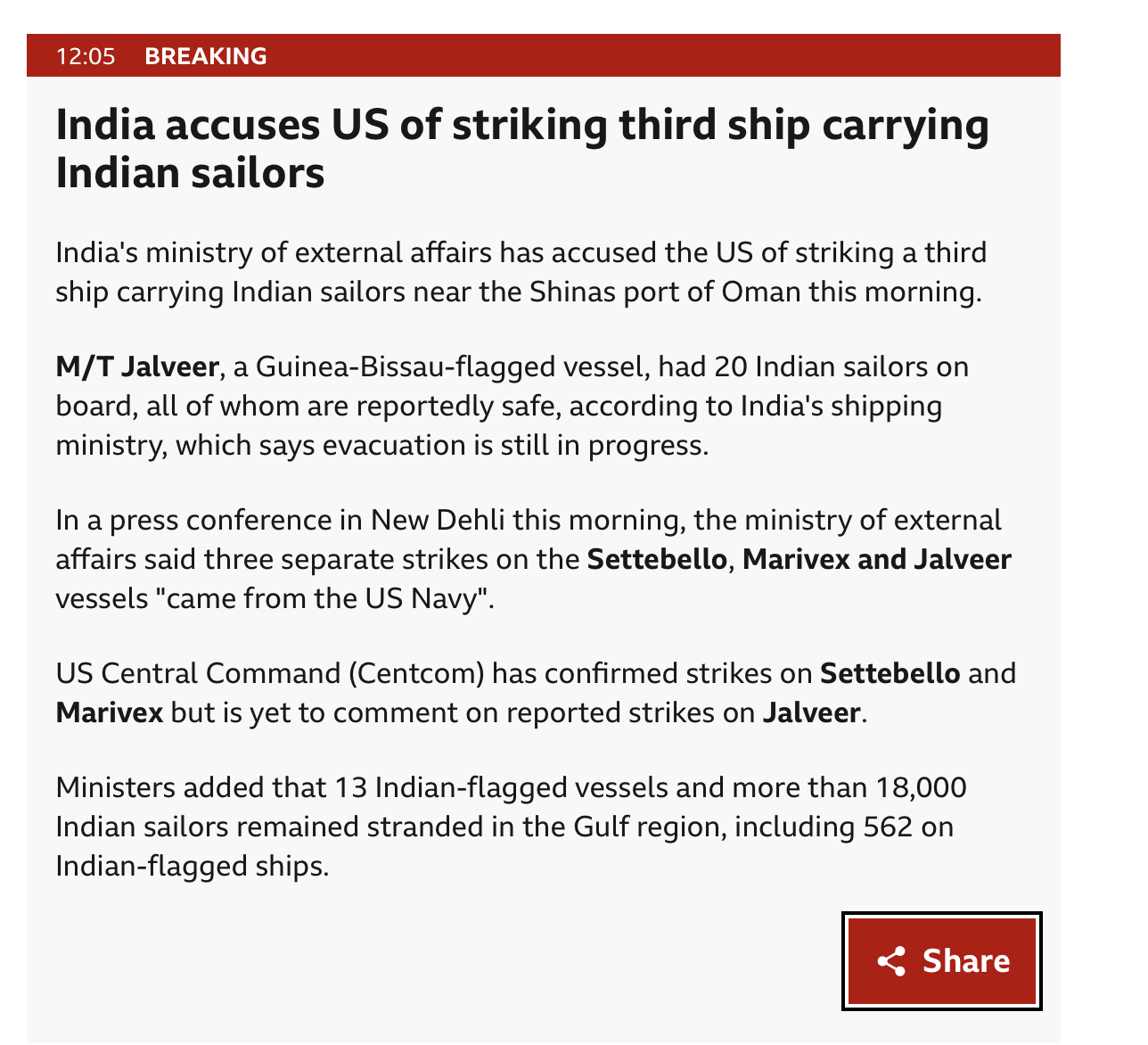
What is going on? We haven’t been following the Middle East for the past month and a half. India-US relations seem to be shakier?
What is going on? We haven’t been following the Middle East for the past month and a half. India-US relations seem to be shakier?
Precedent. Every Brown Pundits post, new ones included, must be at least 70 percent original to BP. Reposts from other sites are allowed, but the reposted portion must not exceed 30 percent of the post.
The Philippines has just recorded one of the fastest fertility declines in modern history, and almost nobody saw it coming.
In 1993 the average Filipino woman had 4.1 children. By 1998 it was 3.9, by 2013 around 3.0, and by 2017 it was 2.7. Then it fell off a cliff. The 2025 National Demographic and Health Survey put the figure at 1.7, well below the 2.1 a population needs to replace itself. That is a 37 percent drop in about eight years, the steepest the country has ever recorded. In the early 1950s, Filipino women were having more than seven children each.
At 1.7 the Philippines is not yet as low as East Asia. It still sits above Japan at 1.2 and well above South Korea at 0.8. What unsettles demographers is not the level but the speed, and the direction, which is the same one every developed Asian society has already taken.
Why nobody expected it
There is a lot of debate taking place in the digital space regarding the safety of women in public spaces. Here, I am sharing an old opinion piece published in The News International on this issue.
Walk through any major city in Pakistan, and you’ll find that urban spaces speak a masculine language – the result of a parochial, patriarchal project sustained over centuries.
From dimly lit streets and poorly maintained sidewalks to male-dominated public transport and unwelcoming parks, our cities have long been built for and around men. This isn’t by accident; it’s the result of decades of planning that excluded the voices and needs of women, girls and gender-diverse individuals.
Unfortunately, Pakistan’s urban centres (Karachi, Lahore, Islamabad, Peshawar, and Quetta, etc) have ample room for improvement. Despite women making up nearly half the population, their visibility in public and economic life remains limited.
Since Iran is in the news, I’m sharing this review of a novel categorized as “queer Iranian noir”.
Navid Sinaki’s debut novel Medusa of the Roses (Grove Atlantic 2024) falls into quite a rare genre: Queer Iranian Noir. Noir fiction is a subgenre of crime fiction and has been characterized by author and academic Megan Abbott as follows: “In noir, everyone is fallen, and right and wrong are not clearly defined and maybe not even attainable” (Literary Hub 2018). James M. Cain’s 1934 novel The Postman Always Rings Twice is usually identified as a classic example of the genre. Sinaki directly references this novel and even borrows some plot elements from it. In Cain’s novel, the protagonist and her lover scheme to murder her husband so they can be together. Similarly, Sinaki’s queer protagonists scheme to murder the wife of one of them.
Sinaki’s novel focuses on the relationship between Anjir and Zal, two men who have been lovers since they were teenagers. At the beginning of the story, Zal has been injured in a gaybashing incident–he was with someone other than Anjir. Shortly afterwards, he disappears and much of the novel concerns Anjir trying to locate him. Anjir also plans to get gender reassignment surgery and live as a woman–not because he has gender dysphoria but because while Iranian law punishes homosexuality with death, the government allows people to surgically transition to another gender. Before Zal’s accident, the two men came up with a plan to murder Zal’s wife. After Anjir’s gender reassignment, the two would be able to marry. Continue reading Review: Medusa of the Roses by Navid Sinaki
Disclaimer: This is my first post here, and writing is not my strong suit, so it is very poorly thought out and kinda can be rambling in certain bits. Kinda stream of thought way of writing with some repetition here and there, also kinda missing a citation. Please just bear with me here.
Historical context
During the late 1400’s to early 1500’s, a new figure appeared in the philosophical tradition under the name of Raghunatha Siromani. He was a brahmin of ordinary origin with a point of interest, except for the fact that his grandfather, Sulapani, wrote a minor commentary about a Sanskrit Smriti. He studied at a university in Mithila that was the centre for Brahmanical learning, and he even went on to be a chancellor at the institution; however, he found it to be too conservative and chose to return to his original home in what is modern-day Nadia in West Bengal. This hometown was part of the Bengal sultanate that was presently ruled by the liberal minded Hussain Shah, who multiplied institutions in Brahmanical ones. In this open environment, Raghunatha would go on to rewrite the entire field of logic and indirectly begin what can be considered the earliest forms of Modernity within South Asia.
Before we go any further, we need to understand what Raghunatha’s works were and conduct a broader examination of their social implications for the time. Also, I will be abbreviating Raghunatha Shiromani with the initials RS for the rest of this discussion to make it easier to write.
Skepticism and Reason in the School of New Logic
Basically, RS was a part of the Navya Nyaya school of philosophy that was originally founded by Gangesa in the first half of the 14th century, when he unified the traditional school of Nyaya (logic) and Vaisheshika (metaphysics) together in his magnum opus, the “Tattvachinatmani” (Jewel of thought on the Nature of things). RS, during his lifetime, wrote multiple commentaries or Bhasya on multiple historical texts such as the Nyaya sutra, Nyayakusumanjali, and Gangesa works as well. Traditionally, the Bhasya is supposed to provide clarification about grey areas and expand on the pre-existing literature, but there was always a degree of deference to these ancient works, and one couldn’t understand the precepts that were presented.
RS on the other hand extensively challenged a lot of these assumptions as he did a thing that the author Janardan Ganeri calls “being in a discussion with tradition”, where activity challenges some of the pre-existing states made in the work using logic and reason to ensure the arguments being presented isn’t simply considered as true due to traditional rather there is a logical basis for the points being made. What RS was doing here is shifting the onus of inquiry into the hands of the individuals and challenging the traditional norms that were previously set in place. He doesn’t reject tradition completely, but he emphasizes the need for skepticism and examination of ideas through a lens of neutrality. I am just doing a direct quote from his works, which can explain his point:
“The demonstration of these matters, which I have carefully explained, is contrary to the conclusions reached by all the other disciplines. These matters spoken of should not be cast aside without reflection just because they are contrary to accepted opinion; scholars should consider them carefully. Bowing to those who know the truth concerning matters of all the sciences, bowing to people like you [the reader], I pray you consider my sayings with sympathy. This method, though less honoured, has been employed by wise men of the past; namely that one asks other people of learning to consider one’s own words (Inquiry into the True Nature of Things 1915: 79,1-80,3; trans. Potter 1957: 89-90).”
Continue reading The End of Pre-colonial Modernity and it’s Present Implications
The ‘K’ word serves as a lightning rod in any discussions involving Indians and Pakistanis. And the BP space is no different. That there are diametrically opposing views, fiercely dug in, is an understatement.
Over the past few days, the portion of J&K that came under Pakistani suzerainty after the ‘tribal’ invasion of 1948, has seen massive political protests that have led to violence and deaths of civilians. This isn’t the first time for such incidents in what Pakistani refers to as “Azaad” (free) Kashmir. The old Pakistani playbook of deploying military force, banning political organizations, and media blackout has been deployed once again. This time however, ‘feels different’ somehow. It has become increasingly difficult for totalitarian states to execute media clampdowns in the social media age, and videos and information are steadily streaming out of Rawalkot, Muzaffarabad and elsewhere.
I would hope that this open thread stays away from the always contentious circular ‘debates’ on whether India/Pakistan are the ‘rightful owners’ of Kashmir, and focuses on the specifics of the ongoing protests instead.
Why is that over the last decade or so, such repeated outbreaks of protests show up repeatedly, often swiftly followed with brutal state clampdowns. I think its reasonably fair to say that a strong majority of the residents of Pak-administered Kashmir were and continue to be, willing subjects of Pakistan. What then, is triggering such unrest, repeatedly?
This is the final part of “Apprehension”, a translation of Bilal Minto’s short story “Andesha”. Part 1 was previously published on BP.
Farhat Auntie was pleased when the car arrived. That very day, she suggested they go out for some shopping, but Fizzu Uncle flatly refused. He said he wouldn’t leave the house except in case of dire need and she could go shopping in a rickshaw the way she always had. He said he had retired so early so he could give his full attention to study and reflection. Auntie didn’t reply because for many years she had been following Ammi’s advice to retreat whenever she heard the words ‘study’ and ‘reflect.’
But now a new problem had arisen. She had sold her jewelry to buy the car and there was no one to drive it. She couldn’t figure out what to do with it. She couldn’t even sell a car with Hala tiles. After a while she asked Fizzu Uncle why he had bought the car in the first place?
“I didn’t buy it,” he said. “You did.”
Auntie was shocked at this response but at that very moment she decided, if I am the one who bought the car then, inshallah, I will be the one to drive it. And then, you, Fazeelat Bajwa, when you find yourself paralyzed, that thing you have been saving all your money for, you will have to go to the hospital in a rickshaw.
The same day, Auntie spotted a car from a driving school parked in front of the bakery. Interpreting that as a sign from the unknown, she jotted down the number of the “Fee-Male” Driving School.
The driving school was owned by Farzana Malik. She had two cars. She taught in one while a woman she had employed gave lessons in the other. When Auntie phoned the next morning, Farzana Malik herself answered. Auntie said she wanted to learn to drive and hoped the school was open to women.
“Ha ha ha!” Farzana Malik laughed happily. “We teach both — women and men. Ha ha ha! But only I teach males. I’m afraid if I let my assistant, Rozina, do that, she might run away with one. Then where would I look for a new assistant? Ha ha ha!”
“Oh, I see,” Auntie said. “I had taken your school’s name to mean it was only for women.”
“Ha ha ha! No. We have the two ‘e’s and a dash in the middle of “Fee-Male” to indicate that we take fees from males and teach them to drive. Isn’t that funny? “Fee-Male.” Ha ha ha!” Continue reading Apprehension (translation from the Urdu)–Part 2
In May, Brown Pundits drew around sixty-one thousand visits, roughly two thousand a day and up about a third on the month. Thirty of those readers answered our survey, and while they agree on almost nothing, they are held together anyway by what they find interesting.
They are, on the same evidence, almost entirely male, forward-caste nearly to a person, and tilted in their politics.
The survey can only make sense against the size of our readership. In May, Brown Pundits drew about sixty-one thousand visits, close to two thousand a day, up roughly a third on April. Nearly half of that traffic came direct, readers typing the address or returning by habit rather than arriving from a search or a feed, and the average visit ran about a minute and a half across a little over two pages. The largest national audiences were in Canada, India and the United States.
| Brown Pundits, May 2026 | |
|---|---|
| Visits | ~61,000, up about a third on April |
| Per day | ~2,000 |
| Direct traffic | 49% |
| Average visit | ~1m 27s, 2.2 pages |
| Largest audiences | Canada, India, United States |
Against those sixty thousand, thirty people answered our survey before we closed the form. This is the devoted few who filled in a form asking their caste and their politics, not a census of the many who pass through.
The comments show who shouts; the survey shows who is here.
| Of the thirty who answered | |
|---|---|
| Men | 25+ |
| Aged 30 to 49 | 18 |
| Hold a Master’s or doctorate | 21 |
| Reading from outside South Asia | 17 |
| Hindu (five observant) | 18 |
| Muslim | 4 |
The one thing everyone wants

Hey folks, this will be my first article on Brown Pundits. Hope you guys enjoy it! Any recommendations regarding future topics, books, or just critique on the article itself will be greatly appreciated!
Tilak Devasher is a former Special Secretary, Cabinet Secretariat Government of India. He is now known as a prolifically researcher on Pakistan in India. 10 years ago he began his scholarly journey with Pakistan: Courting the Abyss. As I was going through the book I wished there was a 10 year retrospective on his work which would help us determine how well his work has held with time. So, I’ve decided to undertake that task myself.
Continue reading Review: Pakistan: Courting the Abyss by Tilak Devasher, a 10 year retrospective
This has nothing to do with South Asia but in an attempt to mix up subjects I’m sharing this recent piece I wrote about crime fiction. Also see these related pieces on crime fiction: “Mehmet Murat Somer’s Turkish Delight Mysteries” and “Moonflower Murders by Anthony Horowitz”.
One of my guilty pleasures is that I read police procedurals to relax. Though they are certainly not high art, these novels are paradoxically comforting– despite the violence they contain– since the reader knows that the mystery will be solved in the end. This perhaps explains why detective stories–of which police procedurals are a subgenre– continue to be one of the most popular literary genres. Agatha Christie, for example, is one of the world’s bestselling authors.
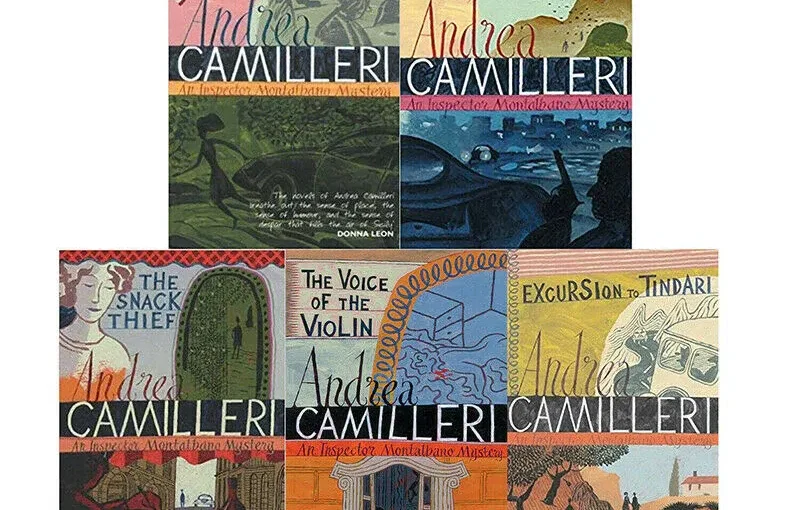
Sometime during the pandemic, I discovered Andrea Camilleri’s Inspector Montalbano mysteries. At a time when we were all stuck at home, these novels allowed me to travel vicariously to Sicily. The books are full of local color. In particular–since Inspector Montalbano is a gourmand– they are full of descriptions of local cuisine.
The series often covers the connections between crime and politics–the Mafia is often involved in the plots. In a 2012 interview with The Guardian, Camilleri spoke about how he combined the detective novel with social commentary. He said: “In many crime novels, the events seem completely detached from the economic, political and social context in which they occur… In my books, I deliberately decided to smuggle into a detective novel a critical commentary on my times. This also allowed me to show the progression and evolution in the character of Montalbano”. Continue reading Review: Andrea Camilleri’s Inspector Montalbano Mysteries