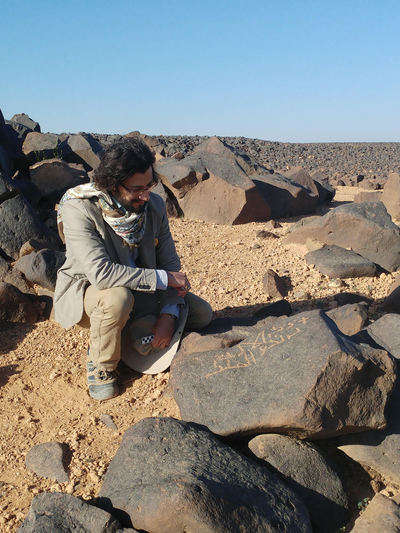
By request — the ouroboros game

Callum Flack saw my recent post here and wanted to see examples of the Ouroboros board in use — so this post is for him, and Ali Minai too if self-reference interests him — I’m guessing it does, unless computer science has moved so far ahead since Hofstadter wrote Godel Escher Bach that it no longer applies..

**

How to explain the ouroboros? It’s the ancient and ubiquitous symbol, found earliest, perhaps, in Pharaonic Egypt, of a serpent biting its own tail:

More recently, it’s a popular image in alchemy
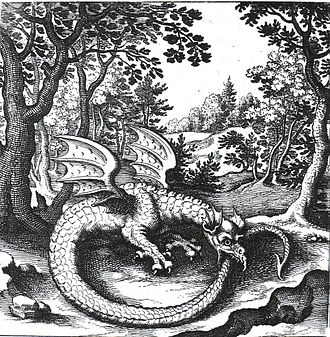
Self bites itself. And that’s a pattern worth watching.

**

Wikipedia tells us, quoting a Harvard study by Michael Witzel:

in the Aitareya Brahmana, a Vedic text of the early 1st millennium BCE, the nature of the Vedic rituals is compared to “a snake biting its own tail.”

Then there’s this example from a medieval Indian scripture, the Yoga-Kundalini Upanishad:

The divine power, Kundalini, shines like the stem of a young lotus; like a snake, coiled round upon herself she holds her tail in her mouth and lies resting half asleep as the base of the body

That’s ouroboros.

There’s a marvelous moment in the film Silence of the Lambs when the young FBI trainee, Clarice Starling, asks the psychiatrist and serial killed Hannibal Lecter:

You see a lot, Doctor. But are you strong enough to point that high-powered perception at yourself? What about it? Why don’t you – why don’t you look at yourself and write down what you see? Or maybe you’re afraid to.

That’s ouroboros.

The paradox of Epimenideas, the Cretan philosopher who declared “all Cretans are always liars” which St Paul mentions in his Epistle to Titus, is ouroboric.

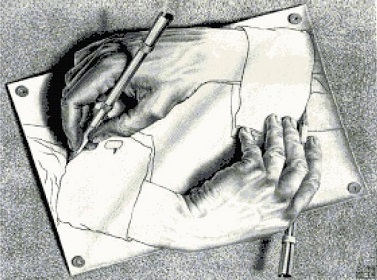
Artists, too, can take an interest in such things as hands that are drawing hands drawing hands — a double ouroboros (MC Escher)..
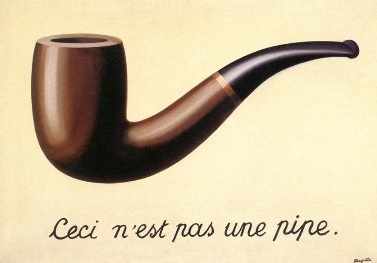
or pipes that are not pipes (Magritte):
**

Anyway, here for any who are interested, are some instances of the one-move self-referential Ouroboros board in use:

I think you’ll see why this New Yorker title jumped out of the page at me:
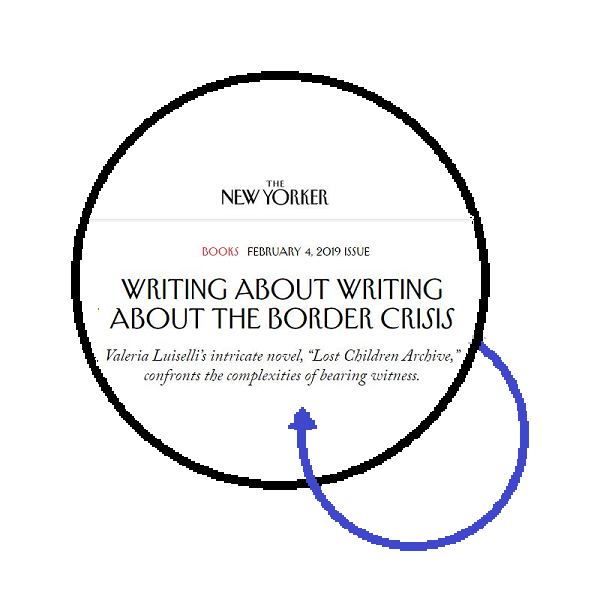
Writers like ’em!

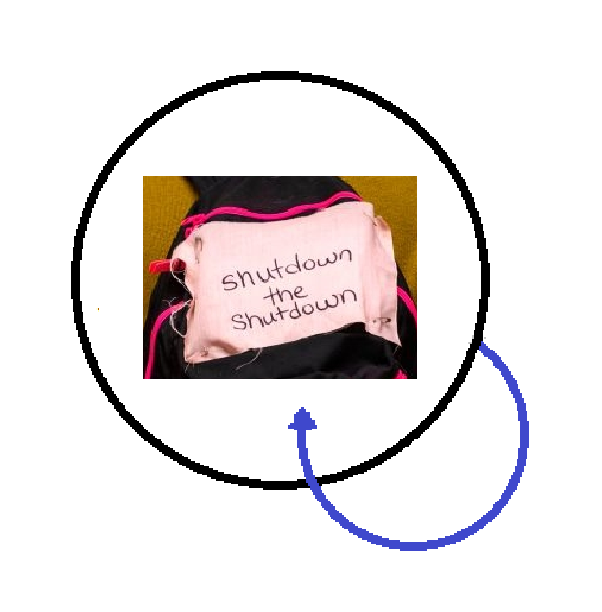
I really liked these two examples, carried by political activists — the first on a back-pack:
and the second on a placard — totally surreal, bearing no relation to the political event which was being protested:
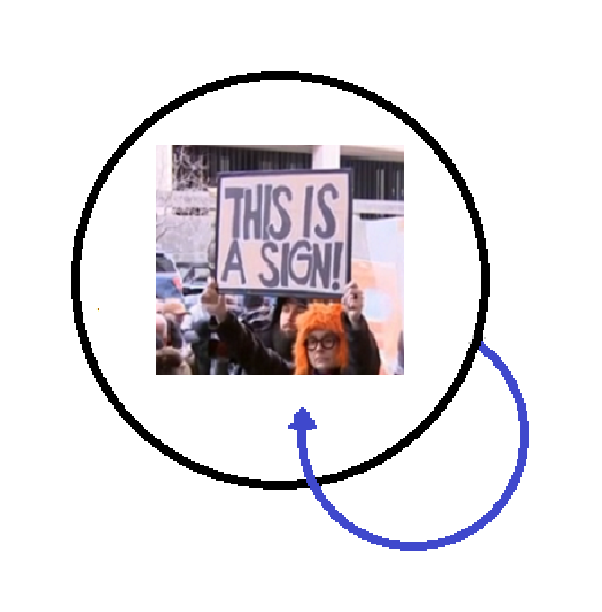
That, too, is an ouroboros.

Nancy Pelosi used a weird ouroboros the other day, saying:

The logo of 8chan, home of the image-board where the extremists of the alt-right meet and plot away from prying eyes is another double ouroboros:

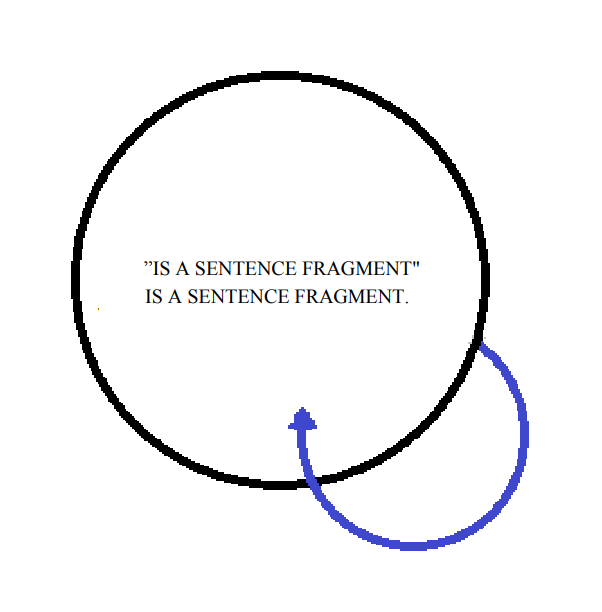
Here’s one from Hofstadter’s book, Godel Escher Bach:
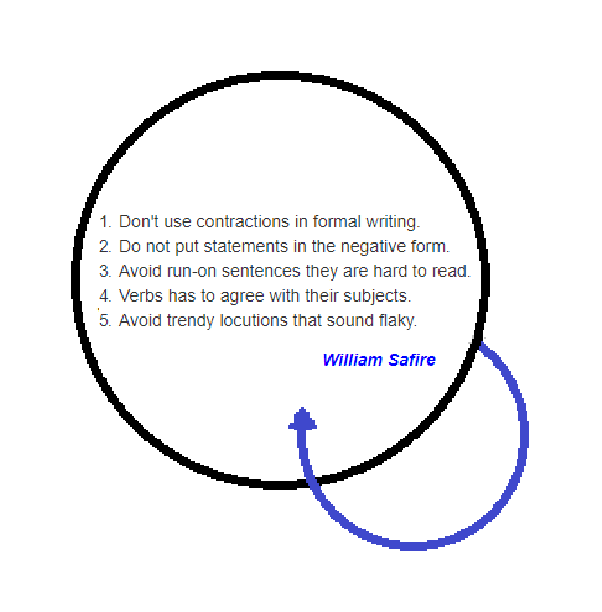
And finally, here are five instances collected by the writer William Safire:
**

I hope you like these, and find your own — here, again, is the empty Ouroboros game board in case you wish to drop your own examples into it!

Enjoy!

Browncast Ep 39: Carl Zha, Pakistan, and China’s demographic crisis

Another BP Podcast is up. You can listen onĀ Libsyn,Ā iTunes,Ā Spotify,Ā  andĀ Stitcher. Probably the easiest way to keep up the podcast since we don’t have a regular schedule is toĀ subscribeĀ at one of the links above.

You can also support the podcast as aĀ patronĀ (the primary benefit now is that you get the podcasts considerably earlier than everyone else…).

This episode we talk to Carl Zha (a return guest) about the Pakistani bride controversy and China. A lot of the discussion involves general demographic concerns about Chinese society.

Also, I know that some listeners consider Carl to be a Chinese government operative or plant (at least on Twitter). In which case, we present here a representative here of the Chinese government!

Ultimately the key point for me is to get someone on who can watch the Chinese media, which is totally opaque to me.

We would definitely appreciate moreĀ positiveĀ reviews. Many of you listen to us, but don’t leave any reviews!

Addendum: This podcast, along with one other, has been on the patron page for several days. There are cases where the latency is very short due to the timeliness, but in other cases, it can be as long as a week or more.

Modi has failed us but at least he put the Muslims in their place

Indian elections are a marvel to behold. The rules stipulate that no citizen should have to travel more than 2km to vote. So the state goes to the voters. Carrying oxygen tanks, election officials scaled the Himalayas to erect a voting booth in a village in Ladakh, 4,500 metres above sea level. In western India, a polling station was set up for the lone human inhabitant of a wildlife sanctuary. In eastern India, officials trekked for an entire day to reach the sole registered voter, an elderly woman, in a remote village. By the time voting closed on Sunday, some 600 million people had cast their ballots, 10 million of them for the first time.

In 2019, the world’s biggest election was much more than a ritual of democracy. It was the most consequential vote in the lifetime of a majority of Indians alive today. India under Narendra Modi has undergone the most total transformation since 1991. This election has, in effect, been a referendum on whether the republic retains its founding ideals or, if Modi wins another term – and exit polls released on Sunday show him winning with a comfortable majority – it leaps to a place of sectarianism from which return may be close to impossible.

Five more years of Narendra Modi will take India to a dark place

Is this election where the angry Bharat finally dispatches his ailing Mother India?

Continue reading Modi has failed us but at least he put the Muslims in their place

Analysing The Election Podcast –

I woke up this morning to commentary on Episode 38:

https://twitter.com/bharat_policy/status/1130700354146971649?s=20

We had a bit of a twitter exchange though I find it odd that Aashish zeroed in on V by claiming that she was misinformed.

https://twitter.com/bharat_policy/status/1130830244603207680?s=20

I do not understand a community where the daughter is called Asifa Bano and the father Muhammad Yusuf are *not* Muslim. People who pray to Sai Baba retain Hindu nomenclature and would be understood to be Hindus.

To somehow *disregard* Asifa’s Muslim identity in an increasingly religiously identified India is irresponsible to say the least and to somehow only raise an ethnic angle is only part of the story.

Continue reading Analysing The Election Podcast –

Why I find it difficult to debate Hinditvas + liberal Zionists

It gets tiring that I have to constantly abuse Islam & Pakistan simply to avoid the allegation that I’m a double agent. Kabir actually makes a valid point; if India and Indians want to crow about their secular liberal democracy then they have to live up to those values.

Pakistan is not a secular liberal democracy nor is Iran. They are both Islamic Republics, which to varying degrees, reject the values of the Enlightenment. Now I may disagree with that and may want otherwise but this is the constitutional fiber of both countries therefore judging them on a different set of liberal Western values is not even wrong.

Before discussing Shariah or liberal democracies in the case of Irano-Pak; we would have discuss the type of government that they have chosen to have. Britain is technically a theocratic monarchy with an aristocratic upper house so it’s not necessarily that such types of government are incompatible with liberalism or democracy for that matter.

Continue reading Why I find it difficult to debate Hinditvas + liberal Zionists

Browncast Ep 38: Indian Elections

Another BP Podcast is up. You can listen on Libsyn,Ā iTunes,Ā Spotify,Ā  andĀ Stitcher. Probably the easiest way to keep up the podcast since we don’t have a regular schedule is toĀ subscribeĀ at one of the links above.
You can also support the podcast as aĀ patronĀ (the primary benefit now is that you get the podcasts considerably earlier than everyone else…).

Razib & I played host to MJ, Kushal (Carvaka Podcast) and Vidhi.

It was a very long podcast (1hr 40 minutes) and it was really entertaining. Kushal & MJ are BJP-lite while Vidhi (if she was forced to vote) is Congress. We skipped the technical discussion since we will serve that after the elections. Continue reading Browncast Ep 38: Indian Elections

As India Saffronises, 9 Questions on her Za’faran sister (IranZamin) with Professor Foltz-

A degree of uncertainty surrounds the origin of the English word “saffron“. It might stem from the 12th-century Old French term safran, which comes from the Latin word safranum, from the Arabic za’farān,[13] which comes from the Persian word zarparan meaning “flower with golden petals”.[14]
As an aside I pilfered this interesting piece from Kabir’s facebook

Continue reading As India Saffronises, 9 Questions on her Za’faran sister (IranZamin) with Professor Foltz-

Magic and advertising

This is to alert BrownPundit readers to a series I’ve begun on Zenpundit, my other punditry-posting place. It’s about Ioan Couliano’s argument in his book Eros and Magic in the Renaissance that the Renaissance art of Magic was essentially a matter of conjuring desire in the recipient by means of visual imagery, and that the Art has been revived with great success in the present day, in the form of commercial advertising.

Roughly speaking, then, Magic is the defendant, modernity-secularity-technology is the prosecution team — who don’t bother to call witnesses because, m’lord, it’s plain obvious that magical thinking is superstitious nonsense — and a bucket-load of TV commercials form the evidence presented by the defense.

**

But wait a minute — here’s magic:

**

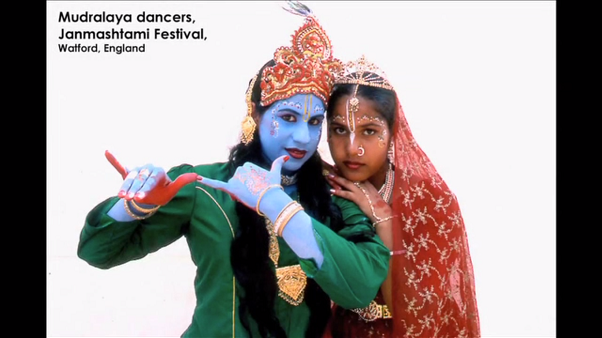
Whether you’re secular or a devotee, that photographic image is magical in that a simple hand-gesture conjures up a flute. The flute isn’t there, objectively speaking — and yet there’s a flute, Krishna is quite obviously playing it, and indeed its mellifluous power of enchantment has drawn the lovely Radha to his side.

About Krishna’s flute — you may know far more than I, but at least I can point to Denise Levertov and Edward C Dimmock’s poem in Songs in Praise of Krishna — from the Bengali:
.

Radha is terrified on her way to the forest

O Madhava, how shall I tell you of my terror?
I could not describe my coming here
if I had a million tongues.
When I left my room and saw the darkness
I trembled:
I could not see the path,
there were snakes that writhed round my ankles!

I was alone, a woman; the night was so dark,
the forest so dense and gloomy,
and I had so far to go.
The rain was pouring down —
which path should I take?
My feet were muddy
and burning where thorns had scratched them.
But I had the hope of seeing you, none of it mattered,
and now my terror seems far away. . . .
When the sound of your flute reaches my ears
it compels me to leave my home, my friends,
it draws me into the dark toward you.

I no longer count the pain of coming here,
says Govinda-dasa

**

And what does all this have to do with advertising?

My response is that the Krishna and Radha in this photo were captured, and Krishna’s flute conjured, by the eye of a pro commercial guy:

JEREMY HUNTER began his career in advertising – as a television creative, working for Young and Rubicam, Leo Burnett, Ogilvy and Bates, along the way winning a number of international awards in Cannes, Venice, New York and Los Angeles. During this time he worked with some of Britain’s most iconic film directors – John Schlesinger, Ken Russell, Tony Scott, Dick Lester, Nic Roeg, Richard Loncraine as well as Oscar-winning Editor Jim Clark and photographer Terence Donovan.

That’s the resume of a contemporary magician.

**

In case you’re interested, the posts in my Magic and Commercials series on Zenpundit to date are:

Advertising series 01: Music
Eros, the Renaissance and advertising
Authentic, spiritual magic!
The magic of advertising or the commercialization of magic?
Here’s magic!
The magic of miniatures

I imagine there will eventually be about twenty posts in the series — but more and more evidence keeps turning up in favor of the defense.

Magic, court observers seem to think, is likely to be vindicated.

Browncast episode 37: Arabian Linguistics, pre-Islamic Arabia

Another BP Podcast is up. You can listen onĀ Libsyn,Ā iTunes,Ā Spotify,Ā  andĀ Stitcher. Probably the easiest way to keep up the podcast since we don’t have a regular schedule is toĀ subscribeĀ at one of the links above.

You can also support the podcast as aĀ patronĀ (the primary benefit now is that you get the podcasts considerably earlier than everyone else…).

Picture for al-jallad.1In this episode we talk to Dr Ahmed Al Jallad, Sofia Chair of Arabic Studies at Ohio State University. Dr Jallad is an expert on the languages and scripts of pre-Islamic Arabia. We talk about the origins of Arabic (most likely in the Northwest of the peninsula and not in the South as previously believed), the development of the Arabic script (most likely from Nabatean Arabic) and the inscriptions of the region (In the 6th Century CE the ones that do reference a religion mostly reference Christianity, not the pagan gods of pre-Islamic Arabia that dominate our vision of the “era of Jahiliya”..

Brown Pundits