The Honey Trap of the Ummah:

šŸ•Œ Reflections on Kabir, Afridi, and the Compact of Coexistence

The recent incident involving KabirĀ / Bombay Badshah / Honey Singh, and the orchestrated drama around his entrapment has, quite unexpectedly, become a catalyst for deeper discussion on Brown Pundits. While none have chosen to focus on analytics (ā€œ2,000 daily visitorsā€ā€”thank you very much:-), the real story lies in how this drama has exposed, yet again, the deep ideological fissures within South Asian identity; especially in the India-Pakistan-Muslim triad.

Let’s begin by being honest: Brown Pundits, for all its digressions into Sri Lanka, Nepal, or Bangladesh, is still primarily a blog about India and Pakistan, and more crucially, about Indian and Pakistani Muslims. This is a feature, not a bug. The origins of the blog lie in the Sepia Mutiny, a scattered band of intellectually independent thinkers questioning dogma from every direction (which started in 2004 and if we are a “daughter blog” that we means have 20+yrs of intellectual antecedents on the Brownet), and it has now matured into one of the few platforms willing to wrestle with the ideological ambiguities at the heart of the subcontinent.

šŸ§• Kabir’s Point: Brotherhood, Boundaries, and the Big Choice

Kabir made an astute, if difficult, observation: that he views Indian Muslims as ā€œbrothersā€, but does not feel the same about Pakistani non-Muslims.

This sounds contradictory until one understands the emotional exhaustion of watching Muslims oscillate between claiming ummah-hood when convenient, and weaponizing liberal values when needed. It’s a cognitive dissonance that creates what I can only call the moral coexistence trap: the idea that Muslims, especially in India, demand maximum accommodation, of their food (their nauseating right to murder Gau Mata on Bharat’s sacred soil itself), Faith, festivals, and foreign affiliations, while rarely extending the same pluralistic courtesy in return.

And then there’s that infamous Shahid Afridi clip, the one where he smashed his television after watching an Aarti, being performed. To many of us, that wasn’t just a cringe-inducing moment of bigotry; it begged a real question: Why do Indian cricketers continue to shake hands with Hinduphobes Hindu-hating men like Afridi and his ilk (the Pakistan cricket team)? At what point does tolerance become indulgence?

🚩 The Compact of Indian Minorities: Understand It or Leave It

Continue reading The Honey Trap of the Ummah:

šŸ“Š Brown Pundits Hits 63,094 Visits in August (+156% Surge)

That’s more than 2,000 visitors a day. What’s driving it?

āœ… Open Threads

āœ… Honest takes

āœ… And yes — argumentation.

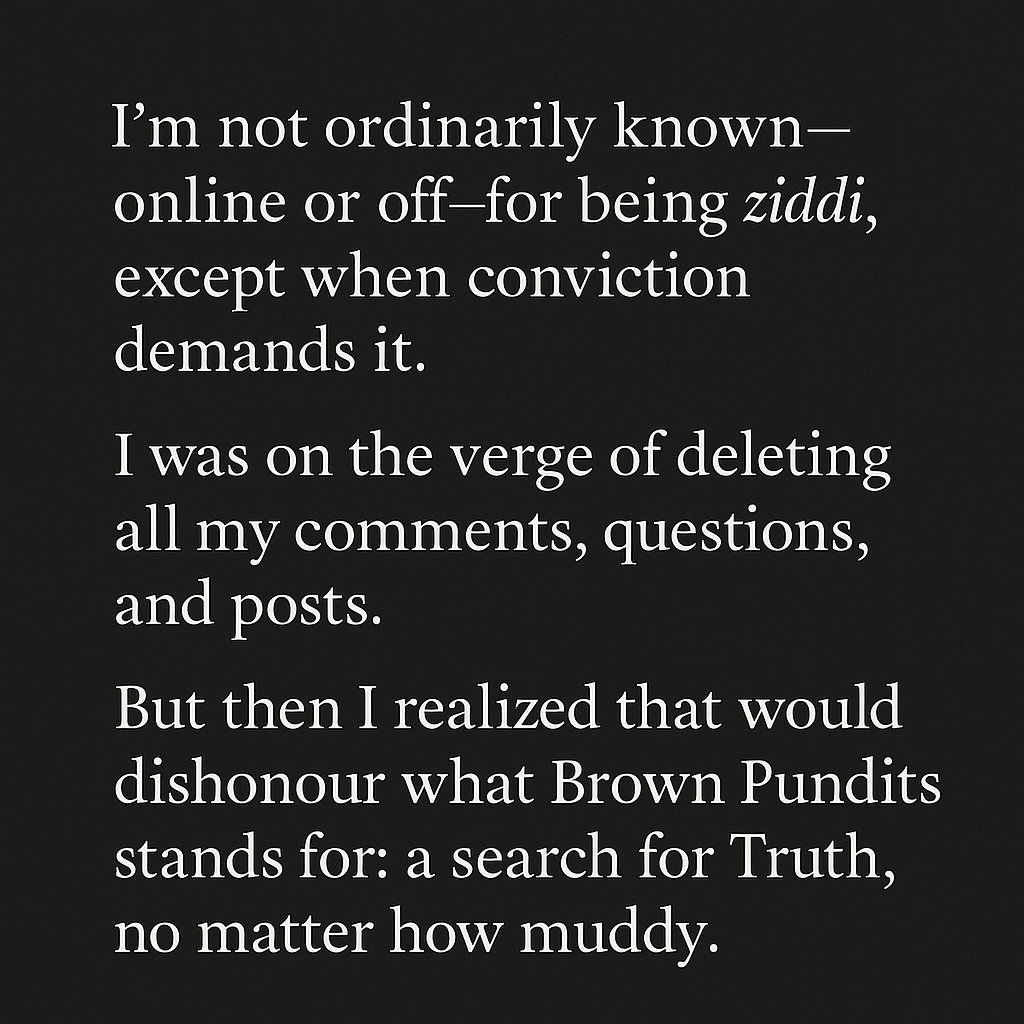
But arguments only work if they spark thought, not just heat. Take Kabir; he’s a regular, and I’ve given him free rein. But his tendency to argue without reflection rubs people the wrong way. He blames his relative unpopularity on identity, but it’s more about tone than religion;Ā highhandedness vs humility.

In my own recent disagreement: I paused, thought, reflected deeply. That’s the spirit of BP; a messy, open-minded search for truth.

šŸŽ­ Meanwhile, the real tamasha isn’t cricket šŸ (India did trounce Pakistan) — it’s on X, and on the BP comment section.

X 🧵:

Image

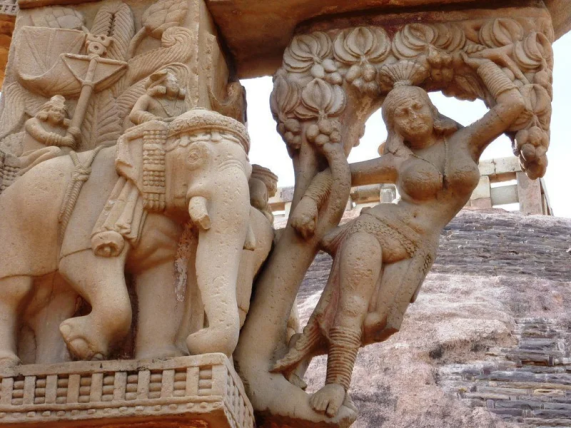
The stupas raises a deeper question:

How central was Buddhism to the Indian subcontinent — and how total was its erasure? In the heartlands, Brahmanism absorbed and displaced it; in the frontier zones, Islam swept away what remained. What we see today are ruins — but once, this was the dominant civilizational framework of the region.

Was its disappearance a slow assimilation, or a deliberate effacement?

Two Pieces Worth Reading

Two pieces I recently read and thought worth sharing

The first is a review of Kabir’s book, recently published in India on Scroll.in—a well-deserved feat that highlights his contribution to South Asia’s cultural and intellectual landscape.

Read: https://scroll.in/magazine/1086014/hindustani-musics-decline-in-pakistan-began-the-day-the-nation-was-born

The second is today’s piece, ā€œGender and the Fight Against Erasure.ā€ Originally published as the Human Rights Commission of Pakistan’s report ā€œā€˜X’ for Exclusion? How Pakistan’s Gender Minorities are Fighting Against Erasure,ā€ it unpacks the structural silencing faced by gender minorities in Pakistan.

Read: https://www.dawn.com/news/1941712

Both pieces raise important questions about identity, culture, and belonging. Read them—and let us know what you think.

When the Commentariat lies

I’ve updated this post (Brown Pundits is not an echo chamber) after realising something important.

What began as a spirited disagreement veered into something darker. It turns out that bombay_badshah, a voice I initially assumed to be new, may not be who he claims to be (I had a hunch but so did Kabir, that BB was HS reincarnated). The posting style, the fixations, the timing; all too familiar. My suspicion is that BB may be a derivative or proxy of HS, previously banned. If true, this was not a genuine disagreement; it was entrapment, bait-and-switch.

In that light, I owe Kabir an apology. He was provoked in bad faith by someone who may be operating behind a mask. And that matters, because here on Brown Pundits, identity isn’t incidental; it shapes perspective, and we respect that. We excavate worldviews, not just opinions.

While I cannot definitively prove that BB is HS, the circumstantial evidence is strong. I will allow BB to remain but if the commentary returns obsessively to Kabir or Pakistan, I will intervene. Everyone is welcome to engage on substance. But this space will not be hijacked.

The original post remains below the jump, unedited but its context has now changed.

Continue reading When the Commentariat lies

The Pakistani Inferiority Complex

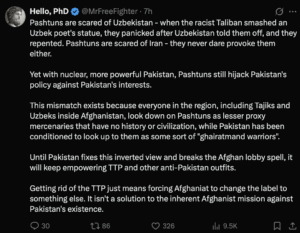
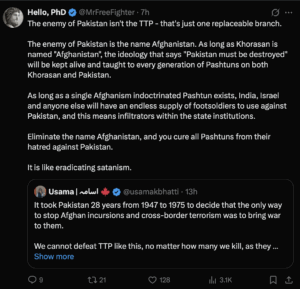
These excellent tweets exhibit a painful pattern that many of us see but few want to name.

Pakistanis, particularly its establishment and elite classes, exhibit a deep inferiority complex towards white (light) Muslims; Arabs, Turks, Persians, and Afghans. These groups are valorized, romanticized, and used as benchmarks for identity and belonging. Meanwhile, other Asian groups, especially within South Asia and Southeast Asia, are seen as lesser. This manifests not only in foreign policy but in pop culture, education, and internalized social hierarchies.

This is why, even if Partition had to happen (and it was undeniably disastrous), Pakistan still could have been something else. It could’ve been a GCC meets Pahlavi Iran construct—a sleek, semi-modernist, high-income Asian Muslim republic with cultural gravitas and economic depth.

Instead, as others have rightly pointed out, Pakistan today has one of the lowest HDIs in its region. Karachi didn’t become Dubai. Lahore didn’t become Paris. Islamabad remains a ghost town of beautiful boulevards and hollow institutions. The promise wasn’t just broken; it was never even understood.

In some ways, Pakistan inherited the worst of both its imagined lineages: neither the intellectual cosmopolitanism of Persianate high culture, nor the industrious civic ambition of Indian civilizational continuity.

This is why tweets like those from @MrFreeFighter land so hard. They expose the psychic dissonance at the heart of the Pakistani state’s anxieties; its hatred of Pashtuns, its paranoia about ā€œAfghanism,ā€ and its inability to deal with its own peripheral ethnic groups as anything but threats.

Meanwhile, Indian Muslims like bombaybadshah, though deeply patriotic to India, often voice critiques of Pakistan with a clarity born of disappointment. They represent what Pakistan could have cultivated: a civic Islam, grounded in identity but untethered to ethnic obsession.

The final irony? South East Asia, Thailand, Cambodia, even Bali, retains more civilizational Dharma than most of Pakistan. Religion is irrespective of that elusive civilisational quality of Dharma, thus the true borders of Bharat lie eastward, not northwest.

Pakistan is not the enemy of India. It is the shattered mirror. And what it reflects, feudalism, insecurity, bigotry, and colonial hangover, is what the entire subcontinent must transcend. Again anyone who reads this can see I’m not saying this from a place of hate but love.


Pakistan’s Extraordinary Diplomacy

let’s preface this w a popular & controversial (?) tweet of mine

šŸ‡µšŸ‡° | A Feudal, Fragile State That Keeps Getting Foreign Policy Right

I haven’t had a moment to breathe lately. I’ve been in Dubai; a city whose heat and ambition leave little room for reflection. But even in the desert haze of hyper-modernity, some themes press through. And perhaps none more than this: the sheer tactical genius of Pakistan’s foreign policy in recent months.

Let me be clear. Pakistan is not a strategic power. It is a fractured, feudal, low-HDI state with deep structural issues. It’s trapped in cycles of elite capture and ideological rigidity. But it is also, to my astonishment, among the most tactically agile states on the planet. It punches far above its weight, not because it has a clear long-term vision, but because it dances well in chaos.

Where India plays the heavy-set civilizational power; bound increasingly to the West and the Israel playbook, Pakistan has played the margins, the hedges, the emotional currents. And it has played them well.

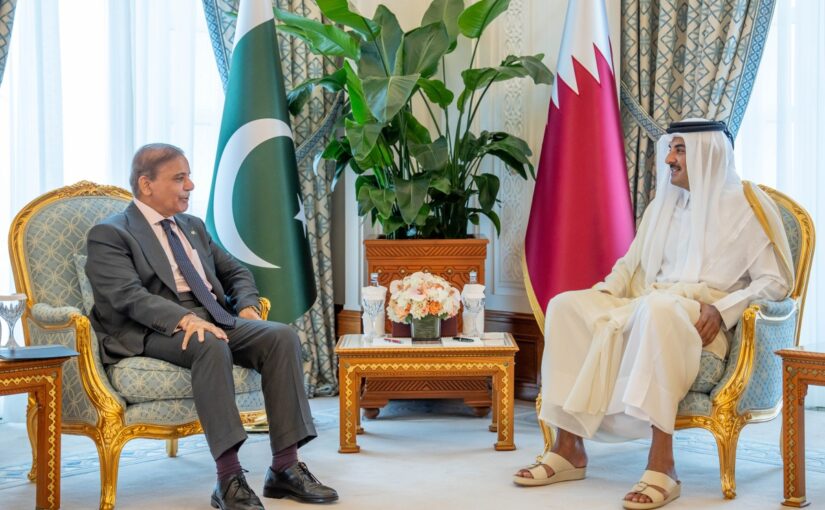
Ever since the Pahalgam conflict, Pakistan’s diplomacy has rarely been wrong-footed. Its tactical instincts are near-perfect. In moments of geopolitical flux, from Qatar to Kathmandu, Pakistan has found ways to remain relevant, nimble, and central. Not liked, not admired but impossible to ignore.

This post is not a celebration. It’s a recognition. A state can be deeply dysfunctional internally, yet highly functional externally. And in a world of waning superpowers and rising regional blocs, that matters.


Pakistan is Not India’s Mexico

Continue reading Pakistan’s Extraordinary Diplomacy

Nepal Newar and Sinhala Quasi-Historical Myths

Now that Nepal is in the news, a post on similar mythical origins of Sri Lankans and the Newar community in Nepal. The post was a result of my Uni Batch mate Sunil Koswatte’s link to a Journal article “The Horse-King and the Merchant Siṃhala, (Z006) By Naomi Appleton.

The Journal article by Naomi Appleton says that
Abstract of the Abstract

The Siṃhala story continues this narrative to include the chief merchant, Siṃhala, being followed home by a demoness, who tries to get him back before seducing and eating the king.
i)This paper examines political and quasi-historical narrative of the invasion of Sri Lanka by the Sinhalese;
ii)Newar Traders warning of the dangers of travelling to Tibet.

Note: The Nepal Newars are the 8th largest ethnic group in Nepal and about 4.6% of the population

Continue reading Nepal Newar and Sinhala Quasi-Historical Myths

Trump Has Birthed Eurasia

I’ve been busy, but I can’t shake the feeling that we’re living through the beginning of a new world.

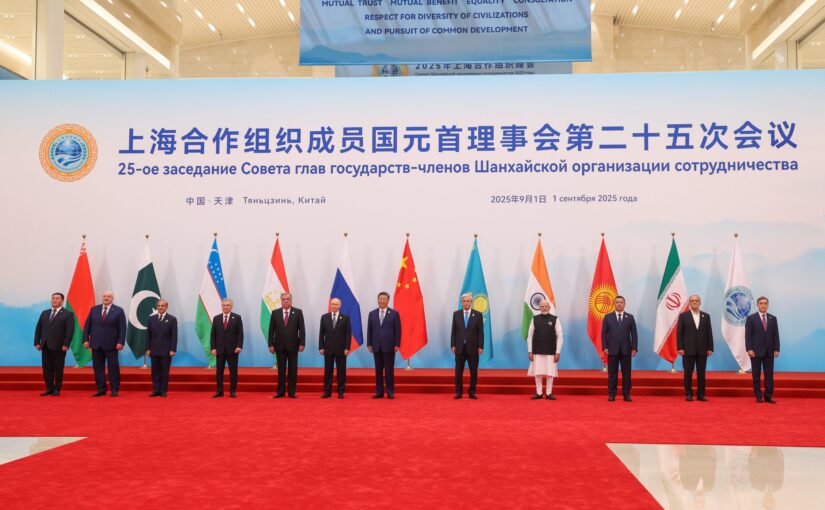
It was acute with the SCO summit; not just through the headlines, but the atmospherics. The handshakes, the body language, the ease. It’s the kind of thing that barely registered in Western media, but Modi’s presence, standing shoulder to shoulder with Xi, Putin, and Pezeshkian, felt like the curtain rising on a new geopolitical epoch.

And at the center of it all? Donald J. Trump. Not by design, of course. But by consequence.


šŸ”„ The Modi Factor Continue reading Trump Has Birthed Eurasia

Brown Pundits