
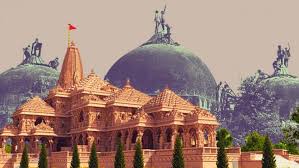
A precedent post on hybridity, custodial duty, and the elites who want it both ways
The argument running through the recent threads is sharper than the usual India versus Pakistan braggadocio. It is a claim about high culture itself. A civilisation cannot demolish a man’s mosque and claim his high culture in the same breath. The two moves cancel. The elites on both sides of the 1947 line have been performing both moves for eighty years, and the contradiction is now visible.
What high culture is
High culture is the foundational settlement of values, ordinarily anchored in religion, that a civilisation runs on. It can be syncretic in formation. Plural ownership is harder to sustain, and most attempts eventually close into a single settlement or fracture into rival ones; some imperial frames (Ottoman, Mughal, the Republic of India itself) did hold the tension for longer than the simple model would predict. The point is not that plurality is impossible. The point is that plurality is unstable, and the instability is what generates events like 1992.
England is the cleanest worked example of closure. The English high culture is a hybridisation of Anglo-Saxon, Anglo-Norman, and an absorbed Celtic remainder. Scotland and Wales sit inside the matrix without breaking it. The hybridisation closed; one settlement emerged.
Ireland is the test case in the negative. The same Anglophone substrate produced a different high culture in the Catholic south, and in the Catholic pockets of the north, because religion did the foundational work and religion would not blend. Two islands, one language family, two high cultures. Language is the medium. Religion is the substrate.
Ludwig von Mises, in Nation, State, and Economy, argued the related half. The nation is a speech community, but the speech community is shaped by what the school teaches and what the church says. Plattdeutsch villages on the Dutch border could have gone either way two centuries ago; the descendants would now be just as good Hollanders or just as good Germans, depending only on where the school and the church sat. Language carries national consciousness. The religious settlement decides which language wins.
Notre Dame: The custodial bargain
A civilisation that claims a high cultural inheritance accepts a custodial duty for the artefacts of that inheritance, including the religious ones it no longer believes in.
The French do not burn down Notre Dame. Secular France, the most aggressively post-Christian polity in Western Europe, treats the cathedral as part of its own foundational settlement. When the building burned in 2019, half a billion euros were raised inside a week. Claim the inheritance and you protect the buildings, regardless of present belief. The cathedral of secular France is still a cathedral.
Babri Masjid was a 500-year-old Mughal-era structure. Pulled down in India in 1992, it became a civilisational event. The Republic of India claims the Mughal inheritance. The Red Fort hosts the Independence Day address. The Taj is the country’s most reproduced image. The Mughal court sits in the school textbooks. The claim is real; the claim has institutional weight; the claim creates the duty.
Three counter-readings circulate and deserve direct treatment. The first is the Ram Janmabhoomi restitution argument: the mosque sat on the birthplace of Lord Ram, so its removal restored a sacred site rather than breaching any duty. The second is the conquest argument: the Mughals were occupiers and not inheritors, so their structures are not part of any continuous Indian high culture and carry no preservation claim. The third is the institutional argument: India self-corrected through the Places of Worship Act 1991, which froze religious site status and limits future repetition. Each has force. Each runs into the same problem. All three require India to define itself as a Hindu civilisation rectifying a foreign occupation, in which case the Mughals are out of the inheritance and the Red Fort is just a captured fortress. India does not say this. India keeps the Red Fort, the Taj, the textbooks, and the address. The Schrödinger move; both states held at once; the choice postponed for as long as the postponement holds.
Confused elites on both sides
Pakistan presents the inverse problem, and a deeper one.
The Israeli–diaspora distinction is the clean way in. Diaspora Jews preserve identity through performance, because the surrounding society does not do the work for them; Israeli Jews can let Shabbat lapse, because the state itself is the preservation. Pakistan stands in the Israeli position. The country can demolish a mosque blocking a highway with no civilisational tremor, because Pakistan is structurally Muslim. The state is the inheritance. Identity does not need its buildings when the country is the building.
That casual security is also the trap. Pakistan defined itself entirely in Islam, and could not therefore capture the Persianate space, which is the more interesting inheritance, and the one that gave Mughal high culture its actual character. The Turkish kingdoms in India were not Islamic polities in the post-1947 Pakistani sense. They were Persianate polities in which Islam was the religion of the dynasty but the cultural code (court, poetry, architecture, dress, administrative language) was fundamentally and ineluctably Persian. By choosing the strict Islamic line, Pakistan opted out of Central Asia, Iran, and the wider Persianate cosmopolis it had every claim to enter. It chose to be a Muslim state in a region where the prestige formation has always been Persianate. The Mughals were not what Pakistan now is. Pakistan’s failure is not insufficient Islam. It is insufficient Persia.
The shared feature on both sides is the refusal to choose. Indian elites want Bharat and the Mughals. Pakistani elites want the Islamic state and the Mughal inheritance, without the Persianate substrate the Mughals actually ran on. A high culture is not a buffet.
The biryani, the Taj, the ghazal on the film soundtrack, the shared vocabulary of grief and celebration. These are residues, not arguments. They will sustain a generation of mutual sentimentality. They will not sustain a civilisation. The elites on both sides know this. The choice has been postponed. The choice is being made anyway.
Great post.
I do disagree with you on “Pakistan’s failure is not insufficient Islam. It is insufficient Persia”.
Pakistan is a South Asian country. More than 50% of the population is Punjabi. The native language of this population is not Urdu but Punjabi.
There are actually Punjabi nationalists who resent Urdu as a “colonial language”. This is a whole another argument perhaps worth a post in itself.
Pakistan’s high culture is Indo-Islamic not Persianate: Hindustani classical music, Urdu, Ghalib, Faiz, etc.
Here is something I wrote in college for a philosophy class that touches on the Babri issue:
“Symbolic versus empirical ‘truth’: What is the distinction and why does it matter?”
https://kabiraltaf.substack.com/p/symbolic-versus-empirical-truth-what
XTM
This is not fair. XTM has mentioned often enough that “We” is the editorial voice of BP.
I also think it’s kind of annoying but he’s clarified why he does it.
50 years down the line, these guys will be claiming British high culture too. Stranger things have happened.
That analogy would make sense if England was a part of India with Buckingham Palace, Westminster Abbey, Stonehenge etc with vast majority of Englishmen being Indian citizens.
And Scotland and Wales were the “UK” (with India helping Wales secede from “UK” at some point) cosplaying as “English”.
The reality is that the land that is now “Pakistan” has never been particularly important. In fact, before the canal colonies it was never even inhabited much. And recent population explosion is due to lack of family planning, female empowerment, low literacy etc.
That’s why they have to go back 4000 years to the IVC.
Everything else of importance in the subcontinent – Hindu, Muslim, Sikh, Christian – happened in “India”.
Hence, Pakistanis look to claim history from elsewhere – India, Turkey, Arabia, Persia.
Pakistan has always been nothing more than a dhaba-stop between India and Persia.
Are we not defining cultures too narrowly .
For starters the Babri Masjid was not built by Babur it was built by a general of his years after he had passed through this area and there is actually an even better case to be made thst it is Aurangzeb who built this over a structure that may or may not have been in use.
As you mentioned Mughals are just one part of the persiante high culture that was created. This culture while under stress from both puritanical muslims and others who also want to purify their own religious practise is still present in India, most obviously amongst our muslims but even among many non hindutvadi hindus whose cuisine, language, culture, some might say even religious practise is built on this interaction.
We may not be able to claim the mughals presently because of the disavowal but that does not mean we are sepereted from the culture they were part of.
Great points. Worth emphasizing that the Mughals were not the only vector of Persianate culture in India, and maybe not even the most intense. . Would also add that history by its nature always gets relitigated, the only disinheritance is when memory is erased, such as in the case of the IVC.
Quick comment :
1) not all hindus claim continuence from mughal, either culture, cuisine and all. It is only the gangetic crowd. reference to mughals is resented even in bengal, parts of Maharashtra where mughals ruled. Absolutely no resonance in South, west and east and northeast. There are advertisements in national news papers from Assam, claiming that they had beaten back mughals 17 times.
2) as anand rangarajan had said recently, that, if there is no Adolf Hitler road in Tel Aviv, there is no justification for babur road in New Delhi.!!!!
@XTM:
Since you’ve mentioned Persian culture in this post, you might enjoy this piece from today’s DAWN:
“Hafez &Hormuz”
By Shahzad Sharjeel
https://www.dawn.com/news/1995951/hafez-hormuz
Precedent post so I will not litigate much even though I don’t agree for some of the same reasons Calvin has touched upon but
India self-corrected through the Places of Worship Act 1991, which froze religious site status and limits future repetition. Each has force. Each runs into the same problem. All three require India to define itself as a Hindu civilisation rectifying a foreign occupation, in which case the Mughals are out of the inheritance and the Red Fort is just a captured fortress.
The first sentence here is non-sequitur with the reason you dismiss it for? PoWA, drafted in the spirit of and under the authority derived from grundnorm that is the Indian constitution, guarantees freedom of religion is exactly how India does NOT define itself as a Hindu civilisation. It may do so in other ways but this is precisely what denies the argument.
[…] Kabir on You Cannot Demolish His Mosque and Claim His High Culture […]
BB: “The reality is that the land that is now “Pakistan” has never been particularly important.”
This is a ridiculous statement. Lahore was the capital of the Mughal Empire. It was also the capital of Maharaja Ranjit Singh’s Empire.
In order to build India up it is not necessary to tear Pakistan down.
Lahore was also the capital of the British province of Punjab.
When East Punjab became part of India, Chandigarh had to be built from scratch,
BB’s argument is ridiculous, It reveals nothing but anti-Pakistan animus.
Isloo was built from scratch as well. Take out Lahore and Karachi – arguably the most….’Indian’ of Pakistani cities in terms of heritage, and what other historic urban city is left?
Exactly. Chandigarh is the capital of a state.
Islamabad of the entire country.
India’s capital meanwhile is Delhi, capital to a multitude of empires/kingdoms, all of whose successor is the Republic of India.
Also both Lahore and Karachi used to be Hindu majority – those populations fled to Delhi and Mumbai respectively and have become an integral part of those cities.
The Pakistani cities never recovered and have more in common with smaller Indian cities than the megapolises of Delhi and Mumbai.
“What other historic urban city is left”?
Have you ever heard of Peshawar or Multan?
Rawalpindi was a cantonment even during the Raj.
You really know very little about Pakistan.
yes Pindi came to mind..
@BB
Lahore was 60% Muslim in 1941.
Karachi was 51% Muslim in 1941.
Where is the Hindu majority?
Yes, calling Lahore and Karachi Hindu majority is a stretch.
However, it is a fact that the elite of Lahore was Hindu.
I discussed this briefly in my dissertation. Allow me to quote myself:
See the following article by A. Hameed:
“Lahore Lahore Aye: Where Hindus and Sikhs once lived”
https://apnaorg.com/columns/ahameed/column-40.html
Karachi was 51.1% Hindu in 1941.
https://en.wikipedia.org/wiki/Religion_in_Karachi#1947_Partition
Lahore minority – I stand corrected but as @Kabir says they were the elite class.
Kabir: “This is a ridiculous statement. Lahore was the capital of the Mughal Empire. It was also the capital of Maharaja Ranjit Singh’s Empire.
In order to build India up it is not necessary to tear Pakistan down.”