
Recently, I’ve been traveling a lot for my formal project: assessing the governance framework of 46 HEIs (universities) in Pakistan. We’re looking at the de jure autonomy of universities (in governance, finance, staffing, academics, and research) versus the de facto reality. Where, like many other sectors, higher education is overregulated.
We’re struggling a lot. Universities are mushrooming (95 in 2002 to 269 in 2024) without any meaningful output, just producing PhDs like rabbits (177 in 2002 to 3489 in 2024). Result: not a single Pakistani university ranks in the global top 350.
I’ve visited different universities. (inter-alia):
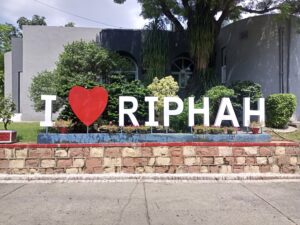
Riphah International University, Islamabad – a private HEI. The I-8 campus is small, but with multiple campuses they cater to around 30,000 students. What’s interesting is how deeply Islamic morality is embedded in their institutional values. It’s the only university (out of the 8–9 I’ve visited so far) whose vision and mission are explicitly integrated with Islamic principles. They even have around 10 credit hours dedicated to teaching morality. Quite remarkable in this era of modernity and expediency.
University of Haripur – a “big whale” kind of university with stunning views. In the public sector, it stands out for its lush green terrain. The guest house? Phenomenal and all pro bono, of course. 😊
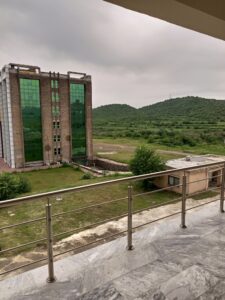
Pak-Austria Fachhochschule Institute of Applied Sciences and Technology – based on the German Fachhochschule model (industry + theoretical study). Students are required to complete around 500 hours of industry experience to graduate. Perhaps the only university in Pakistan operating on this model. Their guest house was phenomenal too.
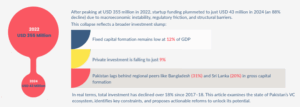
Meanwhile, a brief I authored is out: Pakistan’s Venture Capital Landscape: Navigating Challenges, Seizing Opportunities. In it, I chart the problems in Pakistan’s VC ecosystem and possible ways forward. Read here
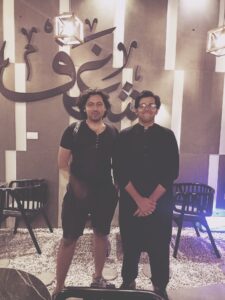
I also met a fellow “dead poet” from my community—the Dead Poets Society of Pakistan—Abdullah, a.k.a. Nuwanda, at a cafe called Shugf (translated as “devotion” or “infatuation”). We tried a coffee variant that had been scaled up to intensify its flavor. And of course, given my addiction, it didn’t disturb my sleep.
On the way back to my hometown, Peshawar, I penned a poem. I hope readers might like it.
While talking of the moon, this line keeps echoing in me: Mein Jo Shair Kabhi Hota (song by Mehdi Hassan).
a silly moon that i was unable to see because of the angle of my seat [1]
i was traveling
to my precious and treasured
city
a typical bus
nothing new
nothing interesting
a person quarreling—
he thought this vehicle
was going towards Lahore
and in silence,
oranges turn up
in your hands with henna patterns everywhere,
tattoos of libido
when i think of you
i want to cry
(maybe due to alignment
of zodiac)
i am fish
it won’t pester anyway
can’t we just go in the deep
iced coffee (not Shireen’s [2] stream but ours)
in the buff and never come back—
by this, we will be
fossilized into another folklore
they would call us
“panic-lovers of the pure land”
a silly moon is saying something to me
but i cannot see it
due to the angle of the seat i am sitting upon
let it enjoy the ephemeral glory
the sunshine would kill it
i am so honored
i am penetrated by a fever
that is insurmountable by any medicine
in this state, i am a slave
and king
at the same time
Note: Please don’t consider this my final version. I’m unable to fully express my feelings right now.
[1] A lovely friend suggested that I look at the moon, but I couldn’t for obvious stated reasons. That sparked the idea to write this.
[2] “Shireen’s stream” comes from the Persian legend Khosrow and Shireen, where Farhad, in love with Shireen, carves a channel through a mountain to bring her water (or milk). It symbolizes devotion, sacrifice, and love that overcomes obstacles.

LUMS is not in the global top 350?
Welcome back! Hope Abdullah will also contribute to BP 🙂
Thank you. No, it isn’t.
https://www.thenews.com.pk/latest/1326832-hec-chief-blames-poor-governance-for-pakistani-universities-declining-rank
Surprising – of course do global rankings matter intrinsically
“LUMS is ranked as the top university in Pakistan in the QS University Rankings for the year 2016, 111th in Asia and among the top 700 in the world. It is also ranked by QS as among the top 250 universities globally for business and among the top 400 universities globally in mathematics.”
These are old statistics of course but there is no doubt that LUMS’s business school is globally competitive (not surprising since LUMS started out as an institution that only gave out MBAs. Humanities were added later).
I think global rankings matter to the extent that they give an indication of the strength of a country’s higher education system. There is no doubt that institutions such as Harvard and Columbia (in the US) and Oxford and Cambridge (in the UK) contribute a lot to the soft power of those countries. LUMS aspires to be the “Harvard of Pakistan” but obviously they are a long way from there.
Yes we have a good range of IndoPak voices
As Nivedita pointed out, we need more women.
Specifically, I would advocate for a Pakistani woman. I can’t really think of any writers off the top of my head. Perhaps Furqan has some suggestions.
Was there ever a Pakistani woman commentator even before the recent revival of BP during its glory days(circa 2018-22ish)? I don’t recall ever having come across anyone who came across as such.
No, there wasn’t. The commentariat has always been overwhelmingly male. There was an Indian female commentator who called herself “Violet” but I think that was pretty much it.
At the risk of being stereotypical, I don’t think women tend to be very interested in genetics and that was a lot of what Razib posted about. Personally, I found the constant discussion of “AASI” vs “Steppe” tiring as well.
The focus on BP has tended to be on geopolitics (specifically of the India-Pakistan variety) and I guess that is another issue that doesn’t tend to generate female interest.
I did try to post on culture (music specifically) but that didn’t seem to generate too much interest.
Razib’s articles tended to focus on which caste or ethnic group had how much “AASI” etc. Definitely they were for a niche audience.
We have a few in the offing courtesy of Furqan
“Undermining Universities” by S. Akbar Zaidi
https://www.dawn.com/news/1930115/undermining-universities