A newer Open Thread is up: Open Thread: Navarātri and Durgā Pūjā →
On Nivedita & Archer’s joint request (Mamnoon/Tashakor/Merci for the kind words); I’m going to expand on my comment:
“Kabir is definitely right. Ethnicity in Pakistan is complex; there are three tiers of society. The English speaking elite (Imran is part of that so is Kabir), who are “Pakistanis” and ethnicity isn’t really reflected on…”
This comment, which the BP archives have tons of similar posts on (BP was venerable even in 2014), sketches the bones of Pakistan’s sociological map. But what lies beneath the skin?
Pakistan is feudal; India is not.
That one statement alone explains much. Landholding elites dominate politics, rural economies still function on patronage, and class mobility is rare. Caste, though “denied,” is real and sharper, in some ways, than it could ever be in India (the reservation system does not really exist in Pakistan except for religious minorities but not for socio-economic castes). Pakistanis can sniff out class in one another with a dexterity that’s probably only matched in the United Kingdom, which is the home of class stratification (I remember reading Dorian Gray in Karachi in the early millennium and shocked how similar late Victorian early Edwardian England was).
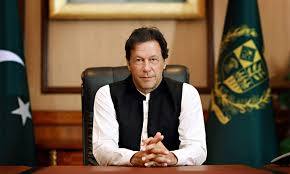
The postcolonial state froze itself in amber. There has never been a serious leftist rupture, excepting 1971’s successful Bengali revolution. Even Imran Khan, who styled himself a reformist, is a product of elite schools, Aitchison College, Oxford, and aristocratic lineage. His “Islamic socialism” was only ever viable because Pakistanis still believe in myths of the benevolent landlord.
And yet, Pakistanis sometimes seem happier than their Indian counterparts, even if not remotely successful. Why?
Hypnosis, Feudalism, and Incomplete Modernity:
Because they haven’t tasted the acid of modernity. Because they haven’t seen their old gods fall. Because they haven’t been told their languages and cultures are “vernacular.” Because they never truly faced the annihilation of the rural.
Modernity arrived, yes; on phones, through Instagram, in the form of Turkish serials and Gulf remittances. But the deep structure of Pakistan remains unshaken and so is their psyche; it is unbroken (in fact post-Pahalgam has reinforced it, the downed planes are a histrionic victory of sorts). High birth rates persist. Social media saturates the culture, yet the psyche resists exactly as George Orwell touched on in his seminal England essay:
but England will still be England, an everlasting animal stretching into the future and the past, and, like all living things, having the power to change out of recognition and yet remain the same.
Something in the Pakistani imagination remains similarly untouched. That is why Iranian Baluchs find their Pakistan Baluch kin to be extremely conservative (whereas the former are not religious) and Indian Muslim wilt to the old-school Pakistani ways (a Pakistani, to a rule, will have a more traditional outlook to an Indian). An Urdu speaking Muslim in India will be more traditional (not necessarily religious) than a vernacular speaking Muslim (Malayee, Konkani or Tamil).
Call it religion. Call it Hindu-Muslim cultural memory. Call it a Western inoculation through elite schooling and overseas networks. But more than that, Pakistan is the only country in the world created to fervently believe its own borders.
It wanted to hypnotise itself. And it succeeded. Pakistan, more than any other nation, built a story for itself that had never existed before. Bharat, Iran, Israel, Arabia; these are real constructs. There never was a Pakistan but for a dream in Cambridge carried forward by the scions of Hindu converts (QeA and the Great Allama). Idea, theory and execution; it’s almost a perfect exercise in how to get a start-up off the ground.
The post-1971 Pakistan is only 54 years old, younger than many assume. In that moment, West Pakistan had to reimagine itself, not as a Muslim umbrella for all South Asians but as a fractured federation barely holding together its provinces. In truth, Pakistan and Bangladesh were both born in 1971. That’s when the fiction collapsed, and something new began.
And that fiction still holds power. It explains why “the Pakistani psyche is almost impossible to understand but completely transparent to insiders.” It’s shapeshifting but bounded. It’s not trying to become Arab or Turkish or Persian. It is something else; something imagined, yes, but rooted. Far more rooted than Israel, for instance. Israel was forged from memory; Pakistan from living inheritance, with the plains of the Punjab, the waters of the Indus and the mountains of the Hindu Kush forming real definition..
That’s why when I make provocative statement that Urdu is a circumcised version of Brahmin culture; it is so “offensive.” My Shijrah goes to Arabia and Afghanistan (on my desi side) but I have “crossed over” to Hindu civilisation; whereas my forebears betrayed their Faith for a more Glorious one, I have betrayed my bloodline and civilisation for a more Grander one (much as I love Pakistan, I now see it as a subset of Bharat Mata)..
I’m not quite a Salman Rushdie; I’m partial to both Pakistan and Islam and even the Ummah but I don’t stake my future on any of them (nor have I defected to the West, which would at least be understandable).
But where Israel is drunk on supremacy, Pakistan swings wildly between inferiority and superiority complexes, between grand civilizational pride and endless national anxiety.
This context is critical to understanding Pakistan today. Its contradictions are stable. Its feudalism is structural. Its nationalism is both performative but permanent. And its modernity is half-swallowed; seen, but not digested.
So yes, Kabir is actually right; he is the Cassandra of Brown Pundits. But only someone inside can truly know how right and its cost (lost dreams, lost pride, lost decades in having to constantly service Great Powers).
AMA compadres | unlike Kabir Bhai, I’m not angling for a fight and I’ll also sign off with a Namaste.
Like I said, I have nothing against Brahmins as such. I only want to emphasize that North India’s high culture (also known as Ganga-Jamuni tehzeeb) is a mixed composite Indo-Islamic culture. Partition really did a number on this culture.
If you know anything about me, you know that I’m not the type of person who is desperate to separate Pakistan from South Asia.
Well, the IMF and the WB already have and the Pakistani rulers seem to be on the same wavelength with their Gaza plan.
Let’s see how this unfolds. TLP don’t seem to like it.
Credit where credit is due; Pakistan has been doing very well.
Honey, I thought you had handed the reins to your buddy, Badshah?
He was visiting and saw the site open. 😛
Haha – glad you guys are so close 🙂
Yes I think the Commentariat do want to understand Pakistan; but you have no patience to explain it.
To some degree, there are ‘many Pakistans’, just as there are so many ‘Indias’. Kabir is, but one version. And to be a bit blunt, given on what he has shared so far, I am deeply skeptical of any ‘explainer’ coming from him. The lack of objectivity is quite consistently on display.
Having said that, even skewed perspectives offer up some transparency, by virtue of displaying where the skews are focused…
Kabir is very very close to Apex Pakistan.
He is the Casaandra on BP but he sort of represents Pakistani elite thinking.
Omar is the Cassandra in real life; he represents a very very small minority imho
My views are just me LOL
To be fair to Kabir; the Commentariat don’t really want to listen to what he has to say..
“Irrelevance’ and “provocation” are subjective opinions so I’m not getting into that.
People here don’t like me because not only am I Pakistani and Muslim, I’m also “woke”. I am unapologetically Left-Liberal and anti BJP (not “anti-India”).
As for “reasonable conversation”, I think you need to apply this same standard to your compatriots who generalize in the most offensive manner about Pakistan and are allowed to get away with it.
It’s my speculation that if I expressed the exact same opinions that I do here but it was clear that I was an Indian citizen, the amount of nastiness I receive here would be considerably less. Of course, there is no way to prove that either way.
I think the constant self aggrandisement & braggadocio coupled with insulting people’s intelligence, english proficiency and religious epics play a large role in the antagonism you experience here.
You being Pakistani and willing to engage in some sort of good faith are your better aspects.
I am willing to concede that I’ve been obnoxious in the past. But surely you will also concede that I’ve received a lot of obnoxiousness back in spades? I’ve been called “Islamist” (when I am a cultural Muslim) and accused of “taqqiya”. By any objective standard, those were extremely obnoxious comments. I’m not someone who is easily bullied.
Everyone on this forum (myself included) needs to work on being more respectful of differing political opinions.
I do stand by my comments on the lack of understanding of argumentation shown by many (though not all) commenters here. It does reflect a lack of training in the humanities.
I do think that my national origin plays a large part in the nastiness that I receive here. Asides from my positions on Pakistan (where i am unapologetically a patriot), my views are bog standard those of Congress in India or of Democrats in the US.
Finally, I’m not overly bothered by what random people on the Internet think about me. I don’t cry myself to sleep every night because of all of you. Unless it crosses the line into blatant personal attacks in which I case I do reserve the right to call out bullying.
Again not true
Kabir reminds me of some very well off Punjabi “friends” from Maharani Bagh and Friends colony type area of Delhi….those chaps were also “elites” and would often talk about how their grandparents also lived the high life etc.. .:)…It was obvious to us that they simply thought less about us and that was never going to change. Our intellect or lack of it had nothing to do with it :)..this is just an observation and not meant to be critical of anyone.
I removed Kabir’s last 5 comments; he is pushing the line with his behaviour, he can focus on his “Substack.”
I will write on ‘Izzat culture
I don’t see any evidence of a genuine desire to understand Pakistan. I see a typical right-wing Indian desire to throw dirt on Pakistan.
I follow India’s news regularly. I read “The Wire” and “Scroll”. I don’t see any evidence that people here even bother to read DAWN (a centre-left Pakistani newspaper).
With respect Kabir you thrive on the adversarialness ..
I give as well as I get.
If people are respectful to me, I am respectful to them.
Very unnecessary; you come with the wrong attitude, when as you know BP actually gives you the most intellectual traction. This is why you lurk here.
To thine self be true.
This is not about politics but personality and respect. Your haughtiness is what irks the Commentariat.
It is also why you are the only regular Commentator without authorship, because as you know you abused it by simply reposting old pieces, without context or new content.
As you know I am pretty fair in my assessment .
I don’t wish to comment but Razib has an extremely successful Substack, with a huge readership, is a cofounder of this Blog but is never here..
So .. to thine self be true; at BP you acquire some level of popularity that you do not get in wider circles.
Humility is a virtue. You would be more endearing to the Commentariat.
It is not your identity that offends but your method
And also watch Bandish Bandits? 😛
>Pakistan swings wildly between inferiority and superiority complexes…
So true.
I think India is so diverse that each state is like a nation. I think Pakistan is like a subsection of Indian regions .. so imagine a cluster of 2-3 states then you have Pk