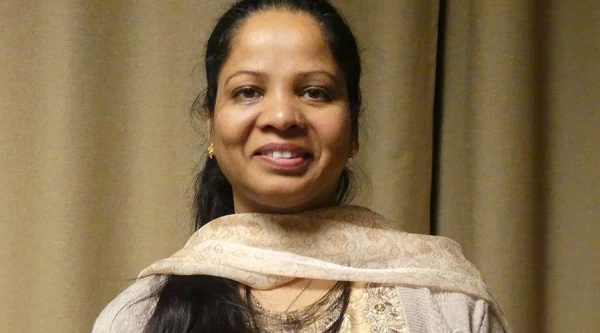
Kabir was right to question why I repeated the remarks Aasia Bibi was accused of making. The point did not require repeating them. But the principle did.
I try to be respectful towards all religions. I’ve even been accused of being too sympathetic to Islam and to Pakistani narratives. But many people still do not grasp that the rage some believers feel when they think their Prophet has been insulted is the rage I feel when a powerless Christian woman spends years on death row for something she did not do—or had every moral right to say.
Aasia Bibi is the clearest example in our era of what happens when a blasphemy taboo becomes a blasphemy law.
And what happens when a blasphemy law becomes a political weapon.
If we cannot speak the very words that put her in prison, then the injustice done to her cannot be fully confronted. Sanitising the allegation only sanitises the cruelty.
This is the core of the matter:
Freedom of expression is meaningless unless it protects speech that some consider offensive or sacred.
It cannot protect only polite dissent. It must also protect speech that religious authority hates.
I don’t indulge in theatrics or gratuitous insults. But the principle has to be clear: in a free society, no religion, none, can demand immunity from criticism, satire, or even irreverence. If believers wish to revere, they are free to do so; if others do not, they are free not to.
What troubles me is the growing chorus of Western liberal Muslims and “hijabi feminist” activists who demand respect under the banner of “Islamophobia,” while simultaneously insisting that Muhammad must never be depicted, mocked, or even discussed without ritualised reverence. This is simply a diplomatic version of the same rule that keeps women like Aasia in prison: the Prophet’s honour is more important than human freedom.
And the moral inconsistency is glaring.
There is deafening anger over Gaza. There is a whisper, at best, over Aasia Bibi. For some, outrage is selective, calibrated to global cause-identity. Aasia is inconvenient because she reveals an uncomfortable truth about the political uses of piety.
This is why I repeated the alleged words. Because the principle they engage is non-negotiable:
In a free society, all ideas, including religious ones, must be open to criticism.
No faith gets to write exceptions into the law.
Aasia Bibi paid for that principle with a decade of her life.
The least I can do is speak the words that she was punished for—even if only to show how absurd it was to punish her at all.