The Jahanara debate & how Desis must dress

In the last podcast I was struggling with pronouncing the name, Jahanara.

The first is a Pakistani friend:

The second is an Iranian friend:

How Jahanara pronounces her name:

My pronunciation is in between the first two. There is some overlap between Persian and Pakistani (Indo-Persian) names of course. So I usually pronounce the name in the way I first heard it or heard it most.

Of course the “Hindi” pronunciation is different where the N in Jahanara is nasalised rather than pronounced.

The personal name “Jahan” seems to have retired from Persian and instead migrated to Hindustan. So I’m inclined to defer to the Urdu version of the name but nasaling the N is very unnatural to me as it reminds of the time at Urdu class. One of the students was counting the Urdu numbers with a Punjabi nasalisation and the teacher  started chuckling.

I dropped the Urdu class after one semester even though I was making the fastest progress; Persian & Urdu are simmering languages for me, it’s easy to get to fluency but English almost always takes over.

As a final note; Urdu, by any other name would be just as sweet, but Persian is sweeter (I’ve mauled Iqbal & Shakespeare in a single sentence).

The irony is that Urdu was called Hindi since Urdu was initially used to refer the Persian of Shahjahanabad. Urdu is the regularisation of a Hindustani standard that came about through Amir Khusrao but was obviously was called Hindi as it was the local language.

As a final aside it is just astounding the extent to which India’s medieval history is in Persian. I *knew* that the official language was Persian but never understood what that meant entirely. The Indo-Muslim rulers were copious writers and along with their monuments left mountains of documents (Shah Alam’s unfinished Perso-Urdu verse ran to 600+ pages).

The reason Pakistanis and Urdu-speakers go on and on about Middle Eastern forebears is because their ancestors were certainly in that milieu for centuries. It’s a vestigial memory that has persisted.

Origin Myth of Urdu & Hindi by Shamsur Rahman Faruqi

Of course one can never deny Pakistan’s aristocratic heritage when our dear Captain decides to wear a cheesy Shalwar Kameez in an audience with HM the Queen:

Image may contain: 11 people, people smiling, people standing and suit

When meeting Royalty one should at least be aware of the sartorial graces. It looks like something he would wear to a shaadi in the Pind. Also Virat Kohli may be brash but his socks, shoes and pants do not go together at all!

If anything learn from the wonderful Noorie Abbas in how to dress:

Image result for noorie abbas

ISI/RAW have trained this vixen well. Interestingly though the choice of a Sari was very unorthodox; Pakistan girls her age will never wear a Sari to a formal event. I know that the older generation in Pakistan wear it (one socialite NGO makes a point of wearing it everywhere) but it’s pretty much died down; I wouldn’t be surprised if Noorie has inadvertently kick started it.

Her pastel shawl and gray-blue top set off extremely well. It was an interesting thing in the Prof. Devji podcast that the main gripe Hindutva had against Muslims pre-1947 was their “aristocratic connotations”. After Independence when most of these people went across to Pakistan; the image of the Muslim changed to gangster and poor.

Pakistan’s structural inequality, which we explored in our educational podcasts, means that even though there is a very high National Asabiyah (in core Pakistan; East of the Indus); the Islamicate class structure is very much dominant.

So you have these extremes in Pakistan, which are not so apparent in other countries. Since Bangladesh shackled the yoke; it’s made tremendous strides since it seems so much more egalitarian (it may also be that Perso-Urdu culture is inherently hierarchical considering its origins despite a strong socialist tradition of Urdu Poetry).

The rest of the Pakistan nation is as lemmings off a cliff:

Browncast into June….

Thanks to everyone who is a patron on the Browncast. I’ll be posting a few more in there today (or very early tomorrow). We won’t be posting anything in public until June 1st. Our podcasts tend to go longer, rather than shorter. Perhaps it’s a brown thing? In any case, regular podcasts of 1+ hours mean that our month quota gets used up regularly.

I won’t be recording too many podcasts for the next month (I may jump on one here and there depending on my availability), but that’s fine because there are already several in the pipeline. Here is a preview:

  • Discussion about the Indian elections. Kushal and Zach almost get into a (friendly) shouting match on this one
  • I talk about Game of Thrones, fantasy, and neuroscience, with Adam Calhoun
  • A discussion with an Israeli American about living in Israel, and perceptions of Israel abroad.
  • A discussion about open science with “data thug” Jordan Anaya
  • A discussion between me and two young millennial tech-bro browns about navigating American society
  • A discussion of Game of Thrones with a historian and a geneticist (this is not recorded yet)

One of the reasons I’ll be taking a break is that I’ve been podcasting pretty intensively recently. I’ve been putting out a podcast every week for my main science one since the end of January, and have gotten about 2 months ahead there (that’s what recording on weekends and two or three times a week sometimes will do).

I will be focusing on other projects for a bit, and not podcasting will make my schedule more flexible.

Browncast Ep 42: American Arranged Marriage

Another BP Podcast is up. You can listen on Libsyn, AppleSpotify, and Stitcher. Probably the easiest way to keep up the podcast since we don’t have a regular schedule is to subscribe at one of the links above.

You can also support the podcast as a patron (the primary benefit now is that you get the podcasts considerably earlier than everyone else…this podcast was posted a week ago).

Probably the number #1 reason that the “Browncast” is of interest to me is that I can talk to people who are different from me in some deep and important manner. This podcast is a conversation with Amit, an Indian American who is doing a medical residency. Raised on the “best coast” of the USA, after some conventional dating travails, he has decided he will go the route of an “arranged” matched.

If you listen, you will see that the process has been a positive one for Amit, and it includes much more flexibility and volition than most Americans might imagine.

I went into the discussion mildly skeptical and came out of it with an appreciation for how people can make different choices, but those choices are probably the best for them.

I would really appreciate if regular readers/commenters would leave more positive feedback/ratings, especially on Apple and Stitcher.

Browncast Ep 41: An Indian Muslim on Maharajah Modi

Another BP Podcast is up. You can listen on LibsyniTunesSpotify,  and Stitcher. Probably the easiest way to keep up the podcast since we don’t have a regular schedule is to subscribe at one of the links above.

You can also support the podcast as a patron (the primary benefit now is that you get the podcasts considerably earlier than everyone else…).

We speak to Jahanara, a Cambridge student who has extensive experience with the Delhi education system and who happens to be an Indian Muslim.

Image result for maharaja modi

I’m joined by MJ & LV (this is part 2 of Episode 38; I plan to do part 3 with Kushal of Carvaka) as we discuss the ramifications for India; it was a balanced podcast in the sense I felt that we respected all viewpoints and respectfully disagreed but enjoyed listening to one another.

As I alluded to in yesterday’s post; Jahanara is the “ideal Indian Muslim” by Indian standards. I don’t want to delve into her life details, to protect her privacy, but I can’t think of a prouder or more assimilated Indian. But it seems to me that her “Muslimness” is now almost being foisted on her; making her an incidental Muslim.

I get from the podcast that Indian Muslims, who are a multiplicity, are increasingly becoming a minority who have to prove their “Indianess.”

But listen to the podcast and make your own views. I did take LV & MJ to task for their “Hindu privilege”; a bit like white privilege, it’s so invisible in India that once can take it for granted.

I also called LV a Left-Liberal Hindu, her Hinduism isn’t necessarily important to her, but becomes an issue when she feels it’s being hijacked by Rightist forces.

So it was an interesting back and forth and as always I try to keep my views fluid so that the podcast can reflect the right balance of views. I did point out that Modi, in terms of his personal austerity and immense work ethic, is an enviable leader. He has no progeny to leave office to and no dynastic politics at work; he is all about the country. Incidentally Imran may be the same as I can’t see any of his three children succeeding him in terms of PTI.

I also feel that if India is heading towards the same type of governance as Pakistan (God forbid) then the idea that Hinduism is somehow manifestly superior to Islam is a bit weak. I do sense Indians want to keep the tagline of secular, liberal democracy but with overtly Hindu characteristics, which is fine albeit majoritarian.

MJ, as per usual, is off to good and great things; giving a speech today on Brexit and Dharma with Hindo Sengupta.

We would definitely appreciate more positive reviews. Many of you listen to us, but don’t leave any reviews!

Browncast Ep 40: Wael Taji on the Topology of Privilege

Another BP Podcast is up. You can listen on LibsyniTunesSpotify,  and Stitcher. Probably the easiest way to keep up the podcast since we don’t have a regular schedule is to subscribe at one of the links above.

You can also support the podcast as a patron (the primary benefit now is that you get the podcasts considerably earlier than everyone else…).

(as of this posting there are two postings on the patron page that probably won’t see the light of day until next month; one on Game of Throne and another a discussion with an Indian American on his impending arranged marriage)

On this episode, I talk to Wael Taji, a graduate student in behavioral economics and neuroscience at Peking University, in China. Wael is from an ethnically European background but converted to Islam at one point, before becoming a Coptic Christian (listen to the podcast for details!).

We talk about privilege, race relations, or lack thereof, in modern China. Wael has been living in China for two years, and first visited in 2013. He offered his own views on the changes in China’s view of the world and its place geopolitically.

Wael also offers a pessimistic take on Western academia (his undergraduate background was as a student at Cambridge University). His comparative assessment of intellectual prospects in China and the West were published in Palladium Magazine.

We would definitely appreciate more positive reviews. Many of you listen to us, but don’t leave any reviews!

Browncast Ep 39: Carl Zha, Pakistan, and China’s demographic crisis

Another BP Podcast is up. You can listen on LibsyniTunesSpotify,  and Stitcher. Probably the easiest way to keep up the podcast since we don’t have a regular schedule is to subscribe at one of the links above.

You can also support the podcast as a patron (the primary benefit now is that you get the podcasts considerably earlier than everyone else…).

This episode we talk to Carl Zha (a return guest) about the Pakistani bride controversy and China. A lot of the discussion involves general demographic concerns about Chinese society.

Also, I know that some listeners consider Carl to be a Chinese government operative or plant (at least on Twitter). In which case, we present here a representative here of the Chinese government!

Ultimately the key point for me is to get someone on who can watch the Chinese media, which is totally opaque to me.

We would definitely appreciate more positive reviews. Many of you listen to us, but don’t leave any reviews!

Addendum: This podcast, along with one other, has been on the patron page for several days. There are cases where the latency is very short due to the timeliness, but in other cases, it can be as long as a week or more.

Analysing The Election Podcast –

I woke up this morning to commentary on Episode 38:

https://twitter.com/bharat_policy/status/1130700354146971649?s=20

We had a bit of a twitter exchange though I find it odd that Aashish zeroed in on V by claiming that she was misinformed.

https://twitter.com/bharat_policy/status/1130830244603207680?s=20

I do not understand a community where the daughter is called Asifa Bano and the father Muhammad Yusuf are *not* Muslim. People who pray to Sai Baba retain Hindu nomenclature and would be understood to be Hindus.

To somehow *disregard* Asifa’s Muslim identity in an increasingly religiously identified India is irresponsible to say the least and to somehow only raise an ethnic angle is only part of the story.

Continue reading Analysing The Election Podcast –

Browncast Ep 38: Indian Elections

Another BP Podcast is up. You can listen on LibsyniTunesSpotify,  and Stitcher. Probably the easiest way to keep up the podcast since we don’t have a regular schedule is to subscribe at one of the links above.
You can also support the podcast as a patron (the primary benefit now is that you get the podcasts considerably earlier than everyone else…).

Razib & I played host to MJ, Kushal (Carvaka Podcast) and Vidhi.

It was a very long podcast (1hr 40 minutes) and it was really entertaining. Kushal & MJ are BJP-lite while Vidhi (if she was forced to vote) is Congress. We skipped the technical discussion since we will serve that after the elections. Continue reading Browncast Ep 38: Indian Elections

Browncast episode 37: Arabian Linguistics, pre-Islamic Arabia

Another BP Podcast is up. You can listen on LibsyniTunesSpotify,  and Stitcher. Probably the easiest way to keep up the podcast since we don’t have a regular schedule is to subscribe at one of the links above.

You can also support the podcast as a patron (the primary benefit now is that you get the podcasts considerably earlier than everyone else…).

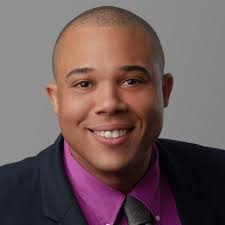
Picture for al-jallad.1In this episode we talk to Dr Ahmed Al Jallad, Sofia Chair of Arabic Studies at Ohio State University. Dr Jallad is an expert on the languages and scripts of pre-Islamic Arabia. We talk about the origins of Arabic (most likely in the Northwest of the peninsula and not in the South as previously believed), the development of the Arabic script (most likely from Nabatean Arabic) and the inscriptions of the region (In the 6th Century CE the ones that do reference a religion mostly reference Christianity, not the pagan gods of pre-Islamic Arabia that dominate our vision of the “era of Jahiliya”..
Browncast Ep 36: Karl Smith, Communist to neoliberal

Another BP Podcast is up. You can listen on LibsyniTunesSpotify,  and Stitcher. Probably the easiest way to keep up the podcast since we don’t have a regular schedule is to subscribe at one of the links above.

You can also support the podcast as a patron (the primary benefit now is that you get the podcasts considerably earlier than everyone else…).

On this episode, I talk to Karl Smith. A former economist, Smith is now a columnist at Bloomberg. Smith’s style is that of a nonpartisan neoliberal driven by empirical considerations, but he actually has a very interesting background as someone who came out of an orthodox Marxist family. He was raised, quite literally, as a Bolshevik.

We also talk about his experiences being a relatively heterodox black American public intellectual, and how both of us see how racism has played out in our lives and in the country at large.

Finally, we discuss what we see in store for the United States in the future on the global stage.

We would definitely appreciate more positive reviews. Many of you listen to us, but don’t leave any reviews!

Brown Pundits