Dravidian Progressivism is a Scam

Chennai, without any doubt, is one of the better cities in the country. I agree with many of the issues raised by XTM here. Along with Hyderabad, Ahmedabad, and Bangalore, Chennai continues to fare better in many aspects of life compared to Mumbai, Delhi, Kolkata, and even Pune.

My Experience

While I appreciated the cleanliness and infrastructure of Chennai, I cannot say I came away with the same impression as XTM. Of all the Indian cities I have visited, I found Chennai less hospitable than Ahmedabad, Hyderabad, or Delhi. Even as a fluent English speaker, I struggled to hail autos or get directions. Surprisingly, I did not face this issue in the rest of Tamil Nadu. For older Hindi speakers with limited English, the experience is even worse. The issue is not simply language, but linguistic chauvinism (also present in Karnataka and Maharashtra, though to a lesser extent). A non-Tamil speaker often looks for Muslim individuals to ask for help in Chennai.

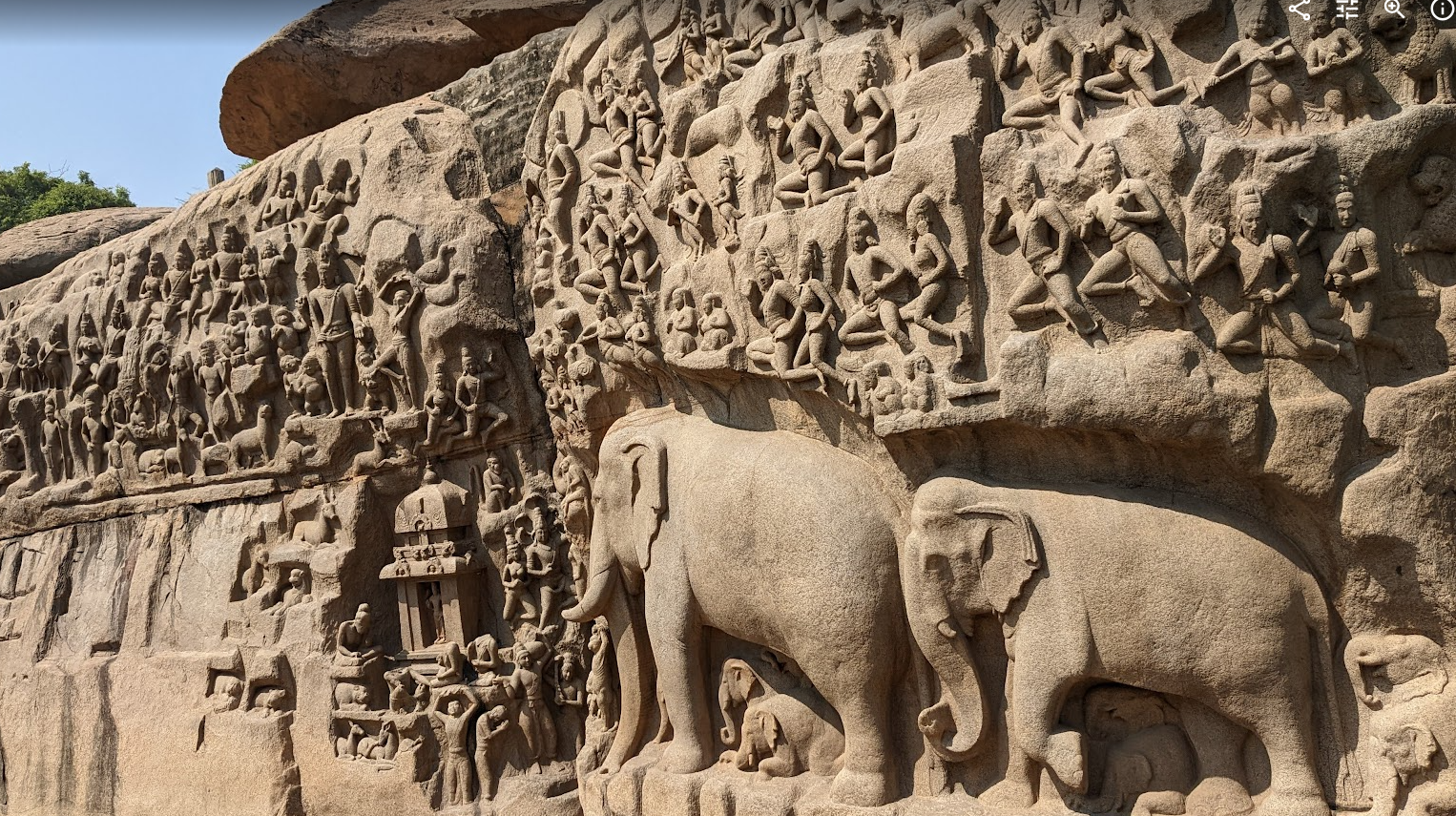
I had a wonderful time in Mamallapuram, enjoying the Pallava ruins and the beach, thanks to a very helpful Muslim auto driver. But enough of auto-wala stories.

Culture and Politics

Without comparing cities directly, it is important to recognize that culture may play a role in Chennai’s successes. However, correlation should not be confused with causation, and credit should not be misplaced. Any link between Chennai’s well-being and Dravidianism is tenuous or purely incidental at best. While successive Tamil Nadu governments aligned with Dravidianism have been relatively successful (especially compared to the North) in providing welfare nets, what direct connection do these well-run policies have with Dravidianism?

Let us compare Tamil Nadu with the rest of India on the metric that Dravidian progressivism claims to address: CASTE

Link:

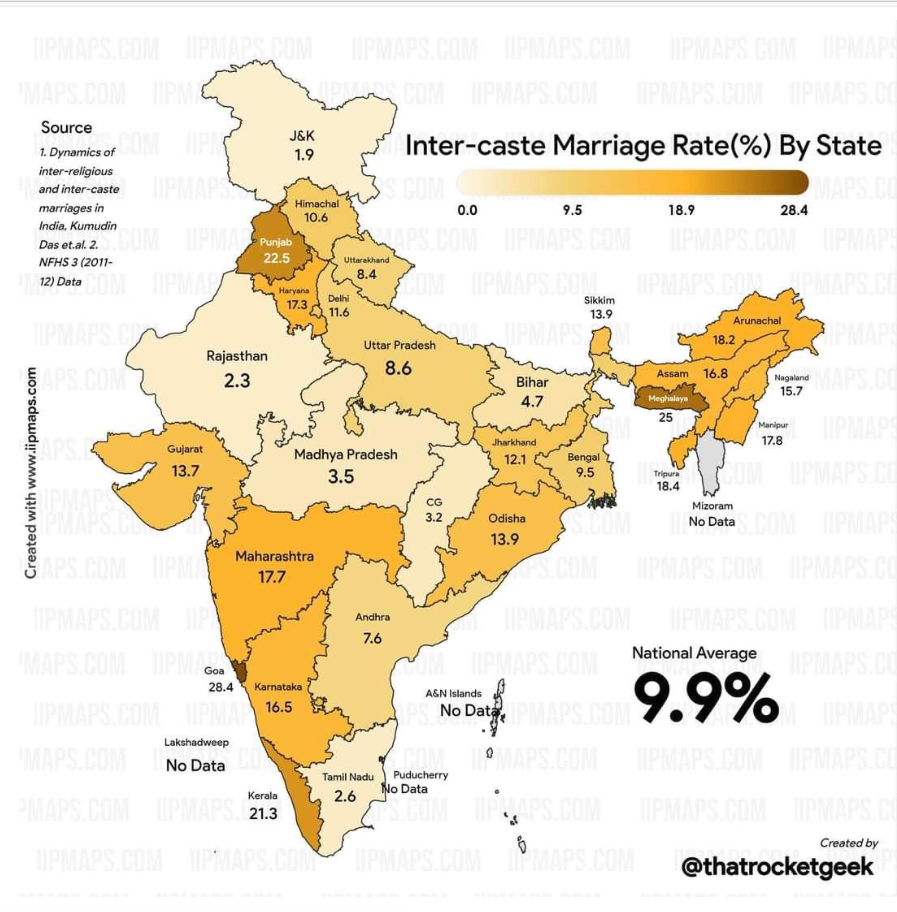
Scroll piece : Caste endogamy is also unaffected by how developed or industrialised a particular state is, even though Indian states differ widely in this aspect. Tamil Nadu, while relatively industrialised, has a caste endogamy rate of 97% while underdeveloped Odisha’s is 88%, as per a study by researchers Kumudini Das, Kailash Chandra Das, Tarun Kumar Roy and Pradeep Kumar Tripathy. 

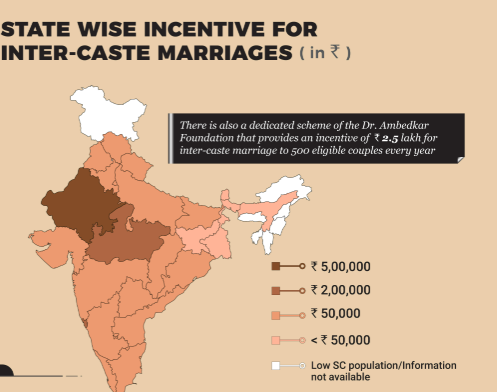
Put differently: caste endogamy seems unaffected by how anti-Brahminical or “progressive” a state claims to be. Tamil Nadu, the heart of the Dravidian movement, remains at below 3%, while Gujarat—often seen as Brahmanical and vegetarian—stands around 10% (15% in a 2010 study, though possibly overstated). However one frames it, Gujarat has more inter-caste marriages than Tamil Nadu.

Surprisingly, even Haryana and Punjab—traditionally associated with Khap Panchayats and honor culture—show significant inter-caste marriages, along with Gujarat, Maharashtra, Karnataka, and Kerala.

While data on Haryana, Punjab, and Goa is contested, Tamil Nadu consistently lags, whereas its neighbor Kerala consistently leads, along with Maharashtra.

Crossing from Kerala into Tamil Nadu, the difference is stark: one in five marriages in Kerala are inter-caste, compared to fewer than one in thirty in Tamil Nadu. Would it be fair to blame Dravidian politics for this? That claim has more merit than attributing Tamil Nadu’s successes to Dravidianism. Tamil Nadu ranks alongside Madhya Pradesh, Rajasthan, and Kashmir, while Karnataka, Kerala, and even Andhra/Telangana are far ahead.

Even Kashmir, with a 65% Muslim population, has an inter-caste marriage rate just below 2%, lower than Dravidian-ruled Tamil Nadu. So, after 500 years under a “casteless” religion and 100 years of “progressive” Dravidianism, both Kashmir and Tamil Nadu lag behind Gujarat, Bihar, and Uttar Pradesh.

Link:

Additional Observations

This data does not fit neat narratives. I was surprised to see higher percentages of rural inter-caste marriages. Rates are negatively correlated with wealth and income (more strongly with assets such as land). Landed communities show stronger caste endogamy, for historically and pragmatically clear reasons. That Brahmins, as a group, have the highest inter-caste marriage rates is unsurprising, given how progressive (some might say deracinated) Brahmins have become in India.

One social metric where Tamil Nadu performs well is female foeticide. Tamil Nadu and Kerala are among the leading states less affected by sex-selective abortions compared to the rest of India.

Tamil Brahmins have generally been more socially aloof compared to Brahmins elsewhere in India (both anecdotally and objectively) and disproportionately occupied government posts in the late 19th and early 20th centuries. The Justice Party movement, which arose in response, was initially a elite-feudal project, though Periyar’s early movement (also virulently anti-Brahmin) was more inclusive of Dalits and non-dominant castes. Over time, while retaining its anti-Brahmin rhetoric, the movement became a proxy for domination by landed and wealthy communities. Dravidianism today (or perhaps always) resembles what it claimed to oppose—Brahmanism. The dominant elites have simply shifted from Brahmins and the British to others who hold power today. Hatred alone does not create positive change.

It seems Rajasthan and Madhya Pradesh understood the incentives for reform, while Tamil Nadu did not.

Anecdotes or caste violence are often dismissed when praising the Dravidian model of social progressivism. Comparative caste violence data is brushed aside under claims of underreporting or lack of Dalit assertion in other regions. But caste endogamy cannot be ignored. If anything that truly encapsulates Caste is endogamy.

Post Script:

Tamil politicians, both DMK and AIADMK, have run better governments in terms of welfare, industrialization, and infrastructure, and they deserve credit for that. However, linking these achievements to culture may not be wise. Geography is a more convincing explanation.


The evolving understanding of varNa in Indian history

This post is triggered by some posts from XTM in the past and some discussions on the BP whatsapp group.

This is not a referenced essay but more of a summary of my evolving position on the history jAti and varNa. I am neither a history or genomics scholar and this is an essay of a reasonably well informed layperson who has gone deep in the speculative prehistory of Indian subcontinent. 

The first thing to note is the difference between jAti and VarNa.

jAti is a endogamous population – maps on to English word Caste. Identity into a jAti is a lived reality for billion Indians.

varNa is a hierarchical abstraction which is presented in Vaidik texts which does and doesn’t always map neatly on to thousands of jAti groups. I would wager that varNa mattered for the Brahmanas and at times to the Kshatriyas as their jAtis map neatly on respective varNas. 

This post will focus on varNa, I will cover jAti in some other post briefly.

For a bit more on jAti: Early Hinduism – the epic stratification – Brown Pundits

on varNa:

During the composition of the ṛgveda the priests and the warriors were the prime movers of the Arya society hence designated Brahmanas and Rajanyas. This bifurcation is common among a lot of society where the physical and spiritual power is owned by different elites who in a sense rule the society. These two communities were to become two Arya varNAs. The third varNa called the Vaishyas were originally the remaining people. The word Vaisya comes from Vish which means people. So all farmers, craftsman, artisans etc would come under the word Vaisya initially. This much can be asserted with certain degree of confidence.
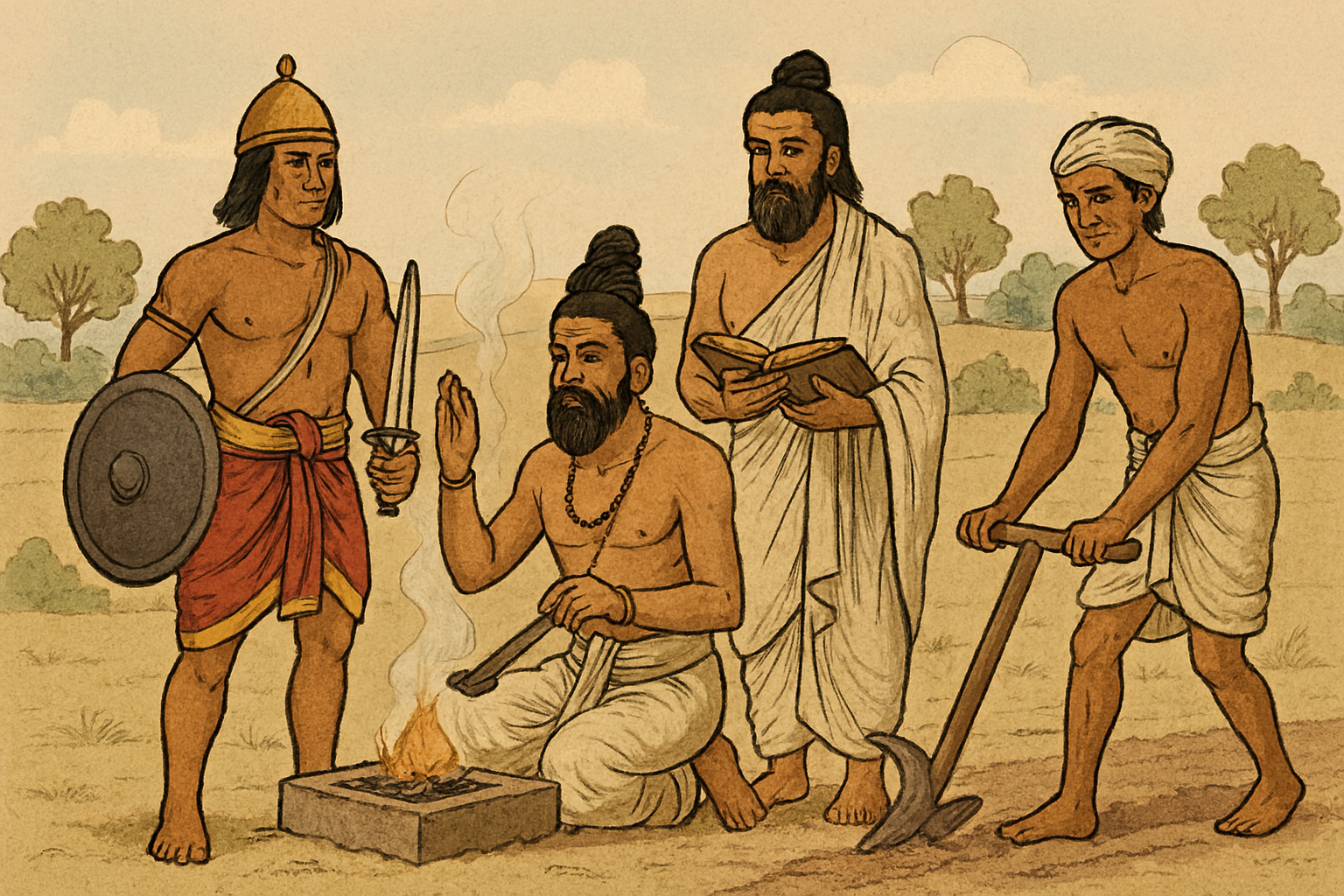
The origin is the fourth varNa – Shudras is not as crystal clear but its safe to bet that initially the outsiders (non Arya) were called Shudras. The word is used to denote someone who doesn’t follow the proper Arya rituals at places or someone who is a defeated enemy or someone who is a labourer. So as Arya communities were forming during the early Vaidik period after the collapse of Harappan civilization, the outsiders who were defeated and assimilated were termed Shudras. This label also applied to populations outside the core Vaidik area who were kings and rulers in their own right in complex pastoral and farming  societies. The cultures of Deccan and Peninsular India at this time would also fall in this bracket (precursors to speakers of Dravidian languages of today).
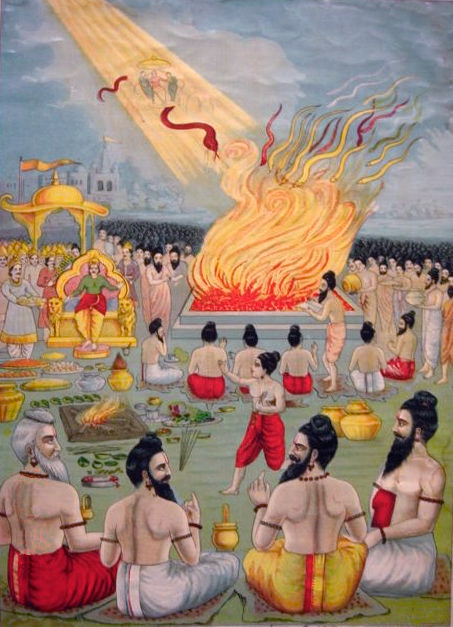
Aryavarta (Land of the Aryas) expanded mimetically through lavish sacrifices and tall poetic tales (later Epics). Instead of building complex structures, the Rajanya class (later Kshatriyas) from the core Indo-Gangetic region (Aryavarta), focussed their wealth on conducting extravagant sacrifices (Yajnas) like Asvamedha and Rajasuya to assert their strength. The template was set by Vaidik Rajanyas and slowly people outside the core Vaidik area began to emulate their peers. Non Arya rulers invited priests to conduct spectacular sacrifices to rival the Rajanyas. These Non Aryas were gradually assigned the Kshatriya varNa along with the original Rajanyas. I would wager that priests from non Arya cultures were assimilated into the Brahmanas. Those from outside who didn’t keep their power became the Shudras. But this designation also was by no means settled.

Every now and then we have Shudra monarchs especially in the Eastern and Southern part of the subcontinent. Its worth noting that even thought a dynasty may be of Shudra origins, they likely re-wrote their histories once they attained power. Some of these rulers claim to have conducted even grander sacrifices than the Kshatriyas 1.0 and 2.0. Conversely, Kshatriyas and Vaishyas who lost their power or wealth might have lost their varNa.

a-varNa

(Co-Pilot wouldn’t help me with a representative image as its termed offensive)
Even now a vast number of people were outside this matrix of abstract varNa and secular Kshatra. As AryaVarta continued to expand it encountered the people on the margins. The template of absorbing the elites into the elite varNas would slow down eventually. Every now and then the outsiders would not be integrated into the varNas but remain outside as a-varNas. When this became happening is debatable but its safe to assume that around the time of Manu smriti, Arya-Varta had a significant proportion of a-Varna population. Over time ritual status was assigned to the outsiders and they became the untouchables.

I think this practice evolved like slavery as suppling an eternal supply of low cost labor (especially for dirty tasks). The a-varNa need to be distinguished from the Shudras who could accumulate wealth and status. So it could be a combination of (a) tribes whose professions were deemed unclean (b) defeated  people forced to do unclean professions or probably a combination of both.

Another group of people were to remain outside the Arya social system, the tribals. But it would be unfair to club the tribal communities with a-varNa. Tribal people had wide range of experience of interactions with the mainstream from domination and competition to servitude. Some tribes may have been absorbed into the a-varNa groups but that is not a generic template.

The varNa fluidity:

As Merchant guilds began becoming powerful around the times of Mahajanapadas, the Vaishya Varna began to become more associated with the Merchant class. Artisans, farmers and ordinary soldiers began to be associated with Shudra varNa. Today its quite common to associate the Vaishya varNa with traders and merchants but it wasn’t always so.

Similarly its quite possible that some a-varNa clans could lose their shackles but its fair to assume that this fluidity kept reducing in the common era. Last thousand years the varNas have not been fluid – especially for the a-varNas.

The Ossification:

I have written an entire blogpost on why the jAti-varNa matrix began to ossify and when.

Co-Pilot summary of this post:

The essay explores how early Hinduism’s caste stratification evolved through interactions between Vedic Brahmanical traditions and Sramana schools like Buddhism and Jainism. It argues that concepts of karma, rebirth, and dharma—emphasized by Sramanas—helped justify and ossify the Varna hierarchy, linking birth to karmic retribution. Over time, this moral dimension reinforced endogamy and rigid social divisions, especially during the Gupta era. The author speculates that pre-Aryan tribal endogamy combined with Vedic ritual purity and karmic philosophy created the uniquely enduring Jati-Varna system in India

The Kaliyug cope:
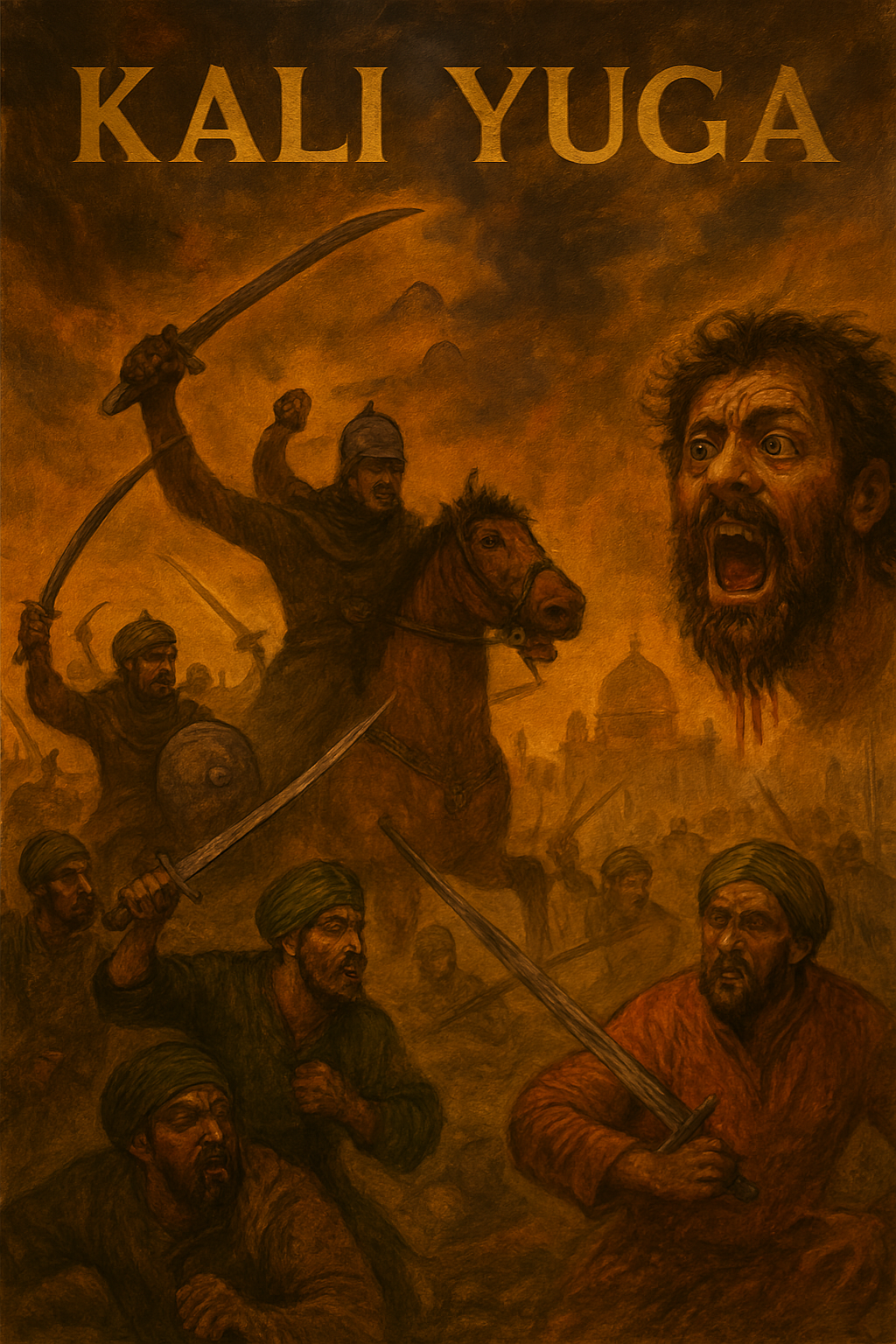
From the turn of the century, the subcontinent was always under attack from North West, Yavanas, Shakas, Kushanas, Hunas and final Arab and Turks. It is my belief (and also of some scholars) that the ideas of Kali-yug were a response to these invasions. A Yug when idealised Vaidik society was destroyed.

Islamic conquests of India began in the 7th century itself but it wasn’t till the 13th century that the entire subcontinent was touched by the crescent scimitar. While the concept of Kali-yug might be older than Islamic incursions into the subcontinent, I think they were imagined sufficiently during the Islamicate age. Some of the Brahamanas who survived (entire Shakhas of Vaidik learnings have been wiped out) saw Kaliyuga as the yuga where only 2 varNas exist – Brahmanas and Shudras. While some Kshatriya clans retained the memory of their ancestry during the Islamic time and reformulated as Rajputs, a lot of Kshatriyas and Vaishya lost the touch with their ancestry. While most of these groups have myths of their descent from Yadus or Ikshvakus, these claims did not get Brahmana (and Kshatriya) stamp of approval in the medieval times.

On psychological level one can understand this statement – Kali-yug contains only Brahmanas and Shudras as a coping mechanism opted under the yoke of Barbarians. Naturally wealthy landed castes who may have descended from Kshatriyas or Vaishyas were seen as Shudras. The Kadambas, Rashtrakutas, Yadavas, Chalukyas, Cholas, Gangas, Pandyas and Cheras all claimed Kshatriya descent. If this is assumed to have some merit, its not logical to assume that all the descendants of these dynasties and their power structures went extinct. Its more likely that the elites from medieval times became the wealthy landed and mercantile elites without some deviation (on the coattails of the brits).

Brits and modernity:

The Europeans began documenting varNa with the arrival of Portuguese (Casta). But the modern understanding began to truly take shape under the British rule. I will only quote the Co-pilot summary of Nicolas Dirk’s fantastic book here.

Nicholas Dirks’ Castes of Mind argues that the modern idea of caste as India’s defining social system was largely shaped by British colonial rule. While caste existed earlier, it was more fluid and intertwined with local, regional, and occupational identities. Colonial administrators, obsessed with classification, codified caste through censuses, ethnographic surveys, and legal frameworks, turning it into a rigid hierarchy. Dirks shows how this “ethnographic state” reified caste as the central lens for understanding Indian society, overshadowing other identities. The book highlights how colonial policies and scholarship created enduring structures that continue to influence politics and social life today.

In essence, varNa and social stratification is surely older than even the Roman colonisation of Britain, what we understand today as Caste is significantly shaped by the British intervention into India. The emerging economies have offered upward mobility for some while relegating others to medieval times. In many cases, artisan communities continue to see their economic status significantly degrade with mechanisation. Present Caste identities and economical realities are much more downstream of the economic exploitation and changing economy due to industrialization than abstractions like of Dharma-Shastras.

In the theatre of Indian democracy, the first-past-the-post script ensures caste takes center stage — louder, sharper, more enduring than ever before. And as present-day passions spill backward into history, they stir the ancient pot with fresh fervor, adding new tadka to a saga already simmering with spice and strife.


Post Script:

I am generally liberal with comments, but i will exercise moderation for repeated stupidity on this post.

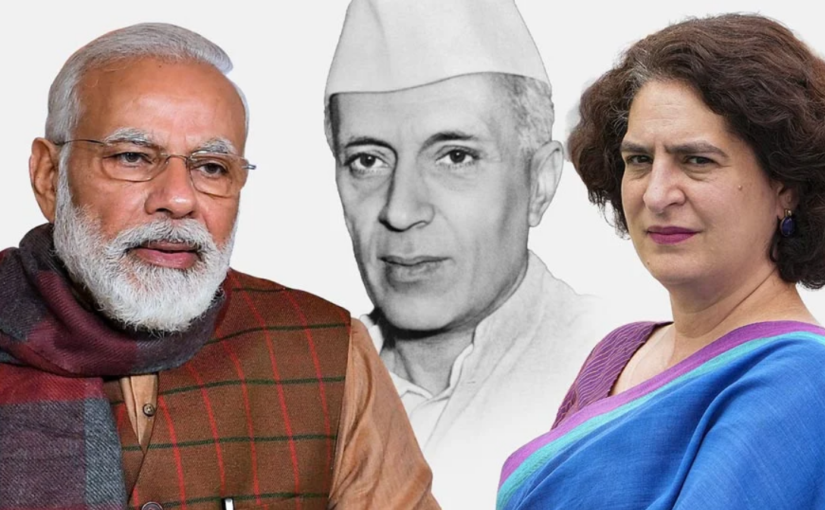
Nehru bashing has become very old but is it ineffective yet ?

Priyanka Gandhi Vadra targeted PM Modi over the latter’s repeated Nehru bashing, and i felt a some happiness that someone was voicing what i had felt for 6 odd years now, and done so in a rhetorically effective way (unlike her brother).

“When Done Nehru Bashing, Debate Unemployment”: Priyanka Gandhi’s Top Quotes

You can find the entire speech on YouTube : LIVE: Smt. Priyanka Gandhi ji speaks in Parliament on the 150th anniversary of ‘Vande Mataram’.

Ram Guha has said multiple times that if Rahul and Priyanka were to leave the INC, the charge of dynasty and sins Nehru and Indira (real and alleged) wouldn’t pull the INC back as much as it does. But i think we are at a point where even firm BJP supporters are fed up of BJP’s Nehru bashing and its bound to have diminishing returns.

Its been 12 years and Nehru bashing brings cheers from only the hardcore supporters and none others. Maybe we are at an inflection point, maybe not.

Personally I remain an admirer of Nehru while disagreeing with his decisions profoundly. Maybe i will expand upon my criticisms and praise at some point but i do not think Gandhi erred massively in choosing Nehru over Patel. While i do think Gandhi shouldn’t have gone against democratic nature of congress (which had chosen Patel), I do think Nehru would have been a better PM had Patel remained alive longer into Nehru’s term. A bit cliched but Nehru’s life kind of reminds me of famous lines from Dark knight trilogy.

You die a hero or you stay alive long enough to become a villain.

I am not into fortune telling but i think the path Modi is following is very similar to his great opponent (atleast in his own mind), Jawahar Lal Nehru. I think they’re a bit more alike that their followers think. But all thats for another time.

Why 2014 happened in 2014

I just read a comment by Kabir about how 2014 changed Nehru’s India drastically ( I do not agree but that’s not for now). But this poses another question.

As XTM’s post pointed out/alluded Hindutva was inevitable and the natural outcome of Pakistan. But why did it take 67 years of Hindutva to assert itself.

In my mind the answer is pretty straightforward and two fold.

1. Gandhi’s murder at hands of a Hindutvavadi.

2. Sluggish economical growth of the socialist era (also called wrongly the Hindu rate of growth).

I would love to hear comments on the question posed above.

Why 2014 happened in 2014?

Note on Moderation

In light of Omar stepping down from active management of BP, i wanted to share this note. As I have immense respect and gratitude towards Omar I wouldn’t want the brand he and others have built up (and i have contributed a bit) over last decade and half to just go downhill. Despite the success of Substack and X (and video platforms) I feel the BP blog presents nice niche with its moderate reach and past history of extremely insightful authors and commentators – I feel BP is a community/blog worth maintaining into the coming years (and hopefully decades).

Given the recent fracas on the blog and in between its authors and commentators, I think we ought to indulge in some moderation – how much is the question that can only be addressed as we go ahead.

In light of this i hope to:

  1. Write a bit more frequently on the blog.
  2. Moderate comments (not every day) and weed out filthy content which crosses a certain red line. I generally tend to be pretty liberal with my tolerance for free speech so i hope i do not indulge in too much censoring. XTM can take his call – everyone sees moderation different and being the admin and founder – his authority on moderation (along with Razib) will be the final call. But i know even he is pretty liberal with respect to comments.
  3. Where i think reasonable standards will apply viz commenting are BP authors. It lowers the Brand of Brown pundits if people who are authors on this platform indulge in trollish and racist behavior. All always authors can moderate their threads as they deep fit instead of indulging in shitposting with trollish comments. If someone wants to have a banter in comments I hope they remember this line. I am in no way an authority but i think what i have written here wrt different standards for authors makes sense.

As I have mentioned above I do have pretty liberal standards with speech. Giving a concrete example – I did not find the jibe “subhuman” or jibe as Elitist/Islamist/Brahmanical/Fascist (ideological) as crossing a Red-Line in general. Context is important and one off comment of such nature doesn’t alarm me (It might be a redline for someone else i do not disagree) – even if directed at me. After all isnt a Troll also a subhuman ? but we are fine to call people we disagree with as low IQ trolls all the time without getting offended. Having said this – different standards ought to apply to authors but i would leave it to XTM (though i would drop him a line)

I hope i am able to stay regularly active on this space as and when time permits. As XTM has said multiple times, moderating in a thankless mandate and i hope i can slightly reduce his burden going forward.

What is Akhand Bharat ?

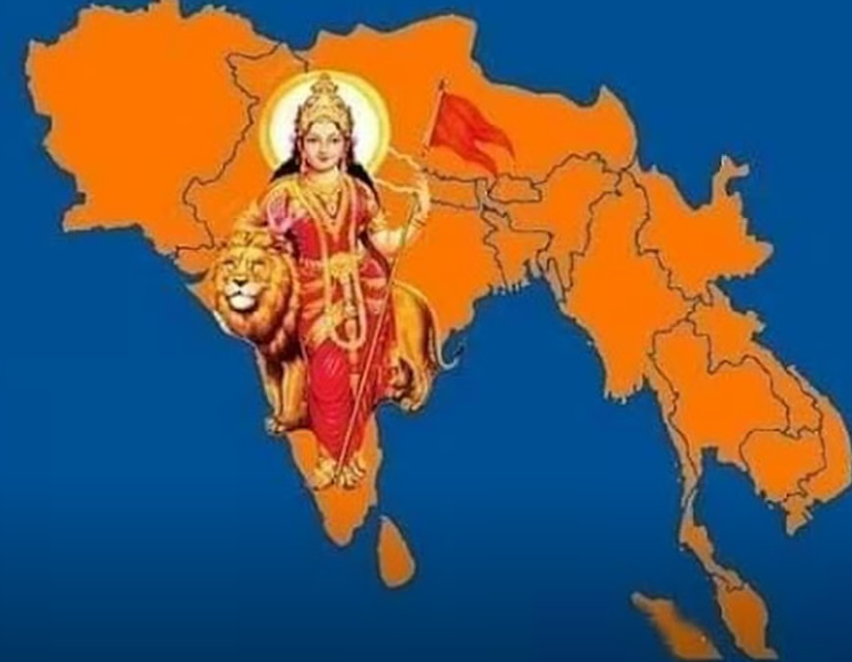
Anyone who is aware of the Hindutva project would have seen this picture (Commentators from outside India might not have seen this).

RSS and other Hindutvavadi organizations use this image or similar images for conveying the message of Akhand Bharat. As the extend of this image appear ludicrous, I would like to pose the question here – What would be the fair boundaries of “Akhand” Bharat from history?

What were the boundaries of Indian civilization? Where the Muslim kingdoms of medieval times part of this civilization? What qualifies a kingdom or area to be part of the Indian/Hindu civilization? or any other civilization for that matter.

@500 CE / 1000CE & 1500CE respectively?

Or to put it more correctively –

The post I am thinking of writing in the month of November will have a lot to do with this.

The issue i have with this thought is that due to its extravagant claim is that it can be refuted without much thought or effort like done here :

From Hindu Ocean to Sindhu Sea: Here’s what RSS-backed schools are teaching children about history


GST reform – go big Modiji, let the bizmen breathe

This post is published on behalf of Yajnavalkya – Medium

————————————————————————————-

A GST terror story

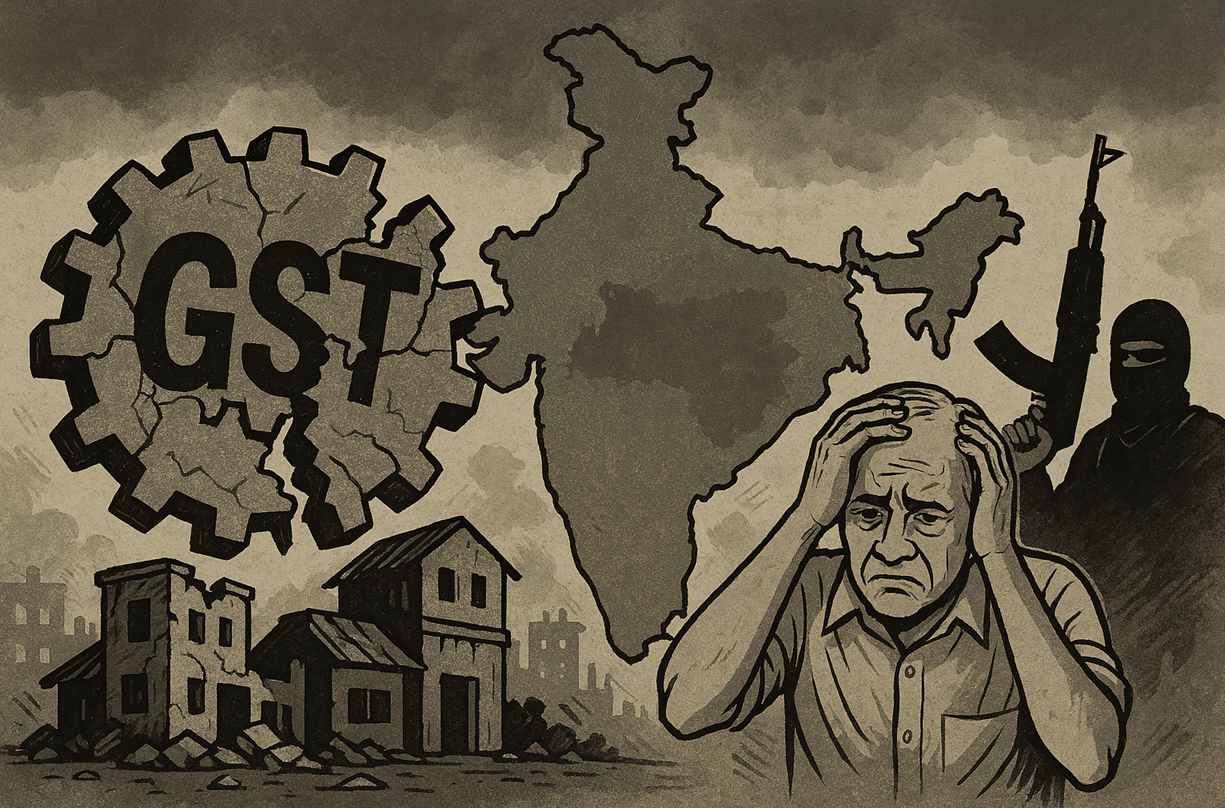
Modi has announced during his Independence Day speech that he would be going for sweeping reforms of GST by Diwali. The central piece of the reform would be reducing the number of rates from 4 to 2. A lot of people – both experts and non-experts – have been advocating a single/dual rate regime as a magic bullet for the GST mess.

But is it? Let me start by narrating a GST horror story. Some GST basics first: GST is a value-added tax. Assuming a product has 10% tax, Manufacturer A sells the product to wholesaler B for Rs. 1000 (pre-tax). B pays A Rs.1000 + Rs. 100. B then sells the goods to Retailer C for Rs. 1050 (pre-tax) and C pays B Rs. 1050+Rs. 105. Now since B has already paid Rs. 100 as tax to A, he is required to deposit only Rs.5 to the exchequer. The Rs.100 that he paid the manufacturer is termed as ‘Input Tax Credit’ or ITC.

There are some elaborate ways of defrauding the system of taxes involving ITC which is also facilitated by loopholes in the tax filing process – discussing that would require a 5000-word post, so I will desist. But for those interested, you can read up about bill trading. One of the ways in which the system combats this menace which potentially causes trillions in tax losses, is Rule 86-A, which empowers the taxman to block ITC of any businessman if he has “reasonable cause” to believe that the ITC was fraudulently availed.

Ok, now on to the story. A few months back, a bunch of businessmen operating in the steel sector in my city – including one of my personal acquaintances – were slapped with notices under this rule, blocking ITC aggregating to Rs.60 million, for transactions related to the period 2021 to 2024. The stated reason – Supplier X from whom these people had purchased goods (and taken ITC credit) was declared to be “non-existent” and hence all those purchase transactions were fake. But here is the thing – the supplier was very much “existing” during the said period. There was concrete evidence of the same – power bills for the factory running into tens of millions, his GST filings, company annual returns, income tax returns and so on. The supplier had closed down his business in early 2025, not in small part due to the pain of GST terror and compliance burden. The panicked recipients of the notices went to meet the taxman, taking along the supplier and with all the aforementioned evidence. The taxman was unmoved. So next they moved to the court but the latter dismissed the petition asking them to exhaust the appeals process via the department first. Before filing an appeal, 20% of the blocked ITC needs to be deposited. The legal costs in this case would have added another couple of million Rupees. Having figured out that legal process was not worth the effort, the group sent a message to the taxman requesting a deal. Initial demand-Rs.12 million. After lots of hard bargaining, it was finally settled for Rs.8 million.. Continue reading GST reform – go big Modiji, let the bizmen breathe

What did Asim Munir talk with Trump

Now that the blog has a lease of new life i thought why don’t I join the fray.

Funny that Asim Munir is having lunch with Donald Trump only a day after Trump was having X diarrhoea threatening Iran and its leadership.

What could potentially be the points of discussion one wonders. I have a few wild thoughts.

  1. Trump is asking for Pakistani help against Iran. Either back-channel negotiations and/or direct intelligence. I am not sure of this one as this seems for a Pro-India cope which sort of makes sense of the ceasefire.
  2. Pakistan wants to remain the only Nuclear Islamic nation and hence is willing to get into bed with Zionists in Trump towers while giving a middle finger to Ummah.
  3. The felid marshal wants swip up some Tomahawks to counter Brahmos.
  4. Trump in all his infinite wisdom is playing at 56D Chess against China via flirting with the felid Marshal and Dumping Modi after a brief fling (or maybe it never was a fling).
  5. Trump wants to learn some catty dictatorship from the felid Marshal for the 3rd term.

Ironically Modi declined US invitation which seems to be related to either claimed US mediation into Op Sindoor or Israel Iran war.

Finally Sorry Amey and Poulasta but the podcast episode on OP Sindoor was terrible. Cant have a podcast where Omar’s wisdom is interrupted as frequently as that with all the rants and interruptions.

I hope to write a longish post from India POV about Op Sindoor and the future as soon as i get some brainspace.

Be civil in comments. 

Born in Blood: a relook at the final act of Parv

Please find the earlier review of the same novel i wrote a few years back: Parva (Marathi): An epic masterpiece | by Gaurav Lele | Medium

Spoilers ahead

The futility of war really comes through in the retelling of by SL Byrappa in the final act. A very brief summary of the final act with climax I had missed the first time around.

Bhima goes over to Hidimba forest, only to find out that some of his fellow Arya have burned up the forest like the Pandavas had done all those years ago in the Khandav-Van. Life comes a full cycle for him, like Takshak killing Parikshit in the original epic. We descendants of Vaidik Aryas must swallow a bitter pill as we look back with Bhimasen at the ways in which our forefathers brought forest land under cultivation.

अ॒ग्निमी॑ळे पु॒रोहि॑तं य॒ज्ञस्य॑ दे॒वमृ॒त्विज॑म् । होता॑रं रत्न॒धात॑मम् ॥ (RV 1.1)

Kṛṣṇa looks at the tsumani swallowing his Dwarka, as the alcohol fueled Yadava fratricide looms.

Continue reading Born in Blood: a relook at the final act of Parv

Brown Pundits