Prof. John Mearsheimer: Dismantling Iran, The Four Part Strategy (Iran Open Thread)

Prof John Mearsheimer argues that Western media misrepresents events in Iran as an organic, popular uprising against a mismanaged regime. Instead, they claim the unrest follows a familiar U.S.–Israeli four-step regime-change playbook. Economic warfare: The U.S. imposes sanctions that deliberately damage Iran’s economy, creating widespread hardship. Protests then arise largely in response to these externally induced economic conditions. Fueling protests: The U.S. and Israel allegedly encourage, organize, and support mass protests, citing evidence such as Israeli media reports, statements by U.S. officials, Mossad involvement, and the use of Starlink terminals by protesters after Iran shut down the internet. Disinformation campaign: Western audiences are told the protests are purely internal and democratic, while messaging inside Iran is designed to convince people the regime is collapsing and momentum is unstoppable. Military intervention (planned but not executed): Once the regime appears near collapse, U.S. and Israeli military force would be used to strike infrastructure and elites to finish it off. According to the speaker, this strategy has failed because protests have sharply declined and the Iranian government’s crackdown has largely succeeded. Israeli commentators and even President Trump’s shifting rhetoric are cited as acknowledgments of failure. The concern now, they argue, is that Trump—having expected the regime to be on its last legs—may consider military force to “rescue” a collapsing strategy, despite reduced U.S. combat power in the region and Iran’s stated intention to retaliate directly against U.S. and Israeli targets.

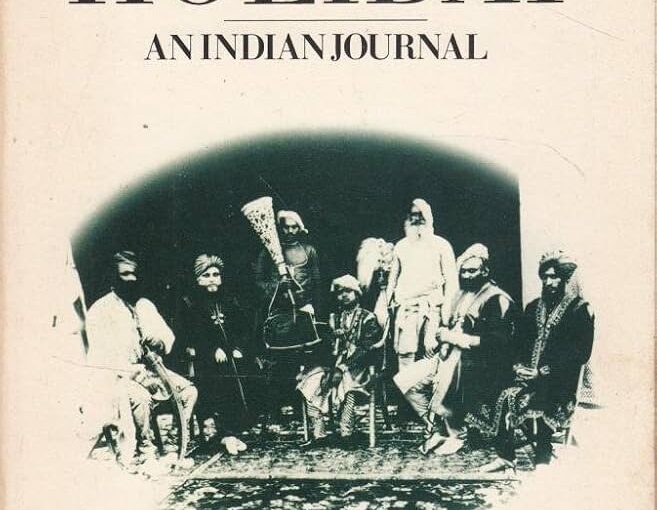
Review: Hindoo Holiday by J.R. Ackerley

From my Substack:

J.R. Ackerley’s Hindoo Holiday–originally published in 1932–tells the story of the five months (December 1923-May 1924) he spent as secretary to Maharaja Vishwanath Singh of Chhaturpur (called “Chhokrapur” in the book). In his “Explanation”, Ackerley describes the Maharaja’s motivations for hiring a private secretary from England. He writes:

He wanted someone to love him–His Highness, I mean; that was his real need, I think. He alleged other reasons, of course–an English private secretary, a tutor for his son; for he wasn’t really a bit like the Roman Emperors, and had to make excuses.

As a matter of fact, he had a private secretary already, though an Indian one, and his son was only two years old; but no doubt he felt that the British Raj, in the person of the Political Agent who kept an eye on the State expenditure and other things, would prefer a label–any of the tidy buff labels that the official mind is trained to recognize and understand–to being told ‘I want someone to love me.’ But that, I believe, was his real reason nevertheless.

In his initial meeting with Ackerley, the Maharaja asks him if he has read certain books as he wants them explained to him. Ackerley writes:

His highness seemed very disappointed. I didn’t know what ‘Pragmatism’ meant, and had read practically none of the authors he named. I must read them at once, he said, for they were all very good authors indeed, and he wished me to explain them to him. He had them all in his library in the Palace; I must get them out and read them
 (9)

Later, in the same conversation, the Maharaja wants Ackerley to settle the question of the existence of God. Ackerley writes:

‘Is there a God or is there no God?’ rapped out His Highness impatiently. ‘That is the question. That is what I want to know. Spencer says there is a God, Lewes says no. So you must read them, Mr. Ackerley, and tell me which of them is right (9)

This interaction immediately characterizes the Maharaja and sets the tone for the rest of the book. Continue reading Review: Hindoo Holiday by J.R. Ackerley

Khaleda Zia, Bangladesh’s first female prime minister, dies at 80 after prolonged illness (Open Thread)

1) Khaleda Zia, Bangladesh’s first female prime minister, dies at 80 after prolonged illness 

Begum Zia was Bangladesh’s first female prime minister–and only the second female prime minister of a Muslim majority country (Benazir Bhutto was the first).

Prime Minister Modi has expressed his condolences as has PM Sharif of Pakistan. PM Sharif called Begum Zia “a committed friend of Pakistan”.

She will be given a state funeral on Wednesday (December 31) and then buried alongside her late husband, Ziaur Rahman.  Her son, Tarique Rahman, recently returned to Bangladesh after seventeen years in self-exile.  He is expected to be prime minister if BNP wins the February elections.

2) Khaleda Zia: How Begum Khaleda influenced Bangladesh, India| Analysis 

Join The Hindu’s Suhasini Haidar, Kallol Bhattacherjee and Stanly Johny as they decode the influence of Khaleda Zia, Bangladesh’s first woman prime minister. Zia, along with archrival Sheikh Hasina, defined the country’s politics for a generation.

3) “Inside ‘The Great Shumsuddin Family”: Anusha Rizvi in Conversation|Speak Easy-Episode 4″ 

In the fourth episode of SpeakEasy, senior journalist Amit Baruah is in conversation with filmmaker Anusha Rizvi, on her latest film “The Great Shamsuddin Family” and the questions it raises about fear, belonging, and everyday life in contemporary India. Rizvi discusses how the film unfolds over the course of a single day, capturing the quiet anxieties of a middle-class Muslim family in Delhi. She emphasises that there is no single, uniform idea of “Muslimness” in the country, a point the film quietly makes through its characters and situations. She reflects on why the film avoids overt drama, instead foregrounding the persistent undercurrent of fear—of being misunderstood, misread, or targeted—that shapes ordinary decisions, conversations, and silences. The conversation also explores Rizvi’s approach to representation, her resistance to stereotypical portrayals of Muslim households in cinema, and her focus on women characters who navigate work, family, and crisis with agency and humour. Rizvi also speaks about how social media, surveillance, and heightened public hostility have altered the emotional landscape in which artists and citizens now operate.


Nehru Was a Global Statesman and the Current Prime Minister Has a Deep Complex About That

“There is an attempt to erase Nehru from history,” said Aditya Mukherjee, a former professor of contemporary history at JNU and author of a book on Nehru. “The idea is to minimise his presence. There are text books in Rajasthan on the contemporary period that do not mention him,” he said in a podcast conversation with Sidharth Bhatia. Mukherjee said that Nehru was the antithesis of all that the Sangh Parivar stands for and he created the structure to understand communalism. In the conversation, Mukherjee lays out the many reasons why Nehru’s view of what India should be is totally against what the communalists believe in. He also points out the ways in which Mahatma Gandhi is sought to be undermined, by reducing him to be “just a pair of spectacles and a jhadu.” “The real target is Gandhiji. “He is the real enemy, he even took religion away from them.”

Doha Debates: Is the nation-state still a meaningful foundation of who we are?

In the context of the discussions on BP about the nation-states  of India and Pakistan, this is a very important debate.

For more than a century, the nation-state has shaped how we organise the world, offering unity for some and division for others. In this Doha Debates Town Hall, filmed live in partnership with the Bradford Literature Festival, we ask: Where does national belonging come from? Is it defined by culture and citizenship? Or does it go beyond the nation-state? Moderated by Malika Bilal, this live debate brings together guests Shashi Tharoor, Wael Hallaq and David Engels, along with university students from Qatar Foundation’s Education City and beyond, to discuss the future of the nation-state on the same stage, in front of a live audience.


Review–Queen Zarqa: A Transgender’s Odyssey by Hayat Roghaani

From my Substack:

Queen Zarqa: A Transgender’s Odyssey (Lightstone Publishers 2025) is an English translation from the Urdu of a novel by Hayat Roghaani. Roghaani originally wrote the novel in Pashto. It was then translated into Urdu by Gohar Rehman Naveed and subsequently into English by Shama Askari. It is noteworthy for being one of the few Urdu novels to deal with the subject of khawaja saras–transgender women (also referred to as hijras in India). 1

In her “Introduction” to the book, Zubaida Mustafa–a renowned Pakistani journalist who passed away earlier this year–describes how the Transgender Persons (Protection of Rights) Act 2018 “grants [transgenders] the same rights as any other citizen of Pakistan. Recognizing their special needs the Act provides for separate transgender wards in hospitals. True as is the wont in this country many of the facilities promised under the law have yet to see the light of day, but activism, cajoling the authorities and other means could bear fruit” (20).

Mustafa goes on to describe attempts to roll back the protections granted by the 2018 act. She writes:

But what is more disturbing is the concerted drive by some bigoted and misogynist leaders of religious political parties to undo the gains the transgender persons have won. These parties have already got the Shariat Court to give a verdict adding conditionalities that offend the dignity of transgender persons. The Shariat Court wants transgender persons to appear before a medical board to have their gender determined. The government has mercifully appealed to the Supreme Court against this judgement. The final verdict is still awaited,and the Shariat Court’s ruling is held in abeyance until the Supreme Court rules on the matter (20).

Given the immense challenges faced by transgenders in Pakistan and the sensitivity of this subject, it is extremely commendable of Roghaani to take up this subject in his fiction. While the novel is not great literature by any means, it serves an important sociological function in sensitizing readers to this important subject. Continue reading Review–Queen Zarqa: A Transgender’s Odyssey by Hayat Roghaani

Vande Mataram, Dhurandhar and the Politics of Performative Nationalism |The Wire Wrap

Recently, we’ve seen some heated debates in parliament around Vande Mataram and electoral issues, a visit from Russian President Vladimir Putin, and a vicious online campaign against critics of the film Dhurandhar. Jahnavi Sen is joined by lawyer Shahrukh Alam and The Wire’s political editor Ajoy Ashirwad Mahaprashasta to discuss all of this.

Pratap Bhanu Mehta’s Powerfully Insightful JNU Lecture on “Reflections on Global Political Thought”

This video presents an extraordinary intellectual experience with this powerful lecture delivered by Pratap Bhanu Mehta — Senior Fellow at the Centre for Policy Research and Lawrence S. Rockefeller Distinguished Professor, Princeton University. Recorded by me (Samim Asgor Ali, the owner of this YouTube Channel) on Monday, 1st December at 3:30 PM in the SSS-1 Committee Room, JNU, under the banner of the JNU Lecture Series, this talk titled “Reflections on Global Political Thought” dives deep into some of the most urgent questions shaping our world today — The global crisis of ideas reshaping modern political landscapes, how shifting political imaginations influence democracy and governance, the profound dilemmas of contemporary political theory, why global political thought must reinvent itself for a radically changing world.

What does it feel like to be a Muslim in Modi’s India? Have they become second class citizens?

In the context of X.T.M’s post “Who can speak for the ‘Muslim minority’ of India?” , this video is extremely relevant.

I am often accused on BP of having an “anti-Indian” agenda when I state facts such as that the BJP doesn’t have a single elected Muslim parliamentarian.  Yet, these are the exact same arguments being made by Najeeb Jung, who has been the Lt. Governor of Delhi and the Vice Chancellor of Jamia Milia Islamia and thus is not at all a Pakistani.

Today we focus on questions that few people are likely to address yet they are important and need to be honestly answered. What does it feel like to be a Muslim in Modi’s India? How do Muslims feel when they are lynched in the name of cow protection, accused of love jihad, hear calls to boycott their businesses, pilloried in campaign speeches and told to go to Pakistan? Does this suggest that Muslims are becoming second class citizens in India? As a result has the fraternity that binds India’s communities been fractured and weakened? And what is the Prime Minister’s response to this?

Brown Pundits