DoubleQuoting Trees, 2001 – 2019, Greta 2019 – 1898

[ by Charles Cameron — from tree-planting in the millions, via Tolkien’s ents in entmoot mode, to the Yukon, science-fiction time-travel, and a Greta Thunberg lookalike ]
.

A couple, Brazilian photographer SebastiĂŁo Salgado and his wife, planted 20 million trees in 20 years. Some of their product is visible in this photographic DoubleQuote

:

Simply and factually, two states of a hillside are connected by twenty years of planting, similarly but more personally, a photographer and his wife are connected by love and marriage nurtured by their lives together, more abstractly two nodes in a network are connected by edges, in each case, the connections in a network are the strength of that network..

And in this case, trees are the result of planting over time, and over time this marriage of two persons is no doubt deepened. They make a difference, and if a hundred thousand, scattered across the habitable globe, followed their example, the impact would be considerable.

Consider also that in the view of a German scientist whose ideas are, according to the Smithsonian, “shaking up the scientific world”. Anthropomorphosizing more than a little, the Smithsonian writer tells us:

Wise old mother trees feed their saplings with liquid sugar and warn the neighbors when danger approaches. Reckless youngsters take foolhardy risks with leaf-shedding, light-chasing and excessive drinking, and usually pay with their lives. Crown princes wait for the old monarchs to fall, so they can take their place in the full glory of sunlight. It’s all happening in the ultra-slow motion that is tree time, so that what we see is a freeze-frame of the action.

20,000 trees must have quite a conversation.

**


Entmoot

Cue JRR Tolkien on the tree-like Ents, the ancient and wise guardians of trees and forests introduced in volume 2 of the Lord of the Rings:

Quickbeam, for example, guarded rowan trees and bore some resemblance to rowans: tall and slender, smooth-skinned, with ruddy lips and grey-green hair. Some ents, such as Treebeard, were like beech-trees or oaks. But there were other kinds. Some recalled the chestnut: brown-skinned Ents with large splayfingered hands, and short thick legs. Some recalled the ash: tall straight grey Ents with many-fingered hands and long legs; some the fir (the tallest Ents), and others the birch, … and the linden.

A gathering of the ents is called an Entmoot. Tolkien quotes Treebeard:

The ents have not troubled about the wars of men and wizards for a very long time. But now something is about to happen that has not happened for an age… Ent Moot. [ … ] Beech, oak, chestnut, ash… Good, good, good. Many have come. Now we must decide if the ents will go to war.

**

By way of a bookend to this post, here’s a DoubleQuote in images of Greta Thunberg and a 1898 lookalike in a photo from the Yukon:

As usual, parallelisms promote speculation — in this case, the laughable, laudable conspiracy theory that Thunberg is a time traveler.

Conspiracy! Science fiction!

The suggestion is that Greta traveled back from our time, when she despaired of our efforts to reverse human-caused climate change, to the Yukon of 1898, where she set about reversing the problem at its time and place origin. Exactly why human-caused climate change should have started in the Yukon in 1898 is not clear, nor can we understand how, if she began her efforts at reversing the progressive wasting of earth by human impact back in 1898 and had had no notable impact on that process by now, as revealed in the 1898 and 2019 photos of Ms Thunberg.. that too is unclear.

Fabulation, however, is fabulpous by dedfinition — so we record this conspiracy here.

Readings:

  • HuffPost, Photo From 1898 Sparks Hilarious Theory That Greta Thunberg Is A Time-Traveler
  • Owen Sound Sun Times, Greta Thunberg look-alike in 1898 Yukon gold rush photo has sparked time-travel conspiracies
  • **

    Okay, here’s a auggestion:

    Greta Thunberg — or the Entmoot , for that matter — might suggest we plant trees:

    Plant for yourself:

    But be warned

    As we plant trees, we must avoid planting monocultures, and ensure we plant variety, as The Economist suggests.

    Is American culture sharply increasing crime? (a)

    Discussing the relationship between culture and crime scares most enormously. But does discussing it help improve human flourishing for people around the world? Please read the first article in this series hyperlinked at the bottom. Please also read these two very fine PDF reports on suspensions of students in the USA and California by race (they also have very good education performance data).

    Asian Americans students are suspended from school at a small fraction the rate of European American students and massively academically outperform European Americans students. I couldn’t believe the extent to which this was true when I first read the numbers and researched many other studies and data sets; all of which had similar results. To be consistent with Is American culture sharply increasing crime let us use California data. See page 25 about California student suspensions by year, summarized below:

    • 7.6% of hispanic students were suspended in 2013
      • 5.2% of hispanic students were suspended in 2015
        • (31.6% less than in 2013)
    • 5.9% of European American students were suspended in 2013
      • 4.4% of European American students were suspended in 2015
        • (25.4% less than in 2013)
    • 23.5% of black students were suspended in 2013
      • 17.8% of black students were suspended in 2015
        • (24.3% less than in 2013)
    • 1.8% of asian students were suspended in 2013
      • 1.2% of asian students were suspended in 2015
        • (33.3% less than in 2013)

    Suspensions started to decline sharply in 2012, dropping 13% from 2011. Suspensions fell again in 2013 from 2012.

    There are hundreds of youtube videos of teachers who have complained about the breakdown of discipline, safety and learning in recent years in schools. Too many to link here.

    https://www.youtube.com/watch?v=lKxrGHqb1Wg

    These videos are probably unnecessary since most Americans teachers who teach at schools that don’t cater to the upper middle class would quietly say as much if asked. Here is a less hysterical and more measured video on this subject:

    It is possible that the sharp drop in student school suspensions in recent years might be causing a sharp increase in school misbehavior t

    Presenter 1 &2:

    Teachers and students in what survey exist overwhelmingly complain that they do not feel safe in school and feel far less safe than they felt a few years ago. Many post modernist activists respond to this by accusing most teachers of being racist. [While this wasn’t stated in the presentation, I would add that post modernists increasingly accuse immigrant/children of immigrant/Asian/Latino/ethnic caucasion students of being racist, prejudiced and bigoted. One shocking trend is recent years is that post modernists are increasingly accusing immigrant and children of immigrant Africans of being racist too.] We are seeing a wave of increased violence against students in schools across America. One presenter speculates that the reason truancy rates [rates at which students miss school] are rising rapidly is because students across America are increasingly afraid of being violently attacked by other students if they attend school. School fights have risen sharply. Many teachers say they are leaving the profession because of threats of violence. [I personally know many teachers who no longer teach at schools with lower middle class students because of they were afraid of being violently attacked.]

    Presenter 3:

    Much of the achievement gap between much higher performing immigrant students (including Asian, Cuban, Central American, Jamaican, South American, African), Asians, and ethnic caucasions on the one hand; and far lower performing non ethnic non immigrant caucasion students on the other is actually a time on task gap. A large and growing percentage time in schools, students are not engaged in productive learning but off task; often due to behavioral disruptions and threats of violence from students. Presenter said without question the largest impediment to academic performance for students is classroom disruption and threats of violence. Getting a schools climate and culture right is far more important than getting pedagogy and curriculum right. This is despite the fact the presenter emphasized that in his opinion pedogogy and curriculum are far more important than school reformers think. He said that even if Nobel prize winner best of class teachers were teaching every class his guts tells him it would make little different if most students were afraid of being jumped by other students.

    America has a national crisis of students who are regarded as nerds and geeks getting beaten up and threatened with violence. Many of these nerds are immigrants, children of immigrants, blacks, asians, latinos, or ethnic caucasians.  This has gotten far worse in recent years. This is a national disgrace and something every American should be deeply ashamed of. One of my saddest disappointments with President Obama was the fact that despite publicly talking about this crisis a few times–he quickly backed down when the caucasion intelligentsia started to chew him apart. President Obama should have let his poll ratings crater and publicly fought for nerds and geeks students. And if this meant that he was widely condemned and regarded by the caucasion intelligentsia, global universities and global media as racist, bigoted, prejudiced, sectarian, hegemonic, imperialist, exploitative, oppressive, white supremacist and evil; so be it. It is far more important to do what is right than to be respected and far more valuable to be respected than popular. Maybe President Obama was right to be afraid of the caucasion intelligentsia; maybe they are far more powerful than I think, touche.

    To quote from the black American economist Walter E. Williams:

    “Dr. Thomas Sowell provides some interesting statistics about Stuyvesant High School in his book “Wealth, Poverty and Politics.” He reports that, “In 1938, the proportion of blacks attending Stuyvesant High School, a specialized school, was almost as high as the proportion of blacks in the population of New York City.” Since then, it has spiraled downward. In 1979, blacks were 12.9% of students at Stuyvesant, falling to 4.8% in 1995. By 2012, The New York Times reported that blacks were 1.2% of the student body.”

    .  .  .

    An Education Week article reported that in the 2015-16 school year, “5.8% of the nation’s 3.8 million teachers were physically attacked by a student.” The Justice Department’s Bureau of Justice Statistics and the Department of Education’s National Center for Education Statistics show that in the 2011-12 academic year, there were a record 209,800 primary- and secondary-school teachers who reported being physically attacked by a student. Nationally, an average of 1,175 teachers and staff were physically attacked, including being knocked out, each day of that school year.

    In the city of Baltimore, each school day in 2010, an average of four teachers and staff were assaulted. A National Center for Education Statistics study found that 18% of the nation’s schools accounted for 75% of the reported incidents of violence, and 6.6% accounted for half of all reported incidents. These are schools with predominantly black student populations.


    For full disclosure, here is a post modernist defense of President Obama’s executive order that explains the Obama administration perspective:


    Allowing, glorifying and justifying indiscipline is anti black and anti African American. Please read “When Disruptive Students Are Coddled, the Whole Class Suffers” by Max Eden.


    In Ferguson 2014, large numbers of young black males locked hands to defend the shops owned by their Latino and Asian brothers and sisters from looters. Their moms and elders sent them to defend their community from out of town violent looters and attackers:

    This greatly infuriated the post modernists and European American intelligentsia. Resulting in hit pieces such as In Defense of Looting:

    For most of America’s history, one of the most righteous anti-white supremacist tactics available was looting.

    As protests in Ferguson continued unabated one week after the police killing of Michael Brown, Jr., zones of Twitter and the left media predominantly sympathetic to the protesters began angrily criticizing looters. Some claimed that white protesters were the ones doing all of the looting and property destruction, while others worried about the stereotypical and damaging media representation that would emerge. It also seems that there were as many protesters (if not more) in the streets of Ferguson working to prevent looting as there were people going about it. While I disagree with this tactic, I understand that they acted out of care for the struggle, and I want to honor all the brave and inspiring actions they’ve taken over the last weeks. [Wow. Simply Wow. This is part of the subtle way the European American intelligentsia and post modernist intelligentsia try to undermine and uproot culture and character. To use post modernist terminology this is an attempt to deconstruct, negate and remove universalist meta-narratives and norms such as “values”.]

    Some politicians on the ground in Ferguson, like alderman Antonio French and members of the New Black Panther Party, block looting specifically in order to maintain leadership for themselves and dampen resistance, but there are many more who do so out of a commitment to advancing the ethical and politically advantageous position. It is in solidarity with these latter protesters–along with those who loot–and against politicians and de-escalators everywhere that I offer this critique, as a way of invigorating discussion amongst those engaged in anti-oppression struggle, in Ferguson and anywhere else the police violently perpetuate white supremacy and settler colonialism. In other words, anywhere in America. [Most local Fergusan blacks likely view these people as criminals. It is insulting to Fergusan African Americans to imply that locals approve of this criminal activity in any way.]

    • • •

    The dominant media is itself a tool of white supremacy: it repeats what the police deliver nearly verbatim and uncritically, even when the police story changes upwards of nine times, as it has thus far in the Brown killing. The media use phrases like “officer-involved shooting” and will switch to passive voice when a black man is shot by a white vigilante or a police officer (“shots were fired”). Journalists claim that “you have to hear both sides” in order to privilege the obfuscating reports of the state over the clear voices and testimony of an entire community, members of which witnessed the police murder a teenager in cold blood. The media are more respectful to white serial killers and mass murderers than to unarmed black victims of murder.

    And yet, many of the people who perform this critique day-in, day-out can get jammed up by media perceptions of protesters. They want to correct the media’s assertion that protesters were all looters for good reason: the idea of black people looting a store is one of the most racially charged images in the white imaginary. When protesters proclaim that “not all protesters were looters, in fact, most of the looters weren’t part of the protest!” or words to that effect, they are trying to fight a horrifically racist history of black people depicted in American culture as robbers and thieves: Precisely the image that the Ferguson police tried to evoke to assassinate Michael Brown’s character and justify his killing post facto. It is a completely righteous and understandable position.

    However, in trying to correct this media image—in making a strong division between Good Protesters and Bad Rioters, or between ethical non-violence practitioners and supposedly violent looters—the narrative of the criminalization of black youth is reproduced. This time it delineates certain kinds of black youth—those who loot versus those who protest. The effect of this discourse is hardening a permanent category of criminality on black subjects who produce a supposed crime within the context of a protest. It reproduces racist and white supremacist ideologies (including the tactic of divide-and-conquer), deeming some unworthy of our solidarity and protection, marking them, subtly, as legitimate targets of police violence. These days, the police, whose public-facing racism is much more manicured, if no less virulent, argue that “outside agitators” engage in rioting and looting. Meanwhile, police will consistently praise “non-violent” demonstrators, and claim that they want to keep those demonstrators safe.

    In working to correct the white-supremacist media narrative we can end up reproducing police tactics of isolating the individuals who attack property at protests. Despite the fact that if it were not for those individuals the media might pay no attention at all. If protesters hadn’t looted and burnt down that QuikTrip on the second day of protests, would Ferguson be a point of worldwide attention? It’s impossible to know, but all the non-violent protests against police killings across the country that go unreported seem to indicate the answer is no. It was the looting of a Duane Reade after a vigil that brought widespread attention to the murder of Kimani Gray in New York City. The media’s own warped procedure instructs that riots and looting are more effective at attracting attention to a cause.

    But of course, the goal is not merely the attention of dominant media. Nor is the goal a certain kind of media attention: no matter how peaceful and well-behaved a protest is, the dominant media will always push the police talking points and the white-supremacist agenda. The goal is justice. Here, we have to briefly grapple with the legacy of social justice being won in America: namely that of non-violence and the civil rights movement. And that means correcting a more pervasive and totalizing media and historical narrative about the civil rights movement: that it was non-violent, that it claimed significant wins because it was non-violent, and that it overcame racial injustice altogether.

    In the 400 years of barbaric, white supremacist, colonial and genocidal history known as the United States, the civil rights movement stands out as a bright, beautiful, all-too-brief moment of hope and struggle. We still live in the shadow of the leaders, theory, and images that emerged from those years, and any struggle in America that overlooks the work (both philosophical and organizational) produced in those decades does so at its own peril. However, why is it drilled into our heads, from grade school onward, in every single venue, by presidents, professors and police chiefs alike, that the civil rights movement was victorious because it was non-violent? Surely we should be suspicious of any narrative that the entire white establishment agrees is of the utmost importance.

    The civil rights movement was not purely non-violent. Some of its bravest, most inspiring activists worked within the framework of disciplined non-violence. Many of its bravest, most inspiring activists did not. It took months of largely non-violent campaigning in Birmingham, Alabama to force JFK to give his speech calling for a civil rights act. But in the month before he did so, the campaign in Birmingham had become decidedly not-non-violent:

    I use the rather clunky phrase not-non-violent purposely. For some non-violence ideologues breaking windows, lighting trash on fire or even building barricades in the street is “violent”. I once watched a group of black teens chanting “Fuck the Police” get shouted at for “being violent” by a white protester. Though there are more forms of violence than just literal physical blows to a human body, I don’t believe a conception of “violence” which encompasses both throwing trash in the street and the murder of Michael Brown is remotely helpful. Frustratingly, in protest situations violence tends to be defined as “whatever the nearest cop or non-violence practitioner says it is.” Calling breaking a window “violent” reproduces this useless definition and places the whole argument within the rhetorical structure of non-violence ideology. Not-non-violent, then, becomes the more useful term.

    protesters had started fighting back against the police and Eugene “Bull” Conner, throwing rocks, and breaking windows. Robert Kennedy, afraid that the increasingly riotous atmosphere in Birmingham would spread across Alabama and the South, convinced John to deliver the famous speech and begin moving towards civil rights legislation.

    This would have been impossible without the previous months of courageous and tireless non-violent activism. But it is also the emergent threat of rioting that forced JFK’s hand. Both Malcolm X and MLK had armed bodyguards. Throughout the civil rights era, massive non-violent civil disobedience campaigns were matched with massive riots. The most famous of these was the Watts rebellion of 1965 but they occurred in dozens of cities across the country. To argue that the movement achieved what it did in spite of rather than as a result of the mixture of not-non-violent and non-violent action is spurious at best. And, lest we forget, Martin Luther King Jr., the man who embodied the respectable non-violent voice that the white power structure claims they would listen to today, was murdered by that same white power structure anyway.

    Though the Civil Rights movement won many battles, it lost the war. Mass incarceration, the fact that black wealth and black-white inequality are at the same place they were at the start of the civil rights movement, that many US cities are more segregated now than they were in the sixties: no matter what “colorblind” liberals would say, racial justice has not been won, white supremacy has not been overturned, racism is not over. In fact, anti-black racism remains the foundational organizing principle of this country. That is because this country is built on the right to property, and there is no property, no wealth in the USA without the exploitation, appropriation, murder, and enslavement of black people.

    As Raven Rakia puts it, “In America, property is racial. It always has been.” Indeed, the idea of blackness was invented simultaneously with American conceptions of property: via slavery. In the early days of colonial America, chattel slavery was much less common than indentured servitude—though the difference between the two was not always significant—and there were Irish, French, German and English immigrants among these populations. But while there had always been and continued to be some black freedmen, over the course of the 17th century light-skinned European people stopped being indentured servants and slaves. This is partially because production exploded in the colonies much faster than a working population could form to do the work–either from reproduction or voluntary immigration–and so the cost of hired labor went through the roof. Even a very poor and desperate European became much more expensive than an African bought from the increasingly rationalized transatlantic slave trade.

    The distinction between white and black was thus eventually forged as a way of distinguishing between who could be enslaved and who could not. The earliest working definition of blackness may well have been “those who could be property”. Someone who organized a mob to violently free slaves, then, would surely be considered a looter (had the word come into common usage by then, John Brown and Nat Turner would have been slandered with it). This is not to draw some absurd ethical equivalence between freeing a slave and grabbing a flat screen in a riot. The point, rather, is that for most of America’s history, one of the most righteous anti-white supremacist tactics available was looting. The specter of slaves freeing themselves could be seen as American history’s first image of black looters.

    On Twitter, a tongue-in-cheek political hashtag sprang up, #suspectedlooters, which was filled with images of colonial Europeans, slave owners, cowboys and white cultural appropriators. Similarly, many have pointed out that, had Africa not been looted, there wouldn’t even be any black people in America. These are powerful correctives to arguments around looting, and the rhetorical point—that when people of color loot a store, they are taking back a miniscule proportion of what has been historically stolen from them, from their ancestral history and language to the basic safety of their children on the street today—is absolutely essential. But purely for the purposes of this argument—because I agree wholeheartedly with the political project of these campaigns—I want to claim that what white settlers and slave traders did wasn’t mere looting.

    It was genocide, theft, and barbarism of the lowest order. But part of how slavery and colonialism functioned was to introduce new territories and categories to the purview of ownership, of property. Not only did they steal the land from native peoples, but they also produced a system under which the land itself could be stolen, owned by legal fiat through force of arms. Not only did they take away Africans’ lives, history, culture, and freedom, but they also transformed people into property and labor-power into a saleable commodity. Chattel slavery is the most barbaric and violent form of work coercion—but as the last 150 years has shown, you can dominate an entire people through law, violence, and wages pretty well.

    Recently an Instagram video circulated of a Ferguson protester discussing the looting and burning of the QuikTrip convenience store. He retorts the all too common accusation thrown at rioters: “People wanna say we destroying our own neighborhoods. We don’t own nothing out here!” This is the crux of the matter, and could be said of most majority black neighborhoods in America, which have much higher concentrations of chain stores and fast food restaurants than non-black neighborhoods. The average per capita income in Ferguson, MO is less than $21,000, and that number almost certainly gets lower if you remove the 35% white population of Ferguson from the equation. How could the average Ferguson resident really say it’s “our QuikTrip”? Indeed, although you might hang out in it, how can a chain convenience store or corporate restaurant earnestly be part of anyone’s neighborhood? The same white liberals who inveigh against corporations for destroying local communities are aghast when rioters take their critique to its actual material conclusion.

    The mystifying ideological claim that looting is violent and non-political is one that has been carefully produced by the ruling class because it is precisely the violent maintenance of property which is both the basis and end of their power. Looting is extremely dangerous to the rich (and most white people) because it reveals, with an immediacy that has to be moralized away, that the idea of private property is just that: an idea, a tenuous and contingent structure of consent, backed up by the lethal force of the state. When rioters take territory and loot, they are revealing precisely how, in a space without cops, property relations can be destroyed and things can be had for free.

    On a less abstract level there is a practical and tactical benefit to looting. Whenever people worry about looting, there is an implicit sense that the looter must necessarily be acting selfishly, “opportunistically,” and in excess. But why is it bad to grab an opportunity to improve well-being, to make life better, easier, or more comfortable? Or, as Hannah Black put it on Twitter: “Cops exist so people can’t loot ie have nice things for free so idk why it’s so confusing that people loot when they protest against cops” [sic]. Only if you believe that having nice things for free is amoral, if you believe, in short, that the current (white-supremacist, settler-colonialist) regime of property is just, can you believe that looting is amoral in itself.

    White people deploy the idea of looting in a way that implies people of color are greedy and lazy, but it is just the opposite: looting is a hard-won and dangerous act with potentially terrible consequences, and looters are only stealing from the rich owners’ profit margins. Those owners, meanwhile, especially if they own a chain like QuikTrip, steal forty hours every week from thousands of employees who in return get the privilege of not dying for another seven days.

    And the further assumption that the looter isn’t sharing her loot is just as racist and ideological. We know that poor communities and communities of color practice more mutual aid and support than do wealthy white communities—partially because they have to. The person looting might be someone who has to hustle everyday to get by, someone who, by grabbing something of value, can afford to spend the rest of the week “non-violently” protesting. They might be feeding their family, or older people in their community who barely survive on Social Security and can’t work (or loot) themselves. They might just be expropriating what they would otherwise buy—liquor, for example—but it still represents a material way that riots and protests help the community: by providing a way for people to solve some of the immediate problems of poverty and by creating a space for people to freely reproduce their lives rather than doing so through wage labor.

    Modern American police forces evolved out of fugitive slave patrols, working to literally keep property from escaping its owners. The history of the police in America is the history of black people being violently prevented from threatening white people’s property rights. When, in the midst of an anti-police protest movement, people loot, they aren’t acting non-politically, they aren’t distracting from the issue of police violence and domination, nor are they fanning the flames of an always-already racist media discourse. Instead, they are getting straight to the heart of the problem of the police, property, and white supremacy.

    Solidarity with all Ferguson rebels! Justice for Mike Brown!

    This is a carbon copy of the techniques European imperialists used in their former colonies to undermine, negate and replace local cultures and civilizations with post modernism.


    PS. Related articles:

    Is American culture sharply increasing crime?

    American Caste

    Intellectual Dark Web

    Intellectual Dark Web (a)

    Setting the ground straight on the Indian economy

    “I could see some parts of the coastal peninsula approaching Thai levels at best”

    Some comments in our discussion threads necessitate a deconstruction of the Indian economy.

    In my opinion, a good place to start analyzing national economies is nominal industrial output. This is a good measure of the level and depth of industrial prowess of a country. The prices of industrial goods also tend to be less sensitive to locale, than services.

    As an example of the usefulness of this measure, consider the economies of Italy and Germany. Seeing the number of German brands around the world, the reputation of German engineering and more recently, the exodus of highly educated Italians from their country, we have a strong intuition that the German economy is stronger than the Italian one. Yet the difference between Germany and Italy in terms of overall PPP GDP per capita does not seem very large. However, restricting to the nominal industrial output, the German output is more than twice that of Italy.


    Ayushmaan Khurana and the self image of North Indians

    Indian film actor and singer Ayushmann Khurana has made quite a name for himself with a string of quirky, off the beaten track Hindi movies. Khurana (5 million twitter followers) doesnt have the star power of megastars like Shah Rukh Khan and Akshay Kumar (38 and 32 m twitter followers), or even more recent stars like Ranveer Singh (13 m) and Varun Dhawan (11 m).

    But he has now delivered a string of superhits, starting with Dum Laga ke Haisha, Bareilly Ki Barfi, Shubh Mangal Saavdhan, Badhaai Ho, Article 15, Dream Girl and most recently, Bala since 2015. This is a better ratio than any other actor or actress in Indian cinema. Due to the low cost of his movies, some claim that Khurana has made more money for distributors in India in the last two years than all Bollywood stars in the last two decades.

    It is important to note that unlike Indian movies of the past, the role of the protagonist in these movies is not ‘heroic’. Khurana, in all these movies, is playing a rooted, local role, not some generic ‘larger than life’ hero. Apart from Dream Girl, Khurana’s name indicates that the role is that of a ‘UP Brahmin’, although his Brahminness is not central to the movie’s plot.

    The actresses in these movies are Bhumi Pednekar (Marathi), Kriti Sanon (Punjabi), Sanya Malhotra (Punjabi), Nusrat Bharucha (Gujarati) and Yami Gautam (Garwhali). Like Khurana (Punjabi), none of them trace their last name to Uttar Pradesh.

    I find it interesting that Bollywood cannot find local UP actors to represent what it thinks are genuine UP roles. I also find the insistence on the protagonists being Brahmin interesting.

    My own explanation for this phenomenon is that UP is one of the least urbanized states in India. India’s major urban centres, even Delhi, do not have a majority of Hindi origin people. Actors typically come from urban backgrounds, and other linguistic groups have seen more urbanization for historical reasons.

    This creates an interesting dichotomy where these urbanites grow up thinking that their nation has a certain core, which they do not know intimately. But since Bollywood does claim to represent the nation (“Bharat ke dil main ek gaon, Ramgarh”), these non Hindi actors have to represent something UP. It seems that the imaginary of UP in their eyes is of Brahmins, Muslims and crime.

    The Global Influences and Achievements of Indian Civilization

    A few days Razib asked about the achievements of Indian civilization that a Hindu would be proud of. I take this as a opportunity to make an exhaustive list of all things I am aware of in my own humble understanding.  This is not limited to what one would refer to as achievements but also includes events or processes that have made a significant influence across the globe.

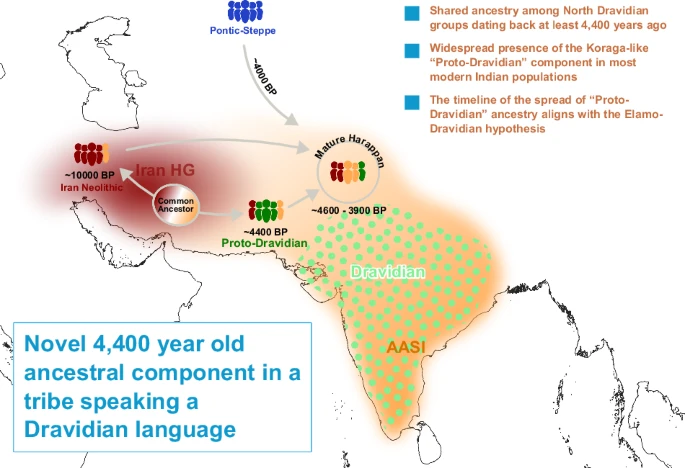
    1. The origins of Indo-europeans

    2. the indus-saraswati civilization and its sphere of influence

    3. Greater india

    4. gypsies

    5. indian diaspora

    Indians diaspora is the largest in the world, more than 15 mn live ...

    6. zebu cattle

    7. water buffalo

    8. chickens

    9. cotton

    10. rice

    11. religion

    12. philosophy

    13. statecraft & espionage

    14. republics

    15. non-violent non-cooperation

    16. mathematics


    17. hindu-arabic numerals

    18. medicine

    19. astronomy

    20. toxicology

    21. yoga

    22. classical literature

    23. paninian grammar

    24. scripts

    25. indian stories

    26. music

    27. dance & theatre

    28. murals & frescoes

    29. vastu shastra & shilpashastra

    30. surgery

    31. chess

    32. snakes & Ladders

    33. ludo

    34. the drainage and sewerage system

    35. canals & reservoirs

    36. seafaring & shipbuilding

    37. grid-iron city plan

    38. the english bond

    39. tin bronze

    40. lost-wax casting

    41. coinage & currency

    42. iron

    43. steel

    44. zinc

    45. spices

    46. sugar & jaggery

    47. mango & other fruits

    48. indian cuisine

    49. toys

    50. soaps & shampoo

    51. perfumes

    52. dyes – indigo & others

    53. organic farming

    54. gunpowder & rockets

    55. martial arts

    56. indian clubs & maces

    57. chariots

    58. gemstones – diamonds & others


    Trump got Covid-19 and the Republican leadership followed him into getting it


    If Donald Trump dies days before the election, think about being Hillary Clinton and watching it happen


    Hillary Clinton schemed and manipulated her way close to power

    To paraphrase Bilawal Bhutto, the world is now scripted by fascist spies and forget compassion, economics or emotion, politics is now all going according to narrative logic.

    https://twitter.com/TheseLongWars/status/1312076142782951432

    WTH is a narrative? Is life now a fascist screenplay where if u don’t follow a script u r declared traitor? Screw u and ur narrative, I have an ideology my ideology doesn’t changes ur narrative will keep changing. Read, think, speak & ignore fascist trolls who run this country.

    https://www.dawn.com/news/1471219

    Majorities in “democracies” across the world are attacking the second biggest group in the country that has political power

    Brown Pundits