The Belgian neutrality is over; India’s next steps on Kashmir

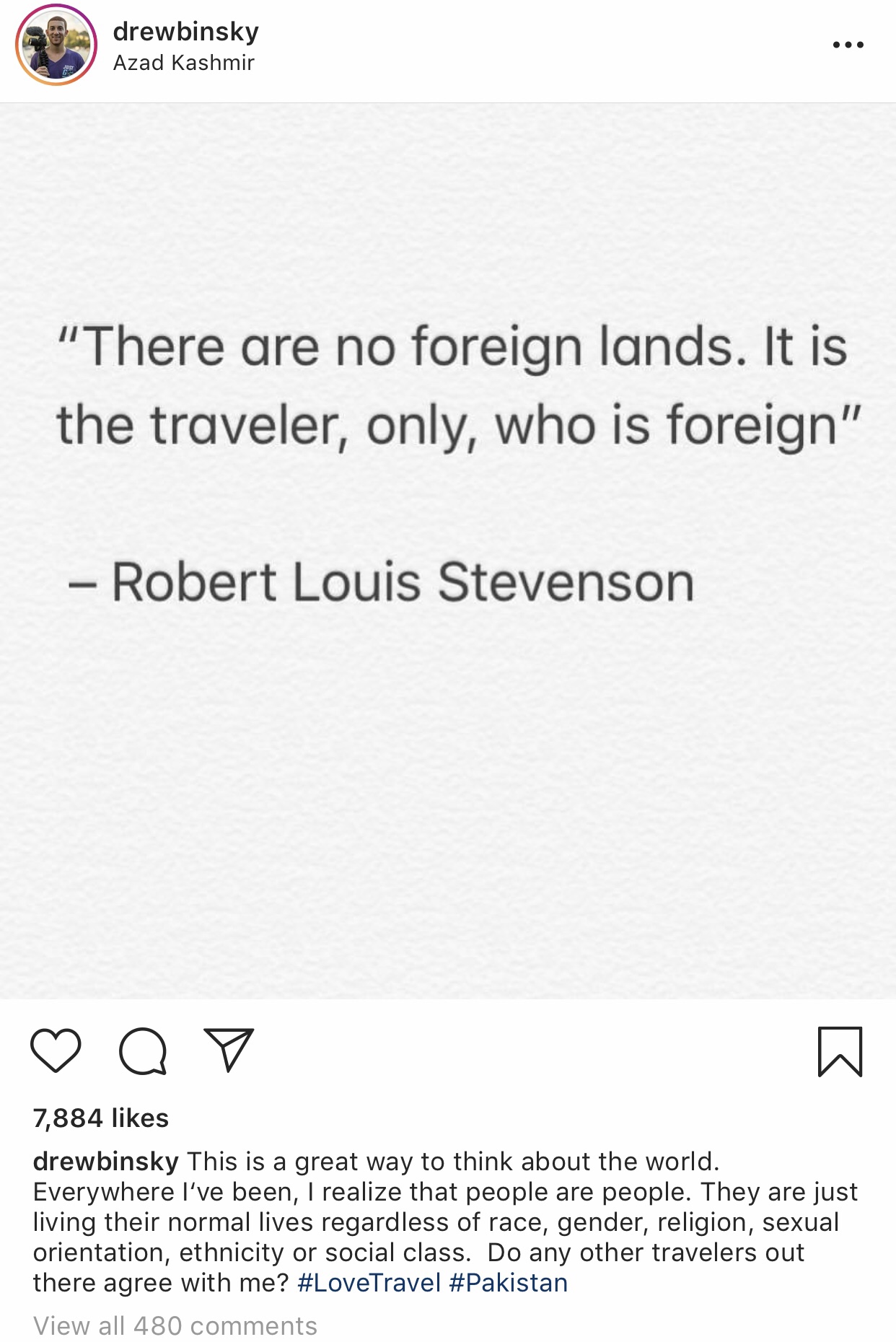
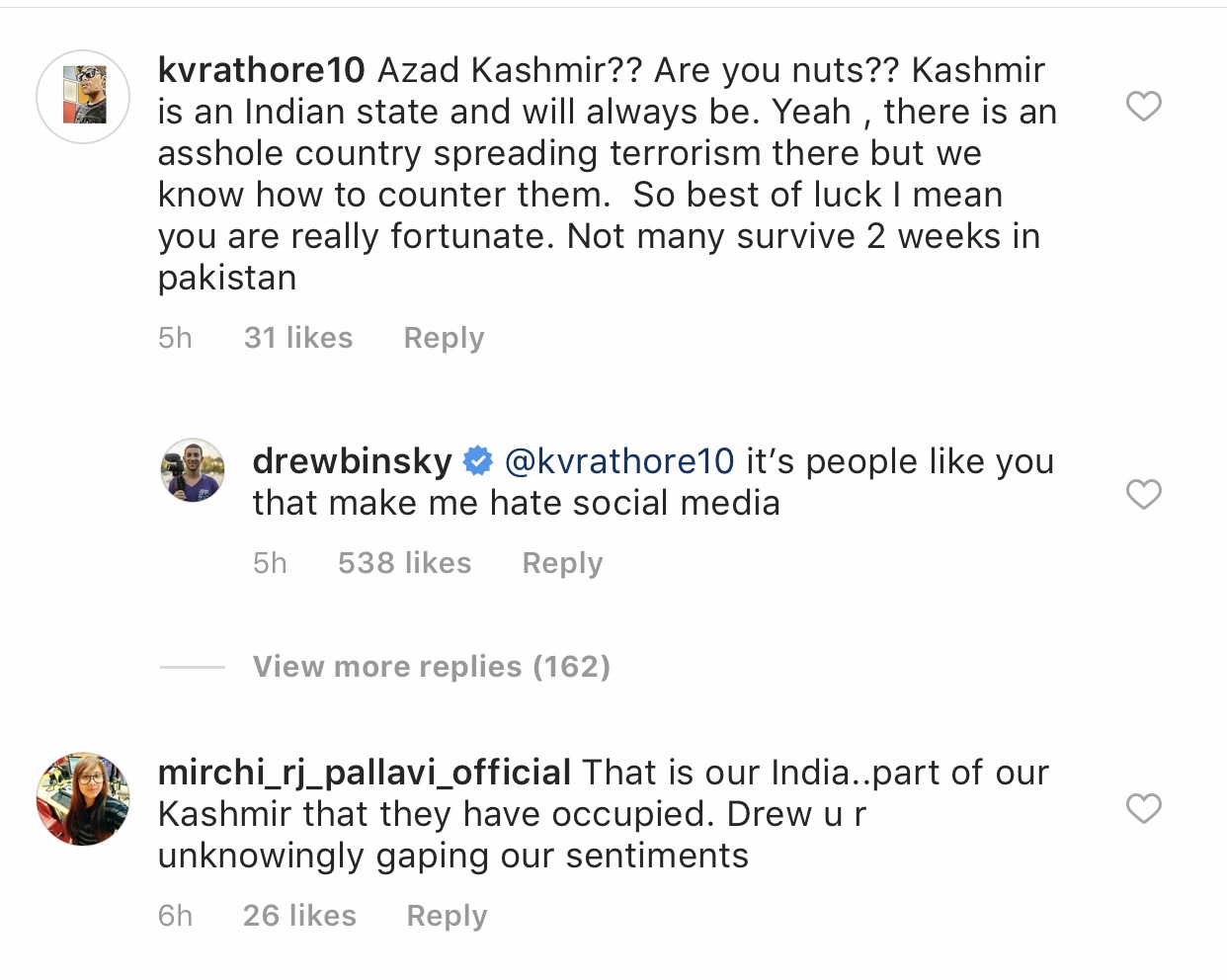
Jesus Christ- just wow.

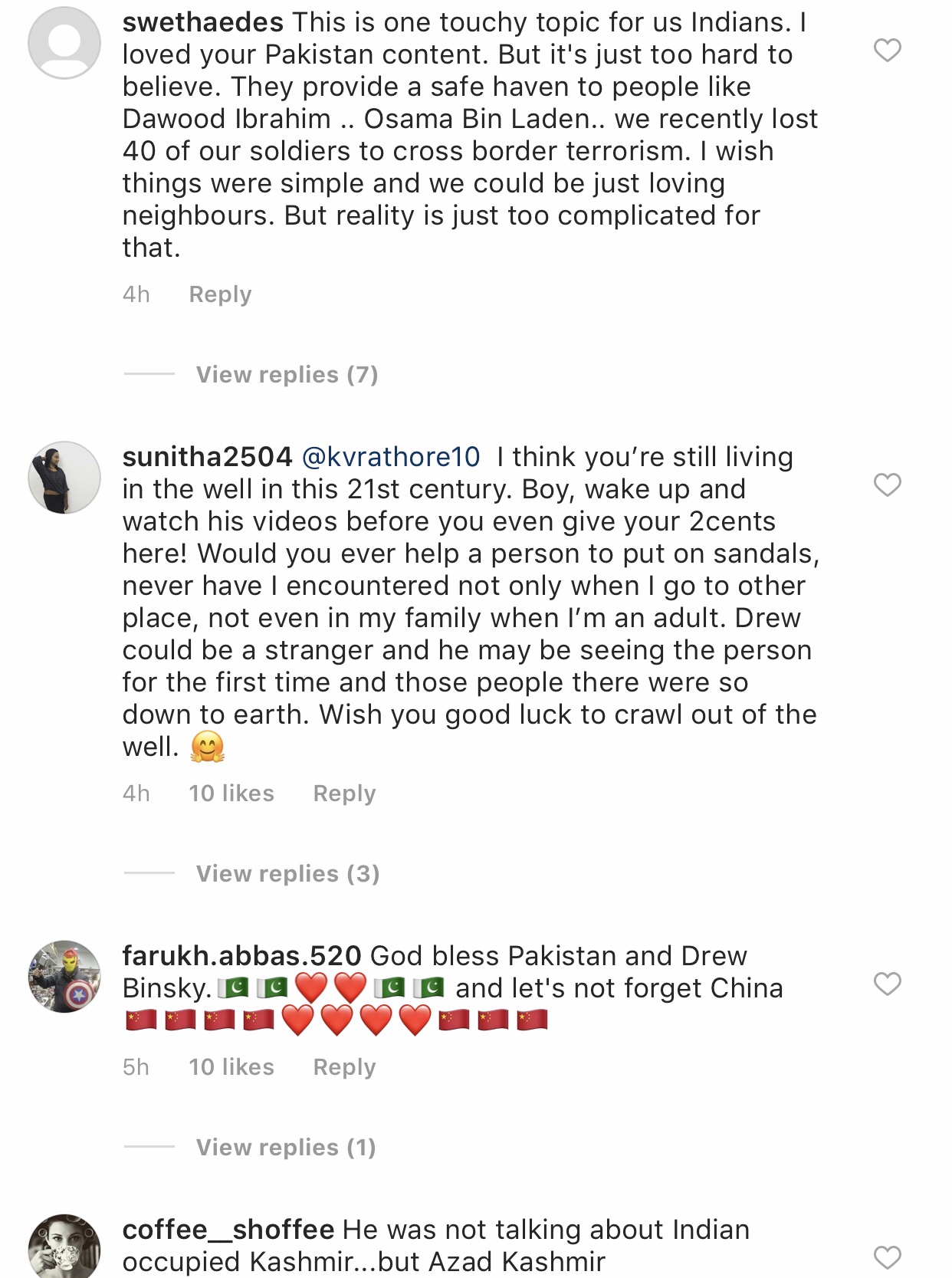
The Fifth column speaks:

The only winner in all of this is of course China. Finally a sensible commentator on Twitter:

India should cede the Muslim part of Kashmir but then accept that TNT is the “correct ideology” for South Asia.

Whereupon it should administer loyalty oaths to its entire Muslim population (the oath should be in such a manner than no practising Muslim can actually accept so should include some Hindu deities). 100million Muslims cross the border to Pakistan & Bangladesh; India will be left with the Khans the glamorous types of Muslims.

India can then look forward to beating China becoming a first world country. Indians must accept that they have lost the wings of India permanently (thankfully the South was saved by  the Vijaynagar dynasty) but instead embrace it’s Hindu Civilisational identity.

Modi has unfortunately lost the election with this humiliation; India will enter a period of darkness with Congress and the Italians. Hopefully the Hindu Right will evolve a new leader that can understand how the Nehruvian settlement is India’s true enemy.

Without Nehru; India would have been at 12,000 per capita, 95% Hindu and a prosperous autocracy.

BrownCast Podcast episode 17: India-Pakistan conflict, Hindu nationalism, Cosmopolitanism

Another BP Podcast is up. You can listen on LibsyniTunes and Stitcher. Probably the easiest way to keep up the podcast since we don’t have a regular schedule is to subscribe at one of the links above. You can also support the podcast as a patron (the primary benefit now is that you get the podcasts considerably earlier than everyone else…). Would appreciate more positive reviews.

My next planned podcasts were going to be next week…but then world-events intervened. We recorded this before the latest developments in the border clashes between India and Pakistan. We spend probably 35% of the conversation on that topic. But…in a wide-ranging discussion we discuss knitting & racism, Hindu nationalism, Maratha(i)(?) nationalism, and the future of India, with a cosmopolitan <<<Third Culture>>> Indo-British-American professional.

The conversation between our guest, Amey, myself, and Omar, was spirited. I actually had to edit out sections where we kept interrupting each other to get in a word in edgewise! That being said, there is one section where I drop into an American colloquialism which is atypical for me, and I state I’ll “edit it out.” But I left it in since to some extent I did play the role of the befuddled and fearful American from the heartland who just wants the world safe for freedom and consumerism!

I now support quotas on (South) Asian Americans at elite universities

A Harvard Law Professor Is Representing Harvey Weinstein. Students Say This Makes Them Unsafe, Demand His Resignation:

Harvard’s administration is taking students’ concerns seriously, and has agreed to conduct a review of Sullivan.

“In this situation, we would like to have a more complete understanding of the current environment at Winthrop House,” wrote Dean of the College Rakesh Khurana in an email, according to The Harvard Crimson.

One of The Crimson’s own staff members*, Danukshi Mudannayake, is spearheading the effort to remove Sullivan. She started a change.org petition that claims his representation of Weinstein as “not only upsetting, but deeply trauma-inducing.” According to Mudannayake, Sullivan has made clear that he does not “value the safety of students he lives with in Winthrop House.”

The American system is upsetting. To be frank, it’s a feature, not a bug. Presumption of innocence exists not in cases where it is easy to support the innocent, but in cases where it is hard. In the United States of America there are people who commit horrible crimes, and lawyers who defend them and lawyers who prosecute them. This is all part of the system.

It is tough on the heart. But it works. Unlike some societies, the will of the majority does not dictate the outcome (in theory).

Seeing those names was like a punch in the stomach. This is not the sort of “model minority” that I’d like to encourage.

The airstrikes

Indian Jets Strike on Pakistani Side of Kashmir Line:

Indian warplanes conducted airstrikes in the Pakistan-controlled side of Kashmir on Tuesday, Pakistani officials said, in an escalation of tensions between the nuclear-armed nations after a suicide bombing against Indian troops in the disputed region this month.

If confirmed, it would be the first time that Indian aircraft had crossed the Kashmir Line of Control to strike in years. But it was unclear what, if anything, the attack jets hit on the Pakistani side, raising the possibility that India was making a calculated bet to assuage public anger but minimize the risk of a major Pakistani military response.

Curious about value-add thoughts….

Do people in India care about ‘racist’ knitters?


There is a weird controversy about a white knitter who was perceived to be racist against Indians because they were worried about going to India because it was so alien from her experience? At least that’s what I get from the conversation. See the above exchange for some more context.

The mainstream website Vox, published something relating to this, The knitting community is reckoning with racism. The post shows that this is really about Americans more than about Indians. For example:

As someone who is mixed-race Indian, to me, her post (though seemingly well-meaning) was like bingo for every conversation a white person has ever had with me about their “fascination” with my dad’s home country; it was just so colorful and complex and inspiring. It’s not that they were wrong, per se, just that the tone felt like they thought India only existed to be all those things for them.

The author of the piece is a mixed-race American. Her mother is Irish American, and her father an immigrant from India.

My question is simple: what do people in India think about this?

White Hepthalites?

This is a parody account, which has been started by that blonde twitter account (I can’t recall her name).

However what I find interesting is treating the Hepthalites as “white.” There is a strain in Anglo-Saxon civilisation to absorb other heritages into their own. Furthermore as a shadow of the Western hegemony, “whiteness” is a trait often bestowed (the Aryans are treated as a white people).

I understand that there are many nuances but as the Devil Wears Prada teaches us, subtleties in the elite level trickle all the way down into the popular one.

The average Persian or India has a continuous link to their ancient by way of geography, history or ethnicity. What link does the average WASP really have to Alexander the Great; except a sentiment that they belong to the same “civilisation.” Constantly absorbing the winners of history into a mythos is what led to disasters like the film 300. The last traces of colonisation is economic & psychological; you still have to perceive another civilisation as superior to be able to buy into their lifestyle.

Shatranj Ke KhilaRi (The Chess Players)

I just happened to catch Shatranj Ke KhilaRi on youtube (you can see the whole movie on youtube, though I am not sure if there is a free subtitled version.. for that you may have to pay). I saw this movie in the 1980s and I remember watching it as:

  1. A Satyajit Ray movie. Hence serious, arty. Deep.
  2. A movie that (brilliantly, obviously since it was by Satyajit Ray, see above) captured the (unequal) chess match between the perfidious English and the decadent Indian nobility. . i.e. a “history movie” that tells us something profound about the British conquest of India.
  3. A movie with a message.

Now I saw it after 35 years and it seems to me that these are exactly the worst things about the movie. It is in fact a VERY funny, beautifully directed, brilliantly acted period piece that anyone can enjoy without thinking “art movie”.  But it is NOT a good depiction of how and why the British conquered India. The annexation of Oudh was just that, the annexation of Oudh. Wajid Ali Shah was a very unique personality, a gentleman and a patron of the arts, but hardly a real ruler. His deposition did not require any great chess move. The Oudh nobility had decayed long before this event and the conversion of Oudh from indirect rule (with British officers manning the Oudh army and supervising tax collection, etc) to direct EIC rule was typical of many similarly decayed nawab-doms, but NOT typical of the British conquest of India. It may be that the decaying hulk of the Mughal empire was just as depicted in that movie, but the Mughals did not rule most of India by that time. The stylized story of perfidious albion conquering the decaying Mughals was true enough of Bengal, Bihar and Oudh, but India is much more than that…The conquest of most of it was a much more serious affair, fought against harder men than Wajid Ali Shah (Haider Ali, Tipu Sultan, the Marathas, the Sikh Empire, etc). It was an unequal contest in the sense that Europeans in general were far more advanced in science, state organization and military arts, but some of the rulers who held real power in their domains (Marathas, Sikhs, Mysore, Nizam of Haiderabad, even Nepal) did make efforts to modernize their military and many of them did put up a fight. They did not lose because they were composing music, organizing kathak dance or playing chess, they lost because they were disunited, and the British proved better than them at most things that matter in statecraft. To take this movie as a metaphor for that struggle or as a good depiction of it is a disservice to history. This may be a good enough description of the annexation of Oudh, but every reviewer on Rotten Tomatoes seems to take it as a great depiction of the British conquest of India, which seems wrong to me.

That said, it is still a good movie. Ignore the politics, enjoy the acting, the comedy, the dialog. Sanjeev Kumar and Saeed Jaffery are both great as the aristocats playing chess while their wives have affairs or get sexually frustrated, Victor Bannerjee as the prime minister, Shabana Azmi as the wife, all do a great job, though the best performance is by Amjad Khan as Wajid Ali Shah.  Tom Alter (the late American-Indian actor.. I assume that would be the term; if an Indian born in America is Indian-American, then an American born in India would be American-Indian?) is also good as the Urdu speaking English officer advising General Outram.

My favorite dialog: Wajid Ali Shah asking his prime minister why he is crying? Did Outram recite some poetry or sing a song to him? because only music and poetry can bring a real man to tears!

The hilarious cuckolding scene:

Complete Movie:

Postscript: A few links to reviews from the time

New York Times. 

BBC

Washington Post (enriched by the comprehension of an exceptional film artist, who perceives clearly what this historical parable signifies for his country and his compatriots.)

Afghan Peace Process

From Dr Hamid Hussain

My two cents of Afghan peace process.  It is based on my own limited perspective informed by regular travels to the region and interaction with many including Pakistanis, Afghans, Americans, Indians etc.  Many have been kind to candidly share their views and not ‘official’ narrative as well as hopes and aspirations of common people in streets and bazaars that they shared with me.

Hamid

Making Peace with Broken Pieces – Afghan Peace Process

Hamid Hussain

 “There is nothing further here for a warrior.  We drive bargains; old men’s work.  Young men make wars and the virtues of war are the virtues of young men; courage and hope for the future.  Then old men make the peace.  The vices of peace are the vices of old men; mistrust and caution.  It must be so”.   Prince Feisal (Sir Alec Guinness) to T. E. Lawrence (Peter O’Toole) in Lawrence of Arabia.

In the last few months, a new window opened in the seventeen years old war in Afghanistan. There was breakthrough with first serious efforts of direct negotiations between United States (U.S.) and main militant group Taliban.  It was President Donald Trump’s announcement of withdrawal of American troops from Afghanistan that got the ball rolling.  He made this decision without consulting any other government agency. Pentagon, intelligence community and State Department view rapid withdrawal as a recipe for disaster.  Trump appointed former U.S. envoy to Afghanistan and an Afghan-American Zalmay Khalilzad nick named Zal to spearhead this effort.  Saudi Arabia, United Arab Emirates (UAE) and Qatar worked as intermediaries and a bridge between Taliban, Pakistan and Americans.

Negotiations between Taliban and Unites States is only one dimension of a complex conflict.  Taliban’s strategy is simple in its execution.  It used its committed cadre of fighters and support structure in Pakistan to escalate violence to a level to achieve two goals.  First to sow enough fear and uncertainty among Afghans that will undermine the efficiency and to some extent legitimacy of the government.  Another objective is to convince fellow Afghans that without giving them a share in power and economic pie, Afghans will never see peace.  Initially, behind the scene, questions were raised by Americans whether Taliban are a unified entity to work with.  Taliban responded by announcing a three days ceasefire during Eid festival.  There were no attacks all over the country proving their point that they have a firm command and control system and all fighters follow the leadership.  When United States announced troop withdrawal plan, Taliban thought that by directly negotiating they will get the credit and fulfill one of their objectives of forcing foreign troop withdrawal.  This will help them to carve out a much larger share in power after American withdrawal. Another factor was intense pressure on Taliban from Pakistan and Arab countries.  Agreeing to direct negotiations with Americans, Taliban placated both parties and if no agreement is reached, they can claim that they entered in negotiations with good faith and put the blame of failure at American doorstep. From U.S. point of view, there is a narrow window of about six months. Domestic troubles of President Trump will take a sharp turn with completion of special prosecutor Robert Mueller’s work.  In addition, presidential campaign will start in the fall of 2019 and these two factors will suck all the oxygen in White House.  Like many other foreign policy issues, Afghanistan will also recede in the background.   Continue reading Afghan Peace Process

Brown Pundits