Pakistan’s Extraordinary Diplomacy

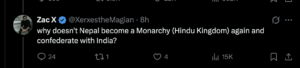
let’s preface this w a popular & controversial (?) tweet of mine

🇵🇰 | A Feudal, Fragile State That Keeps Getting Foreign Policy Right

I haven’t had a moment to breathe lately. I’ve been in Dubai; a city whose heat and ambition leave little room for reflection. But even in the desert haze of hyper-modernity, some themes press through. And perhaps none more than this: the sheer tactical genius of Pakistan’s foreign policy in recent months.

Let me be clear. Pakistan is not a strategic power. It is a fractured, feudal, low-HDI state with deep structural issues. It’s trapped in cycles of elite capture and ideological rigidity. But it is also, to my astonishment, among the most tactically agile states on the planet. It punches far above its weight, not because it has a clear long-term vision, but because it dances well in chaos.

Where India plays the heavy-set civilizational power; bound increasingly to the West and the Israel playbook, Pakistan has played the margins, the hedges, the emotional currents. And it has played them well.

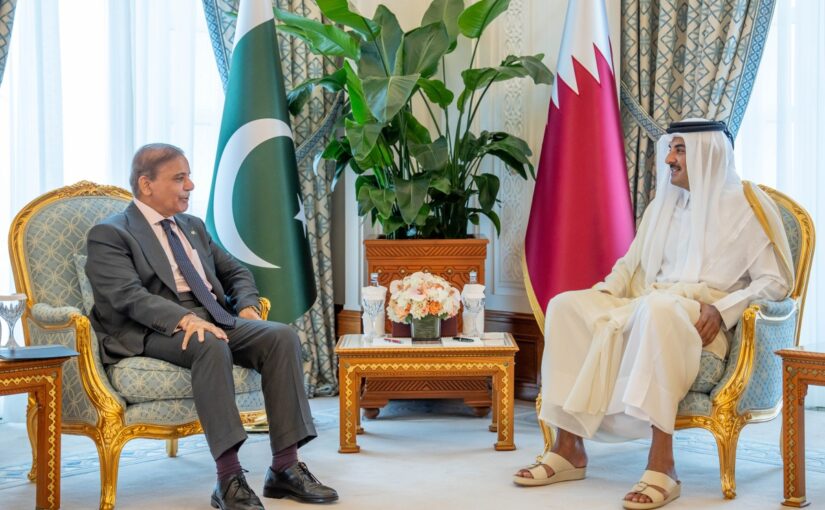
Ever since the Pahalgam conflict, Pakistan’s diplomacy has rarely been wrong-footed. Its tactical instincts are near-perfect. In moments of geopolitical flux, from Qatar to Kathmandu, Pakistan has found ways to remain relevant, nimble, and central. Not liked, not admired but impossible to ignore.

This post is not a celebration. It’s a recognition. A state can be deeply dysfunctional internally, yet highly functional externally. And in a world of waning superpowers and rising regional blocs, that matters.
Pakistan is Not India’s Mexico

Continue reading Pakistan’s Extraordinary Diplomacy

Nepal Newar and Sinhala Quasi-Historical Myths

Now that Nepal is in the news, a post on similar mythical origins of Sri Lankans and the Newar community in Nepal. The post was a result of my Uni Batch mate Sunil Koswatte’s link to a Journal article “The Horse-King and the Merchant Siṃhala, (Z006) By Naomi Appleton.

The Journal article by Naomi Appleton says that
Abstract of the Abstract

The Siṃhala story continues this narrative to include the chief merchant, Siṃhala, being followed home by a demoness, who tries to get him back before seducing and eating the king.
i)This paper examines political and quasi-historical narrative of the invasion of Sri Lanka by the Sinhalese;
ii)Newar Traders warning of the dangers of travelling to Tibet.

Note: The Nepal Newars are the 8th largest ethnic group in Nepal and about 4.6% of the population

Continue reading Nepal Newar and Sinhala Quasi-Historical Myths

Trump Has Birthed Eurasia

I’ve been busy, but I can’t shake the feeling that we’re living through the beginning of a new world.

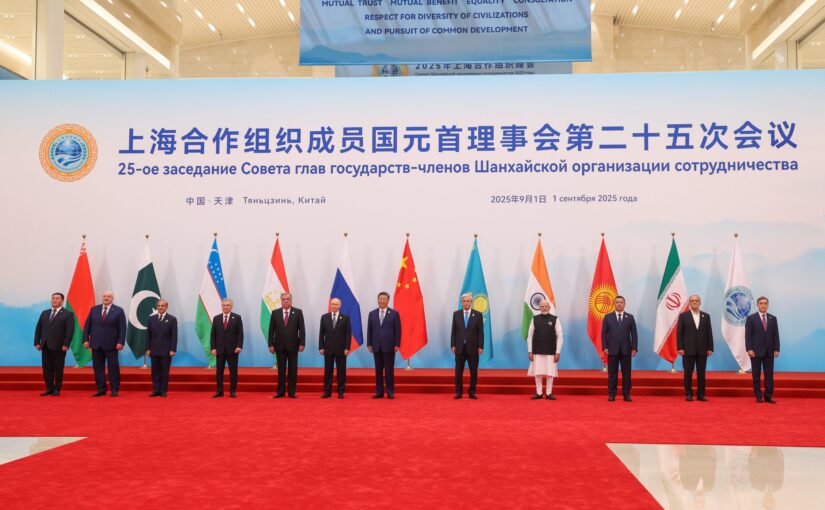
It was acute with the SCO summit; not just through the headlines, but the atmospherics. The handshakes, the body language, the ease. It’s the kind of thing that barely registered in Western media, but Modi’s presence, standing shoulder to shoulder with Xi, Putin, and Pezeshkian, felt like the curtain rising on a new geopolitical epoch.

And at the center of it all? Donald J. Trump. Not by design, of course. But by consequence.


🔥 The Modi Factor Continue reading Trump Has Birthed Eurasia

Open Thread: Pakistan Floods – Let’s Talk

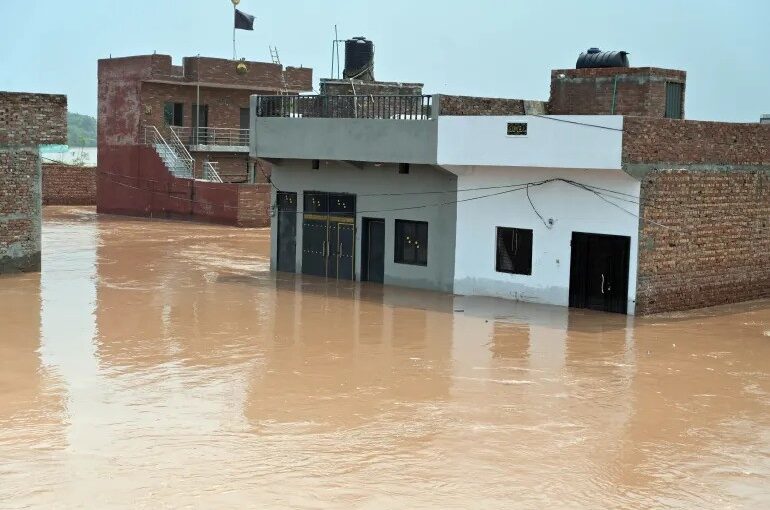
Massive floods have hit Pakistan’s Punjab province after record-breaking monsoon rains and the overflow of major rivers. Officials report nearly 300,000 people displaced from the province alone and more than a million affected as the Ravi, Sutlej, and Chenab overflowed their banks. Over 1,400 villages are underwater, and there are growing fears of disease outbreaks and food shortages.

👉 ‘The water left nothing’: Pakistan’s Punjab province reels from deadly floods (The Guardian)

This thread is for everyone to share thoughts, updates, and questions about what’s happening.

Jump in and share your perspective.

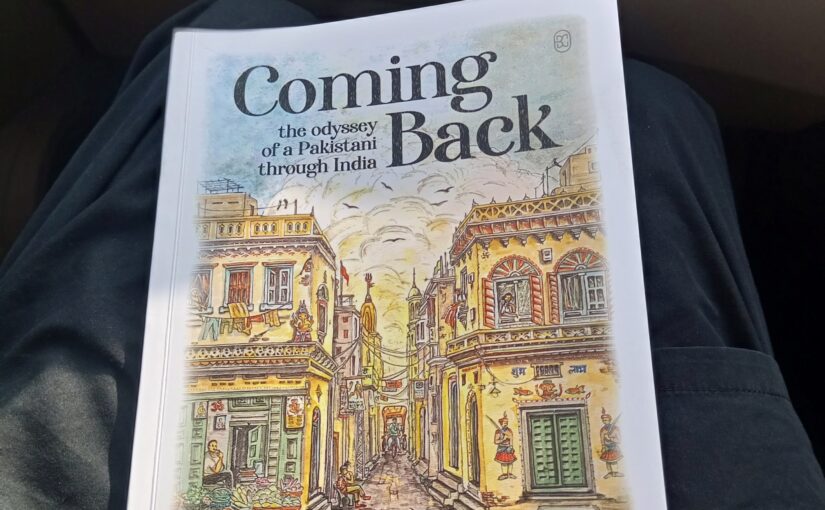
Why Travelogues?

For me, the logic is simple: if you’re someone like me who prefers the comfort of a room over venturing out, travelogues are the perfect gateway. They let you seep into panoramas you’ve never explored, experience cultures without packing a bag, and even gather cross-cultural insights before you actually travel.

My recent read, “COMING BACK: The Odyssey of a Pakistani Through India” by Shueyb Gandapur, is a true tour de force. It chronicles a chartered accountant’s journey through India in 2017 – two and a half weeks, four cities, and countless encounters. The narrative beautifully captures the essence of shared histories and nuanced differences, making it more than just a travel diary; it’s an exploration of identity, culture, and connection.

Have you read any travelogues recently? Which ones would you recommend?

PS: Despite my dislike for traveling, the picture was taken while traveling from Mansehra to Islamabad. 😅

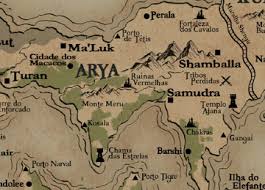
The Aryan Cleft: Pakistan as the Cradle and Cusp of Indo-Iranian Civilisation

The traditional Mercator worldview slices our imagination. It distorts the unity of the Indo-Iranian zone; a civilizational belt that has resisted rupture, even across millennia of empire, religion, and state.

May be a graphic of map and text

And yet, if you look again, linguistically, genetically, geographically, the facts are harder to ignore. Pakistan sits at the inflection point. Continue reading The Aryan Cleft: Pakistan as the Cradle and Cusp of Indo-Iranian Civilisation

Gaza open thread

This is a genocide every which way but I would be interested to hear the views of the commentariat.

I am very pro Zionist for what it’s worth.

I’ll explained my thoughts later on in a proper post, but I am interested to see RW Indians reflect on Gaza.

The Long Defeat: How Hinduphobia Hollowed Out Pakistan

I lost an entire post earlier, but perhaps it’s for the best. I’ve had the time now to clarify my thoughts and this is better to make clear the new policy of just junking comments that don’t “smell right.”

What prompted me to write again was a small but telling excerpt from a recent Dawn article. It wasn’t just that they misspelled “Brahman”; they wrote “Barhaman,” a word that doesn’t exist in any linguistic tradition. It was also the order in which they listed religions. They wrote:

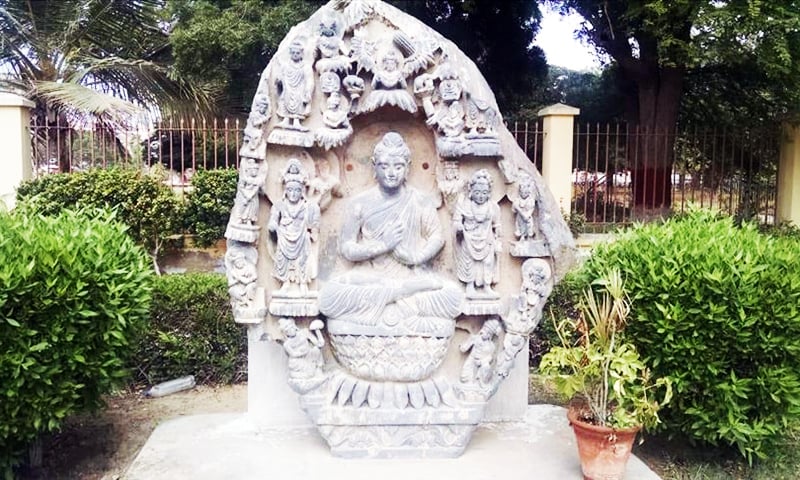
“…revered for not only the followers of the world’s three major religions — Buddhism, Sikhism and Hinduism…”

Hinduism, the oldest and most foundational of the three, was placed last. This is not trivial. Both Buddhism and Sikhism evolved from Hinduism. Yet in Pakistani discourse, so marked by dislocation and disavowal, Hinduism is routinely treated as a junior or fringe faith. This is what endemic Hinduphobia looks like: not explicit violence, but civilizational misordering, semantic erasure, and the subtle, continuous downgrading of Hindu memory.

It’s barely recognized. And that’s the point. Continue reading The Long Defeat: How Hinduphobia Hollowed Out Pakistan

Why does the West get Immigrants and not Indigenous

A post as a result of discussion I had with a classmate, now an Aussie for about 30 years

Classmate: As for Australia and need for immigrants…. insufficient labor supply for the growing economy!

My reply::Plenty of Labor, the Indigenous Aborigines.
Why are they (First Aussies) not being educated, Racism ??

Classmate:  Barr…you are clearly unaware of the reality..there is no simple solution to the barriers faced by Aborigines in integrating into the Australian economy.

My long reply, the crux of this Post
There are parallels of why Immigrants are preferred over Aus Aborigines and why the Brits got Indentured South Indian Labor for the Estates in Ceylon  (Same as why Immigrants are preferred  over African Americans in US too)

Indenture Estate Labor in Ceylon was essentially undocumented, i.e. not given any legal status (Residency ) or even Birth not recorded, The reason was simple, residency or similar would have meant Ceylon Labor Laws would have been applicable. Ceylon Labor Laws were pretty decent and reasonable for those times. So it was easier to control undocumented South Indian Labor. Sinhalese were notorious for NOT being docile and prone to Litigation. Just keep in mind only a select few Ceylonese got a decent education. Universal literacy (and Life Expectancy) only happened after Independence. Tamil were more prone to violent crime, but among themselves. Oppressed rarely fight the oppressor in this caste the high caste Tamils.

Continue reading Why does the West get Immigrants and not Indigenous

India’s sugar was bitter, until her first female scientist made it sweet

The Untold Story of E.K. Janaki Ammal

via X

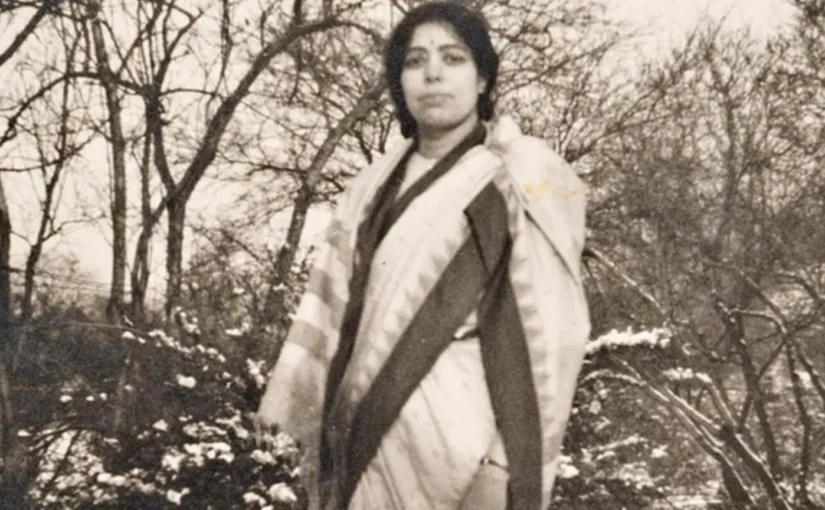
She was born in 1897 in Tellicherry, Kerala, the daughter of a high court sub-judge and one of nineteen children in a large, liberal household called Edam. Her family belonged to the Thiyya community, considered “socially backward” under the Hindu caste system. But within Edam, caste meant little. There was music, a sprawling library, a cultivated garden, and a quiet expectation of excellence.

Her sisters married. She did not. Instead, Janaki Ammal chose plants.

She trained first at Queen Mary’s and Presidency Colleges in Madras, then left colonial India in 1924 on a Barbour Scholarship to the University of Michigan, where she would become the first Indian woman to earn a doctorate in botanical science. She lived in an all-women’s dorm, smuggled a squirrel in her sari for company, and worked under renowned botanist Harley Harris Bartlett.

She returned to India and joined the Sugarcane Breeding Station in Coimbatore, where she changed the course of Indian agriculture. The country’s native sugarcane was hardy but lacked sweetness; imported varieties were sweeter but weak. Janaki crossbred both into something stronger, higher-yielding, and perfectly suited for Indian soil.

The sugar in Indian chai owes its taste to her. Continue reading India’s sugar was bitter, until her first female scientist made it sweet

Brown Pundits