
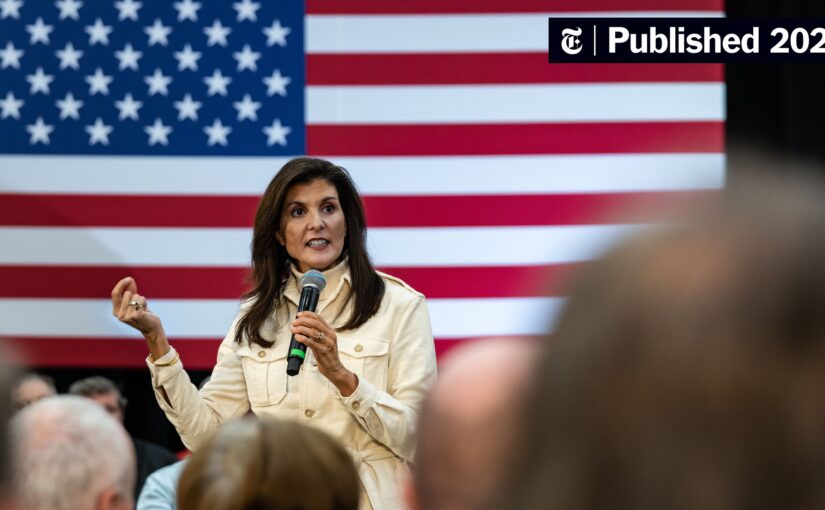
Fascinating for me how two very different Indian-Americans are battling it out. There seems to be far less Indian asabiyyah?
Tag: Diaspora
On Islamism, the Oneness of Mankind, and the Burden of Public Bahá’ís
For too long, the term Islamism has functioned as a lazy shorthand in Western discourse; one that often sanitizes the dehumanization and securitization of Muslim bodies. And when it’s used by those claiming spiritual insight, especially from within a global Faith like the Bahá’í Faith, it becomes more than just a rhetorical misstep. It becomes a betrayal.
This week, a prominent British Bahá’í comedian made such a misstep.
A Moment of Caution — Dismissed
When Omid Djalili posted a news clip, which gently reframed the Bahá’í concept of the Oneness of Mankind, I appreciated the gesture. In fact, I said so. The “toe-stubbing” analogy was clever, and there was something moving in seeing profound principles gently repackaged for a wider audience.
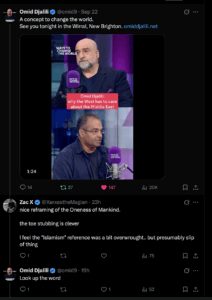
But I raised one concern: the reference to Islamism. It was, I suggested, overwrought, unnecessary, and ultimately unwise. I proposed an alternative: perhaps rephrasing the same concern as “security anxieties around mass migration” or similar language that doesn’t dog-whistle. This wasn’t a condemnation. It was, as any Bahá’í should recognize, consultation. An invitation to reflection.
Instead, I was told: “Look up the word.”
The Burden of Bahá’ís in Public
It’s not about semantics. It’s about responsibility. And especially so when one is invoking sacred teachings, teachings that thousands upon thousands have died for; on public platforms. The Bahá’í Faith is not a marketing device to win over a Western liberal audience by soft-launching its principles in the language of border panic and counter-terrorism.
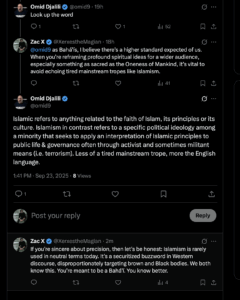
To reduce Islamism to a “technical English-language distinction” is disingenuous. The term has never been neutral. In nearly all Western contexts, it has become a floating signifier for violence, extremism, and “dangerous Muslims.” It serves to other, to isolate, and to justify state and vigilante violence often against entirely innocent people (Afghanistan, Iraq & Palestine).
And when Bahá’ís, of all people, repeat that language without self-awareness, without contrition, and without consultation, we should all be worried.
The Problem Isn’t the Joke. It’s the Response.
I understand the pressures of performance. I’ve done media. I know how easy it is to slip. What matters is what happens next. When another Bahá’í, someone you know, someone with many mutual connects, raises a concern gently and in good faith, the correct response isn’t smugness. It isn’t defensiveness. It certainly isn’t “learn English.”
That response is hurtful, racist, and deeply contrary to the values we both claim to serve. And that’s what cut. Not the line in the show but the refusal to listen afterwards. The arrogance of elite Bahá’ís who believe proximity to celebrity, applause, or power gives them carte blanche to reframe revelation in their own image.
This Is Why We Need to Talk
As Brown Pundits reshapes itself, I’m re-examining my own priors, too. What voices we platform. What values we uphold. Who gets to speak for our communities and under what banner.
So I say this plainly: The oneness of mankind cannot be proclaimed by marginalizing Muslims. And Bahá’ís, especially public ones, must hold themselves to the standard of humility, consultation, and truthfulness we profess to believe in. We cannot serve justice while echoing injustice. We cannot preach unity while casually reinscribing division. The world is watching. Let’s be worthy of what we claim.
The Ilhan Omar of Brown Pundits
Every movement has its lightning rods. In American politics, Ilhan Omar is one: progressive, unyielding, often correct in substance but polarizing in style. She calls out genuine injustices, but her timing and tone can sometimes drown out the very points she is trying to make.
I’ve begun to realize that Kabir plays a similar role on Brown Pundits. Like Ilhan, he often raises necessary truths (for instance Israel has just killed an American family in Lebanon). Like Ilhan, he brings traffic, visibility, and energy. But also like Ilhan, he has a way of inflaming rather than persuading.
Charlie Kirk’s remarks illustrate why Ilhan Omar’s critiques resonate, even if her tone divides. When Kirk sneers that there are “no tall buildings left in Gaza,” or jokes that Palestinians are “stupid Muslims” for resisting, he is not just making political commentary. He is engaging in dog-whistling — racialized, sexist, Islamophobic rhetoric that devalues human life. Combined with his earlier comments about the supposed lack of “brain processing power” among prominent Black women, the pattern is unmistakable. One does not have to be a progressive to see that such speech corrodes the civic space. At the same time, none of this justifies violence: the murders of Charlie Kirk and Irina Zarutska are deplorable and must be condemned without qualification.
The Progressive Dilemma Continue reading The Ilhan Omar of Brown Pundits
H1B Open Thread
I’ll add as I go along but this seems quite topical..
I do see the Persian Gulf States emerging as a hyper-conduit between capital, labour and technology. The West is raising up its walls.

Call for Authors
Brown Pundits has always thrived on debate, commentary, and detail. Our compact team—three co-founders, two editors (Nivedita & Indosaurus), and three authors (sbarrkum, Gaurav Lele, Saiarav and Manav); keeps the conversation alive.
We’d like to expand. If you’ve been a regular voice in the comments or simply feel you have something to add, please apply to write for BP. Sharp observations, whether about Modi Ji’s birthday celebrations or broader cricketing analogies, are exactly what we value.
The word Pundit comes from Sanskrit, meaning “learned man” or Brahmin. It reminds us that Brown intellectual life is rooted in centuries of plural, complex traditions of debate. This is our inheritance, and BP stands on those terms; not reducible to any ideology.
I’d especially encourage regulars like brown, Daves, Hoju, Pandit Brown, and BB to consider joining the author list.
Why does the West get Immigrants and not Indigenous

A post as a result of discussion I had with a classmate, now an Aussie for about 30 years
Classmate: As for Australia and need for immigrants…. insufficient labor supply for the growing economy!
My reply::Plenty of Labor, the Indigenous Aborigines.
Why are they (First Aussies) not being educated, Racism ??
Classmate: Barr…you are clearly unaware of the reality..there is no simple solution to the barriers faced by Aborigines in integrating into the Australian economy.
My long reply, the crux of this Post
There are parallels of why Immigrants are preferred over Aus Aborigines and why the Brits got Indentured South Indian Labor for the Estates in Ceylon (Same as why Immigrants are preferred over African Americans in US too)
Indenture Estate Labor in Ceylon was essentially undocumented, i.e. not given any legal status (Residency ) or even Birth not recorded, The reason was simple, residency or similar would have meant Ceylon Labor Laws would have been applicable. Ceylon Labor Laws were pretty decent and reasonable for those times. So it was easier to control undocumented South Indian Labor. Sinhalese were notorious for NOT being docile and prone to Litigation. Just keep in mind only a select few Ceylonese got a decent education. Universal literacy (and Life Expectancy) only happened after Independence. Tamil were more prone to violent crime, but among themselves. Oppressed rarely fight the oppressor in this caste the high caste Tamils.
Continue reading Why does the West get Immigrants and not Indigenous
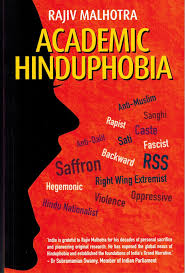
Hinduphobia Exists, But Pakistan Was Not Born from It
I was riffling through the comments and my jaw dropped when Kabir claimed Hinduphobia doesn’t exist. It struck me as both historically and emotionally tone-deaf. I didn’t respond at the time, but I’ve been reflecting on it since.
Let me say upfront: Hinduphobia does exist. It may not always manifest in overt violence or systemic persecution (at least not today, and not in most places globally), but it does appear in more insidious, ideological forms; especially in academic and diasporic discourse.
Take, for instance, the backlash against H1B visa recipients. Much of that criticism is coded; targeting upper-caste Indians, especially Hindus, who are the primary beneficiaries of this brain-drain dynamic. It’s not just about class or meritocracy; there’s an unspoken discomfort with their presence and success, often couched in progressive rhetoric.
On the intellectual front, academics like Audrey Truschke and others within the left-liberal Western consensus have regularly challenged or dismissed Hindu identity altogether; reducing it to political nationalism or caste oppression. This refusal to acknowledge Hinduism as a living, plural, and spiritual tradition creates an environment where Hindu self-articulation is delegitimized. That too is a form of Hinduphobia.
Now, is this Hinduphobia the same as the systemic anti-Muslim, anti-Black, or anti-immigrant hatred we see elsewhere? No. Hinduphobia today is more dismissive than violent, more erasure than exclusion, but it is real and it needs to be acknowledged.
Pakistan Was Not Born from Hinduphobia Continue reading Hinduphobia Exists, But Pakistan Was Not Born from It
Offline Life

I thought I’d start sharing more stuff from offline life just to vary up the tone.
I like my privacy as a general rule of thumb but it would be nice if we fleshed out as individuals rather than just as online voices..
Cheers. And hope everyone had a great weekend.
Ps: I took Timmy (her nickname) with me for Club Training. I do a fair bit of Indo-Persian wrestling; did the “Gama move”, a few days back.
So everyone my Fitness is “Brown” loll
Brown Pundits: Broad Church or Narrow Canon?
Brown Pundits Must Stay a Broad Church
Reading Kabir’s thoughtful post on the “soft Hindutva” bias at Brown Pundits, I found myself both agreeing with parts of his argument and diverging from its framing. My own journey with BP goes back to its inception. The blog was born in Twixmas December 2010; 10 days after I had met Dr. Lalchand, whose presence has profoundly shaped my civilizational views.
I say this not as a biographical aside but because BP, at its best, is where the personal and civilizational collide. We bring who we are; our marriages, our migrations, our contradictions, into this messy, brilliant conversation.
At the time, like many Pakistanis, I held a deep-seated assumption: that Hindus were fundamentally “other.” It wasn’t overt hatred; just a civilizational distance, internalized from birth. But Dr. V & Brown Pundits challenged that.
A Forum With Bias? Yes. But Which One?
The heart of BP is not neutrality; it’s the willingness to host contradiction. That is its genius, and it must be protected.
Continue reading Brown Pundits: Broad Church or Narrow Canon?
What Kind of Space Is Brown Pundits
A few of us authors have been actively discussing the future of Brown Pundits; the space, the tone, and the deeper ideas we’re engaging. It started informally on our WhatsApp group, but the questions are foundational: What kind of platform is BP becoming? What should it strive to be? And what kinds of ideas does it host best?
At its best, Brown Pundits is a bridge; across nations, faiths, ideologies, and lived experiences. It’s a space where one can be deeply Indian, wholly Pakistani, broadly Bangladeshi, or diasporic and disillusioned but still belong. But like any bridge, it needs conscious upkeep. If a conversation leans too far in one direction, it doesn’t stretch, it collapses inward.
Some contributors feel the platform has become overly shaped by one ideological current. Others argue that the real problem isn’t dominance, but disengagement ; those who want plurality must also show up. And both perspectives can be true.