
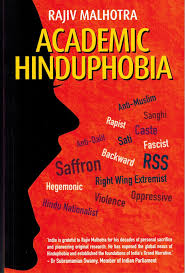
Hinduphobia Exists, But Pakistan Was Not Born from It

I was riffling through the comments and my jaw dropped when Kabir claimed Hinduphobia doesn’t exist. It struck me as both historically and emotionally tone-deaf. I didn’t respond at the time, but I’ve been reflecting on it since.

Let me say upfront: Hinduphobia does exist. It may not always manifest in overt violence or systemic persecution (at least not today, and not in most places globally), but it does appear in more insidious, ideological forms; especially in academic and diasporic discourse.

Take, for instance, the backlash against H1B visa recipients. Much of that criticism is coded; targeting upper-caste Indians, especially Hindus, who are the primary beneficiaries of this brain-drain dynamic. It’s not just about class or meritocracy; there’s an unspoken discomfort with their presence and success, often couched in progressive rhetoric.

On the intellectual front, academics like Audrey Truschke and others within the left-liberal Western consensus have regularly challenged or dismissed Hindu identity altogether; reducing it to political nationalism or caste oppression. This refusal to acknowledge Hinduism as a living, plural, and spiritual tradition creates an environment where Hindu self-articulation is delegitimized. That too is a form of Hinduphobia.

Now, is this Hinduphobia the same as the systemic anti-Muslim, anti-Black, or anti-immigrant hatred we see elsewhere? No. Hinduphobia today is more dismissive than violent, more erasure than exclusion, but it is real and it needs to be acknowledged.

Pakistan Was Not Born from Hinduphobia Continue reading Hinduphobia Exists, But Pakistan Was Not Born from It

If You Have a Side, You Don’t Care for the Other Side

In a world increasingly defined by sides, partisanship often masquerades as empathy. Whether it’s Pakistanis performing concern for Indian liberalism, or Indians invoking the plight of Muslim minorities to score points against their ideological rivals, the truth is simple: if you already have a side, you’re not truly invested in the fate of the other.

This isn’t cynicism; it’s structure. Sides, by their nature, demand loyalty. And loyalty comes at the expense of dispassion. You can mourn injustice selectively, but don’t pretend it’s universalism. More often than not, tribalism puts on the mask of principle.

As a BahÔ’í, I’ve been shaped by a millenarian vision that urges global unity; yet I’m also deeply influenced by Hindu pluralism and pagan elasticity. Nicholas Nassim Taleb once said the more pagan a mind, the more brilliant it might be (excellent article) because it can hold many contradictions without demanding resolution. That capaciousness allows one to see that not every question needs a single answer. Hinduism, with its deep pluralism, contrasts radically with Islam’s (and Judaism’s) uncompromising monotheism. And yet, these two traditions are bound together—enmeshed across centuries of history, thought, and blood. Their tension is real, but so is their shared life.

That’s the point: opposites don’t just coexist, they form a whole. But when we prescribe change for the ā€œother side,ā€ we ignore our own capacity for reform. It’s always easier to critique outward than to renovate inward. Especially in a world run by oligarchic elites and managed emotions, where empathy is choreographed and outrage monetized.

So no, the Dalit Muslims of Dharavi aren’t the problem. Nor are the marginalized Hindus of East UP and Biharis. The problem is that a single family can build a private skyscraper in Mumbai while the city gasps beneath it. It’s the system that rewards power accumulation, not its occasional victims, that should concern us.

I don’t offer neat solutions. Maybe it’s taxation. Maybe it’s redistribution. Maybe it’s noblesse oblige. But the first step is this: stop pretending your critique of the other side is altruism. It’s not. It’s strategy. And perhaps the more honest work begins at home—with your own side, your own people, your own self.

Brown Pundits