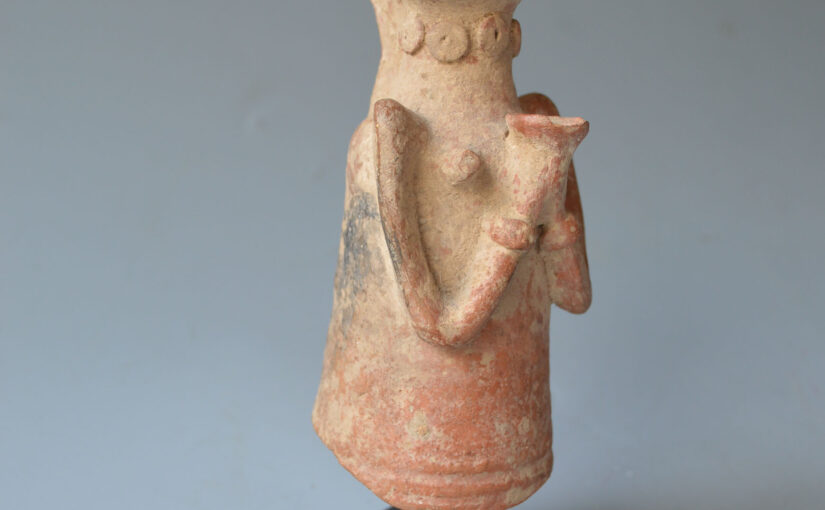
India’s Eastern Face: Where Civilisation Dissolves Instead of Ending

Hard Edges and Soft Ones

India is unusual among civilisations in that most of its edges are real. They can be pointed to on a map and felt underfoot. The northwest is closed by the Hindu Kush, a wall that both protected and punctured India through invasion. The north is sealed by the Himalayas, which turned the subcontinent inward for millennia. The south ends cleanly in the Indian Ocean, a hard geographic edge that also became India’s great outward highway. These are faces with sharp contours.

India is bounded in the northwest by mountains, in the north by ice, in the south by water, and in the east by diffusion.

The east is different. It does not end. It thins.

A Boundary That Does Not Behave Like One

Geographically, there is a boundary. The Indo-Burman ranges run from Arunachal through Nagaland, Manipur, Mizoram, and down into Burma. They are real mountains, thick with forest, rain, and disease. But they are not high enough, cold enough, or empty enough to function like the Himalayas. They slow movement without stopping it. They divide ecologies more than peoples.

This matters because civilisation follows ecology before it follows flags.

Where India Becomes Something Else, Gradually

Continue reading India’s Eastern Face: Where Civilisation Dissolves Instead of Ending

South Asia Is an Ugly Postcolonial Euphemism

There is something faintly ridiculous about how often educated people insist on using the term South Asia as if it were a neutral, hygienic improvement on an older and supposedly “problematic” word. It is neither neutral nor an improvement. It is a bureaucratic euphemism invented to manage post-Partition discomfort, and it collapses the civilizational reality of the region rather than clarifying it.

The Indian subcontinent has had a name for millennia. It was called India because it lay beyond the Indus. Greeks used it. Persians used it. Arabs used it. Medieval Muslims, early modern Europeans, and the British all used it. The word survived because it described a geographic and civilizational unit, not because it flattered any modern state. The fact that the Republic of India later adopted the name does not retroactively invalidate its older meaning. Belgium did not abolish the word “Europe,” and Serbia’s existence does not make “European” offensive.

South Asia, by contrast, is not an ancient term misused by a nation-state. It is a late–Cold War academic construction, popularised by American area studies departments that were uncomfortable saying “India” once India no longer meant a single polity. It is a word designed to avoid an argument, not to resolve one. Like “Middle East,” it describes nothing from within the region itself. No one historically lived in “South Asia.” No one spoke “South Asian.” No one cooked “South Asian food.” Continue reading South Asia Is an Ugly Postcolonial Euphemism

The Demise of Brown Pundits Is Much Exaggerated

Every few months someone asks whether Brown Pundits is “dying.” I understand the instinct. The internet is littered with abandoned blogs. Attention is fickle. Writers drift. The centre does not hold. And yet, when I actually look at the numbers, the mood often turns out to be wrong.

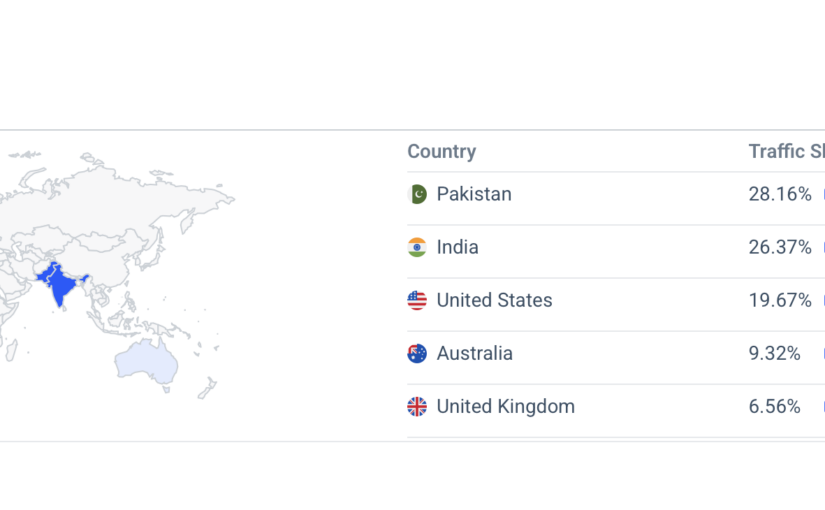
We had a real dip. In September and October we were running at roughly 55–65k monthly readers. Then we fell hard, to around 33k. This month, we have bounced back to roughly 53k. That is a 60% jump on the trough. A lot of it is mobile. A lot of it is casual readership rather than the old-school desktop cohort. But it is still real people arriving, reading, and sharing.

The geographical pattern is also telling. India and the United States remain the main pillars, as you would expect. But Bangladesh has surged in a way we did not anticipate. That matters because it suggests we are not only a niche diaspora salon. We are also being read inside the region, by people who do not need South Asia explained to them. Continue reading The Demise of Brown Pundits Is Much Exaggerated

Dravidian Progressivism is a Scam

Chennai, without any doubt, is one of the better cities in the country. I agree with many of the issues raised by XTM here. Along with Hyderabad, Ahmedabad, and Bangalore, Chennai continues to fare better in many aspects of life compared to Mumbai, Delhi, Kolkata, and even Pune.

My Experience

While I appreciated the cleanliness and infrastructure of Chennai, I cannot say I came away with the same impression as XTM. Of all the Indian cities I have visited, I found Chennai less hospitable than Ahmedabad, Hyderabad, or Delhi. Even as a fluent English speaker, I struggled to hail autos or get directions. Surprisingly, I did not face this issue in the rest of Tamil Nadu. For older Hindi speakers with limited English, the experience is even worse. The issue is not simply language, but linguistic chauvinism (also present in Karnataka and Maharashtra, though to a lesser extent). A non-Tamil speaker often looks for Muslim individuals to ask for help in Chennai.

I had a wonderful time in Mamallapuram, enjoying the Pallava ruins and the beach, thanks to a very helpful Muslim auto driver. But enough of auto-wala stories.

Culture and Politics

Without comparing cities directly, it is important to recognize that culture may play a role in Chennai’s successes. However, correlation should not be confused with causation, and credit should not be misplaced. Any link between Chennai’s well-being and Dravidianism is tenuous or purely incidental at best. While successive Tamil Nadu governments aligned with Dravidianism have been relatively successful (especially compared to the North) in providing welfare nets, what direct connection do these well-run policies have with Dravidianism?

Let us compare Tamil Nadu with the rest of India on the metric that Dravidian progressivism claims to address: CASTE

Link:

Scroll piece : Caste endogamy is also unaffected by how developed or industrialised a particular state is, even though Indian states differ widely in this aspect. Tamil Nadu, while relatively industrialised, has a caste endogamy rate of 97% while underdeveloped Odisha’s is 88%, as per a study by researchers Kumudini Das, Kailash Chandra Das, Tarun Kumar Roy and Pradeep Kumar Tripathy. 

Put differently: caste endogamy seems unaffected by how anti-Brahminical or “progressive” a state claims to be. Tamil Nadu, the heart of the Dravidian movement, remains at below 3%, while Gujarat—often seen as Brahmanical and vegetarian—stands around 10% (15% in a 2010 study, though possibly overstated). However one frames it, Gujarat has more inter-caste marriages than Tamil Nadu.

Surprisingly, even Haryana and Punjab—traditionally associated with Khap Panchayats and honor culture—show significant inter-caste marriages, along with Gujarat, Maharashtra, Karnataka, and Kerala.

While data on Haryana, Punjab, and Goa is contested, Tamil Nadu consistently lags, whereas its neighbor Kerala consistently leads, along with Maharashtra.

Crossing from Kerala into Tamil Nadu, the difference is stark: one in five marriages in Kerala are inter-caste, compared to fewer than one in thirty in Tamil Nadu. Would it be fair to blame Dravidian politics for this? That claim has more merit than attributing Tamil Nadu’s successes to Dravidianism. Tamil Nadu ranks alongside Madhya Pradesh, Rajasthan, and Kashmir, while Karnataka, Kerala, and even Andhra/Telangana are far ahead.

Even Kashmir, with a 65% Muslim population, has an inter-caste marriage rate just below 2%, lower than Dravidian-ruled Tamil Nadu. So, after 500 years under a “casteless” religion and 100 years of “progressive” Dravidianism, both Kashmir and Tamil Nadu lag behind Gujarat, Bihar, and Uttar Pradesh.

Link:

Additional Observations

This data does not fit neat narratives. I was surprised to see higher percentages of rural inter-caste marriages. Rates are negatively correlated with wealth and income (more strongly with assets such as land). Landed communities show stronger caste endogamy, for historically and pragmatically clear reasons. That Brahmins, as a group, have the highest inter-caste marriage rates is unsurprising, given how progressive (some might say deracinated) Brahmins have become in India.

One social metric where Tamil Nadu performs well is female foeticide. Tamil Nadu and Kerala are among the leading states less affected by sex-selective abortions compared to the rest of India.

Tamil Brahmins have generally been more socially aloof compared to Brahmins elsewhere in India (both anecdotally and objectively) and disproportionately occupied government posts in the late 19th and early 20th centuries. The Justice Party movement, which arose in response, was initially a elite-feudal project, though Periyar’s early movement (also virulently anti-Brahmin) was more inclusive of Dalits and non-dominant castes. Over time, while retaining its anti-Brahmin rhetoric, the movement became a proxy for domination by landed and wealthy communities. Dravidianism today (or perhaps always) resembles what it claimed to oppose—Brahmanism. The dominant elites have simply shifted from Brahmins and the British to others who hold power today. Hatred alone does not create positive change.

It seems Rajasthan and Madhya Pradesh understood the incentives for reform, while Tamil Nadu did not.

Anecdotes or caste violence are often dismissed when praising the Dravidian model of social progressivism. Comparative caste violence data is brushed aside under claims of underreporting or lack of Dalit assertion in other regions. But caste endogamy cannot be ignored. If anything that truly encapsulates Caste is endogamy.

Post Script:

Tamil politicians, both DMK and AIADMK, have run better governments in terms of welfare, industrialization, and infrastructure, and they deserve credit for that. However, linking these achievements to culture may not be wise. Geography is a more convincing explanation.


Does India have a “once in a millennium chance”?

India 2047: A Thriving Nation Embracing Progress and Potential

As one does, we were discussing societal rise and collapse on twitter and I said at some point:

“I have no clue about EU etc but I think stories of the demise of France, the Vikings and the Poles all look unlikely to me.. And given the evidence of the last 500 years of Russian asabiya, I wouldn’t write them off either.. They will all survive wud be my guess.. Meanwhile, the gods have arranged a once in a millennium opportunity for Indians and it will be an unforgivable tragedy to miss it.. Go big, or go home”

User @whatwasthataga4 on X.com (an Indian American) asked: “I don’t understand this once in a millennium opportunity. What exactly is it and how is it supposed to work in the best case?”

I posted an off the cuff reply and wished I could sit down and do a proper post on this. But knowing that I may not get to it, I am just quickly updating my tweet and hoping that commentators will add value.. So here is my “off the top of my head” explanation of this “once in a millenium opportunity” claim.

We will come back to why “once in a millenium” (i.e., did this opportunity not exist before? will it not exist in the future?), but I think you have to begin with belief in certain things, some of which seem obvious, but others are hotly contested by HBD types (and I think the HBD types are wrong here). So here are some things I believe are true and which constitute a “once in a millennium opportunity to become a developed and powerful nation” (we will dismiss the fantasists who think humans have moved beyond nations, yadda yadda yadda).

1. Indian human resources are potentially world class; the wetware is actually OK (though disease and malnutrition do lower IQ in some significant subsets, but cultural strengths compensate as well, so even that is not a lost cause)

2. So, wetware can work. What about software? I think even the software is not entirely corrupted. The bios is still intact for most people (though under threat) and the culture has many elements that make it potentially successful. For example, there is a significant commercial class and tradition, of the South Chinese type, if not equally developed right now. There is also significant respect for teachers and learning (again, not at Confucian levels, but it is very much there) and respect for legal authority (sometimes, maybe a lot of times, too much respect for authority, but there is also a romantic anti-authoritarian assault from Wokish Leftist ideologies that now threatens to over-correct).

You may be getting a hint of why i say its a chance, not a done deal. These are also strengths that are under sustained assault from Postleftist wokish ideologies and in India there is such significant domination of western leftish narratives in the educated classes that there is the possibility they could actually destroy these cultural strengths in another generation. That would be one way to miss the bus. Another would be to start a religious civil war. The second is very high on the list of fears for leftists and liberals, but I suggest we should be equally fearful of too much leftism 🙂

3. The administrative and military machinery of the Raj is intact, vast and relatively modern, and can be redirected to new purposes. I listed this at 3, but this is probably what many people think of when they say “India has a chance, thanks to the Raj”. I think the downsides of colonization exceed any benefits they brought, but no doubt the existence of this apparatus gives India (and even the other successor states of the Raj) an edge over, say, Afghanistan, for better and for worse. Its a mixed blessing but its there, and it CAN potentially be directed to new ends.

4. A vast and successful diaspora (a source of ideas, ideals, money and skills)

5. Relatively good asabiya for such a large country (I dont buy this notion that Indian people in general are not patriotic. If anything, they are excessively and over-sentimentally patriotic . Patriotism matters. (Pakistan has even better asabiya, so this is necessary, but not sufficient 🙂 )

6. The biggest population in the world Demographic dividend. Another obvious point where the opportunity is there now, but wont be there forever.

And so on.. There is a lot more

Add your comments. (I have left the meaning of development vague, but what I personally mean is very conventional success as the first layer (the thought is that this layer itself implies others), so things like being a giant middle income or more economy, with no serious invasion fears and a clearly functional political and economic system that is a very big source of innovation and ideas for the whole planet; I dont mean people will be more virtuous, or a “new man” will be born after the glorious revolution).

BTW, here is a conventional western view of why a chance for very serious development exists in India (at least this was the view last year, relations are more tense now and the strategic directives behind such programs may have shifted)

Postscript: My conspiracy theory is that a thousand conspiracies are launched and some turn out to be workable, but nobody knows in advance that A or B is a sure shot.. It’s a leap into the dark 🙂 (hence, work for the ones you want, when the time is right, it will happen)

Paritrāáč‡Äya sādhĆ«nāáč vināƛāya ca duáčŁkáč›tām |

Dharma-saáčsthāpanārthāya sambhavāmi yuge yuge


The evolving understanding of varNa in Indian history

This post is triggered by some posts from XTM in the past and some discussions on the BP whatsapp group.

This is not a referenced essay but more of a summary of my evolving position on the history jAti and varNa. I am neither a history or genomics scholar and this is an essay of a reasonably well informed layperson who has gone deep in the speculative prehistory of Indian subcontinent. 

The first thing to note is the difference between jAti and VarNa.

jAti is a endogamous population – maps on to English word Caste. Identity into a jAti is a lived reality for billion Indians.

varNa is a hierarchical abstraction which is presented in Vaidik texts which does and doesn’t always map neatly on to thousands of jAti groups. I would wager that varNa mattered for the Brahmanas and at times to the Kshatriyas as their jAtis map neatly on respective varNas. 

This post will focus on varNa, I will cover jAti in some other post briefly.

For a bit more on jAti: Early Hinduism – the epic stratification – Brown Pundits

on varNa:

During the composition of the áč›gveda the priests and the warriors were the prime movers of the Arya society hence designated Brahmanas and Rajanyas. This bifurcation is common among a lot of society where the physical and spiritual power is owned by different elites who in a sense rule the society. These two communities were to become two Arya varNAs. The third varNa called the Vaishyas were originally the remaining people. The word Vaisya comes from Vish which means people. So all farmers, craftsman, artisans etc would come under the word Vaisya initially. This much can be asserted with certain degree of confidence.

The origin is the fourth varNa – Shudras is not as crystal clear but its safe to bet that initially the outsiders (non Arya) were called Shudras. The word is used to denote someone who doesn’t follow the proper Arya rituals at places or someone who is a defeated enemy or someone who is a labourer. So as Arya communities were forming during the early Vaidik period after the collapse of Harappan civilization, the outsiders who were defeated and assimilated were termed Shudras. This label also applied to populations outside the core Vaidik area who were kings and rulers in their own right in complex pastoral and farming  societies. The cultures of Deccan and Peninsular India at this time would also fall in this bracket (precursors to speakers of Dravidian languages of today).

Aryavarta (Land of the Aryas) expanded mimetically through lavish sacrifices and tall poetic tales (later Epics). Instead of building complex structures, the Rajanya class (later Kshatriyas) from the core Indo-Gangetic region (Aryavarta), focussed their wealth on conducting extravagant sacrifices (Yajnas) like Asvamedha and Rajasuya to assert their strength. The template was set by Vaidik Rajanyas and slowly people outside the core Vaidik area began to emulate their peers. Non Arya rulers invited priests to conduct spectacular sacrifices to rival the Rajanyas. These Non Aryas were gradually assigned the Kshatriya varNa along with the original Rajanyas. I would wager that priests from non Arya cultures were assimilated into the Brahmanas. Those from outside who didn’t keep their power became the Shudras. But this designation also was by no means settled.

Every now and then we have Shudra monarchs especially in the Eastern and Southern part of the subcontinent. Its worth noting that even thought a dynasty may be of Shudra origins, they likely re-wrote their histories once they attained power. Some of these rulers claim to have conducted even grander sacrifices than the Kshatriyas 1.0 and 2.0. Conversely, Kshatriyas and Vaishyas who lost their power or wealth might have lost their varNa.

a-varNa

(Co-Pilot wouldn’t help me with a representative image as its termed offensive)

Even now a vast number of people were outside this matrix of abstract varNa and secular Kshatra. As AryaVarta continued to expand it encountered the people on the margins. The template of absorbing the elites into the elite varNas would slow down eventually. Every now and then the outsiders would not be integrated into the varNas but remain outside as a-varNas. When this became happening is debatable but its safe to assume that around the time of Manu smriti, Arya-Varta had a significant proportion of a-Varna population. Over time ritual status was assigned to the outsiders and they became the untouchables.

I think this practice evolved like slavery as suppling an eternal supply of low cost labor (especially for dirty tasks). The a-varNa need to be distinguished from the Shudras who could accumulate wealth and status. So it could be a combination of (a) tribes whose professions were deemed unclean (b) defeated  people forced to do unclean professions or probably a combination of both.

Another group of people were to remain outside the Arya social system, the tribals. But it would be unfair to club the tribal communities with a-varNa. Tribal people had wide range of experience of interactions with the mainstream from domination and competition to servitude. Some tribes may have been absorbed into the a-varNa groups but that is not a generic template.

The varNa fluidity:

As Merchant guilds began becoming powerful around the times of Mahajanapadas, the Vaishya Varna began to become more associated with the Merchant class. Artisans, farmers and ordinary soldiers began to be associated with Shudra varNa. Today its quite common to associate the Vaishya varNa with traders and merchants but it wasn’t always so.

Similarly its quite possible that some a-varNa clans could lose their shackles but its fair to assume that this fluidity kept reducing in the common era. Last thousand years the varNas have not been fluid – especially for the a-varNas.

The Ossification:

I have written an entire blogpost on why the jAti-varNa matrix began to ossify and when.

Co-Pilot summary of this post:

The essay explores how early Hinduism’s caste stratification evolved through interactions between Vedic Brahmanical traditions and Sramana schools like Buddhism and Jainism. It argues that concepts of karma, rebirth, and dharma—emphasized by Sramanas—helped justify and ossify the Varna hierarchy, linking birth to karmic retribution. Over time, this moral dimension reinforced endogamy and rigid social divisions, especially during the Gupta era. The author speculates that pre-Aryan tribal endogamy combined with Vedic ritual purity and karmic philosophy created the uniquely enduring Jati-Varna system in India

The Kaliyug cope:

From the turn of the century, the subcontinent was always under attack from North West, Yavanas, Shakas, Kushanas, Hunas and final Arab and Turks. It is my belief (and also of some scholars) that the ideas of Kali-yug were a response to these invasions. A Yug when idealised Vaidik society was destroyed.

Islamic conquests of India began in the 7th century itself but it wasn’t till the 13th century that the entire subcontinent was touched by the crescent scimitar. While the concept of Kali-yug might be older than Islamic incursions into the subcontinent, I think they were imagined sufficiently during the Islamicate age. Some of the Brahamanas who survived (entire Shakhas of Vaidik learnings have been wiped out) saw Kaliyuga as the yuga where only 2 varNas exist – Brahmanas and Shudras. While some Kshatriya clans retained the memory of their ancestry during the Islamic time and reformulated as Rajputs, a lot of Kshatriyas and Vaishya lost the touch with their ancestry. While most of these groups have myths of their descent from Yadus or Ikshvakus, these claims did not get Brahmana (and Kshatriya) stamp of approval in the medieval times.

On psychological level one can understand this statement – Kali-yug contains only Brahmanas and Shudras as a coping mechanism opted under the yoke of Barbarians. Naturally wealthy landed castes who may have descended from Kshatriyas or Vaishyas were seen as Shudras. The Kadambas, Rashtrakutas, Yadavas, Chalukyas, Cholas, Gangas, Pandyas and Cheras all claimed Kshatriya descent. If this is assumed to have some merit, its not logical to assume that all the descendants of these dynasties and their power structures went extinct. Its more likely that the elites from medieval times became the wealthy landed and mercantile elites without some deviation (on the coattails of the brits).

Brits and modernity:

The Europeans began documenting varNa with the arrival of Portuguese (Casta). But the modern understanding began to truly take shape under the British rule. I will only quote the Co-pilot summary of Nicolas Dirk’s fantastic book here.

Nicholas Dirks’ Castes of Mind argues that the modern idea of caste as India’s defining social system was largely shaped by British colonial rule. While caste existed earlier, it was more fluid and intertwined with local, regional, and occupational identities. Colonial administrators, obsessed with classification, codified caste through censuses, ethnographic surveys, and legal frameworks, turning it into a rigid hierarchy. Dirks shows how this “ethnographic state” reified caste as the central lens for understanding Indian society, overshadowing other identities. The book highlights how colonial policies and scholarship created enduring structures that continue to influence politics and social life today.

In essence, varNa and social stratification is surely older than even the Roman colonisation of Britain, what we understand today as Caste is significantly shaped by the British intervention into India. The emerging economies have offered upward mobility for some while relegating others to medieval times. In many cases, artisan communities continue to see their economic status significantly degrade with mechanisation. Present Caste identities and economical realities are much more downstream of the economic exploitation and changing economy due to industrialization than abstractions like of Dharma-Shastras.

In the theatre of Indian democracy, the first-past-the-post script ensures caste takes center stage — louder, sharper, more enduring than ever before. And as present-day passions spill backward into history, they stir the ancient pot with fresh fervor, adding new tadka to a saga already simmering with spice and strife.


Post Script:

I am generally liberal with comments, but i will exercise moderation for repeated stupidity on this post.

A Republic Cannot Deport, Humiliate or “Outbreed” Its Own People

“We are not from Bangladesh. We are Indian. Why did they do this to us?”

That question should shame the Indian state. On the facts as currently established, Sunali Khatun, a pregnant Indian woman, her husband, and their child were detained in Delhi, deported across an international border without due process, imprisoned in a foreign country, separated, and left to survive on charity and court orders. Their crime was not illegal entry. It was speaking Bengali, being Muslim, and being poor. This was not a mistake or overreach. It was state violence carried out through paperwork and silence.

India has procedures for suspected illegal migrants

They exist to prevent this outcome. They were ignored. There was no verification with the home state, no due process, no public record, and no accountability. A family was pushed across a border, reportedly beaten when they tried to return, and abandoned. That is not law enforcement. It is expulsion by force. When a state confuses language with nationality and religion with foreignness, it stops governing and starts hunting.

Citizenship is not a favour

It is a legal fact. India is not meant to be a blood, language, or religious state. Citizenship is defined by law, not accent or poverty. When the weakest are forced to prove citizenship under duress while the powerful are never asked, law collapses into power. This is how republics rot: not through coups, but through habits.

This is not an isolated lapse of manners towards the Muslim minority

It is the same logic in a smaller, more public form. When a Chief Minister can pull down a Muslim woman’s veil at a government appointment ceremony, and senior ministers can defend it as “show your face” patriotism, the message is clear: Muslim dignity is conditional, and visibility is enforced, not consented to. The argument is always the same. It is dressed up as procedure, security, or “rule of law,” but it operates as dominance.

Muslim Identity is seen as a National Threat

Today it is a veil tugged down in a room of officials. Yesterday it was a Bengali-speaking family pushed across a border. In both cases, the state treats Muslim identity as an offence to be corrected in public, and citizenship as something that can be suspended by suspicion. This is how discrimination becomes policy: first through humiliation, then through paperwork, then through expulsion.

Bengal, like Kashmir, is not a border zone to be cleansed Continue reading A Republic Cannot Deport, Humiliate or “Outbreed” Its Own People

Pakistan and the Act of Union

A Cold Comparison, Not a Romantic One

There is only one historical analogy worth using when discussing Pakistan “rejoining” India: the Act of Union of 1707 between Scotland and England. Not Rome and Greece. Not Yugoslavia. Not German reunification. And certainly not civilizational nostalgia. The reason is simple. The 1707 Union was not about love, memory, or reconciliation. It was about bankruptcy, security, elite survival, and managed loss of sovereignty without humiliation. That is the only way such a union could ever happen.

Union Is an Elite Exit, Not a Popular Dream

Scotland did not join England because it felt British. It joined because it was broke. The Darien Scheme collapsed. The Scottish state was insolvent. The elite faced personal ruin. England controlled capital, markets, and trade. The Act of Union absorbed Scottish debt, protected elite property, preserved law and church, dissolved sovereignty while preserving status. The public opposed it. It passed anyway. Unions are not plebiscites. They are elite exits under pressure.

Pakistan’s Position Is Structurally Similar

Pakistan today is not Scotland in 1707. But the resemblance is close enough to matter. Pakistan is chronically indebted, permanently IMF-dependent, over-militarised by design, economically capped by scale and FX limits. It is run by elites whose lives are already offshore, Like Scotland, the state is failing faster than rents can be extracted, sovereignty has become expensive, security dominates fiscal policy and there is no credible independent growth path. This is not ideology. It is arithmetic.

Why India Is England in This Analogy Continue reading Pakistan and the Act of Union

India Is No Longer Legible to Pakistani Liberals

There is a persistent habit among Pakistani liberals, especially those from elite backgrounds or with deep emotional ties to pre-1947 North India, of speaking about India as if it were still legible to them. It is not. India has moved on. So has Pakistan. But only one side seems unable to accept that.

The Mirage of Patrimony

Many Pakistanis of Muhajir or North Indian lineage carry an inherited sense of ownership over India. They speak as if India is a shared cultural estate, temporarily misplaced. This is a fantasy. The India of 2025 is not the India of 1947. It is not even the India of 1991. It has changed demographically, economically, politically, and, most importantly, civilizationally. Pakistanis who have not travelled to India in decades, who rely on English-language media and nostalgic family memory, do not “understand” India. They are projecting onto it. Projection is not insight. It is displacement.

Code-Switching as Evasion Continue reading India Is No Longer Legible to Pakistani Liberals

Musings on & Answers to “The Partition of Elites: India, Pakistan, and the Unfinished Trauma of 1947” (Part 1)

This post by X.T.M has brought up some important points that Indians (and, by extension, Hindus) need to wrestle with. The author’s foundational hypothesis is that “India’s central trauma is not diversity. It is Partition.”

I don’t think I’ve ever read such a succinct diagnosis trying to get to the root of India’s issues, much less such a novel one (at least to me). For these reasons, if nothing else, I think X.T.M’s idea merits a deeper look.

I am largely in agreement with the author that diversity in and of itself is not at the heart of India’s troubles if only because it seems to have always been a factor in Indian society for as far back as we have history. Indeed, “diversity” and differentiation seem to me to be a mark of the continuity of Indian civilization from the earliest days of our forefathers. If this, our patrimonial diversity, has become a bane to India, it is to the India that plays at being a modern nation-state, democracy, and republic — not to the India of uncountable Gods, saints, and heroes, each at the heart of their world, ruling over the innumerable hamlets that dot the country and the uncountable kindreds that dwell within them. As Diana Eck (2012) puts it: “The profusion of divine manifestation is played in multiple keys as the natural counterpart of divine infinity, incapable of being limited to any name or form, and therefore expressible only through multiplication and plurality.” (India: A Sacred Geography, p. 48).

It is the second half of the author’s initial hypothesis that I think is the most important bit to dissect. Something about this diagnosis does not strike me as entirely accurate.

It is true that Partition split the Indian folk, namely, Hindus and Muslims, but the shape that this split took is a rather curious and, at least for me, unexpected one. According to the Pew Research Center’s June 29, 2021 report titled Religion in India: Tolerance and Segregation (Sahgal et al.), when asked whether Partition was a good or a bad thing for Hindu-Muslim relations in a 2019 survey, 43% of Indian Hindus saw it as good while 37% of them saw it as bad. Indian Muslims? Quite the opposite. Only a third (30%) of them saw it as helping communal relations while almost half (48%) saw it as actually harmful.

While Partition may have been the bloody birth pangs of the Indian State and been a very real source of deep pain to the actual humans affected by it, what ails the folks of India is, I think, altogether something else. As to what exactly this is, I will come back to it towards the end of this essay.

X.T.M’s second hypothesis is something I actually agree with. such as the idea that the “two peoples” (Hindus and Muslims) could have lived together. We have seen time and time again that incomers to India have, over time, flowed into the great folksea that ebbs and flows upon our lands like trickles of glacial melt joining with the ocean, at once both one and sundry.

There is data to support this as well. In the same Pew report I cited above (Sehgal et al., 2021), the researchers found that while both Hindus and Muslims wish for segregation in their personal lives, as can be seen in the high percentage (over two-thirds) of both groups who want to stop intermarriage, the fact that most Indians’ friends tend to be from their own religious communities, and 45% of Hindus would not want a neighbour from at least one of the other major religions (Hindu, Sikh, Jain, Buddhist, Muslim, & Christian) — a figure matched by 36% of Muslims, when it comes to what folks believe, there seems to be a surprising degree of similarity that crosses religious lines. The report revealed that an equal percentage of Indian Muslims believed in karma as did Indian Hindus (77%), along with over half of Indian Christians (54%), two-thirds of Buddhists and Sikhs, and 75% of Jains. Around one-third of Muslims and Christians said they believed in reincarnation as opposed to (and I found this very weird) only 40% of Hindus, 18% of Buddhists and Sikhs, and 23% of Jains). A similar level of belief in the purifying power of the Ganga was found among the two Abrahamic faiths. Needless to say that none of these ideas could be considered orthodox doctrine in any tradition of Islam or Christianity, and any adherence to them by followers of those religions in India immediately opens up a flood of questions one could ask.

Could it be the result of a superimposition of a Muslim or Christian layer onto a Hindu-Buddhist base such as happens when a linguistic superstrate is built atop a conquered population leading to the adoption of vocabulary and grammatical features from the linguistic substrate? Or, could it be like the speculated spread of retroflex consonants, which, while found in languages in many parts of the world, are particularly concentrated in India? Perhaps it’s a consequence of Hindu demographic domination over the last several decades causing it to serve as a sort of ‘prestige dialect’ among Indian religions? In any case, I don’t think we can discount the probability that a generally convivial attitude between Hindus and Muslims could have been maintained prior to Partition.

As such, I am generally in agreement with X.T.M’s argument that what happened was largely because of the will of the political elite. What I do take issue with is the rather ludicrous oversimplification of the so-called ‘Hindu’ side as the “Brahminical–Congress elite”, not only because it is patently untrue in terms of the actual people who led the Congress. Let’s take a look at some of the founding and early members. There are: Continue reading Musings on & Answers to “The Partition of Elites: India, Pakistan, and the Unfinished Trauma of 1947” (Part 1)

Brown Pundits