Who Sees? A Caste Audit of an Anonymous Elite Indian Hospital

Excerpt:

We pulled the consultant roster of a leading Indian hospital, well-known, charitable, multiple metros, decades old, and ran the surnames against caste. The institution does not publish anything beyond name, sub-specialty and city. We have anonymised the hospital because the point is structural, not gossip. The pattern here is the pattern at twenty others. What we found will not surprise anyone who has sat in an Indian waiting room, but the numbers are worth tabulating.


The Methodology

This is not a census. It is surname sociology. Indian surnames are imperfect caste signals, especially in Tamil Nadu where initials often suppress jati markers altogether, and elsewhere where regional surnames detach from their origin communities through migration and intermarriage. We are not building a genealogical claim about any individual on the list. We are reading the aggregate. Elite institutional patterns in India are often visible precisely through these imperfect signals: when the noise floor is what it is, a strong signal still tells you something. The exercise is probabilistic, not deterministic, and we have tried to keep the language commensurate with that.

The Numbers

Continue reading Who Sees? A Caste Audit of an Anonymous Elite Indian Hospital

On “Press Freedom” and Prejudice.

This is what Norway’s leading newspaper chose for its coverage of the Indian Prime Minister’s visit to Norway.

https://x.com/_Tracer_Bullet_/status/2056737017460089173

While the usual suspects on BP chose to focus on an aspiring influencer’s stunts and dramatic heckling, I am not surprised that such blatant bigotry in the ‘mainstream’ newspaper of the supposedly Number one ranked Press has not been discussed on BP. Hilariously, a non-trivial subset of the Indian media and political opposition actually supported a rookie aspiring journalist’s publicity stunt.

Its a time-tested pattern. Rage-baiting and attacking Hindus and India earns notoriety, while the pushback and negative consequences if you push the envelope too far into nakedly racist territory, is minimal if there at all.

For all the cacophony and chaos that the Indian media landscape consistently generates, it has yet to demonstrate ability to even capitalize on such low-hanging fruit. A more capable media ecosystem wouldn’t allow such nonsense unpunished.

This is the overton window that needs to be shifted – the coverage ‘rules’ on India allow for a lot more mainstream ‘phobia’ and assault. And we see that on BP as well, the Pakistani tribal ‘patriot’ squad repeatedly find themselves facing pushback which to them is unexpected. After all, why shouldn’t they be allowed free rein in rage-baiting and plying bigoted stereotypes.

Islamicate Civilisation is a Supreme Culture: But Who Stands to Inherit It?

This post grew out of an exchange with EK, the kind that can only happen in a forum that has paid for its openness. Kabir, to his credit, has imposed the hard internal checks that keep the blog from collapsing into the views of its editors.

The high culture built by the three great gunpowder empires (Ottoman, Safavid, Mughal) is one of the supreme achievements of human civilisation. All three were Turkic in dynastic origin, Persianate in literary and aesthetic register, and Islamic in faith. The Blue Mosque in Istanbul, the Naqsh-e Jahan complex in Isfahan, the Taj Mahal at Agra: these are not regional artefacts. They are a single coherent civilisational signature, expressed in tilework, ghazal, miniature, garden, cuisine, and chancery prose, across a belt that ran from the Bosphorus to the Bay of Bengal.

The question this post is about is simpler than it sounds. Who inherits it?

Continue reading Islamicate Civilisation is a Supreme Culture: But Who Stands to Inherit It?

REPOST: On identifying as a liberal

Old post – Reproduced;

My views and politics has changed in last 5 years and i would write a follow-up to this in a week or so. Just thought i would share this in light of recent traffic and comments on this blog.


This blog post was triggered by a Twitter exchange with Akshay Alladi where he questioned why I identify with the label liberal. A lot of people have – on this blog as well as on Twitter or in person have labeled me a Hindutva liberal or closet Sanghi (from the left) or a Hindutva rebel, yet I personally don’t feel comfortable with those labels. Maybe it is positive tribalism on the Saffron side or parochial wokism on the left.

Akshay also referred to me in his blogpost about Liberalism vs Conservatism and I promised I would also come up with an elucidation of my position. Before I go into attempts at formulating my position, a fair warning – I am not a particularly deep thinker on matters of philosophy and do not have an intellectual bent. I get bored with long essays and books about philosophy and religion, it’s the interactions of these abstract ideas with politics, people, and histories (as an art/science) that interests me than the ideas themselves.

It is fair to get some personal biases (which may appear contradictory) I hold out of the way

  • I am a staunch Republican and Secularist. In my early twenties years, I was more partial towards the Laicite as I grow old I become more partial towards the British or American style of secularism. (Though the recent events in France have made me reconsider my position).
  • I have had a very low opinion of Religions in the 21st century in general and Monotheisms in particular.
  • I have some sympathies with Savarkarite Hindutva (not RSS) and I have often been accused of being a closet Sanghi by leftists.
  • Though I think of myself as a patriot who is well aware of British exploitation of India, I am an Anglophile. I adore the Brits with their language, literature, culture, models of governance (Westminster model). I don’t have shame in saying “Anglo West is the best”.

I would like to explain my identification with liberalism in three progressive strains.

Roots and Personality:

Continue reading REPOST: On identifying as a liberal

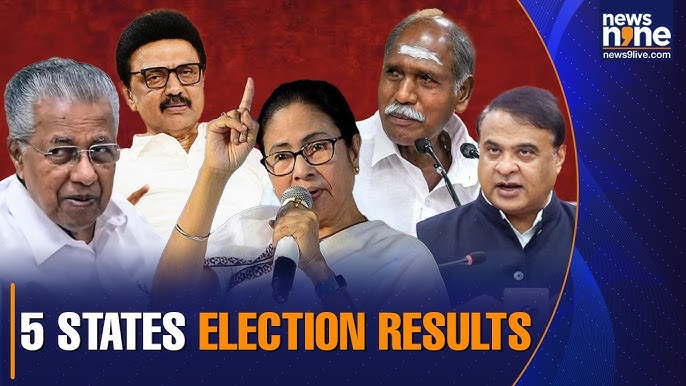
Biggest takeaway of Assembly elections


I was listening to this interview of pollster Pradeep Gupta with Barkha Dutt and this line stuck out. {Copied at relevant point}

Last few assembly elections including the Maharashtra landslide were suggesting that direct cash transfers to women 1 year prior to elections was turning elections sharply in favor of incumbent. Notable examples being BJP in MP in 2023, JMM in Jharkhand 2025, BJP in MH 2025 etc.

All 5 states went into handout mode in late 2025-2026 for this election, but incumbents have only one in 2 small states out of the 5 states. Most notably – DMK which has spend significant amount from state funds last year {apart from usual vote for Cash campaign} has lost big. My contacts in TN tell me that both DMK and AIADMK had spend their significant party coffers on cash for votes – whereas T Vijay had not – only giving away flags and whistles. {not sure if this is 100% true but seemed to be the sentiment}.

If true this truly is the biggest positive of these election results.

Also appending Shekhar Gupta’s post
Key takeaways from West Bengal, Tamil Nadu, Kerala elections

Matuas – Dalits mostly from Bangladesh – who are one of the communities specifically touched by SIR had backed BJP despite that – owling to increased violence against them in Bangladesh :

Why Bangladesh played a big role in BJP’s West Bengal win

Ayan Guha, British Academy International Fellow at the Department of Anthropology, University of Sussex, told ThePrint that while it is a fact that a substantial section of the Matuas has suffered exclusion from electoral rolls due to SIR, it seems they have chosen to stay with the BJP this election. The reason, Guha believes, is Bangladesh.

“While this exclusion has created anxiety and frustration, it is quite evident that the BJP still remains their preferred choice. It clearly appears that widespread violence and atrocities committed on the Hindus in post-Hasina Bangladesh have made them vote as Hindu refugees,” Guha said.


The Hindification of East India

The Saffron Block

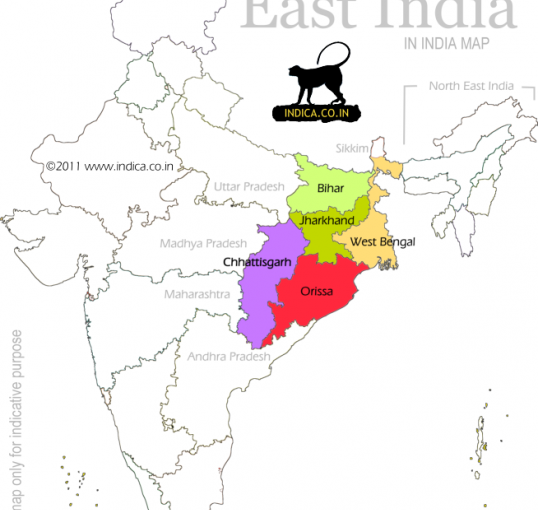
The map of East India has changed colour. Bihar fell to the NDA in November 2025 with 202 of 243 seats, and Samrat Choudhary now sits as the first BJP Chief Minister Bihar has ever had. Odisha went saffron in 2024 under Mohan Charan Majhi. On 4 May 2026 Mamata Banerjee lost Bengal after fifteen years; the BJP took 206 seats and will form its first government in Kolkata. Himanta Biswa Sarma returned in Assam with 82 seats, a two-thirds majority and a third consecutive term. The old Bengal Presidency, once the largest province of British India, is now a single saffron block.

This is the completion, by ballot, of a partition the British attempted by map.

1905

In 1905 Curzon split Bengal. The eastern half was to be Muslim and centred on Dhaka; the western half was to be joined to Bihar and Orissa, which made the Bengalis a linguistic minority in their own province. The Bengali Hindu elite, the bhadralok who ran Bengal’s commerce and letters, fought it bitterly. They did not want to be drowned by Bihari and Oriya numbers. In 1911 the British relented and reunited Bengal.

The Biharis, for their part, had spent two decades campaigning to escape Bengali domination. The 1912 reorganisation that gave them their own province, jointly with Orissa, was their reward.

Linguistic identity then was the prime axis. Hindu and Muslim mattered, but not as much as Bengali, Bihari, Oriya.

The Historical Axis Flipped

A century on, that axis has flipped. The Bengali, the Bihari, the Oriya and the Assamese are voting as Hindus, and they are voting for the same party. The two-nation theory, which Bengal once threw off, is doing its work the long way round.

Hindi,, Hindu, Hindustan

Continue reading The Hindification of East India

You Cannot Demolish His Mosque and Claim His High Culture

A precedent post on hybridity, custodial duty, and the elites who want it both ways

The argument running through the recent threads is sharper than the usual India versus Pakistan braggadocio. It is a claim about high culture itself. A civilisation cannot demolish a man’s mosque and claim his high culture in the same breath. The two moves cancel. The elites on both sides of the 1947 line have been performing both moves for eighty years, and the contradiction is now visible.

What high culture is

High culture is the foundational settlement of values, ordinarily anchored in religion, that a civilisation runs on. It can be syncretic in formation. Plural ownership is harder to sustain, and most attempts eventually close into a single settlement or fracture into rival ones; some imperial frames (Ottoman, Mughal, the Republic of India itself) did hold the tension for longer than the simple model would predict. The point is not that plurality is impossible. The point is that plurality is unstable, and the instability is what generates events like 1992.

England is the cleanest worked example of closure. The English high culture is a hybridisation of Anglo-Saxon, Anglo-Norman, and an absorbed Celtic remainder. Scotland and Wales sit inside the matrix without breaking it. The hybridisation closed; one settlement emerged.

Ireland is the test case in the negative. The same Anglophone substrate produced a different high culture in the Catholic south, and in the Catholic pockets of the north, because religion did the foundational work and religion would not blend. Two islands, one language family, two high cultures. Language is the medium. Religion is the substrate.

Ludwig von Mises, in Nation, State, and Economy, argued the related half. The nation is a speech community, but the speech community is shaped by what the school teaches and what the church says. Plattdeutsch villages on the Dutch border could have gone either way two centuries ago; the descendants would now be just as good Hollanders or just as good Germans, depending only on where the school and the church sat. Language carries national consciousness. The religious settlement decides which language wins.

Notre Dame: The custodial bargain Continue reading You Cannot Demolish His Mosque and Claim His High Culture

India and Pakistan Are Playing Chicken; simply to hurt themselves

Two comments are worth picking up on, and one claim worth interrogating.

N disagrees that contact ameliorates ties. EK suggests the only Islamicate voices the Indian RW respects are those who have “debased their own civilizational integrity.” We do not know who he is shadow-tweeting. It could be us, the Founders of this blog, who are Islamicate by heritage and recognisably friendly to Hindu right-wing readings. Either way, the framing is off. And then there is Q, on the thread as we write, claiming Pakistanis “will eventually take over the Islamicate world.

The cost of distance

The dominant idea of the last decade is that less contact means more security. Fewer visas. Less trade. No cricket. No artistic exchange. Reduced diplomatic warmth. This is sold as realism. It is, in large part, self-harm.

Distance does not produce clarity. It produces mythology. When people stop meeting one another, they begin imagining one another. The imagined neighbour is always simpler, darker, and easier to hate than the real one.

He is also, as Dhurandhar showed, sexier. Hatred and desire run on the same current. The more villainous the Pakistani on screen, the more the Indian audience leans in.

Civility is built by proximity. Not sainthood. Habituation. When people share space, study, trade, marriage, and culture, the room for fantasy narrows. One can still dislike the other side. But one dislikes actual people, not cartoons.

N’s response to this is that contact theory is “akin to blaming a victim for not engaging with the perpetrator.” That feels like the Israeli security story applied to the Indian Sub-continent. It assumes Pakistanis are a permanent terror-source requiring permanent counter-violence.

Pakistan obliges the narrative by behaving badly enough often enough to keep it alive. India obliges the frame by treating every bad actor as the median Pakistani. Both governments are now invested in the loop.

Pakistanis no longer defend hybrid Islamicate culture Continue reading India and Pakistan Are Playing Chicken; simply to hurt themselves

Op Sindoor Was Not a Pakistani Defeat: Precedents Two Days From Pahalgam

Two days from the tragic anniversary of Pahalgam (may those brave Martyrs rest in Peace for their sacrifice for Dharma). A useful moment to set down precedents, because a year out the narrative has hardened in places it should not have, and we would like the comments to stress-test these before they calcify further.

Precedent one. Operation Sindoor was not a Pakistani defeat.

Pakistan entered 2025 as a failed state. It exits the Pahalgam year as a diplomatic champion. Whatever happened in the skies over those days in May, the outcome in global perception is unambiguous. A military operation is never only a military operation. It is also how the world reads it, and on that ledger the result is not the one Delhi wanted. No Pakistani commentator across the spectrum treats Sindoor as a setback. Our Pakistani readers can confirm this in the thread, and we invite them to. The Indian premise that Pakistan might now re-engage to recover from some imagined humiliation makes zero sense. The humiliation is not where Indian commentary locates it.

Precedent two. The Crescent commentariat cannot have it both ways.

There is a pernicious Pakistani trait, most visible in the diaspora and the Anglophone class at home. They live distinctly Western lifestyles. They then want Islam for all. Live your beliefs. It is a genuinely offensive thing to cheer on the Iranian revolution, a revolution deeply devastating to the Iranian people, from an American suburb or a DHA drawing room. Only a Pakistani commentator could manage the trick of celebrating the Islamic Republic while exempting themselves from its consequences.

In the Iranian diaspora, religious Shias are quietly ostracised. Persian pride, across pre-Islamic, Islamic and post-Islamic registers, is astonishing in its depth. Some of us, the Baha’is for instance, integrate all three.

The TNT move, which imports Islamist preferences onto others while the class that holds them escapes the reality (QeA typifies this), is the opposite.

Precedent three. The rediscovery of Hinduism is coming, and it will come from South Punjab and Sindh. Continue reading Op Sindoor Was Not a Pakistani Defeat: Precedents Two Days From Pahalgam

Brown Pundits