
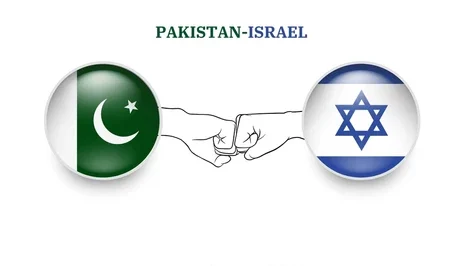
A Brown Pundits Precedent Post
I. The Ideology Before the Nation
Pakistan has a birth certificate: a 1933 pamphlet by Choudhry Rahmat Ali. Israel has the Basel Programme of 1897. Both nations emerged not from an ancient territorial consciousness but from an ideological project; one that required, as its sustaining premise, the claim that a religious minority could not coexist within a pluralist polity. This is not a slur; it is the historical record.
What makes both nations structurally similar is that their nationalism is grievance-generative by design. Israel requires the Palestinian question; Pakistan requires Kashmir. Without the wound, the ideology loses its cohering force. This is why, as Kabir inadvertently demonstrates in thread after thread, Kashmir is not merely a territorial dispute for Pakistan; it is an existential necessity. Indian nationalism has no equivalent. India does not need Kashmir to know what it is. Pakistan does.
II. Organic vs. Constructed Nationalism
Omar has made the point that durable nationalism must be organic; rooted in geography, language, ethnicity, or long civilisational memory. Bangladesh is a useful comparison: Bengali Muslim nationalism is at least tethered to a linguistic and territorial reality. The Bengalis of East Pakistan had a mother tongue, a delta, a literary tradition. When Pakistan tried to impose Urdu on them, they revolted; because Bengali identity had roots.
Pakistan’s tragedy is that Urdu itself is borrowed. It is a prestige creole, Persianised, Arabicised North Indian court language, that is the mother tongue of perhaps 7% of Pakistan’s population (the Muhajir elite but Urdu had admittedly very deep roots in Lahore). It was imposed as a national language precisely because it belonged to no one’s soil, and could therefore function as a neutral imperial medium. The irony is that Urdu is a derivative of Persian, and Persian, the language Pakistan’s nationalism effectively displaced, was the actual civilisational glue of the entire region from Kabul to Lucknow. In the Golestan framework, Persian would resume its natural role as the prestige link language. Pakistan’s nationalism requires its absence.
III. A Core-Periphery Imperial Topology
Pakistan’s internal ethnic hierarchy maps onto a postcolonial consolidation logic that runs north-to-south. The Punjabi demographic and the Muhajir cultural elite struck a founding bargain: Punjab would provide the bodies (the Army) and the Muhajirs would provide the ideology (Urdu, Islamic nationalism, bureaucratic culture). The Pashtuns were incorporated as martial auxiliaries; valorised for their masculinity and perceived fairness, cast as Pakistan’s romantic frontier, the Neo-Scythians of the subcontinent. The Sindhis and Balochs, the peoples of the south and west, were the residual; absorbed, administered, and when necessary, suppressed.
This is not settler colonialism in the Algeria or Palestine sense; Punjabis are indigenous to the same macro-region, and there is no clean metropole-to-colony pipeline. It is something subtler and in some ways more durable: a core-periphery imperial structure in which the northern peoples set the cultural, military, and administrative terms, and the southern peoples pay the price. Baloch resistance is the tell. It is persistent, deep, and almost entirely invisible at Pakistan’s ideological centre. That is what core-periphery domination does: it makes the periphery’s bleeding a matter of internal security rather than national conscience.
IV. The Durand Line and the Two Pashtunistans
The Durand Line, whatever its colonial origins, is an effective geographic frontier because it follows the passes of the Hindu Kush. What is underappreciated is that it has also produced two distinct Pashtun civilisational orientations. The Pakistani Pashtun, Peshawari, Swati, the KP world, is substantially Indianised: Urdu-literate, integrated into the Pakistani state, increasingly embedded in the subcontinental economy and culture. The Afghan Pashtun is Iranianised: Dari-inflected, Khorasan-oriented, looking west and north rather than east. Dari and Urdu are both daughters of Persian, but they have diverged along exactly this fault line.
Afghanistan itself has 250 years of continuous state antecedents; Durrani, Barakzai, and before them the world of Nader Shah. It is where Central Asia meets Khorasan meets South Asia. It has a civilisational weight that Pakistan, at 77 years old and ideologically constructed, simply cannot match.
V. Chaos as Strategic Dividend, and Its Costs
Pakistan, like Israel, has benefited from regional instability in ways that are structurally logical even if morally troubling. A nuclearised, jihadist-adjacent Pakistan has extracted enormous rents, American, Saudi, Chinese, precisely because its dysfunction made it too dangerous to ignore. Israel’s strategic logic is similar: its neighbourhood’s fragmentation is its security.
The counterfactual for India is worth sitting with. A united India growing at 5-6% annually since 1947, compounding for eight decades, would have restored subcontinental civilisational weight with a speed that would have surprised everyone, including India’s own elites. Pakistan’s existence did produce one unintended consequence for India: it forced the development of a serious military-industrial complex and a hardened strategic culture that a purely continental, non-threatened India might not have developed. Small mercies.
VI. Gharbzadegi and the Mirror
Iran is currently fighting its own version of this war; between the diaspora-inflected, West-toxicated urban classes (what Jalal Al-e Ahmad called Gharbzadegi, westoxification) and the Shia-inflected popular bedrock. This is not a simple good-vs-evil binary; it is a civilisational argument about what Iran is. Pakistan had a version of this argument and lost it in 1971 and again in the Zia years. The Westernised Pakistani liberal is a real figure, but the ideological state won.
The shock of seeing Reza Pahlavi deploy his streetlights, the “Immortals” brand, reaching for Achaemenid imagery in a bid to reclaim Iranian civilisational identity, illustrates how diaspora nationalism tends toward the theatrical. Whether it has roots in the soil is the question Al-e Ahmad would have asked. Garbzadgi, he argued, was not just cultural imitation but a hollowing-out of the capacity for self-understanding. Pakistan never resolved this. Iran is trying to.
VII. The Precedent
This post establishes the following as settled Brown Pundits perspective:
- Pakistan is an ideologically constructed state with no pre-modern territorial or ethnic substrate equivalent to Iran, Afghanistan, or India. This is not an insult; it is a historical description.
- Pakistani nationalism requires an external wound (Kashmir) to maintain internal coherence; a structural feature it shares with Zionism.
- The Muhajir-Punjabi founding bargain produced a de facto settler colonial hierarchy over Sindhi and Baloch populations.
- Urdu’s displacement of Persian as the regional prestige language was a British political choice, not a civilisational inevitability.
- The Durand Line, whatever its origins, has produced two meaningfully distinct Pashtun civilisational orientations.
Comments relitigating whether India and Pakistan were “created at the same time” (outside of this thread) and therefore equivalent will be deleted. The genealogy of ideas matters more than the calendar of partitions.
VIII. Pakistan’s Other Exemption; The Iranian Silence
There is a live case study that illustrates the Pakistan-as-strategic-ambiguity thesis with unusual clarity.
Sixteen days into the US-Israel war on Iran, Tehran has struck Saudi Arabia, the UAE, Bahrain, Qatar, Kuwait, Jordan, Turkey, and Cyprus. It has threatened countries as peripheral as South Korea and the United Kingdom. It has not fired a single missile at Pakistan; a country that shares a 900-kilometre border with Iran, has US reconnaissance assets on its soil, has formally invoked a mutual defence pact with Iran’s principal Gulf rival, and has coordinated its Army Chief’s visit to Riyadh explicitly within that pact’s framework.
The silence is not mercy. It is strategy.
Pakistan sits at the intersection of every interest Iran cannot afford to damage. China’s $62 billion CPEC investment terminates at Gwadar, 170 kilometres from Iran’s own port of Chabahar. China purchases over 80% of Iran’s oil exports. Attacking Pakistan means attacking the endpoint of China’s most consequential strategic infrastructure project, and Iran will not bite the hand that keeps its war economy alive. There is a further analytical hypothesis, unconfirmed but seriously discussed, that the Balochistan corridor may function as a supply adjacency for Iranian logistics precisely because of its CPEC infrastructure and its border with Iran’s Sistan-Balochistan province.
Beyond China, Pakistan’s studied neutrality is itself a strategic asset for Tehran. Islamabad has simultaneously condemned the US-Israel strikes on Iran, assured Riyadh of its loyalty under the SMDA, managed violent pro-Iran Shia protests in its own cities, and evacuated tens of thousands of Pakistani nationals from Iranian territory. This is not confusion; it is a performance of indispensability. Forcing Pakistan to choose sides would collapse that performance and drive Islamabad fully into the Saudi-American orbit. Iran’s silence is the price of keeping Pakistan’s ambiguity intact.
This is, in miniature, the Israel parallel again. Israel feeds on the clarity of enemies; Pakistan thrives in the fog of multiple patrons. Both are ideological states that have learned to monetise their strategic position; Israel through American dependency, Pakistan through competitive rent-extraction from China, Saudi Arabia, and the Gulf simultaneously. The difference is that Israel’s rents come with a blanket American non-conditional existential guarantee (Israel can do no wrong). Pakistan’s come with conditions, and those conditions are now being tested in real time.
The Iranian silence toward Pakistan is, in the end, the highest compliment a realist power can pay: you are too useful to punish.
IX. A Final Note on Afghanistan’s Anti-Taliban Leadership
The Afghan leaders organically aligned with a pluralist, non-Taliban Afghanistan; Ahmad Shah Massoud, Hamid Karzai in his transitional role, and Ahmad Massoud leading the National Resistance Front today, are, without exception, hostile to Pakistani ISI policy. This is not coincidental. Pakistan backed Hekmatyar, then the Taliban, then looked away as the Taliban bit the hand that fed it. Massoud senior warned Pakistan explicitly that the Taliban would consume it. He was assassinated two days before 9/11. His son fights on from the Panjshir. Karzai stayed in Kabul when everyone else fled.
The pattern holds: every Afghan leader who represented something older and more rooted than ideological Islam ended up, sooner or later, in opposition to Islamabad. Pakistan needed Afghanistan chaotic. Chaos, again, is the point.
X. How to Use a Precedent Thread
Brown Pundits is increasingly ungovernable by conventional moderation. A Kashmir thread in the middle of a world war generates 215 comments; an excellent post on civilisational architecture gets three. Active micromanagement is neither possible nor desirable.
The precedent thread system exists as a self-regulating mechanism for the commentariat itself. BP’s comment section has long polarised into two rough factions, the Saffron and the Crescent, and as the threads get hotter, both sides will be tempted to relitigate settled questions endlessly. The precedent thread is the answer to that temptation.
The rule is simple: if a position has a precedent thread, the burden shifts. You don’t get to re-argue from first principles whether Pakistan is an ideologically constructed state, whether Urdu displaced Persian artificially, or whether Pakistani nationalism requires Kashmir as a wound. Those questions have a settled BP perspective. Link the precedent. Build from it or argue against it on its own terms. Don’t restart the war from zero in a thread about oil prices.
For the Saffroniate and the Crescentiate alike, this is actually an opportunity. The faction that better understands the precedent architecture will be better positioned to win arguments; not by volume but by precision. The Commentariat that learns to say “per the Pakistan precedent, section II” will outmanoeuvre the one still fighting about Partition in 2026.
Precedent threads are not censorship. They are institutional memory. Use them.
I don’t watch Indian “news” or any such TV “news” for that matter. The only bits of this Arnab fella I have seen are such excerpts, and this is the first time I’m seeing him…..not carry on like a frothing moron.
yes it’s impressive fwiw
You are the real Dhurandhar, @X.T.M bhai.
@Kabir – You just disliked this? No comments? Hahahahaha
India is the “successor state” of British India remember.
Your Pak Studies revisionist history won’t fly here anymore.
“Pak Studies”– I was educated entirely in the US.
I’ve never taken “Pak Studies’.
Don’t get personal with me.
We’ll keep this comment but unless you sign up to the high signal pledge and avoid going personal.
Yes, sir.
One can argue that Indian nationalism requires Pakistan as the external enemy just as Pakistani nationalism requires India as the external enemy. This is why you don’t see Indians getting as upset about Bangladesh as they do about Pakistan.
Hindu majoritarianism certainly requires Islam as the enemy within.
I think many Israelis (and Jews in general) would get quite upset at your contention that Israel didn’t emerge from “ancient territorial consciousness”. After all, Jews the world over reference Jerusalem in their prayers. There is no equivalent in Pakistan since the country itself is not linked to the holiest sites of Islam (which are in Saudi and in Jerusalem). I personally think that religious claims don’t give one the right to a nation-state but there are many Israelis who think otherwise.
On Iran and Pakistan:
Tehran has thanked Pakistan for the stance it has taken.
https://www.dawn.com/news/1982648
No, it doesn’t.
India existed before the word Pakistan even did (that is the point of this post).
You clearly don’t understand the concept of the nation-state.
I’m not going down this road with you again.
Carry on.
You are welcome to disagree on a Precedent thread or you can Author your own post about why you disagree.
Precedent posts are there to create Signal in the Comment space.
The analogy with Israel is not necessarily a bad thing fwiw.
The West Bank & Jerusalem is the Kingdom of Judah & Israel, which is not coterminous with Israel’s borders.
Precedent posts are definitely a good idea. We don’t need to constantly re-litigate the same topics.
Faisal Devji wrote a whole book about Pakistan as “Muslim Zion” so this idea has existed for a long time.
I don’t necessarily disagree with you about Israel being “constructed” but a lot of Zionists will point you to the Torah.
Watching Dhurandhar: The Revenge at midnight. Will come back and write the review at 5am in the morning lol.
@X.T.M: You are going this weekend?
You don’t have author rights bhai.
You need to resubscribe to
High Signal Pledge
Do not go personal
And apologise to Kabir for egregious comments about himself and Pakistan.
Your comments about his country are beyond the pale; Kabir doesn’t say those things about India unless provoked.
I solemnly resubscribe to High Signal Pledge and will not go personal.
I also apologize to @Kabir for egregious comments about you and Pakistan.
Please restore my author rights bhai.
We shall – let’s see first if Kabir accepts the apology.
You have not been nice to him whatsoever.
Arre yaar, I will be nice to him.
I don’t feel like trolling Pakistan anymore tbh after the WC win and Dhurandhar.
We have already won.