IIT Bombay Says It Followed Procedure. A Student Is Dead.

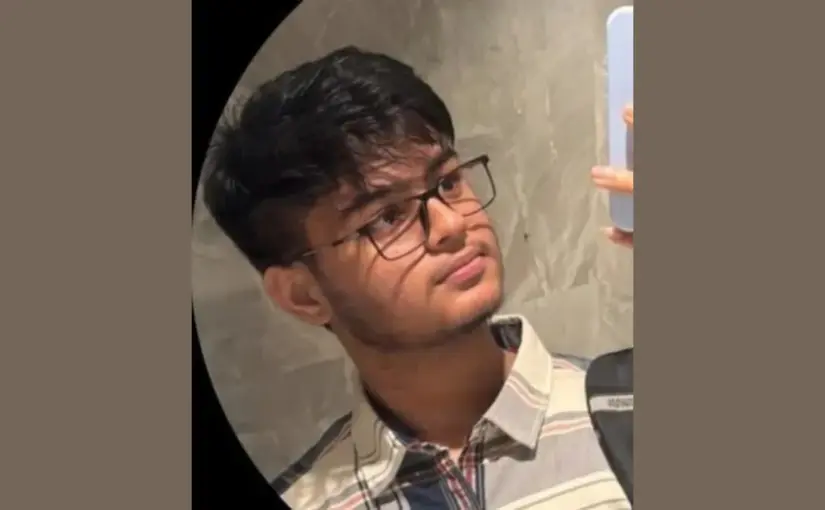
On Friday 18 September, Sahil Wakode, a second-year BTech student in IIT Bombay’s energy science department, was caught with his phone in a midterm; the institute says he had uploaded the question paper to ChatGPT. By evening he was found dead in his hostel room. He was Dalit, from Yavatmal, and the third IIT Bombay student to die by suicide this year.

The accounts split. The institute says the invigilator, Prof Suryanarayana Doolla, followed Senate-approved procedure, that no disciplinary action was begun, and that the instructor and head of department counselled the boy and assured him his career would not suffer. Students and the family say he was threatened with suspension, and the father’s police complaint alleges three months of casteist remarks. An FIR now names Doolla and other senior officials for abetment of suicide and under the SC/ST Act, whose Section 18A lets police register the FIR without a preliminary enquiry. The Faculty Forum has expressed solidarity with him. About 700 students blocked the main gate.

Take IIT Bombay’s own version at face value: procedure was followed, counsel was given, assurance was offered, and hours later the student was dead. That sequence settles nothing about cause; the Crime Branch must establish what was actually said in that hall. Either the assurance was never given, or it was given and did not land.
FlyDie, Volume Two

A sequel to FlyDie on South India. 19 comments, across 6 threads, in this second batch.

FlyDie on South India

The three pillars of caste. Privilege never converged on one varna. Brahmins hold the social pillar, Vaishyas the economic, Shudras the political, and a jati’s rank follows its proximity to each: close to all three makes a Kshatriya, far from all three a Dalit. The Kshatriya is the mediator everyone wants and nobody needs; the Mughals played that part best, and the empire came apart when they stopped.

Varna was always negotiable. The lawbooks rejected one direction of mixed marriage and tolerated the other. Bengal’s Kulin Brahmins wrote jati origin myths to secure their own land grants, and “pure” Kshatriya lineages were invented as needed. The grey areas, he argues, are why caste survived 3,000 years.

Manchus are to China what Mughals are to India. A follow-up to his India-and-China comment. “Han” was a set of practices before it became an ethnicity; Sun Yat-sen, arch Han nationalist, was Hakka. The Yuan never assimilated and lasted barely a century, while the Qing sinicized and endured.

The Deccan blunder. Urban Muslim nobles could be killed and replaced; rural Maratha sardars could not. Aurangzeb’s destruction of the sultanates left the vacuum the Marathas filled. In his verdict, a great general and a bad politician.

What the Mughals took from the land. North India is Vaishnav, he argues, largely through Mughal patronage; even Adityanath’s Nath sect spread on Mughal-era networks. Mughal architecture began at Bayana in Rajasthan, where the chhatri was born from the Nagara mandapa and the Persian canopy.

The environment, not the man. Akbar’s tolerance was no outlier; Ibrahim II of Bijapur ran the same experiment. The conservative turn began in mid-Shah Jahan, and Aurangzeb rode the wave rather than made it. Dara was always going to lose.

Quick Review: Shahab Ahmed, What is Islam

Against apologetics. Defending a faith from the outsider’s picture accepts the outsider’s frame; the prior question is whether culture reflects religion or religion reflects culture. Sarmad Kashani, an Armenian-descent Jewish convert who became a fakir, then a yogi, then nothing at all, fits no category the book allows. A Balkans-to-Bengal “Islamic world” cuts non-Muslims off from their own past while making Muslims the foreign other at home.

Parsis, DNA and steppe incursions

Continue reading FlyDie, Volume Two

The Gender Protocol Has Teeth

Thank you, Kabir

KK writes on excellent topics, AI and art among them. He is also almost certainly BB, which makes him KB: Kishore Badshah.

Kabir emailed the admin team about a set of KB’s comments. They attacked a Pakistani female politician. They referred to her looks and used a very offensive, misogynistic term of abuse. The Gender Protocol demands courtesy towards women. KB grossly violated it.

KB has had a 20-comment removal fine. That is a sad outcome, because his comments on AI and art were particularly high signal. It is also a public warning: this behaviour will never be tolerated.

When Kabir stepped out of line last month with his own extremely ugly comments, we held him accountable and left those comments up as a deliberate reminder. The Protocols and Precedents exist for a reason.

Many thanks to Kabir for using the appropriate channel and emailing in these gross violations, which had slipped past us.

We always prioritise the safety and wellbeing of our small community. We also hold very firm redlines on acceptable language, especially towards women, minorities and other marginalised people.

Pakistan Punches Above Its Weight. Blame Aligarh.

Many thanks to Kabir for inspiring this piece.

Toor at the Courtauld

Salman Toor was born in Lahore in 1983 and paints in New York. On Thursday TIME put him on its first TIME100 Art list, and he told the magazine “I straddle two cultures“. On 2 October the Courtauld opens his first solo show in Europe, nineteen paintings made since 2019. He describes the work as queer and immigrant lives, caught between intimacy and exposure, belonging and estrangement. One of the principal pictures, a bar on East 13th Street, revisits Manet’s bar at the Folies-Bergère, which hangs downstairs in the same building.

Two weeks ago his partner’s Pasoori became the first Pakistan-made music video to pass a billion views, and nine-tenths of those views came from outside Pakistan. I wrote about it. Add Toor. Add that Britain’s Muslim public face is Pakistani. How does Pakistan gets so much of so little that in the end it is the hegemon of “Monsoon” (Sub-altern) Islam, when technically it doesn’t even belong in that category. My candidate is the language, and I am not sure it is enough.

The Indus was the corridor, not the capital

Start with the map. Pakistan is the Indus, and the Indus was where everyone arrived. Alexander crossed it. Mahmud of Ghazni crossed it seventeen times. Babur crossed it and kept going, because the prize lay east. Lahore mattered: fourteen years as Akbar’s capital, Jahangir’s tomb, Shah Jahan’s gardens, Aurangzeb’s mosque. But the high culture that made modern Urdu crystallised farther east and later. Mir and Ghalib wrote in Delhi. Lucknow kept the court after Delhi lost it. Sir Syed built the college at Aligarh that manufactured the class in the next section. Lahore joined the Urdu world in earnest when the colonial state put Urdu above Punjabi in the province’s offices and schools, which is the story of the Lahnda post.

In 1947 Pakistan got the corridor and Lahore. Delhi, Lucknow and Aligarh stayed on the other side. On paper that is a house with a doorway with just about one good room.

Alavi’s salariat Continue reading Pakistan Punches Above Its Weight. Blame Aligarh.

Pakistan Has a Dosa and Nobody Told You

A dosa in wheat country

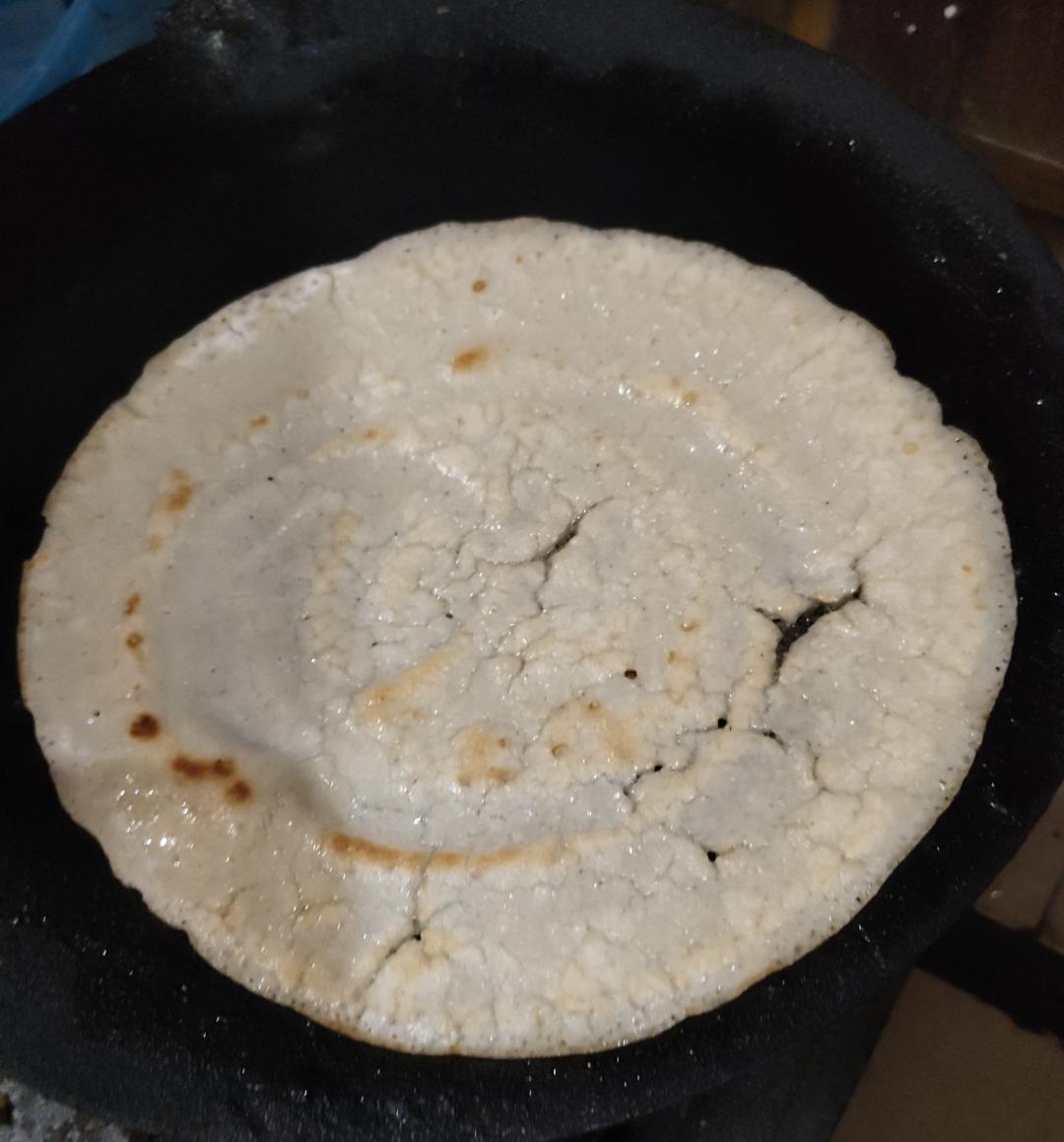
My Urdu teacher is from Rajanpur, at the bottom of Punjab where the Koh-e-Sulaiman begins and, as he puts it, three provinces meet. On Friday morning, Pakistan time, he told me about a bread I could not picture. “We Saraiki people make dosa,” he said. “We have been making it for centuries. We have a name for it: chilla.

Then the method. “Rice flour. Make it into a batter, thin as gravy. Spread it on the tawa with any bowl.” That is a dosa. Nobody rolls a chilla. In Delhi a cheela is a gram-flour pancake. His is rice, in a province that eats wheat. His mother makes it every winter and the family eats it with saag. In summer nobody touches it. He sent me a photograph of last winter’s, taken on the tawa.

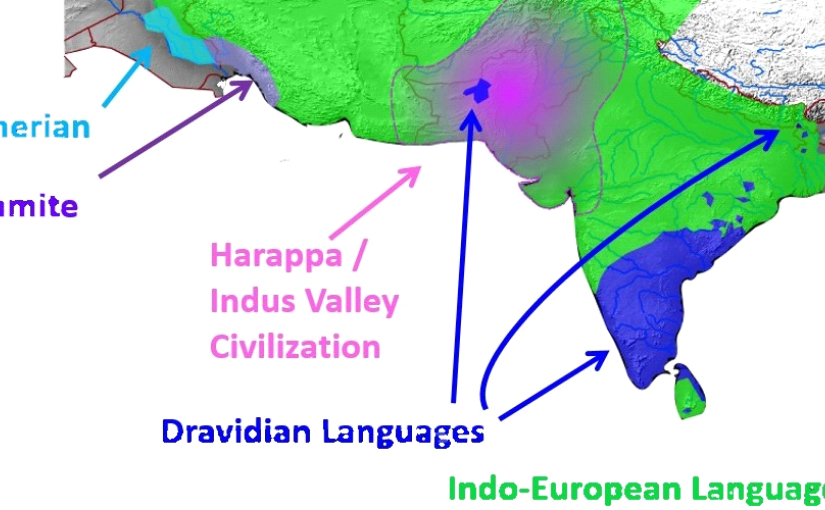
What a mixture Punjab is,” he said. “We sit eating a South Indian dosa with saag. Punjab’s authentic food with South India’s.” He does not know where it came from. He thinks there is some connection between South India and South Punjab, a Dravidian one and a roti one.

Is there a Dravidian residue in South Punjab, on the plate and on the tongue?

What Friday looks like

Continue reading Pakistan Has a Dosa and Nobody Told You

In Remembrance of Shaheed Lt. Ashfaqus Samad, Bir Uttam (My Cousin Nishat Bhai):

by Shawkat

A Tribute to A Family of Freedom Fighters

In 1971, my cousin Ashfaqus Samad (Nishat Bhai) was a student in the Statistics dept. of Dhaka University, having graduated from St. Gregory’s School and Notre Dame College. A talented student, he was considering options of graduate study at MIT and elsewhere. Pakistan Army’s genocidal crackdown started on the night of March 25th; on the 27th, he and his friends Badal, Bodi (Shaheed) and Masud left for Kishoreganj and met with EBR forces there. On April 4th, they returned with a few .303 rifles, some ammunition and 25 grenades, thus becoming the first guerrillas to organize armed resistance in Dhaka. The cache was initially stored at his home, and subsequently moved cross-town at great peril to his friend Towhid Samad’s Dhanmondi residence. Realizing that it was inadequate, he then went to Agartala, India, for further military training.

After seeing sporadic action in the Saldanadi sector, in June he was selected for the First War Course of Bangladesh Army, to be trained by the Indian Army at Camp Murti, near the Indo-Bhutan border. Bearing ID No. S.S. 33, he was one of 61 Commissioned Officers, including Sheikh Kamal (eldest son of Sheikh Mujib), who graduated on October 9th, and one of only two of his batch to be killed in action (KIA) during the war. He was assigned to Sector 6 in Dinajpur and Rangpur, where he helped liberate several areas, notably Bhurungamari, the first upazila (sub-district) to be freed.

Continue reading In Remembrance of Shaheed Lt. Ashfaqus Samad, Bir Uttam (My Cousin Nishat Bhai):

Open thread: Geopolitics and any other interesting news

Please use this thread for any fun conversations. Please do abide by basic courtesy towards one another. 

1. Have folks been tracking the gold prices lately? I personally feel like gold might plateau by mid-2027 but we’re all soothsayers at this point.

2. Any general market trends? Are SIPs losing their sheen? What’s the next big investment strategy?

3. That AI will kill humanity in a decade? True or paranoia?

4. India Pakistan naval collision in the Arabian sea.


How Pakistan Became South Asia’s Reference Muslims

The comments have turned into a meditation over whether Urdu ends up as one more dialect of Hindi. I think the fight is about something bigger. Partition took one Muslim political world and cut it into three. Seventy-nine years on, one of the three sets the culture for all of them, and it is the one that took the language.

By reference Muslims I do not mean the most devout or the richest. I mean the group whose speech, dramas, music and religious manner supply the default picture of a South Asian Muslim outside its own borders.

Three blocs, one language

Pakistan has ~230 million Muslims, India ~200 million, Bangladesh ~150 million. In 1971, when the second partition finished the job, the three stood almost level at about 60 million each. Pakistan has pulled ahead since by having more children. Nobody planned any of it. The Muslim League asked for a homeland for the Muslims of India, got two-thirds of them inside one country, and lost half of those within a generation.

The three blocs were never one culture. A Bengali cultivator, a Punjabi Jat, a Sindhi tenant and a Lucknow ashraf household shared a mosque and not much else. What they shared at the top was one political world and one elite language. That language was Urdu, and Urdu was not Pakistani. It grew up in Delhi and matured in Lucknow. Ghalib is buried in Delhi and Mir in Lucknow. Aligarh taught it. The Punjab, which became Pakistan’s heart, spoke something else entirely, as I argued in my last post.

Pakistan made it the state language anyway. In March 1948 Jinnah stood in Dhaka and told the Bengalis they could keep Bengali for their province, but that the state would speak Urdu and only Urdu. Few in either wing spoke it at home then. The 2023 census puts it at 9.25% of Pakistanis now. The Punjabis, Sindhis, Pashtuns and Baloch learnt it at school. On 21 February 1952 police shot Bengali students in Dhaka for objecting, and the road to 1971 opened from there. The Bengalis kept their language. They still lost the argument about whose culture the Muslims of the subcontinent would run on.

So the language of the Indian Muslim elite now carries a Pakistani label. When a Hindu in Delhi hears Urdu, he hears Pakistan. When a Pakistani hears Urdu, he hears himself.

Why Urdu does not dissolve Continue reading How Pakistan Became South Asia’s Reference Muslims

Brown Pundits