
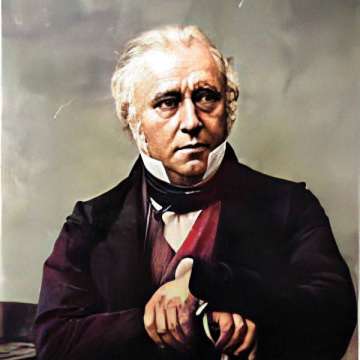
Rebuttal to When RSS-Modi Attack Macaulay and English, They Attack Upward Mobility of Dalits, Shudras, Adivasis
Follow-Up to Macaulay, Macaulayputras, and their discontents
A new orthodoxy has taken hold. It claims that criticising Macaulay or colonial education is an attack on Dalit, Shudra, and Adivasi mobility. English, we are told, was not a colonial instrument but a liberatory gift. Macaulay is recast as an unintended ally of social justice. This view is wrong. More than that, it is historically careless and civilisationally corrosive.
The Core Error
The mistake is simple: confusing survival within a system with vindication of that system. No serious person denies that English became a tool of mobility in modern India. No serious person denies Ambedkar’s mastery of English or its role in courts and constitutional politics. But to leap from this fact to the claim that Macaulay was therefore justified is a category error. People adapt to power structures to survive them. That does not sanctify those structures. To argue otherwise is like saying famine roads liberated peasants because some learned masonry while starving. Adaptation is not endorsement.
Macaulay Was Explicit
There is no need to guess Macaulay’s intentions. He stated them plainly. He dismissed Indian knowledge as inferior. He wanted to create a small class:
“Indian in blood and colour, but English in tastes, in opinions, in morals, and in intellect.”
This was not emancipation. It was an imperial staffing strategy. Colonialism first destroys local systems, then forces the colonised to climb the ruins using the conqueror’s tools. Later usefulness does not erase original contempt.
Why the ‘English as Dalit Liberation’ Frame Is Offensive
This argument rests on a hidden premise: that Indian civilisation itself had nothing to offer the oppressed. That Sanskritic, Bhakti, Sufi, vernacular, and subaltern traditions were only chains, never resources. That dignity had to arrive from Europe, validated by empire. This is not progressive. It is colonial logic, recycled. Social reform and anti-caste critique long predate Macaulay. They were uneven and contested, but they were alive. Colonialism did not create critique; it monopolised it and declared everything else obsolete.
Ambedkar Was Not Macaulay’s Vindication
Invoking Ambedkar to defend Macaulay is intellectual laziness. Ambedkar worked through the colonial structure because it existed. He did not endorse Macaulay’s civilisational judgement. Tactical brilliance is not philosophical alignment. To weaponise Ambedkar against critiques of colonialism is to misunderstand him.
The Elitism of English
Colonial education did not democratise English. It concentrated it. For over a century, English remained confined to a narrow elite. That remains largely true. The celebration of English ignores harder questions:
-
Why vernacular education was underfunded
-
Why translation movements were abandoned
-
Why indigenous institutions were dismantled instead of reformed
Colonialism created a bottleneck, then congratulated itself when a few escaped through it.
Civilisations Are Not Placement Offices
The final tell is the purely economic defence: jobs, mobility, markets. These matter. But a civilisation is more than a ladder of incomes. It is a shared memory, a moral vocabulary, and languages capable of carrying law, poetry, science, and dissent. Colonialism attacks that foundation first. Economic adaptation comes later as damage control. Praising the latter while ignoring the former is praising the crutch and forgetting the broken leg.
The Mughal Contrast
The Mughals were conquerors and often brutal. But they ruled within the subcontinent’s civilisational space. They did not declare Indian knowledge worthless or impose epistemic subjugation. The British ruled from outside and recoded value itself. That difference matters.
The Point
Criticising Macaulay is not nostalgia. It is civilisational clarity. English is now an Indian language, and its utility is real. But utility does not rewrite history. We did not need epistemic humiliation to become modern. To say otherwise is to mistake survival for salvation.
XTM loves indian civilization. I am glad he likes indian civilization. But wants to see only glory of civilization and does all the cherry picking like Sanghis. The indian civilization has its own strength and weaknesses. when Sanghis talk about glory, they think that all was great in indian civilization and only Mughals and britishers spoiled it. they have zero sense of history, scholarship , truth , nuances . they just want to shout the glory of this civilization and feel happy and ectstatic about it. There were innumerable weaknesses in indian civilization, if anyone tries to count weaknesses, the Sanghis become very upset and start abusing them by calling them colonial ghulam. This way , they do the populist agenda and discredit all the scholars who take nuanced approach to the Indian History and civilization. With invent of social media, these Sanghis who are in large number and has zero training and knowledge of history, they create some fictional stories mixed with partial truth, add lots of flavor of glory and whosoever tries to correct them, they abuse them by declaring them colonized minds and thus sanghis discredit all the scholars and score victory by populist method. This fulfills their agenda of Hindu majoritarianism in India and helps in winning the elections and consolidating the power in their hands.
The Macaulay thing is same. it has so many nuances, it did good as well as bad. it was an administrative decision. it was taken with the concept that modernity and scientific progress can be achieved better if education medium is English. it is also true scientific progress during enlightenment and industralization in europe was at lightening pace and age old Indian and Persian knowledge was much weaker. it turned out bad that it could not educate the general public . it could have been better achieved by reforming the existing infrastructure at that time. I do not think, Macaulay’s decision was taken as sinister plan to hurt indians. but it certainly did not have good outcomes. on the other hand English language strongly connected India in several significant ways. It serves as a vital link language across the country’s very vast linguistic diversity. No other country in world has diversity like india. English language helped in connecting India and possibly also helped in achieving modernity and science at faster pace but somehow could not educate general public.
Google AI wrote it like this as below :
The fundamental problem with the right wing’s (BJP/RSS) framing of Indian history and civilization, according to mainstream scholars and political analysts, is that it prioritizes political ideology over factual historical analysis.
Critics highlight several key issues:
1. The Use of History as a Political Weapon
The primary criticism is that history is being “weaponized” to serve a modern political agenda: the creation of a Hindu Rashtra (Hindu nation) with Hindu supremacy. The narrative is designed to mobilize Hindu voters by stoking historical grievances and creating a sharp ‘us vs. them’ (Hindu vs. Muslim/minority) divide.
2. Selective ‘Cherry-Picking’ and Erasure of Nuance
The framing involves deliberate selection of facts and the ignoring of others to create a specific, sanitized narrative:
3. Rejection of Established Scholarship and Methodology
The Hindutva narrative frequently clashes with mainstream academic and scientific consensus:
4. Creation of False Narratives
The approach leads to the promotion of ‘pseudo-history’ and exaggerated claims (e.g., ancient Indians had airplanes or stem cell technology) that are incompatible with modern scientific understanding, aiming to prove a perceived ancient superiority.
In essence, critics argue that the right wing’s framing is a form of state-sponsored propaganda that distorts the past to justify present-day discrimination and solidify a homogenous national identity, rather than an honest pursuit of historical truth.
Prime Minister Modi and the RSS are frequently raising the issue of Thomas Macaulay, and analysts widely view this as a form of political and cultural weaponization.
Their focus on Macaulay is used to achieve several contemporary political and ideological objectives:
1. The “Decolonization” Agenda and Hindu Identity
The core argument is that Macaulay’s 1835 “Minute on Indian Education” instilled a “colonial mindset of slavery” by dismissing indigenous knowledge systems in favor of Western education to create a class of Indians “British in thought”.
2. Discrediting Political Opposition and Academic Elites
The “Macaulay mindset” is often used as a derogatory term or a “dog-whistle” against India’s liberal, English-educated, and often secular intellectual and political elite, historically associated with the Congress party.
3. Promoting Ancient texts
The criticism of Macaulay ties directly into the push for ancient texts.
4. Justifying Historical Revisionism
By framing the entire post-Macaulay intellectual tradition as flawed, the right wing creates a justification for its attempts to rewrite history textbooks, minimize the contributions of non-Hindu rulers, and incorporate mythological claims as historical facts (pseudo-history).
In essence, invoking Macaulay is a powerful political tool that serves to define who is “truly Indian” versus who is “colonized,” strategically consolidating their power base and shaping the national identity along Hindu nationalist lines.
Great post! As you observed, it’s not just his role in introducing English education that irks the Hindu right. Many in the Hindu right take issue with him because he attempted to erase India’s civilizational identity at the same time. Right wing intellectuals like Shrikant Talageri and J Sai Deepak are not referred to as Macaulayputras, despite their use of English when engaging with their followers.
thank you – yes 🙂
Mr Modi is almost illiterate but a successful populist leader. His goal always is to dog-whistle” against India’s liberal, secular intellectuals and academia. His propaganda is successful since he controls the media through power. BJP spends lot of corruption money on propganda in his favor.
gotta love these confident ‘explainers’ spewing out all kinds of nonsense. 🙂
this is the tragedy of Indian Right wing.
in 11 years of holding unlimited power in India and BJP is “the extremely richest” party in the world. , they could not produce a single work/author which could be cited in mainstream academia .
Most RW intellectual are populist and thriving on popular support because public is not interested in truth but interested in glorified half truth.
Shrikant Talageri and J Sai Deepak both are their best intellectuals.None is trained historian. One is lawyer /engneer . another has no formal degree. None is trained in history. Their Methodology is poor and often lacks the rigorousness of academic writing.
Their engagement is often “reactive” or counter-narrative approach to mainstream academia .
I noticed this in Cambridge but it doesn’t mean they are not right in some things
gatekeep and then discredit. don’t worry your pretty head with logic.
if this is ‘the real sai deepak’ welcome. x t m should get him to write an occasional article.
well , there is so much literature from the academia which has genuinely found out the harmful effects of colonialism. This plethora of literature from academia is quite large and genuine. Dharmpal is best example. The RW / Hindutva ideologues also use their work but add their political agenda and ingenuity to make it populist. my point is that RW/Hindutva ideologues have not produced any genuine work with academic rigorous. .obviously people who are trained in this field will have better grasp of the subject, so blaming academia will not help here.
Read the book. Nearly every para is referenced with exemplary diligence. Beware, you might learn something.