Please put all the latest news here. We would like to preface that we mourn ALL lives lost in this unnecessary conflict whether they are civilian (Iranian school girls, Israeli families, Iranian hospital patients) or military (American soldiers, Iranian sailors).
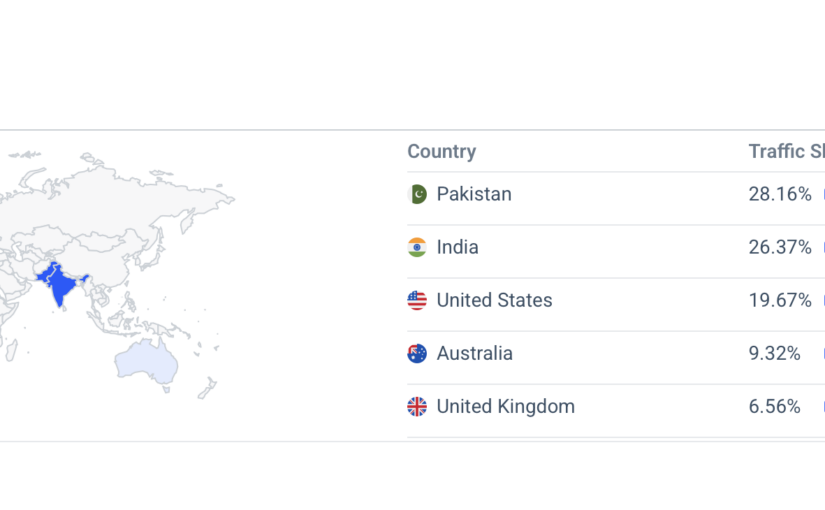
We have been running this blog long enough to know that readership numbers are a vanity metric, until they aren’t. February held steady at 41,000 views, which we are quietly proud of. But what genuinely surprised us, and we mean genuinely, not in the performative way, is that Pakistan now constitutes 28% of our readership.
A thousand visits a day, give or take a bit more. The old 1% rule says one in a hundred will actually say something; which means for every BB, RNJ, Kabir or Sbarr in the comments, there are ninety-nine people reading in silence and agreeing with “either camp”. We find that thought rather beautiful.
Prior to February, Pakistan had never cracked the top five. Now it’s sitting at number one.
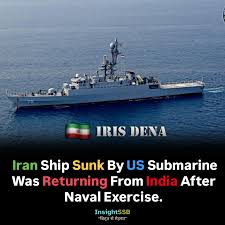
On the 4th of March 2026, a US submarine torpedoed the Iranian frigate IRIS Dena in the Indian Ocean, 40 nautical miles off the coast of Galle, Sri Lanka. At least 87 sailors were killed. Over a hundred remain missing. Pete Hegseth called it “quiet death” from the Pentagon podium; bragging it was the first torpedo kill since World War II.
MILAN at Vyzag
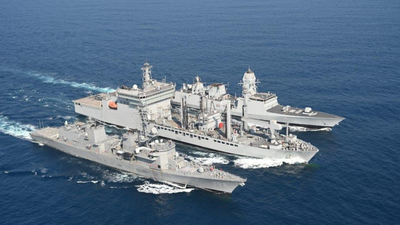
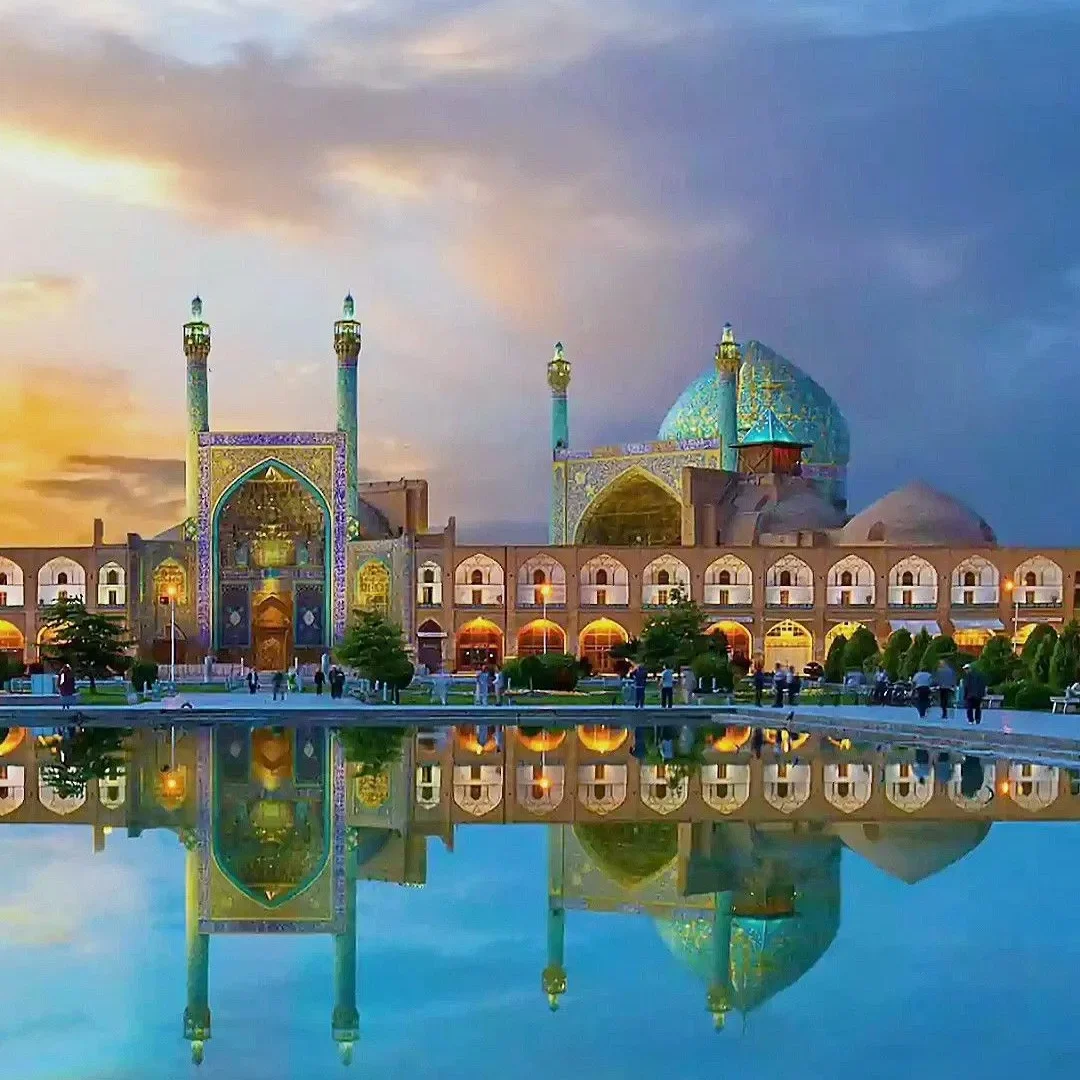
The IRIS Dena had just left Visakhapatnam. It had been India’s guest. Formally invited to MILAN 2026, the International Fleet Review hosted by the Indian Navy, attended by 86 ships from 74 nations. The Eastern Naval Command had tweeted a welcome photograph two weeks earlier: “reflecting long-standing cultural links between the two nations.”
Two weeks later, that ship is on the ocean floor. And from New Delhi, silence. Iran’s Foreign Minister Araghchi said it plainly: Frigate Dena, a guest of India’s Navy, was struck in international waters without warning. That line will not be forgotten in Tehran. It should not be forgotten in New Delhi either; because it is the most precise summary available of what Modi’s diplomatic positioning has actually cost India.
When guests are murdered
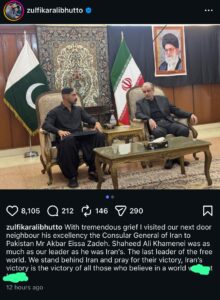
Say what you want about Pakistan’s post-colonial elite; and there is plenty to say. But since Pahalgam they have been reading the room better than New Delhi has. Not because Islamabad became richer or more competent. Neither of those things happened. What happened is simpler: when the bombs fell on Iran, Pakistan said nothing loud, and that silence was itself a signal. Across the Muslim world that signal was heard. Loyalty travels farther than power. Whether that loyalty is strategic or genuine is a separate question. The effect is the same.
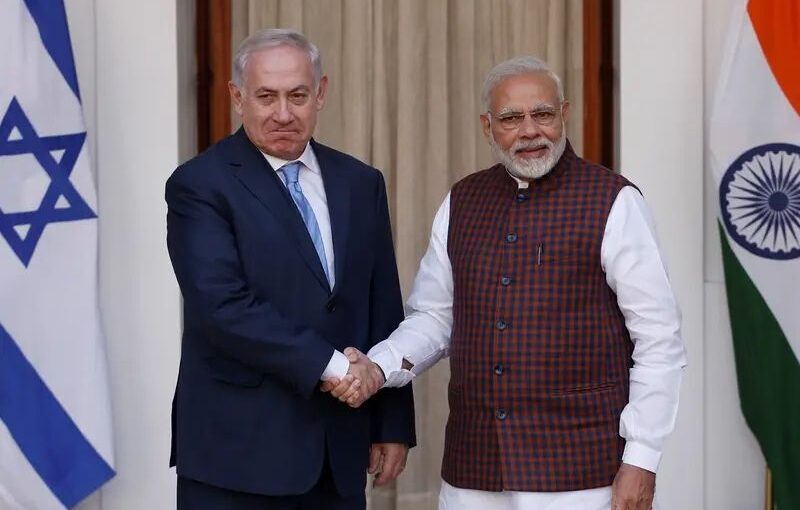
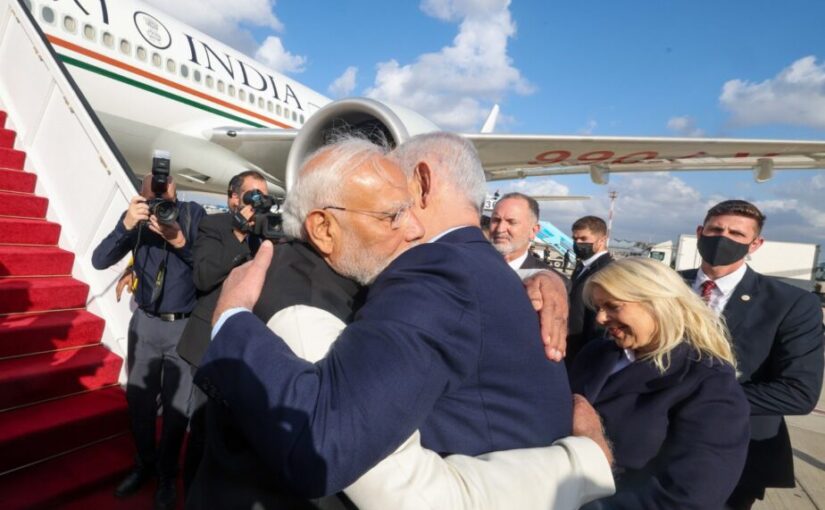
Journalist Bharat Bhushan wrote in Deccan Herald that with the recent visit, Modi has put India “firmly in the U.S.-Israeli camp.”
That is not a space that India should be in if it is hoping to lead the Global South, especially in the context of Israel’s continuing war on Gaza and the latest Israel-U.S. military strikes on Iran.
Omar’s excellent piece raises the question of barbarians. I want to raise a harder one: whose side is God on? I ask this not as theology but as military analysis. Because the planners of Operation Epic Fury appear to have assumed the answer is obvious; and that assumption may be the central miscalculation of this war.
Barbanians
The Pahlavist Map of Iran
The Pahlavists who helped guide this operation are, broadly speaking, secular liberals. Their Iran is Tehran’s northern suburbs, Los Angeles, Paris. Their model of the enemy is a man like themselves: attached to life, afraid of death, protecting assets and family and position.
Rational actors in the economic sense. You remove the leader, you remove the fear, the system collapses. This is a coherent theory of change. It just happens to be wrong about the specific civilization it was applied to.
Pretender to the Peacock Throne
The Gift of Martyrdom
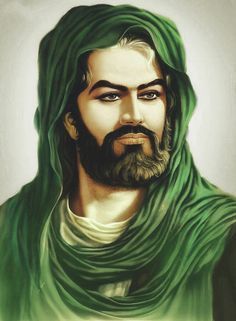
Shia Islam is not organised around the fear of death. It is organised around the embrace of honourable death as the supreme spiritual achievement. Karbala is not a trauma to be processed; it is a template to be repeated. Husayn did not miscalculate when he rode into the plain knowing Yazid’s army outnumbered him. He made a theological choice.
The willingness to die without surrendering is not a bug in the Shia operating system. It is the entire point of the operating system. When you assassinate a Supreme Leader who has spent forty years framing his rule in exactly these terms, you do not break the system. You hand it the most powerful gift available: a martyr. Khamenei is now Husayn. The Americans gave him that.
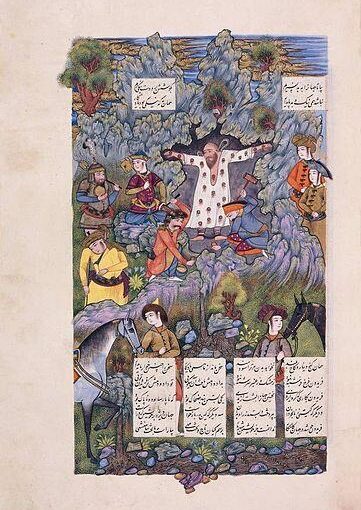
On March 1, 2026, Reza Pahlavi issued his statement on the killing of Ali Khamenei: “Ali Khamenei, the Zahhak of our time; the evil being who, just a few weeks ago, issued the order to slaughter tens of thousands of Iran’s finest children, is gone.“
The Shahnameh framing was not ornamental. For years, Pahlavi has used the Zahhak figure, the serpent-shouldered tyrant who fed on the brains of Iran’s youth, as his shorthand for the Islamic Republic.
And Khamenei, symmetrically, had organized his entire ideological project around the Husayni archetype: the martyr of Karbala, the one who refused submission before Yazid’s overwhelming power. Every day is Ashura. Every land is Karbala. That was the grammar of the revolution.
Now the “Zahhak” is dead (or the Husseiny attained martyrdom depending on your viewpoint). The question that follows is the only one that matters: who is Iran? Continue reading Zahak versus Husayni
Tehran has been bombed; University Street, home to a Military Intelligence base, has been struck.
Today is 9/11 in the Muslim calendar: the 11th of Ramadan, the 9th and holiest month.
US Marine guards at the American Consulate in Karachi opened fire on Shia protesters attempting to storm the compound, killing at least 12. Pakistani police and paramilitary Rangers were also present. The Sindh chief minister has ordered a probe into the deaths.
Shia communities in Kargil are mourning the death of their leader.
Imam Khamenei was not just a leader for Iran but seemingly for Muslims around the world. The Muslims of Kashmir took to the streets upon hearing news of Seyyed Khamenei’s martyrdom.
A word was flagged in our comments last night. I think it deserves its own post.
Kabir called RNJ’s use “kleptocracy” offensive, when used to describe Pakistan. I understand the instinct. Words carry weight. But here’s my problem: in the High Signal era of Brown Pundits, we don’t retire words because they sting. We interrogate them.
So let’s interrogate this one.
I. What Does the Military Actually Own?
Not metaphorically. Literally. The Fauji Foundation operates across fertiliser, cement, food, banking, and energy. Revenues exceeding $1.5 billion annually. The Army Welfare Trust adds real estate, insurance, agriculture. Neither answers to civilian audit. Neither tables accounts in Parliament. DHA schemes, Defence Housing Authority, operate in every major Pakistani city. Land acquired below market rate. Sold at market rate. The differential isn’t commerce. It’s transfer. Ayesha Siddiqa documented this in Military Inc. back in 2007, estimating military business interests at $20 billion. That figure is now considered conservative. The military controls an estimated 12% of all state land. In a country where land is wealth, that number is not incidental.
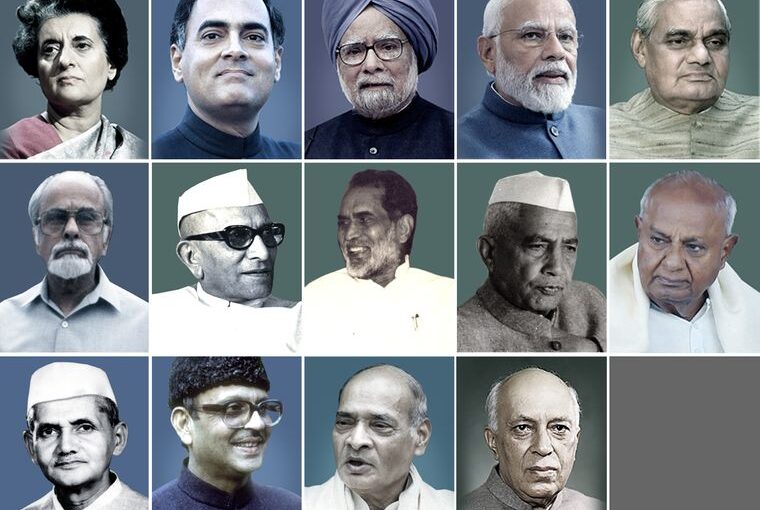
Replying to Sbarrkum got me thinking; instead of relitigating India-Pakistan, a more interesting question: across 14 India Prime Ministers, who actually did the job best?
Simple question. Hard answer.
Make the case. What criteria matters most to you?
Economic stewardship
Institutional integrity
Foreign policy judgment
Social cohesion
Crisis management
No slogans. No party loyalty. Just reasoning.
Moderated for substance. Indian-centred perspectives prioritised.
Two comments overnight exposed different sides of the the same problem.
You Can’t Weaponise Islamophobia and Then Kneecap Hinduism
Kabir tried to circulate a link around Manu Pillai’s Gods, Guns and Missionaries, a serious book, framed around whether Hinduism was, in some sense, constructed. The question is legitimate. All traditions are constructed. All identities consolidate under pressure.
But Hinduism and Islam are pari passu in this respect. The nineteenth century shaped both. Colonial enumeration shaped both. Reform movements reshaped both. Romila Thapar, Wendy Doniger, Sheldon Pollock; the literature on Hindu consolidation is vast. So is the literature on Islamic reform: Wahhabism emerging from Najd in the 1740s, Deoband crystallising in 1867 directly in response to 1857, Barelvism as counter-movement to both. All traditions have formation moments. All traditions modernise under pressure.
To apply the deconstructive lens to Hinduism while leaving Islamic historiography untouched is not intellectual rigour. It is asymmetry. Kabir, who deploys “Islamophobia” as a first-strike weapon with the hair-trigger of a seasoned litigator, has never shown the slightest inclination to subject his own tradition to equivalent scrutiny. If the lens is universal, use it universally. If it is selective, say so.
Anything else is prosecution dressed up as scholarship.






 Not metaphorically. Literally. The Fauji Foundation operates across fertiliser, cement, food, banking, and energy. Revenues exceeding $1.5 billion annually. The Army Welfare Trust adds real estate, insurance, agriculture. Neither answers to civilian audit. Neither tables accounts in Parliament. DHA schemes,