The 100th Brownpundits Browncast


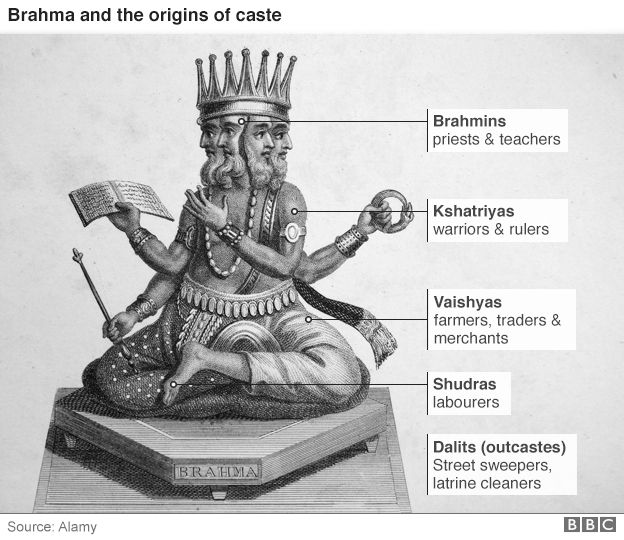
The 100th Browncast! Razib and Mukunda talk to Pushpita Prasad and Sudha Jagannathan of the Coalition of the Hindus of North America to talk about where we stand on the “caste question” in the US today. There are lots of different opinions here between the four guests, and platform of Dalits and Bahujan.

Also submitted for your approval, (1) Who is behind the caste legislations in North America? A peek into their track record – YouTube. The UCSD Ethnic Studies link about hiring only Dalits and Muslims: Commentaries (ucsd.edu)

Browncast with J Sai Deepak

Another Browncast is up. You can listen onĀ Libsyn,Ā Apple,Ā Spotify, andĀ StitcherĀ (and a variety of other platforms). Probably the easiest way to keep up the podcast since we don’t have a regular schedule is toĀ subscribeĀ to one of the links above!

The podcast was a good experience – a free flowing discussion without much structure. Retrospectively I felt I could have intervened more on some points or countered some of the answers, but I am overall happy with the discussion.

I hope I have this opportunity again to discuss a few more things with Sai.


Browncast episode 194: Caste, Hindus in America and Hinduphobia


On this episode of the Brown Pundits Browncast I had a long conversation withĀ  Nikunj Trivedi and Pushpita Prasad of the Coalition of Hindus of North America. One of the things we talked extensively about during this podcast is the Carnegie Endowment study Social Realities of Indian Americans: Results From the 2020 Indian American Attitudes Survey. The survey is rich with data that might surprise (for example, there are as many Bengali speakers as Punjabi speakers in the US, though I suspect this might be due to many ethnic Punjabis putting Hindi down as their mother tongue). But for the purposes of this episode, we were interested in caste identity, and how it relates to Hindus in America.

The Carnegie study takes a shot at the 2018 Equality Labs survey that argues for the pervasiveness of caste discrimination:

A 2018 survey of 1,500 South Asian Americans found that many low-caste members of numerous diaspora communities had endured firsthand experience of caste discrimination. However, the study is not based on a representative sample, raising questions about the generalizability of its findings.

The figure above shows that most Hindu Indian Americans do not live in a caste-homogeneous environment. There are reasons for this. From the text:

Forty-seven percent of Hindu respondents report identifying with a caste, which means the majority (53 percent) said that they do not personally identify with a caste group of any kind. However, there is marked variation by place of birth. Whereas 53 percent of foreign-born Hindu Indian Americans affiliate with a caste group, 34 percent of U.S.-born Hindu Indian Americans do the same.

…Overall, there are 632 respondents in the IAAS sample who belong to the Hindu faith but only 293 who report identifying with a caste group. Of this latter group, the overwhelming majority—83 percent—categorize themselves as General or upper caste. Sixteen percent identify as a member of OBC and 1 percent each identify as Adivasi/Scheduled Tribe (ST) or Dalit/Scheduled Caste (SC).

The latter number, that about 80 percent of Hindu Indian Americans are not OBC, Dalit or Adivasi is exactly what I’ve seen in other data. But perhaps a more important aspect is that large numbers of Hindus in America don’t “affiliate” with a caste group. Some of the American-born individuals may not actually even know their caste group, though the foreign-born ones clearly know their origins as noted in the text:

Figure 21 looks more closely at the caste composition of social networks among Hindus. Seventy-four percent of Hindu respondents who report not identifying with a caste nevertheless know enough to be able to identify the caste identities of their social networks. Only 26 percent of Hindus who do not identify with a caste respond to questions about the caste composition of their social networks by answering ā€œdon’t know.ā€ This indicates that even though a large proportion of Hindu respondents say they do not identify with a caste, only a small fraction are unaware of the caste composition of their networks.

What is also striking is how relatively small the differences are between respondents who identify with a caste versus those who do not. While the former report that a slightly higher share of their social network comprises people of the same caste, if one sets aside the ā€œdon’t knowā€ responses, the relative differences between caste identifiers and non-identifiers is marginal. For instance, 27 percent of Hindu respondents who identify with a caste report that all or most of their Indian friends share their caste affiliation. Nineteen percent of those who do not identify with a caste group answer similarly. Respondents who acknowledge a caste identity are only slightly more likely to report that some of their social network is made up of people of the same caste (41 percent versus 33 percent for those without a caste identity).

So here is the subtle point: people who do not identify with a caste group nevertheless can often assess whether their social circle is mostly of their caste group or not. The dynamic here is that people are proactively disavowing or denying caste identity personally, but they clearly still know the provenance of their own lineage and that of their friends.

The landscape of caste and America is complex. Nevertheless, today’s social justice activists are trying to reframe it as just another black-white dichotomy, with oppressed Dalits, etc., against oppressive Brahmins.

Finally, we discuss the casual and not-so-casual anti-Hindu comments that are spreading across mainstream discourse. For example, an organization at UC Davis called the Other Collective has said some really bizarre things about Diwali:

Browncast: Subcontinent and Movies

Another Browncast is up. You can listen onĀ Libsyn,Ā Apple,Ā Spotify, andĀ StitcherĀ (and a variety of other platforms). Probably the easiest way to keep up the podcast since we don’t have a regular schedule is toĀ subscribeĀ to one of the links above!

Omar Ali and Maneesh Taneja have a free-flowing conversation with Gaurav about movies in the Indian subcontinent in the 20th century

Please leave your movie suggestions in comments. A few links about the movies we discussed and recommended below

Super Deluxe – Official Trailer | Yuvan | Vijay Sethupathi, Fahadh Faasil, Samantha, Ramya Krishnan – YouTube

Sairat I A Narrative of Contrast – YouTube

“Aarambh [Full Song]” | Gulaal | K K Menon & Mahi Gill – YouTube

Ashi Hi Banwa Banwi | Comedy Marathi Movie | Dhammal Entertainment Movie – YouTube

Kalyug | Shyam Benegal | 50 Films I Love | Film Companion – YouTube

Panchayat – Official Trailer | New Series 2020 | TVF | Amazon Prime Video – YouTube

Badhaai Do Official Trailer | Rajkummar R, Bhumi P | Harshavardhan Kulkarni | In Cinemas 11th Feb – YouTube

Johnny Gaddaar Official Movie Trailer | Neil Nitin Mukesh,Dharmendra – YouTube

Jaane Bhi Do Yaaron – A Kundan Shah Film – YouTube

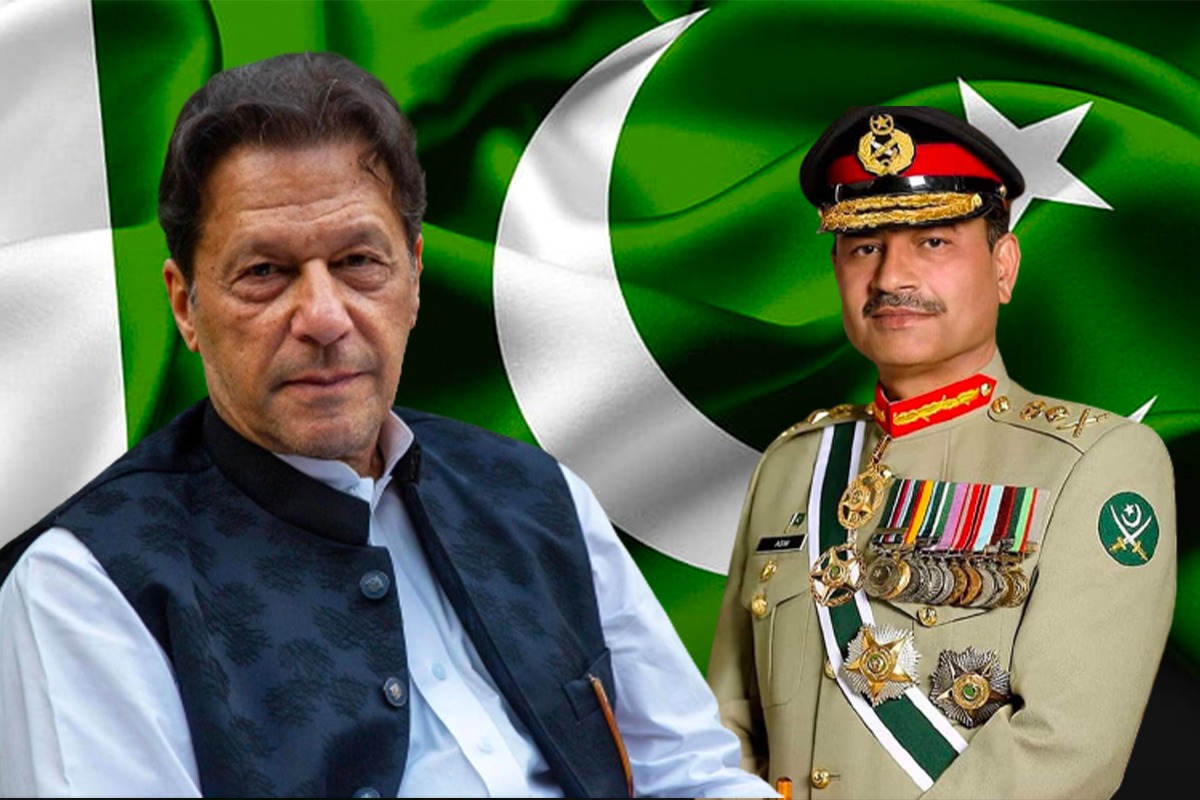
Browncast: Is Imran Khan on the Way Out?

Another Browncast is up. You can listen onĀ Libsyn,Ā Apple,Ā Spotify, andĀ StitcherĀ (and a variety of other platforms). Probably the easiest way to keep up the podcast since we don’t have a regular schedule is toĀ subscribeĀ to one of the links above!

In this episode Omar talks with Ambassador Kamran Shafi and Dr Mohammed Taqi, two very well known and astute observers of the Pakistani political scene. We talk about the current political crisis and why and how the military may have abandoned Imran Khan, exposing him to a no-confidence motion in the National assembly.

(spotify link did not work in Pakistan)

Browncast: Major Amin on the Ukraine Crisis

Major Amin – Brown Pundits

Another Browncast is up. You can listen onĀ Libsyn,Ā Apple,Ā Spotify, andĀ StitcherĀ (and a variety of other platforms). Probably the easiest way to keep up the podcast since we don’t have a regular schedule is toĀ subscribeĀ to one of the links above!

In this episode we talk to our regular guest, Major Amin. Major Amin is a military historian with long experience of working in Afghanistan and Russia. As a fan of military history he is also a huge fan of the Russian Army, the entity that executed such historic operations as Uranus and Bagration. This bias shows in the podcast today and many listeners will find things they vigorously disagree with, but his views probably reflect a lot of Putin’s (or Russian nationalist’s) own thinking in this affair. In any case, as always he is brutally frank and frequently provocative. Enjoy, and add your comments..

Reason for Russia-Ukraine War: Why did Russia attack Ukraine? Timeline of events that led to Russia Ukraine Invasion

Auto generated Transcript: (unedited, full of errors, but those in a hurry may get the drift) Continue reading Browncast: Major Amin on the Ukraine Crisis

Browncast: Salman Rashid, Travel and History Writer

Image

Another Browncast is up. You can listen on Libsyn,Ā Apple,Ā Spotify, andĀ StitcherĀ (and a variety of other platforms). Probably the easiest way to keep up the podcast since we don’t have a regular schedule is toĀ subscribeĀ to one of the links above!

In this episode Omar and Maneesh Taneja chat with Pakistani travel writer and history buff Salman Rashid. Salman has a very popular youtube channelĀ Ā and tweets as odysseuslahoriĀ  . We chat about partition, pakistan, history and whatever else comes up.

Browncast: Indic explorer on Hinduism, Dharma, etc

Image

Another Browncast is up. You can listen on Libsyn,Ā Apple,Ā Spotify, andĀ StitcherĀ (and a variety of other platforms). Probably the easiest way to keep up the podcast since we don’t have a regular schedule is toĀ subscribeĀ to one of the links above!

In conversation with Indic explorer, Mukunda and Omar discuss a lot of things related to all things “Indic” . Items include how to define Hinduism, why it does not get the respect it deserves and why its most ardent fans may need to “up their game”.. .

Indic (who prefers to remain anonymous for now) can be found on Twitter at @theindicexplor1

Browncast : Karnataka hijab issue


Another BP Podcast is up. You can listen onĀ Libsyn,Ā Apple,Ā Spotify, andĀ StitcherĀ (and a variety of other platforms). Probably the easiest way to keep up the podcast since we don’t have a regular schedule is toĀ subscribeĀ to one of the links above!

Karnataka hijab issue

This discussion has a lot of digressions and tangential issues but it is a discussion worth having. Leaving aside the Hijab controversy, how India is represented (or more misrepresented) in global media (arguably of both sides) is something Indians have to confront. Maybe that’s a separate podcast why India and Hindutva which is certainly moderate when compared to polities of the subcontinent get such a bad rep. I would lay the blame more on the Indian origin interlocuters than any foreign design (though that bias is undeniable).

I would even go on to add that the Western world, in general, hasn’t treated most non-Western countries as sovereign nation-states. I guess if sovereignty is treated as sacrosanct by people of Indian origin, inspite of personal biases some semblance of balance would be maintained in the “India” discourse

Browncast: Core Agenda and India as a Hindu State-In conversation with Arihant Pawariya.

I (Maneesh Taneja) am in conversation with Arihant Pawariya. Arihant is a senior editor with the Swarajya magazine and an influential voice in the right-wing ecosystem in India. In a freewheeling conversation, Arihant talks about the ā€˜Core’ agenda and how he sees the Indian state behaving were India to turn into a Hindu state.

My take away, the as positions on both sides of the ideological divide harden, the window of bringing in a Uniform Civil Code in India will close in a decade.

You can listen onĀ Libsyn,Ā Apple,Ā Spotify, andĀ StitcherĀ (and a variety of other platforms). Probably the easiest way to keep up the podcast since we don’t have a regular schedule is toĀ subscribeĀ to one of the links above!

Look forward to your thoughts and feedback.

https://five.libsyn.com/episodes/view/22075706

@maneesht and @haryannvi on Twitter.


Authors and books mentioned in the episode:

M. N. Srinivas: https://en.wikipedia.org/wiki/M._N._Srinivas

Caste in Modern India: https://www.jstor.org/stable/2941637

Social Change in Modern India: https://www.jstor.org/stable/24431229

Thomas Sowell: https://en.wikipedia.org/wiki/Thomas_Sowell

The Vision of Anointed: https://en.wikipedia.org/wiki/The_Vision_of_the_Anointed

Nassim Nicholas Taleb: https://en.wikipedia.org/wiki/Nassim_Nicholas_Taleb

Incerto: https://en.wikipedia.org/wiki/Nassim_Nicholas_Taleb#Incerto

Ayan Rand: https://en.wikipedia.org/wiki/Ayn_Rand

Atlas Shrugged: https://en.wikipedia.org/wiki/Atlas_Shrugged

Who is John Galt: https://en.wikipedia.org/wiki/John_Galt

Brown Pundits