Open Thread; Trans in the Muslim World

Other Stories (thank you Nivedita):

🔗 India Today – Harshvardhan Jain Scam

A man posed as a diplomat, set up fake embassies, and ran a multi-crore loan fraud racket via fake companies. He even issued “official” visas.

🔗 Business Standard – Karnataka Vendor GST Nightmare

A vegetable vendor in Karnataka received a GST notice due to high UPI volume — triggering a cascade of tax bureaucracy.

🔗 Economic Times – Indian Man Stabbed in Ireland

An Indian man in Ireland issues a public warning after surviving a random stabbing in Dublin.

🔗 NDTV – Hyderabad Man Kills Wife

In Hyderabad, a man stabbed his estranged wife to death at a birthday party for a child.

Open Thread

Today will be a bit busy so I haven’t had time to attend to BP (running on 4-5hours sleep).

Talk about whatever you like; I’ll make this thread sticky a while. A good & engaged commentariat is the lifeblood of a platform.

I’m working on something that will be a bit interesting (my newsletter meets my work) but let’s hear from you w.r.t the wacky and the wonderful.

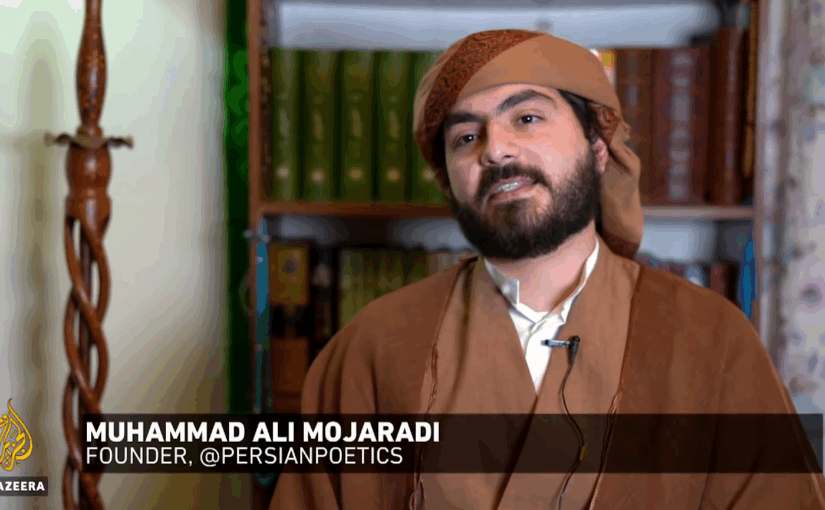
Open Thread: From Flattery to Fatigue — What the Iranian Diaspora Can’t Admit

On July 14, I wrote about Ta’arof ; the millennia-old Persian art of flattery, refusal, and ritualised courtesy. It’s often misunderstood in the West as “saying no three times,” but it’s really about emotional high-context negotiation, reading the room before the room speaks.

The next day, on July 15, Sharghzadeh posted a powerful video, calling it Iranian Diaspora Fatigue. A searing takedown of the Iranian Diaspora’s toxic racial insecurities, internalised Islamophobia, misogyny masked as modernity, and cultural denialism. He’s mostly right.

What he calls fatigue, I’d call poisoned flattery turned inward. Because Tehranglos are no longer performing Ta’arof to honour guests or elders. They’re doing it to whiteness itself. Hoping if they refuse our own identity long enough, maybe the West will say: “Yes, come in.”

That’s not assimilation. That’s exhaustion. And the worst part? Even the racism feels borrowed; against Arabs, against Afghans, against Iranians back home. It’s not even Iranian. This isn’t just about cringe TikToks or awkward panel guests. It’s about who gets to narrate Persian culture. And what gets flattened when tradition becomes product. I was stunned when Zachary Newman — one of the most prominent Persian-Jewish American chefs — endorsed Netanyahu’s strikes on Iran. That moment crystallised something.

Sharghzadeh and I are saying the same thing: Persian culture is being gentrified by its own children. What survives isn’t tradition. It’s content. It’s vibes. If Iran is an unreadable poem, diaspora is turning it into a slogan. If Iran is lived, diaspora is increasingly just captioned. And they wonder why they’re tired. Is the Persian diaspora preserving a culture, or just performing it for the algorithm?

What Is Brown Pundits For?

Brown Pundits has always been an open tent—not a monolith, not a movement, and certainly not a megaphone. A forum. A space where ideas, arguments, and identities from across the Brown world are aired, examined, and sometimes clashed over—with the hope that we all leave a little sharper than we arrived. But with that openness comes tension. How do we balance quality and quantity? Principle and pluralism? Coherence and contradiction?

It’s something I’ve reflected on often in other matters of my life (like party-planning for instance). When I’m in the UK, time is tight. When I’m in the US, there’s more room for Brown Pundits. In that ebb, others—like Kabir—have stepped in, contributing with energy and range. And I’m grateful.

Some of Kabir’s posts may align politically with The Wire. That’s fine. Other Pundits lean toward a down-low Hindu Right. Also fine. This was never a place for orthodoxy. We aren’t here to gatekeep belief—we’re here to grow through encounter. The real question isn’t what side are you on? It’s why are you here?

If you’re here to dunk, to declare, to dominate—maybe this isn’t the right space. But if you’re here to engage, to learn, to argue in good faith—welcome. As authors, we don’t always agree. We shouldn’t. But how we disagree matters. To that end, I’d like to lay out four standing principles—not as commandments, but as shared norms that keep our house in order:

Brown Pundits Continue reading What Is Brown Pundits For?

Resistance, Realignment, and the Roads Not Taken

First, a brief acknowledgment: Kabir remains one of the pillars of this blog. His consistency, depth, and willingness to engage with the hardest questions are invaluable. I don’t always agree with him—but the conversation would be much poorer without his voice. The post is a series of reflections—stitched together from the comment threads.

I. Gaza: Beyond the Pale of Language

The death of a 19-year-old TikToker, Medo Halimy, in South Gaza this week caught my eye—not because it was the most horrific (foetuses are sliced in two in Gaza as Dr. Feroze Sidwa* attests). But because having seen his video, it just made the death so immediate (yes that is a cognitive bias).

At this point, to debate whether what is happening is a genocide feels grotesque. It clearly is. The scale, the intent, the targeting of civilians and children—it’s all there. The legal frame collapses under the moral weight. We are witnessing something darker than war: ethnocultural suffocation & demographic extinction, broadcast live and met with diplomatic shrugs. But the world is watching inspired by the very brave Bob Vylan duo (UK punk-rap duo opposing imperialism, recently denied US visas):

Something stirs and pricks beneath the rubble.

II. The Huma Moment: A Civilizational Reversal? Continue reading Resistance, Realignment, and the Roads Not Taken

đŸ§”Quick Moderation Note

Just a heads-up for everyone:

  • India–Pakistan threads are totally fine when the post is about India–Pakistan, or if it’s an Open Thread. Let the sparks fly there.

  • But on other posts—please avoid steering every conversation back to India–Pakistan. It’s not always relevant and derails useful discussion.

I won’t be actively moderating every thread. If something is genuinely offensive or disruptive, feel free to flag it—I’ll step in only if needed. Continue reading đŸ§”Quick Moderation Note

On Moderation, Minoritization, and the Elite

Pulse: The Threads We Weave —

Lately I’ve wondered whether I over-curated the threads. Things feel quieter. Maybe too quiet. But perhaps that’s the cost of raising the bar—of asking for dialogue instead of dopamine. Still, this lull has me reflecting not just on moderation but on why some arguments no longer move me.

Take the Indo-Pak conflict: once electric, now strangely inert. That shift reflects my own evolution over two decades. I no longer inhabit that binary. I carry a layered identity—a South Asian Bahá’í sensibility shaped by Persian aesthetics, grounded in British institutions, and fluently navigated through English. That complexity is my compass. It’s why I care less about flags and more about forces.

And the real force that shapes our lives? The elite. Not as a pejorative, but as a structural reality. I see it as nested tiers: Continue reading On Moderation, Minoritization, and the Elite

Merit, Class, and the Ossified Dream

Dispatch from Newark Airport

By X.T.M | Acting Editor, Brown Pundits

I lost my train of thought earlier, but I’m back now, writing this from Newark Airport, awaiting a flight back to the United Kingdom—then onward, as they say, to the old, old world.

What I’d begun to reflect on was social mobility—and how drastically it’s shifted over the past few decades. In much of the Global South, the idea of a working-class avant-garde—those who rose through grit, communal aspiration, and sacrifice—still retains cultural force. But in the Global North, that current has largely dissipated. Class structures have ossified. The ladder still exists, but the rungs are brittle.

I’ve been mapping that reality onto the commentariat, especially the highly educated, striving upper-middle-class Hindus who have, for the most part, embraced the system—IITs, IIMs, Oxbridge, the Ivies. These are not just institutions; they’re rites of passage. For many, the peak came at the point of entry. Twenty years on, what remains is not expansion, but a formula—one track, one ceiling. Continue reading Merit, Class, and the Ossified Dream

Denial Isn’t Just a River in Egypt—It’s a Dammed Indus Too

By X.T.M | Acting Editor, Brown Pundits

“Qureshi” has glibly informed me that caste doesn’t exist in Pakistan, and that had I not deleted his comment, I would have seen his thoughtful explanation on why his ancestors would (or wouldn’t- tough to follow) have “embraced caste.”

Let’s address both claims.

I. Denial, and the Geography of Amnesia

First: the deletion. The reason I removed Qureshi’s comment was simple—it referred to “when the Hindus left Pakistan in 1947.” As if they left. As if it were a long vacation. That turn of phrase is emblematic of a deep, disturbing historical erasure—a civilizational amnesia that’s not just inaccurate, but actively offensive.

To phrase the violent dislocation of millions as “leaving” is a textbook case of internalized Hinduphobia—a posture so normalized in Pakistani elite discourse that it barely registers as cruelty.

This is not about word policing. It’s about confronting the inherited violence buried in euphemism. Continue reading Denial Isn’t Just a River in Egypt—It’s a Dammed Indus Too

Flame Thread Protocols: Honey Kabir

A Note from the Editor

Flame thread warning: Honey vs. Kabir.

Last night’s open thread surged past 50 comments—most of it orbiting the now-familiar friction between the two.

Let me be clear: I’m inclined toward Kabir. He’s often overwrought, sometimes hyperbolic, but he’s a known quantity. He’s been part of this space for nearly a decade. He is a “real person.” We know how he argues, where he lands, and the limits of his provocations.

Honey is harder to read. Multiple handles. No clear background. No track record. And a rhetorical posture that feels less like engagement, more like carpet bombing—especially when it comes to Pakistan. There’s a difference between critique and hatred, and it’s usually in the tone. “Pakistanis under-endowed”—LOL, happy to disprove that.

Moderation is evolving. I no longer think of it as refereeing an online debate. I think of it like hosting a discussion in my living room. That means: Continue reading Flame Thread Protocols: Honey Kabir

Brown Pundits