The tyranny of geography

Maleeha Lodhi in DAWN:

Today however, Pakistan faces a three-front security challenge. On the eastern front an implacable foe continues to issue threats and insist its ā€˜Operation Sindoor’ — the name of its military action against Pakistan in May — is not over. On the western frontier, Pakistan and Afghanistan remain engaged in hostilities. Pakistan also alleges active collusion between Kabul and New Delhi in terrorist attacks on the country. The third front is at home, reflected in the surge in militant attacks that is undermining domestic peace and stability.

And:

Given New Delhi’s hostility and absent any communication between the two countries, a high degree of unpredictability and risk of miscalculation characterises the situation. Pakistan thus has to keep a watchful eye on the western front and remain in a state of military preparedness. The existential threat after all can come from India, not Afghanistan.

While Pakistan may be unable to do much in the near term to defuse either of the two external fronts (ideally the Afghan front should be over time) the home front is what it can and should control. Two provinces are afflicted by insurgency while terrorists are also striking across the country. Despite notable counterterrorism gains, the internal security situation remains troubling with rising fatalities from terrorism likely to make 2025 the deadliest year in a decade.

Pakistan needs a more effective counterterrorism strategy. Strengthened border controls must involve zero tolerance for corruption and criminality that allow militant movement. The government should also evolve a differentiated approach to deal with militant violence in Balochistan and KP. In Balochistan, the underlying sources of long-standing public disaffection need to be addressed. Law enforcement should be accompanied by political and economic measures to win hearts and minds. Effective counter-insurgency operations in KP require rising above partisan politics for better coordination with the opposition-controlled province to secure community support.

Defeating militant violence ā€˜within’ is a strategic compulsion as a continuing three-front situation is obviously untenable.


The growing Pakistan-Afghan Conflict. What next?

Most of us keeping up with news from the sub-continent are aware by now of the recent escalation in the long-simmering friction between Pakistan and Afghanistan.Ā  The historical ‘divide’ regarding the Durand Line is something that never really went away as much as the Pakistani state attempted to pretend that its aĀ fait accompli.Ā  And now with the Tehreek e TalibanĀ Pakistan managing to to challenge the Pakistani state’s writ, and inflicting ever increasing costs on PakMil, the threats to punish Afghanistan further are flowing thick and fast from Islamabad.

Pakistan, obviously enjoys a military supremacy over Afghanistan in multiple orders of magnitude. But as we have seen in Ukraine, or even in Afghanistan over the last few decades, the underdog can inflict some serious costs. And keep it going.

Question is, where does Pakistan go from here? With the growing reported rapprochement between the Taliban and New Delhi, there’s every chance that the Afghan air defenses may be quickly ramped up from non-existent, to at least some level of deterrent.Ā  Rumors are rife on the internet about Indian supply planes landing at Bagram.Ā  And simply bombing Afghan border posts has diminishing returns.Ā  The Taliban do not appear to be in any conciliatory mood.

In many ways, this has many parallels to India’s experience with Pakistan backed jihadi groups in the 30+ years starting from the late 1980s.Ā  Its almost impossible to deter and defend against insurgency in mountainous terrain.Ā  Especially when the insurgents find succor in the local populace.

So, what next for “Khyber Pakhtunkhwa” and Pakistan? How realistic is the possibility that the Pakistani military will be able to succeed “this time” when it has already ‘failed’ a few times post-9/11, and had to make repeated ‘peace’ deals with the TTP or its predecessors in the past?

The shooting war seems to have gone a bit quiet for now, but the war of words is quickly escalating.Ā  It seems like the Taliban are being ‘good students’ of the ISI and have adopted the tactic of releasing catchy music videos to make propaganda points.

Threads, Carpets, and PM Modi’s 75th

Happy Birthday Pradhan Mantri:

I watched several videos — four or five, maybe more — of public figures sending their wishes. Among them: Donald Trump, Narendra Modi, Benjamin Netanyahu, Shah Rukh Khan, Aamir Khan, Mohammed Siraj, and Mukesh Ambani.

Mukesh Ambani, of course, remains closely aligned with the establishment, and Aamir Khan seemed to lean heavily into his Hindu heritage — adorned with Rakhis on his wrist, even a Bindi. He’s presenting himself now in a distinctly Hindu cultural idiom, though he comes from a very prominent Indian Muslim family.

By contrast, Shah Rukh Khan stood out. His message was subtly sardonic — he remarked that the recipient was ā€œoutrunning young people like me.ā€ It was light, but just subversive enough to feel intentional. Interestingly, both Shah Rukh and Aamir spoke in shuddh Hindi, which added a certain performative weight to their gestures.


Hindu Art

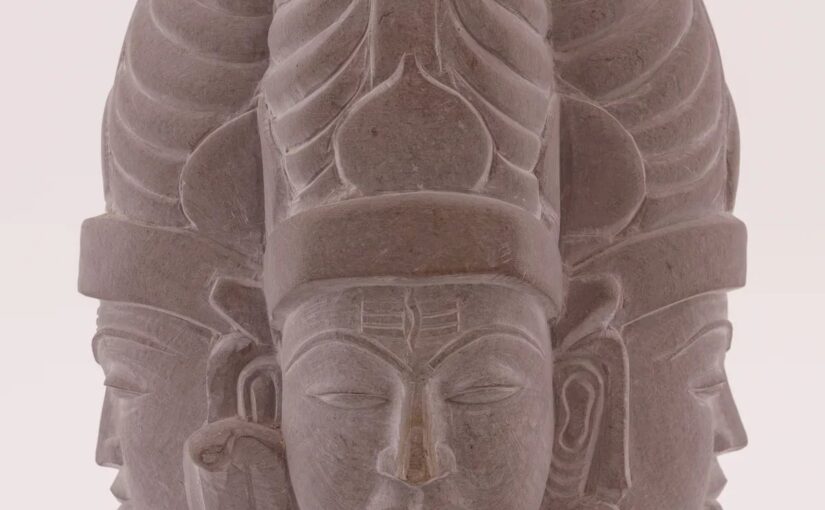
I’ve been fairly busy the past few days, mostly focused on BRAHM Collections;Ā writing about carpets, curating Trimurti sculptures, and exploring Ardhanarishvara iconography. It’s been a deep dive into the civilizational grammar of India and by extension, the porous boundary between sacred art and civil religion.

In the background, I’ve also been chipping away at longer-form reflections; trying to crack the formula for my newsletter (believe it or not the readership is neck to neck with BP but different demographics). It’s all a bit scattered, but the writing has become its own brown paper trail.


On the Commentariat (and Why I’m Stepping Back)

I still follow the commentariat but I’m slowly easing off. There’s a rhythm to it, sure, but too often it turns into exhaustion. I’ve removed all of Honey Singh’s abusive posts. Abuse is now a hard red line for me, but beyond that, I’m stepping back from constant moderation or sparring. Continue reading Threads, Carpets, and PM Modi’s 75th

Afghan Chaos. Dr Hamid Hussain’s view..

From Dr Hamid Hussain. As readers of this blog know, our other Pakistani military history contributor (Major Amin) has a harsher version of the same situation: that there is chaos in Afghanistan and it will drag all neighbors into trouble with it. Dr Hamid, a nice guy at heart, is willing to hope for peace a little more than Major Amin.. (the initial response is about what the American policymakers are thinking of doing)

17 October 2021

Following was part of conversations with many with first hand knowledge about the region.Ā  This gentleman had front row seat to many changes in the region and he was kind enough to candidly share his views with me & my response. It may be of interest to some.

Hamid

Thanks Sir.Ā  I think you got it right about potential risks for the region.Ā  I know that in polite conversations, these topics are not discussed but in the real and cruel world people talk about their dreams and delusions and it is directly proportional to the level of their knowledge or ignorance. This has been at least my experience of dealing with many from different countries who have front row seat to this blood sport.

Here are my two cents.Ā  In my view, there is no agreement yet about the policy going forward but there are conversations about what is called ā€˜controlled chaos’.Ā  Some see huge opportunities in current situation where all potential trouble makers in Washington’s eyes can be paid back in the same coin.Ā  Keeping Russia busy defending its southern borders by spending more military and diplomatic capital, highlighting human rights violations of Uighurs on diplomatic front and limited support to do some fireworks in Xinjiang by using Wakhan corridor, destabilize Iran’s eastern border thus almost completely encircling Iran as currently, Israel is using Iraqi Kurdistan and Azerbaijan to cause troubles.Ā  Igniting another border and more involvement in Afghanistan will waste more Iranian intelligence resources.Ā  Turkey under neo-Ottoman dreamer Erdogan has gone from ā€˜zero trouble with neighbors’ foreign policy of decades to ā€˜100 % trouble with every neighbor’ quagmire.Ā  He is arrogant and ignorant enough to be easily enticed into putting his hand in the snake pit of Afghanistan.Ā  There have been reports of increasing Turkish parleys with Pakistan and several mysterious military flights from Istanbul to Chaklala air base have landed.Ā  We don’t know the details yet but I’m suspicious that the cargo has something to do with Afghanistan and it is not humanitarian aid.

Everyone and his cousin in Washington is very angry at Pakistan.Ā  The dangerous part is that now Afghanistan is not seen as a separate entity for management purposes.Ā  The talk is about region and it is now ā€˜Pak-Af’ that means support of anti-Taliban groups in Afghanistan and Pakistan mainly on political front at this stage and if needed in future a military front can also come into play.Ā  Goal is to create a ā€˜cordon sanitaire’ around Talib country of southern and eastern Afghanistan that is traditional Loy Kandahar and Loy Paktiya regions.Ā  This means strengthening both Pushtun and Baloch nationalist forces in Baluchistan.Ā  In Khyber Pukhtunkhwa (KPK), if Pushtun Tahaffuz Movement (PTM) is converted into a political party and moribund Awami National Party (ANP) wakes up and revamps its structure, it can create a political barrier to Taliban narrative.Ā  In addition to these ethnic forces, two major political parties; Pakistan Muslim League – Nawaz and Pakistan Peoples Party (PPP) have no love lost for Afghan Taliban.Ā  During their respective tenures (2008-2018), they have tried desperately to get rid of flea infested Afghan blanket but army came in the way. Even limited retreat of the army in current scenario provides the room for push back for all anti-Taliban forces.

Afghan Taliban leadership will try a hand at ā€˜reverse strategic depth’ by supporting religious segment especially fellow Pushtun Deobandi lot of KPK, Baluchistan and metropolis of Karachi.Ā  This will be their attempt at political front.Ā  In future, if circumstances force a military front then their natural allies will be Tehreek-e-Taliban Pakistan (TTP).

For the northern part of the region, there is talk about the Kurdish model that was adopted for Iraq.Ā  A de facto independent region although Afghan scene is quite different as there is no history of separatism among non-Pushtuns and also it is not one single ethnic entity in the north.Ā  If somehow, this time around non-Pushtuns come to the conclusion that Taliban are a dominant military force in control of Kabul for forseeable future who are not willing to share and they don’t have strong Pushtun partners to wrest control back and run as a joint venture, then other options come to the table.Ā  Even in that case, this model will require some modification.Ā  One possibility is the ā€˜canton model’ attempted in Syria for different ethnic and sectarian groups.Ā  The base for northern plan will likely be Tajikistan.Ā  Contrary to popular belief, it will be Afghan players that will determine the future course, outsiders will be simply enablers.

In my view ā€˜controlled chaos’ is a misnomer as chaos takes its own course and apprentice sorcerers can not even comprehend let alone control it. My personal view is that like every government change (although we may not agree with the method of taking control), Taliban should be given a chance of at least three years to prove what they mean?Ā  Formal recognition can be kept at back burner for now while channels kept open at different levels.Ā  In the meantime humanitarian aid channeling directly to the people to prevent famine and further dislocations while gently pushing Taliban to modify their stance on some issues especially inclusion of other groups and female education.Ā  On part of Talib, if he can keep violence below a certain threshold where it does not hamper daily activities for the next few years, that will be an achievement.Ā  In my view patience is needed but alas patience has never been an American virtue.

ā€œThe everlasting battle stripped from us care of our own lives or of othersā€.Ā Ā T. E. Lawrence

Warm Regards,

Hamid
Afghanistan was never “Hindu”


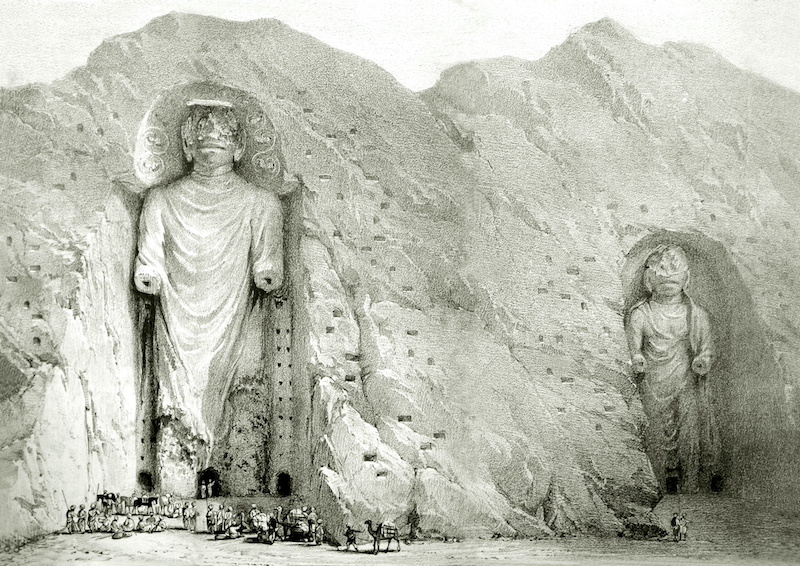
Buddhism and Islam on the Silk Road has an extensive section on Afghanistan. The Bamiyan Buddhas reminds us what the texts make clear: up until 900 AD the highlands in an around modern Afghanistan were heavily Buddhist. The Turki Shahi kings of Kabul seem to have patronized Buddhism. In contrast, their successors, the Hindu Shahi kings, seem to have tilted toward what we would call Hinduism.

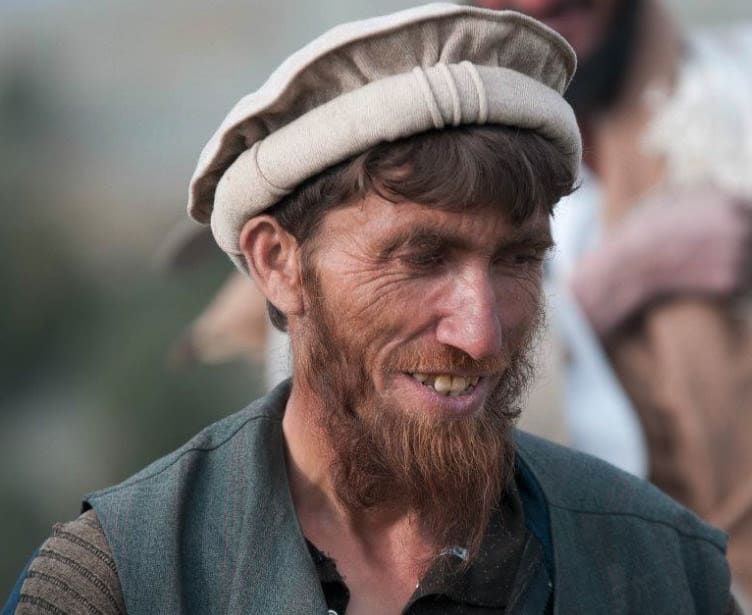
Because I’m posting a Substack on Afghanistan soon the civilizational and cultural identity of Afghanistan is on my mind. After my reading and reflection, I’ve come to the conclusion that the area and the people can be thought of as a crossroads between Persian, Central Asian, and Indian. Central Asia includes both Iranic and later Turkic cultures, while the Persian influence reflects a deeply west Iranic sensibility. Finally, it has hard to deny that India and much of southern and western Afghanistan are deeply connected geographically, biologically, and culturally.

And yet some Indians keep claiming that “actually Afghanistan use to be Hindu…” This is false. At least by any comprehensible definition of “Hindu.” It is true that Afghanistan was once heavily Buddhist, but Buddhism is not Hinduism. It is true that there have long been Indians in Afghanistan, but there have been Indians in Southeast Asia as well. It is true that the Iranian pagans, like the Nuristanis, worshipped gods and practiced traditions that descend from one’s affinal to the Vedic Aryans, but the pre-Vedic religion of the Indo-Aryans was not Hinduism as we’d understand it.

To a great extent, this sort of cultural imperialism is harmless and cringe. But it’s a bit on the insensitive side given what’s going on in Afghanistan, where ironically Indian-origin Deobandi Islam is is reigning supreme…

Browncast: Major Amin on the Age of Strategic Anarchy in Afghanistan

Another BP Podcast is up. You can listen onĀ Libsyn,Ā Apple,Ā Spotify, andĀ StitcherĀ (and a variety of other platforms). Probably the easiest way to keep up the podcast since we don’t have a regular schedule is toĀ subscribeĀ to one of the links above.

This episode was recorded over the phone, so please excuse some minor audio issues. As many of our readers know, we posted an article from Major Amin a few days ago, arguing that the US had made a brilliant strategic move out of Afghanistan (even though the disengagement has been handled poorly). In this podcast, he repeats this view and has a few salty words about this and related topics.. Enjoy.

Comments welcome.

Btw, my own random amateur views can be found at this link.Ā 

Postscript 1: Several friends have said that they cannot take his views seriously if he thinks “lower middle class” is such an insult, etc. But I no longer use that particular filter too much. I think people can have very “problematic” AND insightful views simultaneously. If we are interested in learning (and not just in virtue signaling) then we can filter them out and still find something useful. Of course, friends will do that all the time with each other, but I admit that it is a more complicated question when we talk with strangers online, so if you feel strongly about this issue, this may not be the podcast for you.

Postscript 2: Is there anything in the podcast that I should have objected to during the conversation? I think yes, there is. I should have suggested that we cannot really say “the only good Chinese is a dead Chinese”. Other than that, I have no regrets šŸ™‚

Afghanistan; Graveyard of Western Policy Wonks (but certainly NOT the graveyard of empires)

I had posted an earlier blog post with the somewhat tongue in cheek title “America’s brilliant strategy in Afghanistan”. This was basically a note (and an audio version of the same) from Major Amin, arguing that strategically a US exit was a brilliant move as it ensured that this tar baby is now the problem of Pakistan, China, Russia and Iran (and to some extent, India), and not an expensive American headache. The thought is strategically sound (if very cynical and cold blooded), but I have some doubts about whether the US is consciously trying to do this (they may indeed end up doing this, and could even emerge stronger, with their rivals weaker, as a result, but that may not have been the conscious intention). Ā Anyway, here, in no particular order, are my random thoughts on this topic:

  1. There are no grounds for thinking that the same damnĀ  people who created the disaster and were wrong about it at every step for 20 years are now suddenly these Machiavellian geniuses who will trap Pakistan and its patron China (not to mention Russia and Iran) in Afghanistan. It is far more likely that the geniuses are still dreaming of “engagement”, only now instead of engaging with Musharraf and the anti-Taliban Afghans, they will engage with General Bajwa and the Taliban. These geniuses will now sell new kool aid about how the new government they have helped to install will ensure security and crackdown on alqaeda and whatever bogeyman the Americans are now supposed to be scared of. And of course, to do this the new “anti-terror allies” will need aid (part of which will be stolen by corrupt Americans at step one, the rest to be stolen locally by these new allies, with a small trickle making it to starving afghans). Meanwhile, these new allies, not new to the game themselves, will make sure a steady supply of “alqaeda number threes” are handed over to be housed in Guantanomo or wherever. They will also make sure there are enough terror incidents and threats to keep the show going forever. We will of course get mucho dinero from the EU as well, since that is the only way refugees can be kept out of fortress Europe (or at least, this is the line that will be sold on TV). Now, this may NOT come to pass fully like this because Western powers are still democracies, there will be debate and the best laid plans of mice and thinktankers may be thwarted by bad publicity and “aid fatigue”, but NOT by their own planning. In short, the US and the West may indeed end up leaving the tar baby to less gentle caretakers, but they will do so unwillingly and in spite of themselves, NOT because this (sensible) plan is what they have opted for now that the first (nonsensical) grand strategic plan has failed and they have well and truly lost the war.
  2. The failure in any case is not a failure of Democrats or Republicans, it is a systemic failure of the entire postmodern Western establishment. And the systemic failure starts from the vast gap that exists between Western civ and the rest of the world. For better AND for worse, the West has moved very far from where most humans were a century ago. Leaving aside all questions of whether this is good, bad or ugly, or whether this is sustainable or not, the fact remains that at this point in time the average ivy league educated “analyst” is bound within so many layers of WEIRD assumptions and habits that he or she (maybe especially she, since she will not have hormonal access to the patriarchal and macho world of men outside the West; though this is by no means a general rule; some Western women can also know men AND women and their quirks very well) has no framework for even beginning to see what is going on. Garbage in, garbage out is always true, but it is also worth remembering that there CAN be a machine that converts good information into garbage. If the software is faulty, then non-garbage going in will also become garbage on the way out. This should not be forgotten.Ā 
  3. Some people say that Western corporate capitalism has become so powerful that it has now eaten through whatever older human paradigms were operating (and are still operating at some level) in Western societies. If this is indeed the case then the questions become all about who profits and who loses? but the twist here is that the usual Lefty answers are also mostly propaganda. War is profitable, but so is peace. Peace is actually MORE profitable for more corporations than war is. But if war profits alone were (and are) driving policy choices, then the issue becomes one of how SOME corporations and individuals (who DO profit from war) have managed to capture institutions to such an extent that their profits drove policy to invade Afghanistan? and their profits will determine what comes next? People have strong opinions on this, but I find that most of the opinions turn out to be emotional outbursts or propaganda on close examination. There is almost certainly SOMETHING to this angle of attack, but I still think, not as much as advertised; because I think they make money when they get the chance, but getting the chance was not something they planned in detail.. eg, “corporations” (who would that even be?)Ā  did not blow up the towers just so they could go to war. Other human concerns (race, religion, identity, national interest, individual madness, individual desire to do good, plain stupidity, error, chance, etc) are still driving us.
  4. The whole notion of “non-state actors” is a huge red herring. There ARE non-state actors, and states usually defeat them. They are mostly a police issue, not a military issue. A really serious insurgency (Vietcong, Taliban, Kashmir, etc etc) needs overt or covert state support. Conversely, the really cost-effective counter (provided you have the conventional forces to have such an option) is to confront the states supporting them. The notion that the USA is helpless in front of some ragtag gang of Islamist mujahids is just bullshit. At some point, the US could be up against sponsors that the US cannot go to war with (China, Russia) and would then have to settle for other measures, but to fail to get countries such as Afghanistan, Iran or Pakistan to change their behavior (short of being under the a full Chinese or Russian umbrella) is a choice, not a given.
  5. The Taliban are going to rule all of Afghanistan now because the US chose to give them the country (whether as part of some Machiavellian scheme or just because Khalilzad and Trump were idiots), but they will not do so in some mythical “inclusive” or “moderate” fashion. They will not last long if they do anything that stupid, and they are not stupid. Their asabiya comes from Islam and their core supporters are committed to a very jihadist and harsh version of Islam. They can certainly be smart enough to act moderate or to include non-taliban in their govt because of considerations of realpolitik and their fighters have enough discipline and their ISI minders have enough influence that this can be done. But just as the Chinese communists included many non-communists in their national reconciliation councils or whatever, but never lost sight of the need for unity of command and clear authority over all aspects of national life, so will the Taliban. if they dont, they will fall quicker than expected. That said, they will not enjoy a free run. There will be many groups trying to undermine them. There will be criminals There will be smugglers. There will be local warlords. They will have to be harsh, they WILL be harsh, but they still wont enjoy enough tranquility to start giving out mining concessions to Shenyang Mining corporation number five or whatever. The US may eventually get out of the region (with think tankers kicking and screaming about “failure of engagement” all the way) and then will be able to enjoy the show from a safe distance. But with so many intelligence agencies and agents operating at every level, peace is not likely. Neither is it likely that the Taliban regime (even if it stabilizes) will totally eliminate all the various terrorists who are still holed up in Afghanistan. Ideologically, they cannot. Practically they cannot.
  6. There will be massive economic disruption in Afghanistan very very soon. The whole place was running on American taxpayer money (and smaller contributions from the EU and others). Even though the think-tankers will try their level best to keep the manna flowing, it is not likely to reach even a tenth of the levels achieved in the corrupt war years. Neither China nor Russia believe in throwing money into tar pits. So who will pay? The afghan people will pay, by moving abroad (mostly to Pakistan and Iran, luckier ones further West), by living on less, by selling what drugs they can (though most of that profit goes to middlemen and smugglers, not to the growers). Pakistan will pay what it can, which is not a lot. There is no way there can be a sudden turnaround and prosperity and mining contracts raining down on Kabul. None.
  7. But can there be a longer term recovery? Can China do what the USA could not? build a viable Afghan state? I doubt it. I doubt that they will even try. At best, they will give some money to Pakistan to have a go, but it will not be American level cash, it will be strictly “cash on delivery”. Can Pakistan deliver them a functioning Afghanistan? Our entire past record suggests we cannot. For the sake of the Afghan people, I hope I am wrong.
  8. India mostly gets to sit tight and hope that their “balakot deterrence” still holds after Pakistan has so decisively defeated the great Satan. It could. We will see. Mostly, I think India comes out of this relatively OK. Their main issue is whether this will embolden Pakistan to restart the kashmir Jihad. It may. It may not.
  9. Major Amin has also raised another interesting question: this one for Pakistani think tankers who think they have won some grand victory by defeating the USA. His thought is “what if our boys actually succeed”?Ā  ie what if the Taliban.Ā  actually stabilize their government and become a viable state? The think tankers in Pakistan maybe missing the possibility that these “grains of sand” (the Afghans) could come together to form a solid mass at some point. And at that point, they will start thinking about strategic depth in Pakistan. After all, if Islamic zeal is what gave them victory, then why not export that zeal to Pakistan? and who better to do it than Afghans? I believe the crucial point here is that Pakistanis (especially our Punjabi and Mohajir elites) have this misconception that just because they (through no great gifts of their own) are inheritors of the Sikh conquests and the administrative machinery and mercenary army of the Raj, they are somehow eternally meant to lord it over the Afghans. This is NOT how any Afghan (Leftist, Rightist, whatever) sees themselves. They are down and out right now because the Sikhs drove them out of the trans-Indus districts and the British created a modernish state in the region that is much more sophisticated and capable than the Afghan state (which was not very advanced to begin with, and whatever it was, we managed to utterly destroy in the first CIA Jihad in the 1980s). But this is not some sort of eternal historic truth. A truly stable Afghanistan will want those districts back and will export true Islam to Pakistan as the means with which to get their way. The current arrangement, with Pakistani officers issuing (or at least, trying to issue) orders to Afghans is only because the Taliban lack many things that only a modernish state can supply and we are that supplier. Let them get settled in, and they will start to look East. We cannot afford to let them win in the way Sethi sahib thinks we want (and hope to).
  10. From the last post: Some people have asked if this was not inevitable. I think it was not. I think there was a slim chance in 2002 to make it work. But it involved two very difficult (but doable) things; 1. A more competent American occupation and transition. and 2. Pakistan decisively switching sides and abandoning Jihad in Kashmir and Afghanistan (since the one is our justification for the second, both had to go). 1 in retrospect seems near impossible. 2 may have been more doable than 1,Ā  So putting the primary blame on Pakistan may be a bit unfair now. (Until a week ago, I might have blamed Pakistan first; though i saw the American effort as hugely corruption ridden and frequently incompetent, even I had not idea HOW incompetent it was. THAT effort was never going to succeed. Though it did not have to end in giving the country to the Taliban. It could still have ended with the US leaving a pro-US govt behind, who would likely have held on to some areas if given some money and support. Anyway, after what we have seen of american incompetence and cynical abandonment of friends, I think 1 (US incompetence and strategic and tactical blindness) is the more important reason this failed. Without Pakistan the Taliban could not have retaken the country. Without US incompetence, neither could have won their respective victories.

See the older post for more random thoughts and predictions.

Sethi sahib’s optimistic takes are here:

Afghan National Army Lieutenant General Sami Sadat

Below is an opinion essay in the New York Times by Afghan National Army (ANA) Lieutenant General Sami Sadat.Ā  LTG Sami Sadat,only 36, is one of the most loved and respected men in all of Afghanistan.Ā  HeĀ demonstrated remarkable success as the commander of the 215th Maiwand ANA Corps before being recalled to Kabul.Ā  The ANA lost over 70,000 Killed in Action (KIA). Including the MoI (Ministry of Interior) ANP (Afghan National Police), NDS (National Directorate of Security) and Arbekai the total Killed in Action was probably well over 100,000. The exact number is not known since the Afghanistan MoI and MoD (Ministry of Defense) have both classified the numbers since 2010 because they were afraid it would harm morale. In 2020 alone ANDSF KIA was likely over 15,000. I have been told that many of the ghost soldiers in many ANA battalions were actually KIA being kept on the rolls so that their salaries could support their families.

Posting LTG Sami Sadat’s NYT essay for those who can’t read it through the pay wall:

++++++++++++++++++++++++++++++++++++++++++++++++++++++++++++++++

OPINION

GUEST ESSAY

I Commanded Afghan Troops This Year. We Were Betrayed.

Aug. 25, 2021

By Sami Sadat

General Sadat is a commander in the Afghan National Army.

For the past three and a half months, I fought day and night, nonstop, in southern Afghanistan’s Helmand Province against an escalating and bloody Taliban offensive. Coming under frequent attack, we held the Taliban back and inflicted heavy casualties. Then I was called to Kabul to command Afghanistan’s special forces. But the Taliban already were entering the city; it was too late.

I am exhausted. I am frustrated. And I am angry.

President Biden said last week that ā€œAmerican troops cannot and should not be fighting in a war and dying in a war that Afghan forces are not willing to fight for themselves.ā€

It’s true that the Afghan Army lost its will to fight. But that’s because of the growing sense of abandonment by our American partners and the disrespect and disloyalty reflected in Mr. Biden’s tone and words over the past few months. The Afghan Army is not without blame. It had its problems — cronyism, bureaucracy — but we ultimately stopped fighting because our partners already had.

It pains me to see Mr. Biden and Western officials are blaming the Afghan Army for collapsing without mentioning the underlying reasons that happened. Political divisions in Kabul and Washington strangled the army and limited our ability to do our jobs. Losing combat logistical support that the United States had provided for years crippled us, as did a lack of clear guidance from U.S. and Afghan leadership.

I am a three-star general in the Afghan Army. For 11 months, as commander of 215 Maiwand Corps, I led 15,000 men in combat operations against the Taliban in southwestern Afghanistan. I’ve lost hundreds of officers and soldiers. That’s why, as exhausted and frustrated as I am, I wanted to offer a practical perspective and defend the honor of the Afghan Army. I’m not here to absolve the Afghan Army of mistakes. But the fact is, many of us fought valiantly and honorably, only to be let down by American and Afghan leadership.

Continue reading Afghan National Army Lieutenant General Sami Sadat

An Indian, a Pakistani and a World Bank guy talk Afghanistan

Another BP Podcast is up. You can listen onĀ Libsyn,Ā Apple,Ā Spotify, andĀ StitcherĀ (and a variety of other platforms). Probably the easiest way to keep up the podcast since we don’t have a regular schedule is toĀ subscribeĀ to one of the links above.

In this episode Amey, myself and KarolĀ  Karpinski (Karol is a self-described financial plumber at the World Bank, with experience in Afghanistan and other “gap” countries) talk about Afghanistan and the American pullout. Check it out, leave comments. We hope to talk again soon on this topic and focus on aspects we left out.
If you want to just hear my summary of what happened in Afghanistan, it starts at the 7 minute mark. I think i talked too much, and should have asked Karol more questions, but that will have to be the next podcast šŸ™‚

Brown Pundits