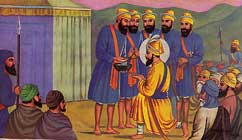
Guru Gobind had earlier written in the Zafarnama
چه ها شد که چون بچگان کشته چار
که باقی بماند است پیچیده مار
che ha shod keh chon bachegaan koshteh chaar
keh baaqi bemaand ast peycheedeh maar
“What happened that you have killed four children (my sons, the sahibzadas)? For the coiled snake (in the form of my Khalsa) still remains…”
It is interesting that the Ten Gurus of Sikhism spanned an epoch of India’s recent history that coincided with the Moghal dynasty. Guru Nanak was imprisoned by the invader Babur, the first Moghal. And Guru Gobind Singh faced off with Aurangzeb, who died rather pathetically shortly thereafter. The Last Guru was called Sacha Patshah (The True Emperor) by Indians at that time, while Aurangzeb isn’t.
It is just 24 verses, the Guru boldly declares the facts of time, and is still advising and admonishing Aurangzeb. Its remarkable that, having just escaped against overwhelming odds from a siege and assassination attempt, the Guru was able to write – in verse no less! – to his persecutor and the murderer of his father and sons, with words of wisdom and warning. He was still willing to meet with the old Moghal and accept his apologies. There can be no doubt who is Guru here.
به نام خداوند تیغ و تبر
خداوند تیر و سنان سپر
be naam e khodaavand e tegh o tabar / khodaavand e teer o sanaan o separ!
1. In the Name of the Lord of the sword and shield! Lord of arrow, battleaxe and spear!
خداوند مردان جنگ آزما
خداوند اسپان پا در هوا
khodaavand e mardaan e jang-aazmaa / khodaavand e aspaan paa dar havaa!
2. Lord of those men that try the test of battle! Lord of their horses that fly through the air!
همان کو ترا پادشاهی بداد
بما دولت دین پناهی بداد
hamaan koo toraa paadshaahi bedaad / bemaa dowlat e deen-panaahi bedaad!
3. The same Lord that granted you a material kingdom, To me He entrusted the protection of the Dharma.
ترا ترک تازی با مکر و ریا
مرا چاره سازی با صدق و صفا
toraa Tork-Taazi ba makr o riyaa / maraa chaareh-saazi ba sedq o safaa!
4. Whereas you engaged in plunder by deceit and hypocrisy, To me was left the responsibility of creating the Way of truth and purity!
[Note: The word Tork-Taazi, which literally means “Turk-Arab” in Farsi, but is a term used to mean plunder and vandalism, pillage and rape in that language.]
نه زیبد ترا نام اورنگزیب
ز اورنگزیبان نه یابد فریب
na zeebad toraa naam e Aurangzeb / ze aurangzeebaan na yaabad fareeb!
5. The name “Aurangzeb” does not befit you, Since one doesn’t find fraud in that which is supposed to bring “honor to the throne”!
تسبیحات از شجه و رشته بیش
کزان دانه سازی وزان دام خویش
tasbeehat az shojeh o reshteye beesh / kazaan daaneh saazi vazaan daam e kheesh!
6. Your rosary is nothing more than tangled beads and thread, With every movement of your beads you only expand your snare of entanglements!
[Note: Here the Guru is referring to the test of sanity of will and purpose. It is an inferred fact that Aurangzeb would have not been able to experience any peace and bliss in his tasbeeh (japa), even if he carried one wherever he went. He may have clung to it for a sense of security, but there was no immediate experience of bliss in it, nor any clarity and ability gained from it. For Aurangzeb, the Holy Name was a co-dependency. For the Guru, it was a relationship based on pan-determinism.
A dharmaarthic system should foster pan-determinism between individual contributors, not co-dependency on or between elites and subjects.]
تو خاک پدر را با کردار زشت
با خون برادر بدادی سرشت
to khaak e pedar ra ba kerdaar e zesht / ba khoon e baraadar bedaadi seresht!
7. Your nature and disposition is from your grisly deeds, Moulded by the dust of your father and the blood of your brothers.
وزان خانه خام کردی بنا
برای در دولت خویش را
vazaan khaaneye khaam kardi banaa / baraaye dar e dowlat e kheesh ra!
8. And from that (by imprisoning your father and murdering your brothers) you have laid a weak foundation for your kingdom.
من اکنون با افضال پرش اکال
کنم ز آب آهن چنان برشگال
man aknoon ba afzaal e Purush e Akaal / konam ze aab e aahan chonaan barshgaal
9. “Now by the grace of the Eternal Oversoul (Akaal Purush), I have made the water of steel (Amrit for my warriors) which will fall upon you like a torrent.”
که هرگز از آن چاردیوار شوم
نشانی نماند بر این پاک بوم
ke hargiz az aan chaardeevaar e shoom / neshaani namaanad bar een paak boom!
10. And with this torrent your sinister castle will vanish from this holy land without a trace!
ز کوه دکن تشنه کام آمدی
ز میوار هم تلخ جام آمدی
ze kooh e dakkan teshneh-kaam aamadi / ze mewaar ham talkh e jaam aamadi
11. You came thirsty (defeated) from the mountains of Deccan; the Rajputs of Mewar have also made you drink the bitter cup (of defeat).
[Note: Throughout the ten-generation span of the Gurus, they took a pan-Indic view in terms of political and social mobilization, and even the panj-piare came from all parts and strata of society. In ideological and spiritual terms, they took a global view, as Guru Nanak did.]
بر این سو چون اکنون نگاهت رود
که آن تلخی و تشنگی ات رود
bar een soo chon aknoon negaahat ravad / ke aan talkhi o teshnegee at ravad
12. Now you are casting your sight towards this side (the Punjab). Here also your thirst will remain unquenched.
چنان آتش زیر نعلت نهم
ز پنجاب آبت نه خوردن دهم
chonaan aatash e zeer n’al at naham / ze panjaab aabat na khordan daham
13. I will put fire under your feet when you come to the Punjab and I will not let you even drink water here.
چه شد گر شغال با مکر و ریا
همین کشت دو بچه شیر را ؟
che shod gar shaghaal ba makr o riyaa / hameen kosht do bacheye sher ra?
14. What is so great if a jackal kills two cubs of a tiger by deceit and cunning?
چون شیر ژیان زنده ماند همی
ز تو انتقام ستاند همی
chon sher e zhiyaan zendeh maanad hamee / ze to enteqaam setaanad hamee!
15. Since that formidable tiger is still alive, he will definitely extract revenge on you!
نه دیگر گرایم با نام خدا ات
که دیدم خدا و کلام خدا ات
na deegar garaayam ba naam e khodaat / ke deedam khodaa va kalaam e khodaat!
16. I no longer trust you or your ‘God’ since I have now seen your ‘God’ as well as his Word.
با سوگند تو اعتبار نه ماند
مرا جز با شمشیر کار نه ماند
ba saugand e to e’tebaar na maanad / maraa joz ba shamsheer kaar na maanad
17. I do not trust your oaths any more and now there is no other way for me except to take up the sword.
توی گرگ باران کشیده اگر
نهم نیز شیر ظ دام بدر
tuye gorg e baaraan kesheedeh agar / naham neez sher ze daam bedar
18. If you are an old fox, I, too, will keep my tigers out of your snare.
اگر باز گفت و شنیدت با ماست
نمایم ترا جاده پاک و راست
agar baaz goft o shoneedat ba maast / namaayam toraa jaadeye paak o raast
19. If you come to me for detailed and frank talks, I shall show you the path of purity and truthfulness.
به میدان دو لشکر صف آرایی شوند
ز دوری به هم آشکارا شوند
be maidaan do lashkar saf-araee shavand / ze doori be ham aashkaaraa shavand
20. Let the forces from both sides array in the battlefield at such a distance that they are visible to each other.
میان هر دو ماند دو فرسنگ راه
جون آراسته گردد این رزمگاه
miyaan e har do maanad do farsang e raah / chon aaraasteh gardad een razm-gaah
21. The battle field should be arranged decoratively in such a manner that both the forces should be separated by a reasonable distance (of two furlongs).
از آن پس در آن ارصه کارزار
من آیم به نزد تو با دو سوار
az aan pas dar aan arseye kaarzaar / man aayam be nazd e to ba do savaar
22. Then I will advance in the battle field for combat with your forces along with two of my riders.
تو از ناز و نعمت ثمر خورده
ز جنگی جوانان نه بر خورده
to az naaz o ne’mat samar khordeh / ze jangi javaanaan na bar khordeh
23. So far you have been enjoying the fruits of a cosy and comfortable life but haven’t yet collided with fierce warriors (in the battle field).
به میدان بیا خود با تیغ و تبر
مکن خلق خلاق زیر و زبر
be maidaan biyaa khod ba tegh o tabar / makon khalq e khalaaq zir o zebar
24. Now come into the battle field with your weapons and stop tormenting the people who are the creation of the Lord.
According to internal Moghal reports, Aurangzeb was old and senile by this time. He had been a fratricidal bigot who acted on the encouragement of a jealous priesthood hardened by ethnic and theological differences. Apparently, he could not tell the difference between Dharma and Adharma, and so his sense of duty was imbued with this lack of ethical discrimination. He dies in the hope of redemption, and had even apologized and invited the Guru to come see him on his deathbed. Here is his last will and testament (link):
“Praise to be God and blessing on those servants [of Him] who have become sanctified and have given satisfaction [to Him]. I have some [instructions to leave as my] last will and testament:
FIRST – on behalf of this sinner sunk in iniquity [i.e. myself] cover [with an offering of cloth and capital] the holy tomb of Hasan (on him be peace), because those who are drowned in the ocean of sin have no other protection except seeking refuge with that Portal of Mercy and Forgiveness.
SECOND – Four Rupees and two annas, out of the price of the caps sewn by me, are with Aia Bega, the mahaldar. Take the amount and spend it on the shroud of this helpness creature. Three hundred and five Rupees, from the wages of copying the Quran, are in my purse for personal expense. Distribute them to the faqirs on the day of my death.
THIRD – Take the remaining necessaries [of my funeral] from the agent of Prince Alijah; as he is the nearest heir among my sons, and on him lies the responsibility for the lawful or unlawful [practices at my funeral]; this helpless person (i.e. Aurangzeb) is not answerable for them, because the dead are in the hands of the survivors.
FOURTH – Bury this wanderer in the Valley of Deviation from the Right Path with his head bare, because every ruined sinner who is conducted bare-headed before the Grand Emperor (i.e. God), is sure to be an object of mercy.
FIFTH – Cover the top of the coffin on my bier with the coarse white cloth gazi. Avoid the spreading of a canopy and uncanonical innovations like [processions of] musicians and the celebration of the Prophet’s Nativity (maulud)
SIXTH – It is proper for the ruler of the kingdom (i.e. my heir) to treat kindly the helpless servants who in the train of this shameless creature [Aurangzeb] have been roving in the deserts and wilderness [of the Deccan]. Even if any manifest fault is committed by them, give them in return for it gracious forgiveness and benign overlooking [of the fault].
[SEVENTH, EIGHT, NINTH – His assessment of the Irani, Turani, and the Saiyid nobles and his advice how to treat them keeping in mind their qualities and weaknesses.]
TENTH – As far as possible the ruler of a kingdom should not spare himself from moving about; he should avoid staying in one place, which outwardly gives him repose but in effect brings on a thousand calamities and troubles.
ELEVENTH – Never trust your sons, nor treat them during your lifetime in an intimate manner, because, if the Emperor Shah Jahan had not treated Dara Shukoh in this manner, his affairs would not have come to such a sorry pass. Ever keep in view the saying, ‘The words of a king are barren’.
TWELFTH – The main pillar of government is to be well informed in the news of the kingdom. Negligence for a single moment becomes the cause of disgrace for long years. The escape of the wretch Shiva took place through [my] carelessness, and I have to labour hard [against the Marathas] to the end of my life, [as the result of it].
Twelve is blessed [among numbers]. I have concluded with twelve directions. (Verse).
“If you learn [the lesson], a kiss on your wisdom.
If you neglect it, then alas! alas!”
Ahkam-i-Alamgir, (Eng. Tr. J.N. Sarkar, Text in Ir. Ms. 8b-10a).
There is another will of Aurangzeb in India Office Library MS.1344 p.49b (Sarkar, Aurangzeb, Vol.V, 201). Its chief interest lies in the suggested method of partitioning the empire among his three surviving sons.