
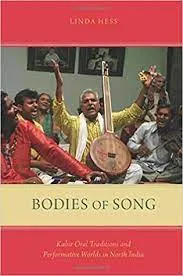
Kabir Oral Traditions in the Indian Subcontinent

In the context of recent discussions on Indian and Pakistani music, I am cross posting this essay on Kabir Oral Traditions.  It is important to remember that–despite the political tensions between India and Pakistan– there is a common culture that unites people.  After all, culture does not end at the borders of nation-states.   This essay was originally submitted as part of the coursework for my M.Mus degree in Ethnomusicology from SOAS University of London. 

Bhagat Kabir (c. 1440-c. 1518) is considered one of the major poet-saints of the Bhakti movement—a social reform movement arising in North India around the fifteenth century. Characterized by an emphasis on the individual believer and a disregard for caste and gender taboos, the movement often rejected Vedic rituals and focused on the individual’s loving relationship with a personally defined god. This emphasis on love has clear parallels with Sufism, often seen as the mystical branch of Islam. It also later influenced Sikhism.

In contrast to other Bhakti poets such as Surdas and Meerabai—whose works can be placed squarely within the Hindu fold, often addressed to particular gods such as Krishna—Kabir’s poetry cannot be so neatly demarcated. He questioned the rituals of both Islam and Hinduism and was devoted to a nirgun (formless) deity, often addressed as “Ram”. According to Professor Harbans Mukhia: “In place of Allah and Ishwar he conceptualized a single universal God; in place of denominational religions he conceptualized a universal religiosity” (Mukhia 2018). This distance from the orthodoxy of both traditions perhaps explains why Kabir is revered by Hindus and Muslims across the Indian subcontinent. Some of his poetry is even included in the Guru Granth Sahib, Sikhism’s holiest scripture. In an era in which South Asia has experienced increasing polarization along sectarian lines, it is instructive to more closely examine this unique figure who served as a bridge between communities. Continue reading Kabir Oral Traditions in the Indian Subcontinent
Thumri and Social Change

Since there has been some discussion about “Indian” and “Pakistani” music recently– and in the spirit of being “high signal”– I am cross posting this essay I wrote about thumri and social change. The essay was originally submitted as part of my M.Mus coursework at SOAS, University of London. 

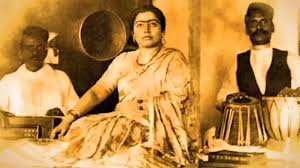
Thumri is a semi-classical genre of Hindustani vocal music, associated primarily with the emotional expression of romantic longing. It is said to have originated in the 18th century from a mixture of folk and art music. The genre reached its height in the 19th century at the court of Wajid Ali Shah, the last nawab of Avadh, who was an enthusiastic patron and even composed several thumris.

Since the 19th century, thumri repertoire and performance style have undergone several changes. These include the de-linking of the genre from the courtesan tradition, the separation of music and dance, and a re-interpretation of lyrics in a devotional, rather than erotic, framework. These changes were linked to the impact of British colonialism, particularly social reform movements such as the Anti-Nautch Campaign. In addition, the shift in patronage from royal courts to concert halls led to the emergence of non-hereditary female performers. In order for performing thumri to be considered acceptable for “respectable” women and to avoid offending the new middle-class audience, the genre was de-eroticized and reinterpreted in a spiritual fashion. This often entailed the sanitization of lyrics. Continue reading Thumri and Social Change

Some Thoughts on Pakistani Culture

Last week, there was a lot of discussion about Basant and its place in Pakistani culture.  In that context, I’m sharing this essay I wrote while I was preparing for my panel at the Faiz festival last weekend.  The panel was entitled “Faiz and the Cultural Policy of Pakistan”.  My co-panelists were Asad Gilani— presently serving as Secretary National Heritage and Culture Division– and Mahtab Akbar Rashdi-– a former actress, bureaucrat, and parliamentarian. 

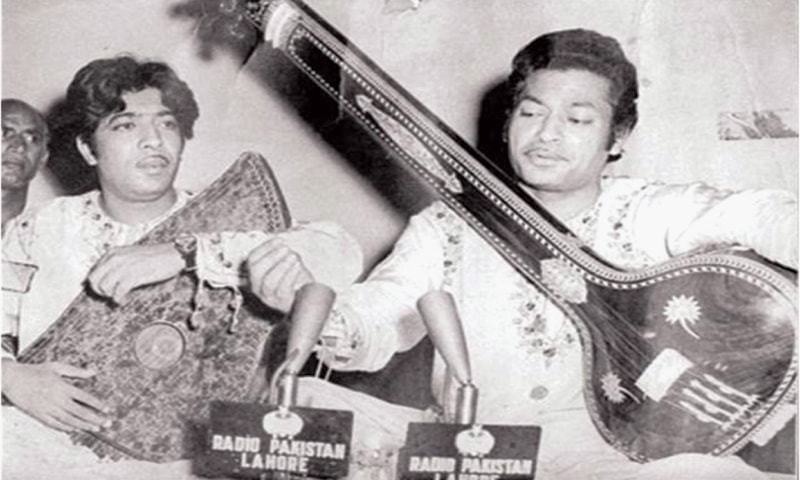
I spoke  at the 10th Faiz Festival held in Lahore last weekend (February 14-15)  as part of a panel titled “Faiz and the Cultural Policy of Pakistan”. I was invited to be a part of this panel primarily because of my book A New Explanation for the Decline of Hindustani Music in Pakistan (Aks Publications 2024).1 Though my book–a republication of my M.Mus thesis in Ethnomusicology– focuses narrowly on Hindustani music, I did discuss the Faiz Cultural Report of 1968, particularly in the context of arguments that Hindustani music declined in Pakistan because it did not accord with the national identity of the newly formed Pakistani state.

I thought I’d briefly share some of my thoughts here since others might find them interesting.

What is the Faiz Report? Continue reading Some Thoughts on Pakistani Culture

Brown Pundits