The West’s War of Decline

Dear friends,

I just wanted to share a thought that’s been on my mind lately. Yes, Trump has attacked Iran — but Iran hasn’t responded in any major way. That in itself is telling. It seems less a climax than a provocation, more bait than strategy. In truth, this might be part of a larger Western pattern: in its long twilight, the West no longer seeks peace but relevance — and sometimes, relevance requires war.

I recently heard a wild claim: that Norway was positioning a remote island of 150 people to tempt a Russian invasion, hoping to activate NATO’s mutual defence clause. Whether true or not, it captures something of the moment — the performative anxiety of a declining order, looking for conflict to reaffirm its own centrality.

As Amar writes, “It is heart-wrenching to see Iran being bombed by two nuclear states, while it remains a signatory to the NPT and compliant with IAEA inspections.” He recalls living in Tehran in 1980, a schoolboy witnessing warplanes above Mehrabad and the skies of Tehran blazing with anti-aircraft fire. That memory isn’t abstract — it’s personal, etched in smoke. His excellent comment is after the jump: Continue reading The West’s War of Decline

🧠 Inside the Mind of Trump: Empire, Restraint, and the Hemispheric Gamble

As an aside the latest FP’s post “India’s Great-Power Delusions” will make an interesting future post

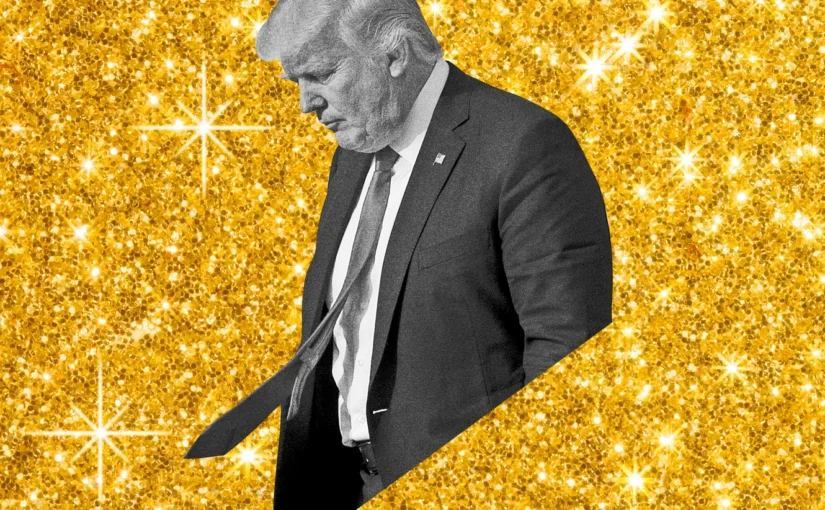
Ten years ago, Donald Trump descended a golden escalator and upended American politics. He entered the White House not as a politician, but as a brand. Today, as the world stands at multiple geopolitical flashpoints—Israel–Iran, India–Pakistan, China–Taiwan—the question is not just what will Trump do, but what kind of world does Trump want to preside over?

Comeback King or New Emperor?

The interlude of Biden’s presidency—whether viewed as rightful or rigged—has only intensified Trump’s mythos. He is no longer just the comeback kid; he is the comeback king in a time when cries of “no king” echo through a fractured republic. A decade on from his initial successful run, he should be an elder statesman but in fact he’s just getting started with another 3 years to go. It’s unparalleled influence in the American Republic since FDR who managed to dominate the 30’s through to the mid 40’s; Trump will be the dominant force in US politics from mid teens through to at least 2029. Continue reading 🧠 Inside the Mind of Trump: Empire, Restraint, and the Hemispheric Gamble

Trump Goes Big in the Middle East

Preface: I am not wading into the most important dispute in the galaxy. These are not recommendations or desires, just an attempt to see what the possibilities are.

So as everyone knows by now, Trump and Bibi had a press conference. Here it is.

Trump announced that the US now intends to take over Gaza, clean it out and rebuild it “nice”. And while this happens, some or all Palestinians will move to other Arab countries, where Trump will make sure they get a chance at a good life “not the hellhole that was Gaza”. Whatever you may think of the proposal, there is no doubt that this is “thinking outside the box”. 75 years of policy tangles and arguments have been swept aside and a bold plan has been offered as if it is actually going to happen. So lets steel man it.

We obviously do not know what their detailed plan is (if anyone has any ideas, do share), but it does seem that the thinking from Trump-Bibi is that the Palestinians have been defeated (not the first time) in battle and should finally see that 75 years of trying to cancel the Zionist project has failed; So (bitterly, reluctantly) they will now accept a deal they hate. And secondary claim: they will find out it’s not that bad, losing to America and allies. They could be the middle eastern Japan if they give up their war. This at least is the public claim.

So what could go wrong. 

1. Most Palestinians have not accepted defeat (or at least, if they have they keep it to themselves, the public posture is defiant) and enough fully intend to fight on to make removal a brutal nightmare.

2. Some Arab regimes will not be able to hold it together once their opponents come after them with “these guys sold Palestine” AND we see above brutal nightmare unfold on live TV

3. Russia is weaker, but unlike China, has skills galore. Unless there is a simultaneous deal with Putin, he could throw a spanner. Maybe the Chinese are not that passive either. The “axis” may push back.

4. What else? (keyboard warriors and western leftists are not on the list of possible spoilers as far as I am concerned, though they will hog attention)


US Elections 2024

The US national election is a week away. It is likely that there are near-zero undecided folks left now, but the race is close, so no one will know for sure until the (inefficient) American electoral system counts the votes. And of course, given his past shenanigans, it is very likely that Trump at least will not easily accept a defeat and this time, the establishment may resist as well. But hopefully there is enough juice left in the system to eventually decide a winner and for that winner to eventually take power on January 20th.

So who should one vote for? and who is likely to win? 

Both questions seem to be hard to answer right now. Kamala is clearly the establishment candidate and the deep state is pulling out all the stops to get her elected. But it is still a democracy, so votes do get cast and do get counted, so it is not just up to them. Still, if you approve of how the USA establishment is doing, then you have to vote for Kamala. But what if you have been blackpilled by one of several potential blackpill possibilities in the current environment? for example, my personal pros and cons list would look like this:

Pro-establishment:

  1. This is the system that has delivered economic abundance,  functional democracy and freedom of speech and association to its people. That the elites game the system and get away with tax fraud, Epsteinism and other corruptions is a given, but compared to peer competitors, this remains a rich country and a democracy; and the competitors are neither.
  2. Even where they are total and utter failures (eg in fighting corrupt wars in the “Muslim world”), the establishment is the system. If you throw the baby out with the bathwater you will not have a more competent establishment, you may have chaos.
  3. The Gender nonsense and the elite’s relentless promotion of racism (presented as “anti-racism”) as a tool of politics is a long term danger to the health of society, but some of these things are niche concerns and some can be countered with “but the other side is even worse”.  Or it can be argued that these are some side effects of increasing freedom from past cultural rules (that felt oppressive to a lot of people too) and are not some sort of plan to destroy society; their overuse was something the elite tried but is now backing away from. Shit happens, but self-correction also happens.

Anti-establishment:

  1. These SOBs stole a couple of trillion dollars and killed tens of thousands of people and STILL lost 2 wars and have not solved a single problem since then either. Their specialty is kicking the can down the road. People like General Milley are not dumb in some IQ sense, but clearly they operate in a system that rewards bullshit and suppresses common sense. An outsider like Trump is needed to shit on these people and flush them out with his giant turds.
  2. The foreign policy area that most interests me (India, Pakistan etc) will almost certainly do better under Trump (mostly because he is not wedded to the Indian regime change hopes of left-liberal westerners). Even the middle-east may be better off under him because he asks common sense questions and is so full of himself that he can easily tell these elite bullshitters to go take a hike. That may work better than whatever Blinken  and company are up to.

But its Trump. And he is frequently an undisciplined clown who either has no idea what it is good to say in a functional democracy and what is beyond the pale, or just does not care. Either way, not a good thing. The system will likely survive him, but it will be endless drama and blatant attempts to use the power of the state against his opponents in ways that would never be admitted by a more disciplined candidate.

Pick your poison. 

Browncast: Major Amin on Current Events

Major Amin – Brown Pundits

Another Browncast is up. You can listen on Libsyn, Apple, Spotify (and a variety of other platforms). Probably the easiest way to keep up the podcast since we don’t have a regular schedule is to subscribe to one of the links above!

In this episode I chat with our regular guest, Military Historian Major Agha Humayun  Amin, but we dont touch on military history in this episode. Instead I asked his opinion on the Trump assassination attempt (he admires Trump), the war in Ukraine, Gaza, Pakistan, India, etc. Enjoy. Comments welcome.

Afghanistan; Graveyard of Western Policy Wonks (but certainly NOT the graveyard of empires)

I had posted an earlier blog post with the somewhat tongue in cheek title “America’s brilliant strategy in Afghanistan”. This was basically a note (and an audio version of the same) from Major Amin, arguing that strategically a US exit was a brilliant move as it ensured that this tar baby is now the problem of Pakistan, China, Russia and Iran (and to some extent, India), and not an expensive American headache. The thought is strategically sound (if very cynical and cold blooded), but I have some doubts about whether the US is consciously trying to do this (they may indeed end up doing this, and could even emerge stronger, with their rivals weaker, as a result, but that may not have been the conscious intention).  Anyway, here, in no particular order, are my random thoughts on this topic:

  1. There are no grounds for thinking that the same damn  people who created the disaster and were wrong about it at every step for 20 years are now suddenly these Machiavellian geniuses who will trap Pakistan and its patron China (not to mention Russia and Iran) in Afghanistan. It is far more likely that the geniuses are still dreaming of “engagement”, only now instead of engaging with Musharraf and the anti-Taliban Afghans, they will engage with General Bajwa and the Taliban. These geniuses will now sell new kool aid about how the new government they have helped to install will ensure security and crackdown on alqaeda and whatever bogeyman the Americans are now supposed to be scared of. And of course, to do this the new “anti-terror allies” will need aid (part of which will be stolen by corrupt Americans at step one, the rest to be stolen locally by these new allies, with a small trickle making it to starving afghans). Meanwhile, these new allies, not new to the game themselves, will make sure a steady supply of “alqaeda number threes” are handed over to be housed in Guantanomo or wherever. They will also make sure there are enough terror incidents and threats to keep the show going forever. We will of course get mucho dinero from the EU as well, since that is the only way refugees can be kept out of fortress Europe (or at least, this is the line that will be sold on TV). Now, this may NOT come to pass fully like this because Western powers are still democracies, there will be debate and the best laid plans of mice and thinktankers may be thwarted by bad publicity and “aid fatigue”, but NOT by their own planning. In short, the US and the West may indeed end up leaving the tar baby to less gentle caretakers, but they will do so unwillingly and in spite of themselves, NOT because this (sensible) plan is what they have opted for now that the first (nonsensical) grand strategic plan has failed and they have well and truly lost the war.
  2. The failure in any case is not a failure of Democrats or Republicans, it is a systemic failure of the entire postmodern Western establishment. And the systemic failure starts from the vast gap that exists between Western civ and the rest of the world. For better AND for worse, the West has moved very far from where most humans were a century ago. Leaving aside all questions of whether this is good, bad or ugly, or whether this is sustainable or not, the fact remains that at this point in time the average ivy league educated “analyst” is bound within so many layers of WEIRD assumptions and habits that he or she (maybe especially she, since she will not have hormonal access to the patriarchal and macho world of men outside the West; though this is by no means a general rule; some Western women can also know men AND women and their quirks very well) has no framework for even beginning to see what is going on. Garbage in, garbage out is always true, but it is also worth remembering that there CAN be a machine that converts good information into garbage. If the software is faulty, then non-garbage going in will also become garbage on the way out. This should not be forgotten. 
  3. Some people say that Western corporate capitalism has become so powerful that it has now eaten through whatever older human paradigms were operating (and are still operating at some level) in Western societies. If this is indeed the case then the questions become all about who profits and who loses? but the twist here is that the usual Lefty answers are also mostly propaganda. War is profitable, but so is peace. Peace is actually MORE profitable for more corporations than war is. But if war profits alone were (and are) driving policy choices, then the issue becomes one of how SOME corporations and individuals (who DO profit from war) have managed to capture institutions to such an extent that their profits drove policy to invade Afghanistan? and their profits will determine what comes next? People have strong opinions on this, but I find that most of the opinions turn out to be emotional outbursts or propaganda on close examination. There is almost certainly SOMETHING to this angle of attack, but I still think, not as much as advertised; because I think they make money when they get the chance, but getting the chance was not something they planned in detail.. eg, “corporations” (who would that even be?)  did not blow up the towers just so they could go to war. Other human concerns (race, religion, identity, national interest, individual madness, individual desire to do good, plain stupidity, error, chance, etc) are still driving us.
  4. The whole notion of “non-state actors” is a huge red herring. There ARE non-state actors, and states usually defeat them. They are mostly a police issue, not a military issue. A really serious insurgency (Vietcong, Taliban, Kashmir, etc etc) needs overt or covert state support. Conversely, the really cost-effective counter (provided you have the conventional forces to have such an option) is to confront the states supporting them. The notion that the USA is helpless in front of some ragtag gang of Islamist mujahids is just bullshit. At some point, the US could be up against sponsors that the US cannot go to war with (China, Russia) and would then have to settle for other measures, but to fail to get countries such as Afghanistan, Iran or Pakistan to change their behavior (short of being under the a full Chinese or Russian umbrella) is a choice, not a given.
  5. The Taliban are going to rule all of Afghanistan now because the US chose to give them the country (whether as part of some Machiavellian scheme or just because Khalilzad and Trump were idiots), but they will not do so in some mythical “inclusive” or “moderate” fashion. They will not last long if they do anything that stupid, and they are not stupid. Their asabiya comes from Islam and their core supporters are committed to a very jihadist and harsh version of Islam. They can certainly be smart enough to act moderate or to include non-taliban in their govt because of considerations of realpolitik and their fighters have enough discipline and their ISI minders have enough influence that this can be done. But just as the Chinese communists included many non-communists in their national reconciliation councils or whatever, but never lost sight of the need for unity of command and clear authority over all aspects of national life, so will the Taliban. if they dont, they will fall quicker than expected. That said, they will not enjoy a free run. There will be many groups trying to undermine them. There will be criminals There will be smugglers. There will be local warlords. They will have to be harsh, they WILL be harsh, but they still wont enjoy enough tranquility to start giving out mining concessions to Shenyang Mining corporation number five or whatever. The US may eventually get out of the region (with think tankers kicking and screaming about “failure of engagement” all the way) and then will be able to enjoy the show from a safe distance. But with so many intelligence agencies and agents operating at every level, peace is not likely. Neither is it likely that the Taliban regime (even if it stabilizes) will totally eliminate all the various terrorists who are still holed up in Afghanistan. Ideologically, they cannot. Practically they cannot.
  6. There will be massive economic disruption in Afghanistan very very soon. The whole place was running on American taxpayer money (and smaller contributions from the EU and others). Even though the think-tankers will try their level best to keep the manna flowing, it is not likely to reach even a tenth of the levels achieved in the corrupt war years. Neither China nor Russia believe in throwing money into tar pits. So who will pay? The afghan people will pay, by moving abroad (mostly to Pakistan and Iran, luckier ones further West), by living on less, by selling what drugs they can (though most of that profit goes to middlemen and smugglers, not to the growers). Pakistan will pay what it can, which is not a lot. There is no way there can be a sudden turnaround and prosperity and mining contracts raining down on Kabul. None.
  7. But can there be a longer term recovery? Can China do what the USA could not? build a viable Afghan state? I doubt it. I doubt that they will even try. At best, they will give some money to Pakistan to have a go, but it will not be American level cash, it will be strictly “cash on delivery”. Can Pakistan deliver them a functioning Afghanistan? Our entire past record suggests we cannot. For the sake of the Afghan people, I hope I am wrong.
  8. India mostly gets to sit tight and hope that their “balakot deterrence” still holds after Pakistan has so decisively defeated the great Satan. It could. We will see. Mostly, I think India comes out of this relatively OK. Their main issue is whether this will embolden Pakistan to restart the kashmir Jihad. It may. It may not.
  9. Major Amin has also raised another interesting question: this one for Pakistani think tankers who think they have won some grand victory by defeating the USA. His thought is “what if our boys actually succeed”?  ie what if the Taliban.  actually stabilize their government and become a viable state? The think tankers in Pakistan maybe missing the possibility that these “grains of sand” (the Afghans) could come together to form a solid mass at some point. And at that point, they will start thinking about strategic depth in Pakistan. After all, if Islamic zeal is what gave them victory, then why not export that zeal to Pakistan? and who better to do it than Afghans? I believe the crucial point here is that Pakistanis (especially our Punjabi and Mohajir elites) have this misconception that just because they (through no great gifts of their own) are inheritors of the Sikh conquests and the administrative machinery and mercenary army of the Raj, they are somehow eternally meant to lord it over the Afghans. This is NOT how any Afghan (Leftist, Rightist, whatever) sees themselves. They are down and out right now because the Sikhs drove them out of the trans-Indus districts and the British created a modernish state in the region that is much more sophisticated and capable than the Afghan state (which was not very advanced to begin with, and whatever it was, we managed to utterly destroy in the first CIA Jihad in the 1980s). But this is not some sort of eternal historic truth. A truly stable Afghanistan will want those districts back and will export true Islam to Pakistan as the means with which to get their way. The current arrangement, with Pakistani officers issuing (or at least, trying to issue) orders to Afghans is only because the Taliban lack many things that only a modernish state can supply and we are that supplier. Let them get settled in, and they will start to look East. We cannot afford to let them win in the way Sethi sahib thinks we want (and hope to).
  10. From the last post: Some people have asked if this was not inevitable. I think it was not. I think there was a slim chance in 2002 to make it work. But it involved two very difficult (but doable) things; 1. A more competent American occupation and transition. and 2. Pakistan decisively switching sides and abandoning Jihad in Kashmir and Afghanistan (since the one is our justification for the second, both had to go). 1 in retrospect seems near impossible. 2 may have been more doable than 1,  So putting the primary blame on Pakistan may be a bit unfair now. (Until a week ago, I might have blamed Pakistan first; though i saw the American effort as hugely corruption ridden and frequently incompetent, even I had not idea HOW incompetent it was. THAT effort was never going to succeed. Though it did not have to end in giving the country to the Taliban. It could still have ended with the US leaving a pro-US govt behind, who would likely have held on to some areas if given some money and support. Anyway, after what we have seen of american incompetence and cynical abandonment of friends, I think 1 (US incompetence and strategic and tactical blindness) is the more important reason this failed. Without Pakistan the Taliban could not have retaken the country. Without US incompetence, neither could have won their respective victories.

See the older post for more random thoughts and predictions.

Sethi sahib’s optimistic takes are here:

A couple of instances of Christianity in the world around us

I saw Omar Ali yesterday — terrific conversation — and when I asked what topics I should discuss here, he suggested I post whatever interests me — so here’s the anointing of Brazilian strong-man Bolsonaro, and hymn singing in Hong Kong.

Religious behavior in general fascinates me — but when it affects politics, people often don’t realize what powerful motivation it can provide.

**

Religion can be coercive, as in the anointing of Bolsonaro

see video

— Remember the laying on of hands over Donald Trump? The overarching authority of religion has Trump bow his head, but sets Bolsonaro on his knees! —

— and religion can be liberating —

see video

— That’s a crowd of protesters in Hong Kong singing “Sing Hallelujah to the Lord”.

Remarkable.

**

From Reuters in June:

Sing Hallelujah to the Lord’ an unlikely anthem of Hong Kong protests

For the past week, the hymn has been heard almost non-stop at the main protest site, in front of the city’s Legislative Council, and at marches and even at tense stand-offs with the police.

It started with a group of Christian students who sang several religious songs at the main protest site, with “Sing Hallelujah to the Lord” catching on among the crowd, even though only about 10 percent of Hong Kong people are Christian.

“This was the one people picked up, as it is easy for people to follow, with a simple message and easy melody,” said Edwin Chow, 19, acting president of the Hong Kong Federation of Catholic Students.

The hymn is simple, optimistic yet adds a touch of solemnity and calm to the proceedings, and also affords some legal protection to the protesters —

The students sang the songs in the hope of providing a cover of legitimacy for the protest. Religious gatherings can be held without a permit in the financial hub.

“As religious assemblies were exempt, it could protect the protesters. It also shows that it is a peaceful protest,” Chow said.

The hymn was composed in 1974 by Linda Stassen-Benjamin in the United States for Easter. Its five words are repeated over four stanzas in a minor key, which gives it an air of meditative solemnity.

**

Between the anointing of a dictator and the hymn singing of a crowd of protesters demanding democratic freedoms from the Chinese state, we have quite an instructive confluence of ways in which religion can enter the public square.

No doubt there are others. In Nepal, there’s the tantric cultus of the goddess Kubjikaa. What’s religion up to in your neck of the woods?

U.S.-Pakistan Re-Engagement; Hamid Hussain

From Dr Hamid Hussain

U.S.-Pakistan Re-Engagement

Hamid Hussain

 ‘Being a friend of the United States was like living on the banks of a great river.  The soil is wonderfully fertile, but every four or eight years the river changes course, and you may find yourself alone in a desert’.  General Muhammad Zia ul Haq to William Casey 1983 quoted in John E. Persico’s Casey: The Lives and Secrets of William J. Casey: From the OSS to the CIA.

 In July 2019, Prime Minister of Pakistan Imran Khan and President Donald Trump met at White House that generated some headlines and as expected from every Trump encounter some controversy.  As expected, this news lasted less than twelve hours in United States and 4-5 days in Pakistan.  Life has gone back to normal.  Positive signs should be acknowledged but Pakistan should not be carried away by euphoria.  The good part is that civilian and army leadership does not have trust deficit and not undermining each other.  This alone is a breath of fresh air for Pakistan. Continue reading U.S.-Pakistan Re-Engagement; Hamid Hussain

Muslim-American personalities and political polarization – part 1


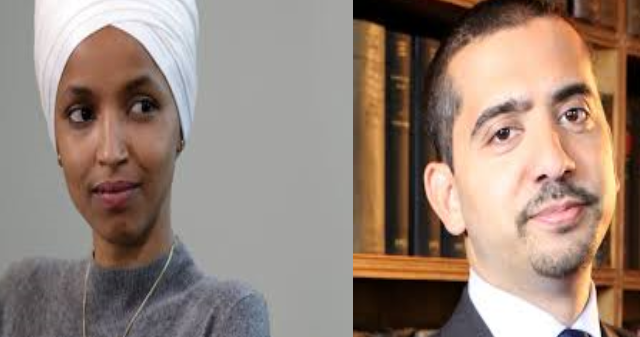
I was meaning to write this for some time now but somehow I kept postponing. Razib’s recent post about Mehdi Hasan inspired me to sit down and finish what I was thinking of writing down (https://www.brownpundits.com/2019/07/31/mehdi-hasans-hypocrisies/). This long post is not about Mehdi Hasan par se, or even Ilhan Omar (sheepishly admitting her clickbait value). This is mainly about prominent Muslims in American public life and public perception of Muslims. In the first part of this post I will discuss direct political aspects of Muslim public representation and in the second I will dive into some of the relevant socio-political and moral issues.

Barack Hossain Obama became the first African-American person to be elected President of United States in 2008. He was reelected in 2012. Now, there are lot of grounds for criticism of Obama’s presidency. His leadership in lot of important matters, particularly in foreign affairs , have come under lot of criticism since the end of his presidency. In domestic matters too, his leadership record has lost lot of luster even among his supporters. However, most Americans agree that Barack and Michelle Obama occupied the White House with exemplary dignity and fulfilled the inspirational role that Americans generally expect the presidential office to provide in this very republican (small R) of countries.

The Obamas were very acutely aware of the huge responsibility they had as the first African-American couple in the White House. They knew personal scandals, failure to control and command, would create huge barriers for the next ethnic minority aspiring to be president. That’s why they were dignified and moderate to a fault in their conduct. In that consideration, the Obama presidency was an unqualified success. Today Barack Obama is the most popular living President to Americans with 60% approval rating (https://today.yougov.com/topics/politics/explore/public_figure/Barack_Obama) and Michelle Obama is frequently polled as the most admired woman in America. The next presidential candidate of African-American descent who will reach the final stages of election, will not face any questions because of his/her ethnic background except from the incorrigible bigots.

John Fitzgerald Kennedy became the first Catholic president in 1960. It’s hard to believe now but prejudice against Catholics was very widespread among mainstream Protestants of America, who were the overwhelming majority, until fifty years ago. When populist nativists of the early 20th century railed against domestic and foreign enemies of the people, ‘Jews, Papists and the N-word’ was the standard phrase used. Kennedy was aware of the great headwind facing him in seeking primary nomination and then eventual victory. He famously said before the election, “I am not the Catholic candidate for president. I am the Democratic party’s candidate for president, who happens also to be a Catholic. I do not speak for my church on public matters, and the church does not speak for me,” (https://www.wbur.org/news/2017/05/25/kennedy-catholicism-presidential-campaign). He kept emphasizing this point before the election and was mindful of his role as the first Catholic president after getting elected. Suffice it to say anti-Catholicism ceased being significant in American political sphere after the Kennedy’s presidency.

Ilhan Omar became the first visibly-Muslim, hijab-clad elected representative at federal level in 2018. Understandably, her ascension to national stage created huge amount of interest, savory and unsavory, in all corners of the politically engaged section of the people. I am not going to mention the long list of accomplishments and  controversies Ilhan Omar has been registering in almost daily basis since her election. It will not be an exaggeration to say that she has become one of the most prominent banner issues that are feeding the frenzy of the two battling political armies in national arena. She is inflaming passion even more than Alexandria Ocasio-Cortez, who may be representing more the economic division than the cultural division represented by Omar.

I personally think that Ilhan Omar is not a very religious Muslim, the identity aspect of the religion is more important to her. Rather than cosmic theology, her religious identity offers her a worldview theology; providing explanation of power relations among communities, groups and institutions of today’s world. Socio-cultural beliefs define the modern political man and Ilhan Omar represents the current cleavages more starkly than almost any other public figures.

However, Ilhan Omar was not lucky enough to get the elite education and varied experience that both Obama and Kennedy had. Experiences greatly influence worldview. A liberal, integrative, long-term worldview that typify Obama, Kennedy, may be too much to ask from her. I personally think she is not very sophisticated but that is not germane to this discussion. However, among her most prominent public defenders there are many who have benefits of background and who are very articulate. That brings me to public personalities like Mehdi Hasan.

In the last couple of years, several Muslim media figures have been regularly invited into mainstream media like CNN, MSNBC, NYTimes, WaPost whenever some events related to Muslims became prominent in the fast churning stream of news and views. Mehdi Hasan, Wajahat Ali probably commanded bulk of those airing of Muslim perspectives. They are among the staunchest defenders of Ilhan Omar (also of other minority social justice public figures) in media. They are also among the most vehement critics and denouncers of Trump, Trump-supporters, the Republican Party and American foreign policy in general. They had been like this since Trump became the Republican nominee. I remember how I first saw Wajahat Ali in CNN before the 2016 election when he repeatedly and day after day described Trump as ‘impotent’. I cringed every time I heard that, but it could have been just me.

Now, people like Ilhan Omar, Mehdi Hasan and Wajahat Ali have lot of justification to go ballistic against Trump and his supporters. I think that Trump is significantly more racist than an average white American septuagenarian, his policies have targeted Muslims discriminatorily, his utterings have stoked outpourings of anti-Muslim hate, Muslims in America may become further victimized if Trump is reelected. However, opportunities of public criticism should not just opportunities for lashing out. We should evaluate effects of these criticisms, whether they are benefitting the country or even Muslims themselves. There is also an ethical aspect of this public criticism, which I will discuss in part II of this blogpost.

Ever since the 9-11 attacks the partisan divide in attitudes towards Muslims and Islam has gradually diverged in America. There are reasons to believe that the divide has become starker in recent years. A recent survey conducted before the 2018 elections show that 71% percent of self-described Republicans agreed they don’t believe Islam is compatible with American values, compared to an overall 42%. 60% of Republicans agreed with the idea that Muslim Americans weren’t as patriotic as non-Muslim Americans, compared to 38% generally (https://www.theguardian.com/world/2018/nov/01/new-america-study-report-republicans-muslims-trump-midterms). The wide difference between the Republican numbers and the average for the population means the difference in attitude between the two parties is very wide. Few wedge issues signal the difference between the two parties more clearly now than their respective attitude towards Muslims in America.

Shadi Hamid has said that he is comforted that at least one of the two political tribes of America is acting as a shelter for American Muslims in these troubled times (https://gen.medium.com/how-donald-trump-made-me-a-muslim-7f28abcfd33a).  Muslim Americans reciprocate the Democratic support faithfully. It is estimated that about 90% of them vote for the Democratic party in national elections now, before 9-11 the figure was more even. As much as 30-40 Muslims voted Republican in the 1990s. Other analysts OTOH have expressed reservation about the state of Muslims in the political polarization. Republican disdain for the Democratic Party and suspicion about Muslims in America may be reinforcing each other, worsening the political divide. Moreover, it’s not that Muslims find a very natural place in Democratic Party that is mainly characterized by secularism and progressivism. Shadi Hamid recounts that a religious Muslim told him, “I can sense the disdain from the Democratic Party towards my faith, even as they don a cape against Islamophobia. The underlying view Democrats have [about] anyone seriously religious is that they’re, at best, silly and gullible, and at worst, dangerous.” (https://www.washingtonpost.com/outlook/for-religious-american-muslims-hostility-from-the-right-and-disdain-from-the-left/2019/07/25/7121e4ce-99e4-11e9-830a-21b9b36b64ad_story.html?utm_term=.f693a53b2fd8 )

For a minority that comprises only 1% of the voters, this kind of polarization should be very alarming. Its true that there are other minorities who also are reliable member of the Democratic clan. Black-Americans generally vote for the Democrats in the 90s while Jewish voters vote in the 70-80% range. However, the socio-political positions of Muslims are not same as Blacks or Jews. Black American voters comprise about 12% of the total voters; they are indispensable core of the Democratic coalition and a un-ignorable part of America for Republics. Moreover, sufficient number of Black Americans take part in Republican politics and intellectual development , making them always cultivable for Republican political leadership.  While Jewish voting population is close to 2% of total, they have very powerful representation within the Republican establishment.

We must consider this context when examining the role of Muslim political and media personalities in the political sphere. It seems to me the most visible Muslim personalities in politics and media, determinedly and gleefully want to exacerbate the partisan divide. Few rational observers would disagree that Donald Trump has been most un-presidential in his public sayings during this political phase of his life. Even labelling those words as juvenile would probably be unjust towards the youth. However, these Muslim public personalities seem to think that going toe to toe and tit for tat with Trump and the Republicans, are the best tactics for Democrats and Muslims. I think, apart for impact on partisanship, there are important ethical aspects in these public exchanges that also have deep and wide consequences, which I intend to discuss in the second part.

These Muslim public personalities want total war against Trump and Republicans where crossing the line or fraternization with the enemy will be unthinkable. A few days ago, a very prominent Muslim religious leader, Hamza Yusuf, got widespread notice among Muslim Americans for joining a multi-religious state department commission on Human Rights (https://www.aljazeera.com/indepth/opinion/time-muslim-americans-condemn-hamza-yusuf-190715130254222.html). Many people would argue this as a very sensible move considering the plight of Muslims in many countries of the world and the very important role that America has in global concerns about those hapless Muslims. However, for political activist Muslim-Americans, Hamza Yusuf joining a Trump presidency commission was an ultimate betrayal, an act of Vichy French ignobility.

A Blitzkrieg style total war wouldn’t be so reckless if the chances of victory were good. However, chances don’t look good at least in the short term. When Trump became presidents, Democrats and liberals were openly speculating how he would be removed from power within one or two years because of all the scandals and malfeasance in the past and before the election. With low presidential approval ratings acting as comfort blanket, few Democrats were thinking Trump would last the full first-term, let alone getting reelected. Now desperation is in the air. Democrats openly speculate that Trump is heading for a second-term and Democrat’s chances are not so good. Betting markets reflect that increasing despair also. This political atmosphere again demand that Muslim Americans take long hard look how their political and media personalities are representing them in the public sphere. I have not read any reports of how Muslim Americans view role of their representatives in the public arena but from my personal interactions I gather that most of them are very uncomfortable being the spearhead of the resistance. Lot of them say that they physically wince whenever Ilhan Omar is in the news and they wish she would be far less prominent.

However, coalition-building, gradual advances may be things of the past and the spirit of the times may demand reckless combativeness. Just as revolutions in military affairs made Blitzkrieg possible, revolutions in socio-political affairs of current era may be favoring bold tactics. After all, Republicans had their May 1940 moment in November, 2016 in a most improbable victory with a most improbable candidate who refused to occupy the center ground. In these kind of historical victories, being the armored spearhead of deep battles brings everlasting glory. Nevertheless, people should also remember that Blitzkrieg grinded to a halt in 1941 in face of obdurate structural conditions and determined resistance. The spearheads were obliterated.

 

Brown Pundits