Energy Vampire or Street Fighter

https://www.facebook.com/dailygoalcast/videos/469060460269933/

I came across the above video on facebook and I couldn’t stop listening to it. While what Guru Dandapani was saying made eminent sense I just had this tingling feeling that he resembled someone from my childhood. I finally clocked who it was, Dhalsim from Street Fighter 2 Nintendo. I remember we used to call him Dharasalama or something like that.

Apparently Dhalsim is one of the most stereotyped character in video gaming history (he had muscular build with an emaciated bodyšŸ™‚ but it’s interest how art & life begin to mirror one another once again.

In the series, he is a yogi, a husband, a father, and a pacifist who goes against his beliefs by entering the World Warrior tournament to raise money for his village.

Image result for street fighter ii indian Continue reading Energy Vampire or Street Fighter

Ahmedis and Pakistan. Some background..

Atif Mian

Professor Atif Mian is a prominent Pakistani-American economist and a professor of economics at Princeton university. 2 weeks ago he was nominated to be a member of Imran Khan’s “Economic Advisory Council” (a think tank of sorts that is supposed to generate ideas for the new PTI government; it is not at all clear what influence, if any, this group will have in real life). This set off a controversy in Pakistan because Atif Mian is an Ahmedi and Ahmedis are widely reviled as heretics, apostates and traitors in Pakistan. After an initial attempt to defend his appointment (including the obligatory Jinnah quote and reference to the fact that an Ahmedi, Sir Zafrullah, was one of Jinnah’s closest advisers and Pakistan’s first foreign minister) the Imran Khan government backed down and asked him to leave the council.

Since then his defenders (mostly liberals who believe religion should play no role in such appointments and experts should be judged on their professional skills and not their religion) and opponents (Islamists, PTI-type Islamist-lite folks who believe Ahmedis in particular should not be appointed to any important position because they are fake Muslims and potential traitors, etc etc) have been arguing about this case on social media. This post is an attempt to provide background and clarify some of the issues raised by both sides.. (some of the background material was published earlier in a post I wrote in 2012 for 3quarksdaily.com)

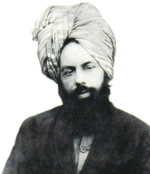
Mirza_ghulam_ahmad
Mirza Ghulam Ahmed

The Ahmediya movement was started in Punjab in 19th century British India, by Mirza Ghulam Ahmed of Qadiyan. He seems to have been a quiet, religious loner who brooded about the challenges faced by his faith and his people. The decisive military and economic superiority of Western civilization over the Islamicate world had produced a variety of efforts at reform and revitalization. They ranged from the Wahabi-influenced puritanical Jihadism of Syed Ahmed Barelvi (who led an extremely fanatical jihadist movement in what is now Khyber Pakhtunkhwah, until he was defeated by superior Sikh firepower and a reaction to his extreme views among the local Muslims) to the anglophile reformism of Sir Syed Ahmed Khan (founder of Aligarh Muslim University). Mirza Ghulam Ahmed’s response was to start a movement of religious revival that was built around his own charismatic claims. Though he contradicted some mainstream Islamist claims about the finality of prophet-hood and the absolute necessity of military Jihad (military jihad as a Muslim duty is now so widely downplayed that it is hard for Westerners and even Westernized Muslims to figure out why his claim was considered so controversial).Ā His movement was socially conservative and even puritanical and he vigorously defended Islam, especially against Christian missionaries and Hindu critics. He found some support among modestly educated middle class Punjabi Muslims (including Islamist icon Allama Mohammed Iqbal, who either flirted with joining the movement or actually joined for a few years, depending on what version you believe). As his movement (and his claims regarding his own status as prophet or messiah) grew, it also drew orthodox opposition, especially from the dominant Sufi-oriented Barelvi Sunni sect.Ā Ironically this branch of local Islam enjoyed some American (and world media) attention as ā€œmoderate and tolerant Muslimsā€ in contrast to their Deobandi/Wahhabi brethren in the aftermath of 9-11 (though this attempt to fight Wahabi/Deobandi fire with Sufi-Barelvi water seems to have run into some trouble recently).

This increasingly vocal opposition (complete with fatwas from Mecca declaring the Ahmedis as apostates liable to the death penalty if they did not repent) led to a sharper separation between Ahmedis and other Muslim sects, but the Ahmedis themselves always claimed to be Muslims and made efforts to remain fully engaged in ā€œMuslim causesā€. In their own view they were reforming and purifying Islam, not opposing it, so they had a legitimate interest in the cause of oppressed Muslims everywhere (e.g. they took a leading role in supporting Kashmiri Muslims against their Dogra-Hindu ruler). Some Ahmedis played a very prominent role in the Pakistan movement, including Sir Zafrullah Khan, who wrote a Pakistan proposal for the viceroy in Feb 1940 and shared it with Jinnah before the Muslim League passed its Lahore resolution in March 1940. He remained one of Jinnah’s closest associates and was the first foreign minister of Pakistan and Jinnah’s representative on the boundary commission that divided India) and others held prominent positions in the new state and fought for it with distinction (most famously, General Akhtar Malik in the 1965 war with India). It is likely that neither they, nor the relatively Westernized leadership of the Muslim league had a clear idea of what lay in store for them in Pakistan.Ā Even more ironically, the Ahmedis themselves aggressively pursued ā€œblasphemersā€ (e.g. Pandit Lekh Ram in Punjab in 1897). It is hard to read this Ahmedi polemic against Lekh Ram without thinking about where the Ahmedis themselves now lie in relation to the blasphemy meme. Continue reading Ahmedis and Pakistan. Some background..

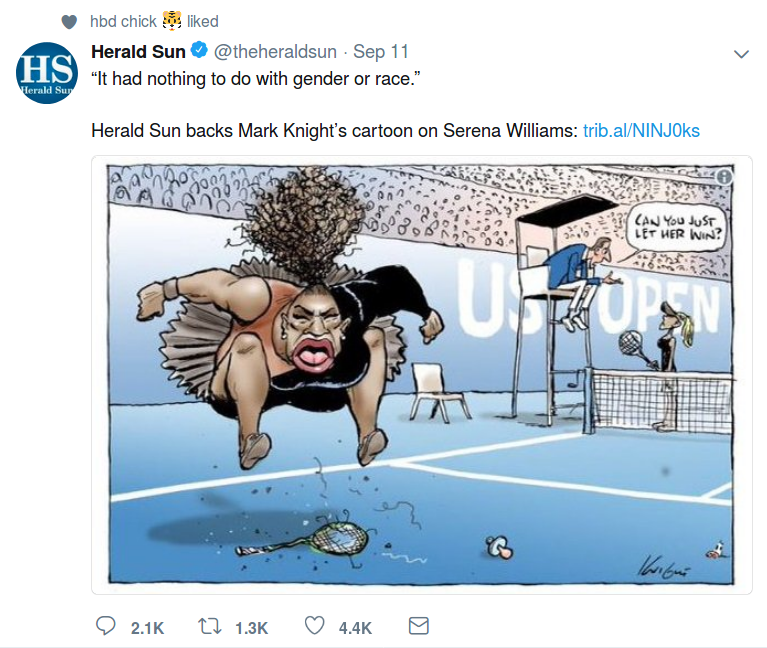
Seems pretty f*cking racist to me

I’m disgusted with this; it’s classic Coloniser to undermine coloured Champions like Serena.

It shows what the cartoonist George Knight really thinks of Serena. The racist & sexist muppet also drew Naomi Osaka as a blonde when she’s anything but!

Having a stale, pale male cartoonist defend a stale, pale male umpire is probably “peak privilege.”

The Munda as upland rice cultivators


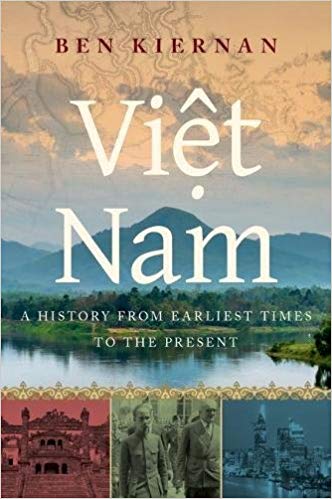
I’m reading Ben Keirnan’s Viet Nam: A History from Earliest Times to the Present. I picked it up mostly because over half the book does not consist of the history of the Vietnam War (a major failing I’ve noticed with books which are histories of Vietnam, as opposed to histories of Vietnamese-American relations).

The section on Austro-Asiatic languages (Vietnamese is one) has something of relevance to the “Munda question”. But before that, let me review a few things.

Until very recently many historians and prehistorians of India have suggested that the Munda people, who speak very distinctive dialects related to the Austro-Asiatic languages of Southeast Asia, are the primal people. That is, they are the aboriginals. The original adivasis.

I do not believe that this case is tenable. Because I am a geneticist, I make this judgment on geneticĀ grounds. Chaubey et al., Population Genetic Structure in Indian Austroasiatic Speakers: The Role of Landscape Barriers and Sex-Specific Admixture, reveals what we know about the genome-wide patterns in the Munda.

1) They are highly enriched for East Asian ancestry compared to other South Asians.

2) Many Munda males carry a haplogroup, O-K18 (once O2a), that is very common in Southeast Asia, especially Austro-Asiatic groups. Additionally, it is more diverse in Southeast Asia. The Munda O-K18 branch seems to be a side shoot from the broader Southeast Asian tree.

3) The Munda mtDNA, defining the maternal line, is uniformly South Asian. This is in contrast to the situation with Bengalis, who have East Asia Y and mtDNA. This indicates that the Munda migration was heavily male-mediated.

4) The Munda carry mutations in genes that are associated with recent selective sweeps in East Asians (e.g., on the EDAR locus). Though this may be a parallelism, it’s unlikely. Rather, it is through shared common descent that this occurs.

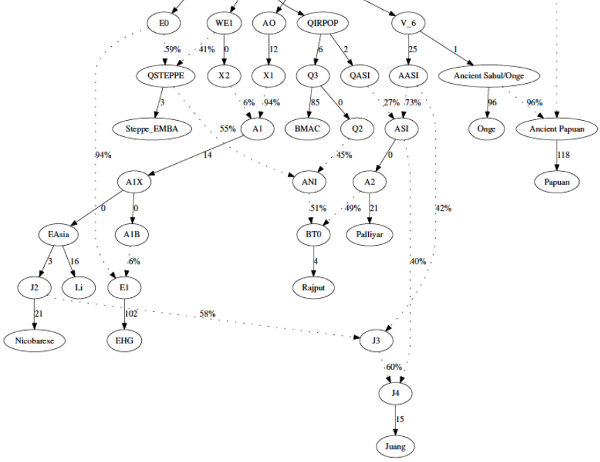
The Genomic Formation of South and Central Asia has a graph which shows population relationships and gene flow that illustrates important aspects of the Munda ethnogenesis (Juang below):

AASI in this model = Ancient Ancestral South Indians. These are very distantly related to Andaman Islanders, Australo-Melanesian Southeast Asians, and more distantly to eastern Eurasians generally. They are likely aboriginal people to South Asia, with no West Eurasian ancestry.

The model above indicates that an East Asian (Austro-Asiatic) population encountered an AASI population and produced a daughter population. Then, that daughter population mixed with an ASI population, ASI being an old and stable mix of West Eurasian Iranian farmer (~25%) and AASI (75%).

This means two things for the Munda. First, they are very AASI enriched. This is obvious in any analysis. And, their West Eurasian ancestry is almost all Iranian farmer andĀ notĀ steppe. This is totally not surprising either. Using more naive model-based clustering Munda samples always seem to lack the components which are most easily adduced to be Indo-Aryan. They have very low frequencies of Y haplogroup R1a1a-Z93.

Let’s take a step back now. The fact that the Austro-Asiatic males arrived when there were unmixed AASI indicates that this was somewhat early. There are no unmixed AASI on the Indian subcontinent today. When we reach the Iron Age, by 500 BCE it is clear that Indo-Aryan society had pushed at least to Bihar. This component would bring steppe ancestry, as well as mixing into any remnant AASI.

So when could the Austro-Asiatics haveĀ arrived at the earliest? Two papers with extensive ancient DNA, Ancient genomes document multiple
waves of migratin in Southeast Asian prehistory
and The prehistoric peopling of Southeast Asia give us a good sense. It seems that the expansion of Austro-Asiatic farmers dates to about 4,000 years ago. That is when the transition seems to occur in northern Vietnam.

One thing that is also evident: the East Asian gene flow into the Munda seems to come from northern Austro-Asiatic groups in Thailand, not the southern branch which resulted in the people of the Nicobar Islands and was eventually submerged by Austronesians.Ā On a final note, a site in northern Burma yielded an individual who was clearly Tibeto-Burman, and not Austro-Asiatic, 3,000 years ago. So even at that date mainland Southeast Asia was heterogeneous.

But, considering that there is no evidence of Tibeto-Burman ancestry Munda, whose Austro-Asiatic ancestry seems to have come through Burma through a mainland route (as opposed to up from maritime Southeast Asia), I think one should push the date of their arrival before 1000 BCE. With the expansion of farming in mainland Southeast Asia at around ~4,000 years ago, that puts the arrival of a distinctive Munda culture in South Asia to between 2000BCE and 1000 BCE. It is entirely reasonable that during this period there were unmixed AASI in eastern South Asia, though the admixture graph may also be picking up assimilation Austro-Melanesian ancestry in southern China/Southeast Asia.

This is whereĀ Viet Nam: A History from Earliest Times to the PresentĀ comes in: the author suggests that the early Austro-Asiatic farmers were dry-land rice farmers who occupied uplands. The reason being that reconstructed Austro-Asiatic common words for rice culture is indicative of dry-land practices, with later wet-rice terminology often being borrowings from Tai and Austronesians.

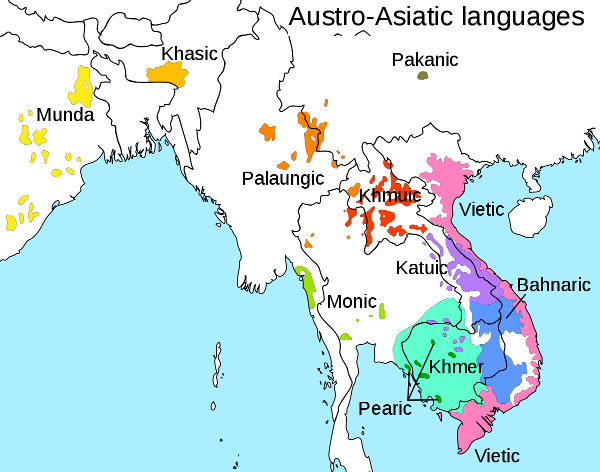
I don’t know enough Indian archaeology and agricultural history to comment further, but, a visual inspection of where Munda are concentrated does suggest upland farming….

The Muslim intrusion into India was probably inevitable

Taking after Edward Gibbon it is often stated in some histories that the Islamicization of Europe was probably prevented by the defeat of the Muslim armies coming up from Spain by Charles Martel at the Battle of Tours.

This is probably wrong for several reasons. First, with hindsight, it seems clear that people like to anchor on salient contingent events which seem plausible bifurcations in our timeline. This is a cognitive bias. The fact is that sally north of the Pyrenees into Francia was probably simply a probing raid, not the precursor to a full-scale invasion. At least that is the impression given by the Muslim textual records, which barely mention this battle (in contrast to the second Siege of Constantinople, which had occurred a few decades earlier). A raid is not a campaign.
Additionally, Muslim armies and corsairsĀ operated north of the Pyrenees and in what became southern France for several centuries after 732. The defeat at the Battle of Tours was simply another battle in the gradual rollback of Islamic depredations in the Western Mediterranean. Perhaps more important was the shift of the world-wide Islamic polity eastward with the emergence of the AbbasidsĀ in 750, and the detachment of western Muslim domains from Abbasid authority (a renegadeĀ Umayyad even reigned in Spain!).

Finally, limits of supply-lines and ecological constraints probably meant that a protracted campaign in Europe would have met difficulties that were less relevant for North Africa and Spain. The conquest of North Africa and Spain occurred in less than a generation (the conquest of the Maghreb was an opportunity opened during a period of tumult in Byzantium in the late 7th century) and were still recent when the Battle of Tours occurred. Additionally, ecologically North Africa and much of Spain were familiar to the Arabs, and in the latter case Berbers. This is not the case with Francia and much of Northern Europe. It is not well known, but Arab armies sallied north of the Caucasus into the territory of the Khazars for several centuries, but ultimately failed in permanent conquests, probably in part due to lack of preparation and experience with harsh cold (the lack of fitness of Arab armies for the harsh winters is noted in the texts).

Remember that the conquest of much of the more frigid regions of peripheral Europe occurred under the Ottoman Turks, who were culturally an Inner Asian people from Siberia.

Which brings us to India and the beginning of widescale Muslim intrusions under Mahmud of Ghazni. I immediately pointed out below that the true conquest, as opposed to raiding, did not occur until the late 12th century. But, to be honest, I think this is a minor detail, and the fact is that Muslim incursions were inevitable, and probably like to succeed to some extent, no matter the outcome of a particular battle.

The key here is less about Islam, and more about the period between 500 AD and 1500 AD, and what you see across Eurasia in terms of the balance of power between mobile people from Inner Asia, and the agricultural civilizations. In books as distinct as War! What Is It Good For?Ā and Strange ParallelsĀ the authors observe that in the period after 500 AD, until the rise of “gunpowder empires”, pastoralists from the Inner Asian steppe were dominant, destructive, and overwhelming military forces (the Mongol conquests were the apotheosis, but not exceptional).

In Strange Parallels,Ā the author reminds us that only a few societies among the EurasianĀ oikoumeneĀ polities avoided major shocks from pastoralists. Mainland Southeast Asia, Japan, and the far west of Europe were insulated from their depredations by and large.* The reason for this was almost certainly geography: Japan was separated by a sea from the mainland, while Southeast Asia and Western Europe were ecologically difficult for pastoralists to penetrate as well as distant. In “mainland Europe” the settlement of the Hungarian basin by repeated groups of steppe pastoralists, beginning with the Scythians and ending with the Magyars, is partly a function of the fact that its broad flat expanses were the westernmost suitable pastorage for large herds of horses typical on the Eurasian steppe.

In the centuries after 500 AD, most of the major civilizations of Eurasia were impacted by migrations of nomads seeking greener pastures. In China, the northern half of the country was occupied by various groups of Turkic origin between the Han and Sui-Tang. The southern half the country maintained local rule, in part because of the difficulty of penetration by pastoralists of the Yangzi basin. In the Near East, Persia was buffeted by both Inner Asians from the north, and Arabs from the southwest. The Arabs conquered Persia and severely diminished Byzantium. Like China, the persistence of part of Byzantium is probably due to geography: Constantinople occupied a strong position on the other side of Bosporus and could be provisioned by sea when encircled. The Persian heartland was much more exposed to the Arab advance (in contrast, the conquest of Turan took many centuries).

Which brings us to India. The pastoralist eruptions that impacted Persia also affected India. But, the initial impacts were of more political than cultural relevance. Groups like the Huna were absorbed into the South Asian cultural matrix.

The arrival of the Turks and Afghans after 1000 AD was different. These people, now Muslims, were not absorbed into the South Asian cultural matrix. The reason is obvious: with Islam, they had their own high culture, one which was assimilative insofar as native converts could be somewhat integrated into the ruling class, and unassimilable from the perspective of native elites due to its ideological and ritual predelictions.

There is here a contrast to the Mongols who conquered China in the 13th century, and the Manchus who conquered it in the 17th century.

First, the raw numbers of Mongols and Manchus in comparison to Chinese was probably far less than the potential mobile Muslim populations which might have settled in India. In fact, Mongols who migrated west were eventually all assimilated into the Turkic or Persian cultural context due to the force of numbers (though they often retained genealogical awareness of part Mongol origins, as the Hazara and Timurids both did despite a Persian and Turkic cultural background).

Second, neither the Mongols or Manchus brought a hegemonic and oppositional high culture. The Mongols were predominantly shamanists, though a minority were Eastern Christians (Kubilai Khan’s mother was a member of the Church of the East, as was the norm among her tribe of Turks), and some were Muslims (the mass conversion of the Mongols to Buddhism occurred in the 16th century, prior to which they dabbled in Islam, Christianity, and Buddhism, as well as their dominant shamanism). The Manchus generally favored shamanism, or, as was the norm among northern border peoples in China, a form of Buddhism. Neither of these prevented assimilation to the Chinese substrate, a major problem for the Manchus over the centuries (like Mongol ancestry, in today’s China “Manchu” national origin is more a matter of genealogy than culture, as the Manchu language is now moribund, only a few thousand out of millions of Manchu speak it).

In regard to India I want to pinpoint a few key issues:

  1. Starting around 1000 AD the whole zone of pastoralist western Inner Asia began to adopt Islam as its standard religious ideology. To a great extent, West Asian Muslim societies were captured by Inner Asians, and they served Inner Asian aims and goals. Societies such as Egypt were ruled for a thousand years by Inner Asians, who created a Mamluk system which depended upon continuous migration and recruitment from Inner Asia.
  2. India was arguably more “exposed” to this culture than China due to geography. While Inner Asians adjacent to Muslim West Asia adopted Islam, those nearest to China tended to be shamanist or Buddhist (Magyars and Bulgars adopted Western and Eastern Christianity respectively).
  3. Mobile Inner Asians, of any religion, were “natural” soldiers (though to be fair, it seems a consistent pattern that Inner Asians, such as Mongols, who were shamanist were less “civilized” and often better soldiers than those who converted to “higher religions”). In the period between 500 AD and 1500 AD mobile mounted warriors had major advantages in continuous warfare against settled peoples. The main way that settled societies held the pastoralists in check was through bribery or co-option, or both. The Byzantines and Chinese deployed both, elevating frontier peoples with mobile fighting skill to their ruling castes, as well as paying nomadic groups tribute. By and large West Asian Muslim societies co-opted and were conquered by Turks (or their Caucasian federates).
  4. India was subject to the same dynamic as West Asian societies: pastoralists from Inner Asia continuously migrated into the subcontinent for opportunities of exploitation and domination down to the early colonial period. Each wave of migrants was more “raw,” and brought alien and alienated sensibilities, to the subcontinent.

In discussions with individuals of South Asian origin, there is some exploration of the possibility that Indians, Hindus, were naturally a less vigorous and martial people than Muslims. That Islam was a muscular and masculine ideology, while Hinduism was feminine and passive (Hindu nationalism then emerging through some dialectical process as a superior synthesis; muscular, masculine, and Hindu).

I believe that this analysis suffers mostly from the issue of confounds. In the period after 1000 AD with the exception of the Mongols under Genghis Khan, the Inner Asian intruders were all Muslim because they were drawn from the broad zone of Inner Asia where Islam was the dominant high culture. The reality is that after 1000 AD Iranian speaking peoples also were dominated by numerically smaller groups of Inner Asians. Reza Shah in the 20th century was the first major ethnic Iranian founder of a dynasty to dominate most of Iran since the Buyids and Samanids.

The difference between Iran and India is that the former eventually became majority Muslim, while the latter remained majority non-Muslim. Iran’s relative pliability can even be seen in sect, as the Turco-Kurdish Safavids forcibly converted the Persians from their predominant practice of Sunni Islam to Twelver Shia Islam in the 16th century. But of course, demographics is an important variable here. There were probably always an order of magnitude more Indians than Iranians. In Turan Turkic languages became dominant, and in Iran proper, they remain a substantial minority. In India, Turkic languages never took hold, presumably because the numbers were never sufficient. An analogy here might be made with Egypt, where the Mamluk caste drawn from non-Arabs eventually Arabicized in language and identity.

As a follow-up to my post, India as a hydra against Islam, I will suggest then a two things:

  1. India is not comparable to West Asia because it is a more robust civilization with more demographic heft. Like parts of Europe it “absorbed” the Islamic demographic impact without being totally captured. The difference here is not qualitative, but quantitative. There were so many more Indians than Iranians that erosion of indigenous culture took much longer and was never complete.
  2. Unlike parts of Europe which absorbed the Inner Asian shock, such as Russia, India never managed to reorganize and turn the tide. To some extent, the Russians adopted Inner Asian tactics with their Cossack bridges (some of the Cossacks were assimilated Muslim Tatars).

But, the emergence of the Maratha in the 18th century and the Sikh Empire in the 19th century, illustrate that a South Asian counter-reaction was occurring eventually. The reality is that this period saw the decline of Inner Asian military superiority because of mass mobilization of infantry with shock weapons (guns, artillery), which were finally decentering mounted warriors after nearly 1,500 years of supremacy. Though the later Mughals relied on cadres of Inner Asians, they were fundamentally a “gunpowder empire”, and the logic of mass mobilization means that it is unlikely that in the long term a culturally alienated elite could have persisted. The French republican armies’ defeats of rival powers showed European nation-states the power and necessity of mass mobilization.

Several years ago an Indian American friend of Hindu nationalist sympathies expressed to me the opinion that if it weren’t for the arrival of the British, the Marthas might have spearheaded the emergence of a new Indo-centric polity. At the time I was skeptical because Indians lacked access to horses, which gave Inner Asians an advantage. But now seeing the logic of massed infantry with guns, it does seem that the Inner Asian, and therefore Muslim, the advantage would eventually have given away to the force of numbers.

Of course, we’ll never get to see how history would have turned out. The British had different plans.

Note: This post was inspired by my reading of Imperial China 900-1800.

Addendum: I won’t tolerate stupid comments on this post in the beginning. Please understand that if I delete I think your comment was stupid. Perhaps you are smart, so try harder!

* The Mongol directed invasions of Japan, Burma, and Java, were arguably less a function of steppe pastoralism, than the militaristic Yuan co-opting and projecting the force capabilities of the Chinese state system.

Why India looks West not East

Razib asks the important question as to why India doesn’t look toward China. I can think of 3 reasons why:

(1.) The Sindhis of HK are deeply linked into the Chinese marketplace. Some of them speak excellent Cantonese/Mandarin however the Sindhis follow a generic Americanised TKC template rather than anything local. They speak to each other in English and when they do marry/interact with Chinese in personal matters most of the time it is in English. The Sindhi diaspora are an excellent barometer of where India will go. They have sufficient ties to the Motherland, open-minded (moreso than the Gujarati and Punjabi communities in the UK) and they dance between their their Karachi-esque hubs; Dubai, HK & London. Mumbai of course is their global capital post 1947.

As an aside it’s astonishing how Sindhis try to replicate Sindh/Karachi abroad and for some Dubai hits that sweet spot. I’ll expand on this in a later post.

(2.) I was looking at the facebook post of an old contact of mine. He’s related to Saif through the Bhopali line (and I think he has connections to the Hyderbadi families; the surname is sufficiently militaristic). At any rate he posted this on his profile:

Image may contain: 1 person, riding a horse, horse, text and outdoor

Image may contain: 2 people, people smiling

The Headmaster of Doon is of Coloniser Stock. It’s difficult to move away from the West when all of your great institutions remain captive. Pakistan had an English headmaster who was lauded for not leaving so both countries are to some extent mentally colonised.

After the jump is my treat to BP reader; no prizes for guessing what point 3 is going to be all about..

Continue reading Why India looks West not East

The education of the people of Tianzhu

Someone on Twitter mentioned that there were references to Shakespeare in the recent ruling to decriminalize homosexuality in India. This is reflective of the fact that some of the ambition to create “a class of persons, Indian in blood and colour, but English in taste, in opinions, in morals, and in intellect” did succeed. The English-speaking South Asian elite is not Western, but they are part of a broader conversation, a republic of letters, which is focused on the West. A public intellectual like Arundhati Roy is integrated and influential in the broader community of international, Western, intellectuals.

And yet looking at the trade numbers for India, you see that China has surpassed the United Kingdom. I have stated on this weblog that India has to deal with the fact that China is already the Asian hegemon. And this hegemony will only wax over the coming decades.

The Westernization of aspects of Indian culture is probably not going to be reversed in the 21st century. Indian English is now a native language. Cricket is the national sport. But Indians also have to look to Chinese culture and civilization, and not just economic statistics, because the maturation of the two states and societies over the next few decades is going to entail some level of interaction and exchange.

Too often conversations about comparative history that I have on this weblog entail comparisons between the West and India (Islam). There is an unfortunate lack of knowledge on Chinese history and civilization.

Fix this forthwith!

Iran Pakistan border

It’s difficult to translate as the video is in Turkish but it’s essentially contrasting between Pakistan and Iranian border..

Also sharing Drew Binksy’s Iran Travelogue videos:

https://www.facebook.com/drewbinsky/videos/1781413925228862/

https://www.facebook.com/drewbinsky/videos/1782974775072777/


American Caste (a)

Caucasian Intelligentsia

Some at Brown Pundits have expressed dismay at my using the phrase “caucasian intelligentsia”, maybe because they see this as a criticism of white people. To be clear I am not criticizing people of European ancestry or European influenced culture; but rather a very subtle, pernicious and dangerous colonization of the mind. Some caucasians and non caucasians are at the epicenter of this imperial oppressive hegemonic system. And many good caucasians and non caucasian are fighting against the caucasian intelligentsia. Malcom X and Ali ably describe this caucasian intelligentsia. They call this phenomenon the “white liberal.” Since many caucasian liberals fight against the caucasian intelligentia, I am uncomfortable with the term “white liberal.” I also do not completely agree every aspect of what Malcolm X and Ali say. With that caveat, please listen to the whole thing. the clip is only six minutes long. Some great quotes:

  • “The white liberals [caucasian intelligentsia] from both parties cross party lines to work together toward the same goal”
  • “The white liberal differs from the white conservative in only one way . . . theĀ  liberal [caucasian intelligentsia] is more deceitful, more hypocritical than the conservative”
  • “Both want power but the white liberal [caucasian intelligentsia] is the one who has perfected the art of posing as the negroe’s friend and benefactor and by winning the friendship and support of the negroe the white liberal [caucasian intelligentsia] is able to use the negroe as a pawn or weapon”
  • Ali says that we should love our race and culture

Most but not all of the caucasian intelligentsia comes from post modernism. A sizable minority of theĀ caucasian intelligentsia comes from other caucasian pathologies that can be elaborated on in another post. To massively oversimplify post modernism seeks to negate all metanarratives and universalist norms to observe the world as it truly is. In practice however, modern post modernists see the world through a very narrow incomplete, misleading and biased western ethnocentric filter. In practice they dispute the core of European Enlightenment liberalism and Eastern philosophy, three features of which are:

  • All humans are created equal and endowed with inalienable rights, including the right of life, liberty and pursuit of happiness (eastern philosophy conforms)
  • All humans have the right to freedom of art, speech and thought (eastern philosophy conforms but adds freedom of intuition and feeling)
  • All human beings are potentially powerful, potentially wise and sovereign (eastern philosophy conforms but adds “divine”)

Post modernists disagree with all of these, seeing them as tools of oppression, hegemony, exploitation, colonialism, imperialism, sectarianism, bigotry, prejudice, racism. Post modernists see free expression, liberty or the concept of everyone being potentially wise, powerful and sovereign; as potentially violent and potentially oppressive.

Post modernists are trying to damage the self confidence (Atma Vishwaasa in Sanskrit) of black Americans of African ancestry similar to what they did to former European colonies in Africa and Asia during the 1800s and 1900s. To quote from a previous Brown Pundit post:

Continue reading American Caste (a)

Brown Pundits